
Düsseldorf
Gustaf-Gründgens-Platz 1, 40211 Düsseldorf, Deutschland
Düsseldorf Theater House | Program & Parking
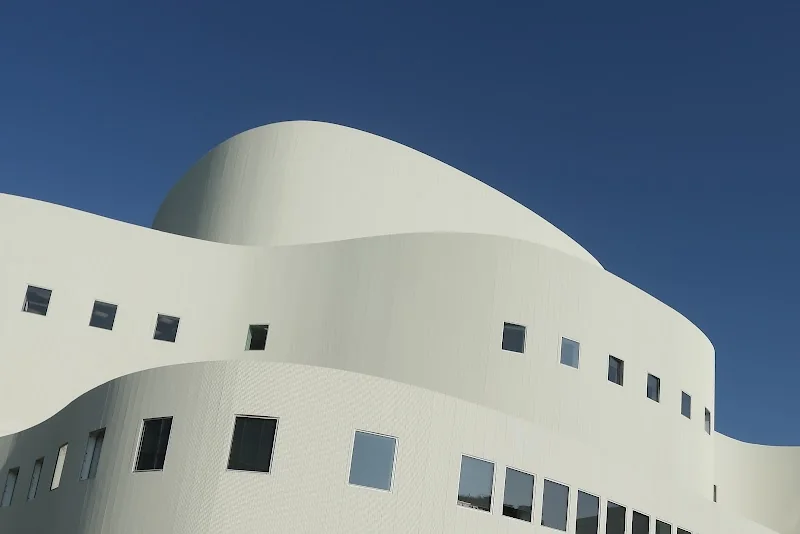
The Düsseldorf Theater House is much more than a single stage: it is a cultural anchor point in the state capital, an architectural landmark, and for many visitors, the first address when it comes to theater, program, access, parking, or the current schedule. When searching for the Düsseldorf Theater House, people often mean not just a building, but a whole ensemble of main venue, side stages, young theater, city:collective, and the associated visitor offerings. This is exactly why this location is so prominently represented in search queries: people want to know what is playing today, how to get there best, where they can park, how large the halls are, and which special productions are currently being discussed. The D’haus describes itself as the largest spoken theater in North Rhine-Westphalia and one of the largest stages in the German-speaking world; the website also makes it clear that it addresses the entire urban society with its various formats. The main venue is the theater house at Gustaf-Gründgens-Platz, while the Central at the main train station serves as the venue for the Young Theater and the city:collective. The curved white building by Bernhard Pfau is already more than just a theater: it is a striking image of Düsseldorf itself, for visibility, for culture in public space, and for the connection between classical theater tradition and modern urban identity. ([dhaus.de](https://www.dhaus.de/das-dhaus/ueber-das-haus/))
Program, Schedule & Today at D’haus
When the search intent focuses on program, today, or schedule, it quickly becomes clear why the official website is so important for the Düsseldorf Theater House. There, the dates are listed up to date, including venue, advance ticket sales, and in many cases, direct ticket links. This is particularly practical for searchers because the D’haus not only offers classic theater evenings but also showcases a wide repertoire between large ensemble productions, city formats, young formats, and special events. The official presentation makes it visible that the schedule has several pillars: theater, young theater, and city:collective. This diversity also explains why current or recent productions such as Cabaret, The Snowstorm, War and Peace, The Neverending Story, and Tyll are among the frequently searched titles. They represent the range of the house, from musically influenced classics to literary grand formats and aesthetically ambitious theater evenings. So, if someone is looking for a piece running today or a specific production, they do not randomly land at the D’haus, but at a house that consistently works with repertoire, premieres, special dates, and recurring productions. The fact that the homepage and the schedule page prominently refer to maps, dates, and selection options also shows how service-oriented the house makes access to the theater easier for its visitors. ([dhaus.de](https://www.dhaus.de/programm/))
From an SEO perspective, this connection between program, tickets, and repertoire is crucial, as search queries related to the Düsseldorf Theater House are rarely purely informational. They are often action-oriented: When is something playing today? Where can I find tickets? Which production is in the large house, which in the small house, which in the Central? The official website answers these questions in a way that is very relatable for visitors. Particularly helpful is that the program is not only displayed as a bare list but also includes information on location, date, time, and often also notes on remaining tickets or special formats. This makes the page relevant for spontaneous theater visits as well as for planned evening appointments. Additionally, the house clearly communicates its different divisions: theater for large evening productions, young theater for a younger audience, and participatory formats with a city reference in city:collective. So, when someone searches for the Düsseldorf Theater House today, they usually want to see not just a name but a reliable overview of what is actually on stage that day, that week, or that season. This orientation is exactly what the D’haus provides. ([dhaus.de](https://www.dhaus.de/))
Access, Address & Parking at Gustaf-Gründgens-Platz
The location of the Düsseldorf Theater House is one of the biggest advantages for visitors coming from Düsseldorf itself or the surrounding area. The main address is Gustaf-Gründgens-Platz 1, 40211 Düsseldorf. For access by public transport, the house lists several subway lines that make the way particularly easy: U71, U72, U73, and U83 to Schadowstraße as well as U70, U75, U76, U77, U78, and U79 to Heinrich-Heine-Allee. Additionally, trams such as 701, 705, and 706 stop at Schadowstraße, and 707 at Jacobistraße. Particularly practical is the note that theater tickets are valid for free in the entire VRR area until 3 AM on the day of the performance. This combination of central location and proximity to public transport is a clear search driver, as many users associate the keyword Düsseldorf Theater House with access, address, and the question of how to get to the theater most conveniently. The official visitor information makes it clear that the location is very urban and fits seamlessly into the traffic network of the city center. Therefore, those arriving without a car can reach the house quickly, directly, and without complicated detours. ([dhaus.de](https://www.dhaus.de/besuch/))
Also regarding parking, the Düsseldorf Theater House provides concrete and useful information. Directly at the house is the parking garage KII / Theater House, which is open continuously. According to the official visitor information, the hourly rate starts at 3.20 euros, and there is also a theater rate: for 10 euros, you can park for up to 5 hours, calculated from the time of entry. The pre-validation of the parking ticket occurs at the box offices in the large and small house, and those using the APCOA FLOW app can activate the discount via QR code. Particularly important for guests with mobility impairments is the note that you can reach the theater directly and barrier-free from the parking garage. At the same time, the website also mentions restrictions, such as that the orange prime parking spaces on level -2 are not available for the theater rate. For those looking for an alternative, additional parking options include the parking garage Schadow-Arkaden or parking garages around the main train station, including KAP1 on Karlstraße. This makes it clear: the search term parking at the Düsseldorf Theater House is not only justified but is answered by the house itself with very concrete, practical information. ([dhaus.de](https://www.dhaus.de/besuch/))
Large House, Small House & the Special Building by Bernhard Pfau
The architecture of the Düsseldorf Theater House is an essential part of its cultural reputation. The building was designed by Bernhard Pfau and opened to the public in 1970. Even the language of form makes it clear that this is not just a functional theater building, but a deliberately designed landmark: a curvy, sculptural, and vertically tiered architecture with a curved white facade. The official house description emphasizes the organic-abstract character of the form, reminiscent of metamorphosis, the change of nature, and at the same time, an oversized theater curtain. Additionally, there is a striking contrast with the neighboring three-slice high-rise, whose glass facade reflects the theater house. For many guests, this combination of architecture and cityscape is a reason to perceive the house not only as a performance venue but as a Düsseldorf landmark. The spatial layout is also clear: the building is divided into a large house with about 730 seats today and a small house with up to 300 seats. This allows for both large, elaborate productions and more intimate productions to be realized. This makes the house particularly flexible for different theater formats and explains why it repeatedly appears in search queries as a place with seating plans, seats, and spatial diversity. ([dhaus.de](https://www.dhaus.de/das-dhaus/ueber-das-haus/))
Another architectural feature is that behind the curved white cladding, not only the main stage but also several side stages are located. The house thinks of the stage spatially beyond just an audience room. This concept fits well with a theater that works from large ensemble evenings to more experimental forms. Furthermore, the visitor and accessibility page makes it clear that there are several accessible foyers and performance venues in the theater house, including the large house, small house, lower house, and foyer. The lower house was newly established as an experimental venue after returning to the renovated building and expands the theater space with a deliberately different, immediate form of playing. This is important for searchers because it answers not only the question about the building but also about the experience inside: How large is the hall? Which stage is the right one for which piece? Where do you sit in which format? The Düsseldorf Theater House does not deliver abstract promises to these questions but provides a concretely usable spatial concept with clear differentiation between the large house, small house, lower house, and the other foyer areas. ([dhaus.de](https://www.dhaus.de/das-dhaus/ueber-das-haus/))
History, Reconstruction & Development into a Modern Theater House
The history of Düsseldorf theater goes back much further than the current building. According to the official house presentation, it begins as early as 1747, when Düsseldorf citizens remodeled the casting house for Elector Karl Theodor. In the 19th century, further important milestones followed: in 1818, a princely theater building was gifted to the city after Napoleon's defeat, and Karl Leberecht Immermann brought new artistic impulses as director in 1834. In 1905, Louise Dumont and Gustav Lindemann opened their private theater house on Karl-Theodor-Strasse, which became famous as a reform stage and even had an attached theater academy. From this tradition emerged aesthetic and organizational demands that continue to shape Düsseldorf theater to this day. The Second World War dealt a harsh blow to this development: in 1943, the stages were destroyed in bombing raids, and the former theater house on Kasernenstraße was so severely damaged that reconstruction was no longer worthwhile. This break makes it understandable why the current theater house can be read not only as a new building but also as a sign of a cultural new beginning. It stands in a long line of theater histories but is also the conscious response to the destruction and the reorganization of urban cultural life after the war. ([dhaus.de](https://www.dhaus.de/das-dhaus/ueber-das-haus/))
The institutional new beginning was initiated in 1951 with the founding of the Neue Schauspiel-GmbH, supported by the state of North Rhine-Westphalia, the city of Düsseldorf, the Society of Friends of Düsseldorf Theater, and with the participation of the German Trade Union Confederation. Initially, the house performed at Jahnstraße 1b in a converted former operetta house, which soon proved too small for the growing demands. In the early 1960s, preliminary design plans for the new building were developed, the foundation stone was laid in 1965, and on January 16, 1970, the Düsseldorf Theater House was opened with Danton's Death. The official historical presentation subsequently names numerous artistic directors who have shaped the house. Particularly noteworthy is also the renovation phase from 2016/17 to 2018/19: during this time, the building underwent extensive construction, the repertoire was shown in the alternative venue Central at the main train station, and at times the D’haus even performed at various locations in Düsseldorf as well as in a specially erected theater tent. After three seasons in the Central, the ensemble returned to Gustaf-Gründgens-Platz in 2019/20; at the same time, the lower house was newly established in the basement as an experimental venue. This sequence shows that the Düsseldorf Theater House not only has history but also makes history by continually renewing itself spatially and artistically. ([dhaus.de](https://www.dhaus.de/das-dhaus/ueber-das-haus/))
Ensemble, Central & City:Collective in the Heart of Düsseldorf
Another reason why so many people search for the Düsseldorf Theater House lies in the size and diversity of its personnel and artistic apparatus. The official house page mentions about fifty actors, many artistic guests, and around 350 employees from art, technology, costume, makeup, and administration. Together, they bring around 900 performances to the stage each year; in the 2024/25 season, 257,900 spectators visited the D’haus. These numbers make it clear that it is not a small niche venue but a large, powerful theater house with enormous reach. Additionally, the D’haus explicitly addresses its mission to the entire urban society and appeals to a broad public with its various events. This opening is important for Düsseldorf because it positions theater not only as evening culture but as a social and urban place. So, when someone searches for ensemble, events, or cultural house, they find here a strongly anchored city theater that connects classical theater tradition with contemporary relevance. The structure of the house also explains why search queries related to ensemble, program, schedule, and individual productions often merge: the audience wants to know not only a title but also understand who is performing, where it is being performed, and how the house functions as a whole. ([dhaus.de](https://www.dhaus.de/das-dhaus/ueber-das-haus/))
The Central plays a special role in this structure. It is located at Worringer Straße 140 near the main train station, serves as the venue for the Young Theater and the city:collective, and also acts as a rehearsal and production center. This complements the representative theater house at Gustaf-Gründgens-Platz with a second, significantly more urban location that visibly makes the house's opening towards younger target groups, participatory formats, and social city projects. The website also features additional service and mediation offers such as theater education, open foyer, and gastronomy, which show that visitors can experience not just a performance but a whole theater visit. The barrier-free access and the direct connection between the parking garage and the house also underscore this claim. Therefore, when visiting the Düsseldorf Theater House, one experiences not just an evening of theater but a system of main venue, side rooms, public connections, and urban presence. This mixture is where the strength of the house lies: it has grown historically, is architecturally striking, is broadly positioned in content, and is very well accessible in the everyday life of the city. For searchers looking for D’haus, Central, Young Theater, or city:collective, the Düsseldorf Theater House is therefore one of the most important cultural addresses in Düsseldorf. ([dhaus.de](https://www.dhaus.de/besuch/))
Sources:
- D’haus – Official Website ([dhaus.de](https://www.dhaus.de/?utm_source=openai))
- D’haus – About the House ([dhaus.de](https://www.dhaus.de/das-dhaus/ueber-das-haus/))
- D’haus – Visit and Venues ([dhaus.de](https://www.dhaus.de/besuch/))
- State Capital Düsseldorf – Fifty. From Düsseldorf Theater House to D’haus ([duesseldorf.de](https://www.duesseldorf.de/theatermuseum/online-archiv-theatermuseum/ausstellungen/ausstellungen-2020/fuenfzig-vom-duesseldorfer-schauspielhaus-zum-dhaus))
- D’haus – War and Peace ([dhaus.de](https://www.dhaus.de/programm/spielplan/2024-08/krieg-und-frieden/2297/?utm_source=openai))
Show moreShow less
Düsseldorf Theater House | Program & Parking
The Düsseldorf Theater House is much more than a single stage: it is a cultural anchor point in the state capital, an architectural landmark, and for many visitors, the first address when it comes to theater, program, access, parking, or the current schedule. When searching for the Düsseldorf Theater House, people often mean not just a building, but a whole ensemble of main venue, side stages, young theater, city:collective, and the associated visitor offerings. This is exactly why this location is so prominently represented in search queries: people want to know what is playing today, how to get there best, where they can park, how large the halls are, and which special productions are currently being discussed. The D’haus describes itself as the largest spoken theater in North Rhine-Westphalia and one of the largest stages in the German-speaking world; the website also makes it clear that it addresses the entire urban society with its various formats. The main venue is the theater house at Gustaf-Gründgens-Platz, while the Central at the main train station serves as the venue for the Young Theater and the city:collective. The curved white building by Bernhard Pfau is already more than just a theater: it is a striking image of Düsseldorf itself, for visibility, for culture in public space, and for the connection between classical theater tradition and modern urban identity. ([dhaus.de](https://www.dhaus.de/das-dhaus/ueber-das-haus/))
Program, Schedule & Today at D’haus
When the search intent focuses on program, today, or schedule, it quickly becomes clear why the official website is so important for the Düsseldorf Theater House. There, the dates are listed up to date, including venue, advance ticket sales, and in many cases, direct ticket links. This is particularly practical for searchers because the D’haus not only offers classic theater evenings but also showcases a wide repertoire between large ensemble productions, city formats, young formats, and special events. The official presentation makes it visible that the schedule has several pillars: theater, young theater, and city:collective. This diversity also explains why current or recent productions such as Cabaret, The Snowstorm, War and Peace, The Neverending Story, and Tyll are among the frequently searched titles. They represent the range of the house, from musically influenced classics to literary grand formats and aesthetically ambitious theater evenings. So, if someone is looking for a piece running today or a specific production, they do not randomly land at the D’haus, but at a house that consistently works with repertoire, premieres, special dates, and recurring productions. The fact that the homepage and the schedule page prominently refer to maps, dates, and selection options also shows how service-oriented the house makes access to the theater easier for its visitors. ([dhaus.de](https://www.dhaus.de/programm/))
From an SEO perspective, this connection between program, tickets, and repertoire is crucial, as search queries related to the Düsseldorf Theater House are rarely purely informational. They are often action-oriented: When is something playing today? Where can I find tickets? Which production is in the large house, which in the small house, which in the Central? The official website answers these questions in a way that is very relatable for visitors. Particularly helpful is that the program is not only displayed as a bare list but also includes information on location, date, time, and often also notes on remaining tickets or special formats. This makes the page relevant for spontaneous theater visits as well as for planned evening appointments. Additionally, the house clearly communicates its different divisions: theater for large evening productions, young theater for a younger audience, and participatory formats with a city reference in city:collective. So, when someone searches for the Düsseldorf Theater House today, they usually want to see not just a name but a reliable overview of what is actually on stage that day, that week, or that season. This orientation is exactly what the D’haus provides. ([dhaus.de](https://www.dhaus.de/))
Access, Address & Parking at Gustaf-Gründgens-Platz
The location of the Düsseldorf Theater House is one of the biggest advantages for visitors coming from Düsseldorf itself or the surrounding area. The main address is Gustaf-Gründgens-Platz 1, 40211 Düsseldorf. For access by public transport, the house lists several subway lines that make the way particularly easy: U71, U72, U73, and U83 to Schadowstraße as well as U70, U75, U76, U77, U78, and U79 to Heinrich-Heine-Allee. Additionally, trams such as 701, 705, and 706 stop at Schadowstraße, and 707 at Jacobistraße. Particularly practical is the note that theater tickets are valid for free in the entire VRR area until 3 AM on the day of the performance. This combination of central location and proximity to public transport is a clear search driver, as many users associate the keyword Düsseldorf Theater House with access, address, and the question of how to get to the theater most conveniently. The official visitor information makes it clear that the location is very urban and fits seamlessly into the traffic network of the city center. Therefore, those arriving without a car can reach the house quickly, directly, and without complicated detours. ([dhaus.de](https://www.dhaus.de/besuch/))
Also regarding parking, the Düsseldorf Theater House provides concrete and useful information. Directly at the house is the parking garage KII / Theater House, which is open continuously. According to the official visitor information, the hourly rate starts at 3.20 euros, and there is also a theater rate: for 10 euros, you can park for up to 5 hours, calculated from the time of entry. The pre-validation of the parking ticket occurs at the box offices in the large and small house, and those using the APCOA FLOW app can activate the discount via QR code. Particularly important for guests with mobility impairments is the note that you can reach the theater directly and barrier-free from the parking garage. At the same time, the website also mentions restrictions, such as that the orange prime parking spaces on level -2 are not available for the theater rate. For those looking for an alternative, additional parking options include the parking garage Schadow-Arkaden or parking garages around the main train station, including KAP1 on Karlstraße. This makes it clear: the search term parking at the Düsseldorf Theater House is not only justified but is answered by the house itself with very concrete, practical information. ([dhaus.de](https://www.dhaus.de/besuch/))
Large House, Small House & the Special Building by Bernhard Pfau
The architecture of the Düsseldorf Theater House is an essential part of its cultural reputation. The building was designed by Bernhard Pfau and opened to the public in 1970. Even the language of form makes it clear that this is not just a functional theater building, but a deliberately designed landmark: a curvy, sculptural, and vertically tiered architecture with a curved white facade. The official house description emphasizes the organic-abstract character of the form, reminiscent of metamorphosis, the change of nature, and at the same time, an oversized theater curtain. Additionally, there is a striking contrast with the neighboring three-slice high-rise, whose glass facade reflects the theater house. For many guests, this combination of architecture and cityscape is a reason to perceive the house not only as a performance venue but as a Düsseldorf landmark. The spatial layout is also clear: the building is divided into a large house with about 730 seats today and a small house with up to 300 seats. This allows for both large, elaborate productions and more intimate productions to be realized. This makes the house particularly flexible for different theater formats and explains why it repeatedly appears in search queries as a place with seating plans, seats, and spatial diversity. ([dhaus.de](https://www.dhaus.de/das-dhaus/ueber-das-haus/))
Another architectural feature is that behind the curved white cladding, not only the main stage but also several side stages are located. The house thinks of the stage spatially beyond just an audience room. This concept fits well with a theater that works from large ensemble evenings to more experimental forms. Furthermore, the visitor and accessibility page makes it clear that there are several accessible foyers and performance venues in the theater house, including the large house, small house, lower house, and foyer. The lower house was newly established as an experimental venue after returning to the renovated building and expands the theater space with a deliberately different, immediate form of playing. This is important for searchers because it answers not only the question about the building but also about the experience inside: How large is the hall? Which stage is the right one for which piece? Where do you sit in which format? The Düsseldorf Theater House does not deliver abstract promises to these questions but provides a concretely usable spatial concept with clear differentiation between the large house, small house, lower house, and the other foyer areas. ([dhaus.de](https://www.dhaus.de/das-dhaus/ueber-das-haus/))
History, Reconstruction & Development into a Modern Theater House
The history of Düsseldorf theater goes back much further than the current building. According to the official house presentation, it begins as early as 1747, when Düsseldorf citizens remodeled the casting house for Elector Karl Theodor. In the 19th century, further important milestones followed: in 1818, a princely theater building was gifted to the city after Napoleon's defeat, and Karl Leberecht Immermann brought new artistic impulses as director in 1834. In 1905, Louise Dumont and Gustav Lindemann opened their private theater house on Karl-Theodor-Strasse, which became famous as a reform stage and even had an attached theater academy. From this tradition emerged aesthetic and organizational demands that continue to shape Düsseldorf theater to this day. The Second World War dealt a harsh blow to this development: in 1943, the stages were destroyed in bombing raids, and the former theater house on Kasernenstraße was so severely damaged that reconstruction was no longer worthwhile. This break makes it understandable why the current theater house can be read not only as a new building but also as a sign of a cultural new beginning. It stands in a long line of theater histories but is also the conscious response to the destruction and the reorganization of urban cultural life after the war. ([dhaus.de](https://www.dhaus.de/das-dhaus/ueber-das-haus/))
The institutional new beginning was initiated in 1951 with the founding of the Neue Schauspiel-GmbH, supported by the state of North Rhine-Westphalia, the city of Düsseldorf, the Society of Friends of Düsseldorf Theater, and with the participation of the German Trade Union Confederation. Initially, the house performed at Jahnstraße 1b in a converted former operetta house, which soon proved too small for the growing demands. In the early 1960s, preliminary design plans for the new building were developed, the foundation stone was laid in 1965, and on January 16, 1970, the Düsseldorf Theater House was opened with Danton's Death. The official historical presentation subsequently names numerous artistic directors who have shaped the house. Particularly noteworthy is also the renovation phase from 2016/17 to 2018/19: during this time, the building underwent extensive construction, the repertoire was shown in the alternative venue Central at the main train station, and at times the D’haus even performed at various locations in Düsseldorf as well as in a specially erected theater tent. After three seasons in the Central, the ensemble returned to Gustaf-Gründgens-Platz in 2019/20; at the same time, the lower house was newly established in the basement as an experimental venue. This sequence shows that the Düsseldorf Theater House not only has history but also makes history by continually renewing itself spatially and artistically. ([dhaus.de](https://www.dhaus.de/das-dhaus/ueber-das-haus/))
Ensemble, Central & City:Collective in the Heart of Düsseldorf
Another reason why so many people search for the Düsseldorf Theater House lies in the size and diversity of its personnel and artistic apparatus. The official house page mentions about fifty actors, many artistic guests, and around 350 employees from art, technology, costume, makeup, and administration. Together, they bring around 900 performances to the stage each year; in the 2024/25 season, 257,900 spectators visited the D’haus. These numbers make it clear that it is not a small niche venue but a large, powerful theater house with enormous reach. Additionally, the D’haus explicitly addresses its mission to the entire urban society and appeals to a broad public with its various events. This opening is important for Düsseldorf because it positions theater not only as evening culture but as a social and urban place. So, when someone searches for ensemble, events, or cultural house, they find here a strongly anchored city theater that connects classical theater tradition with contemporary relevance. The structure of the house also explains why search queries related to ensemble, program, schedule, and individual productions often merge: the audience wants to know not only a title but also understand who is performing, where it is being performed, and how the house functions as a whole. ([dhaus.de](https://www.dhaus.de/das-dhaus/ueber-das-haus/))
The Central plays a special role in this structure. It is located at Worringer Straße 140 near the main train station, serves as the venue for the Young Theater and the city:collective, and also acts as a rehearsal and production center. This complements the representative theater house at Gustaf-Gründgens-Platz with a second, significantly more urban location that visibly makes the house's opening towards younger target groups, participatory formats, and social city projects. The website also features additional service and mediation offers such as theater education, open foyer, and gastronomy, which show that visitors can experience not just a performance but a whole theater visit. The barrier-free access and the direct connection between the parking garage and the house also underscore this claim. Therefore, when visiting the Düsseldorf Theater House, one experiences not just an evening of theater but a system of main venue, side rooms, public connections, and urban presence. This mixture is where the strength of the house lies: it has grown historically, is architecturally striking, is broadly positioned in content, and is very well accessible in the everyday life of the city. For searchers looking for D’haus, Central, Young Theater, or city:collective, the Düsseldorf Theater House is therefore one of the most important cultural addresses in Düsseldorf. ([dhaus.de](https://www.dhaus.de/besuch/))
Sources:
- D’haus – Official Website ([dhaus.de](https://www.dhaus.de/?utm_source=openai))
- D’haus – About the House ([dhaus.de](https://www.dhaus.de/das-dhaus/ueber-das-haus/))
- D’haus – Visit and Venues ([dhaus.de](https://www.dhaus.de/besuch/))
- State Capital Düsseldorf – Fifty. From Düsseldorf Theater House to D’haus ([duesseldorf.de](https://www.duesseldorf.de/theatermuseum/online-archiv-theatermuseum/ausstellungen/ausstellungen-2020/fuenfzig-vom-duesseldorfer-schauspielhaus-zum-dhaus))
- D’haus – War and Peace ([dhaus.de](https://www.dhaus.de/programm/spielplan/2024-08/krieg-und-frieden/2297/?utm_source=openai))
Düsseldorf Theater House | Program & Parking
The Düsseldorf Theater House is much more than a single stage: it is a cultural anchor point in the state capital, an architectural landmark, and for many visitors, the first address when it comes to theater, program, access, parking, or the current schedule. When searching for the Düsseldorf Theater House, people often mean not just a building, but a whole ensemble of main venue, side stages, young theater, city:collective, and the associated visitor offerings. This is exactly why this location is so prominently represented in search queries: people want to know what is playing today, how to get there best, where they can park, how large the halls are, and which special productions are currently being discussed. The D’haus describes itself as the largest spoken theater in North Rhine-Westphalia and one of the largest stages in the German-speaking world; the website also makes it clear that it addresses the entire urban society with its various formats. The main venue is the theater house at Gustaf-Gründgens-Platz, while the Central at the main train station serves as the venue for the Young Theater and the city:collective. The curved white building by Bernhard Pfau is already more than just a theater: it is a striking image of Düsseldorf itself, for visibility, for culture in public space, and for the connection between classical theater tradition and modern urban identity. ([dhaus.de](https://www.dhaus.de/das-dhaus/ueber-das-haus/))
Program, Schedule & Today at D’haus
When the search intent focuses on program, today, or schedule, it quickly becomes clear why the official website is so important for the Düsseldorf Theater House. There, the dates are listed up to date, including venue, advance ticket sales, and in many cases, direct ticket links. This is particularly practical for searchers because the D’haus not only offers classic theater evenings but also showcases a wide repertoire between large ensemble productions, city formats, young formats, and special events. The official presentation makes it visible that the schedule has several pillars: theater, young theater, and city:collective. This diversity also explains why current or recent productions such as Cabaret, The Snowstorm, War and Peace, The Neverending Story, and Tyll are among the frequently searched titles. They represent the range of the house, from musically influenced classics to literary grand formats and aesthetically ambitious theater evenings. So, if someone is looking for a piece running today or a specific production, they do not randomly land at the D’haus, but at a house that consistently works with repertoire, premieres, special dates, and recurring productions. The fact that the homepage and the schedule page prominently refer to maps, dates, and selection options also shows how service-oriented the house makes access to the theater easier for its visitors. ([dhaus.de](https://www.dhaus.de/programm/))
From an SEO perspective, this connection between program, tickets, and repertoire is crucial, as search queries related to the Düsseldorf Theater House are rarely purely informational. They are often action-oriented: When is something playing today? Where can I find tickets? Which production is in the large house, which in the small house, which in the Central? The official website answers these questions in a way that is very relatable for visitors. Particularly helpful is that the program is not only displayed as a bare list but also includes information on location, date, time, and often also notes on remaining tickets or special formats. This makes the page relevant for spontaneous theater visits as well as for planned evening appointments. Additionally, the house clearly communicates its different divisions: theater for large evening productions, young theater for a younger audience, and participatory formats with a city reference in city:collective. So, when someone searches for the Düsseldorf Theater House today, they usually want to see not just a name but a reliable overview of what is actually on stage that day, that week, or that season. This orientation is exactly what the D’haus provides. ([dhaus.de](https://www.dhaus.de/))
Access, Address & Parking at Gustaf-Gründgens-Platz
The location of the Düsseldorf Theater House is one of the biggest advantages for visitors coming from Düsseldorf itself or the surrounding area. The main address is Gustaf-Gründgens-Platz 1, 40211 Düsseldorf. For access by public transport, the house lists several subway lines that make the way particularly easy: U71, U72, U73, and U83 to Schadowstraße as well as U70, U75, U76, U77, U78, and U79 to Heinrich-Heine-Allee. Additionally, trams such as 701, 705, and 706 stop at Schadowstraße, and 707 at Jacobistraße. Particularly practical is the note that theater tickets are valid for free in the entire VRR area until 3 AM on the day of the performance. This combination of central location and proximity to public transport is a clear search driver, as many users associate the keyword Düsseldorf Theater House with access, address, and the question of how to get to the theater most conveniently. The official visitor information makes it clear that the location is very urban and fits seamlessly into the traffic network of the city center. Therefore, those arriving without a car can reach the house quickly, directly, and without complicated detours. ([dhaus.de](https://www.dhaus.de/besuch/))
Also regarding parking, the Düsseldorf Theater House provides concrete and useful information. Directly at the house is the parking garage KII / Theater House, which is open continuously. According to the official visitor information, the hourly rate starts at 3.20 euros, and there is also a theater rate: for 10 euros, you can park for up to 5 hours, calculated from the time of entry. The pre-validation of the parking ticket occurs at the box offices in the large and small house, and those using the APCOA FLOW app can activate the discount via QR code. Particularly important for guests with mobility impairments is the note that you can reach the theater directly and barrier-free from the parking garage. At the same time, the website also mentions restrictions, such as that the orange prime parking spaces on level -2 are not available for the theater rate. For those looking for an alternative, additional parking options include the parking garage Schadow-Arkaden or parking garages around the main train station, including KAP1 on Karlstraße. This makes it clear: the search term parking at the Düsseldorf Theater House is not only justified but is answered by the house itself with very concrete, practical information. ([dhaus.de](https://www.dhaus.de/besuch/))
Large House, Small House & the Special Building by Bernhard Pfau
The architecture of the Düsseldorf Theater House is an essential part of its cultural reputation. The building was designed by Bernhard Pfau and opened to the public in 1970. Even the language of form makes it clear that this is not just a functional theater building, but a deliberately designed landmark: a curvy, sculptural, and vertically tiered architecture with a curved white facade. The official house description emphasizes the organic-abstract character of the form, reminiscent of metamorphosis, the change of nature, and at the same time, an oversized theater curtain. Additionally, there is a striking contrast with the neighboring three-slice high-rise, whose glass facade reflects the theater house. For many guests, this combination of architecture and cityscape is a reason to perceive the house not only as a performance venue but as a Düsseldorf landmark. The spatial layout is also clear: the building is divided into a large house with about 730 seats today and a small house with up to 300 seats. This allows for both large, elaborate productions and more intimate productions to be realized. This makes the house particularly flexible for different theater formats and explains why it repeatedly appears in search queries as a place with seating plans, seats, and spatial diversity. ([dhaus.de](https://www.dhaus.de/das-dhaus/ueber-das-haus/))
Another architectural feature is that behind the curved white cladding, not only the main stage but also several side stages are located. The house thinks of the stage spatially beyond just an audience room. This concept fits well with a theater that works from large ensemble evenings to more experimental forms. Furthermore, the visitor and accessibility page makes it clear that there are several accessible foyers and performance venues in the theater house, including the large house, small house, lower house, and foyer. The lower house was newly established as an experimental venue after returning to the renovated building and expands the theater space with a deliberately different, immediate form of playing. This is important for searchers because it answers not only the question about the building but also about the experience inside: How large is the hall? Which stage is the right one for which piece? Where do you sit in which format? The Düsseldorf Theater House does not deliver abstract promises to these questions but provides a concretely usable spatial concept with clear differentiation between the large house, small house, lower house, and the other foyer areas. ([dhaus.de](https://www.dhaus.de/das-dhaus/ueber-das-haus/))
History, Reconstruction & Development into a Modern Theater House
The history of Düsseldorf theater goes back much further than the current building. According to the official house presentation, it begins as early as 1747, when Düsseldorf citizens remodeled the casting house for Elector Karl Theodor. In the 19th century, further important milestones followed: in 1818, a princely theater building was gifted to the city after Napoleon's defeat, and Karl Leberecht Immermann brought new artistic impulses as director in 1834. In 1905, Louise Dumont and Gustav Lindemann opened their private theater house on Karl-Theodor-Strasse, which became famous as a reform stage and even had an attached theater academy. From this tradition emerged aesthetic and organizational demands that continue to shape Düsseldorf theater to this day. The Second World War dealt a harsh blow to this development: in 1943, the stages were destroyed in bombing raids, and the former theater house on Kasernenstraße was so severely damaged that reconstruction was no longer worthwhile. This break makes it understandable why the current theater house can be read not only as a new building but also as a sign of a cultural new beginning. It stands in a long line of theater histories but is also the conscious response to the destruction and the reorganization of urban cultural life after the war. ([dhaus.de](https://www.dhaus.de/das-dhaus/ueber-das-haus/))
The institutional new beginning was initiated in 1951 with the founding of the Neue Schauspiel-GmbH, supported by the state of North Rhine-Westphalia, the city of Düsseldorf, the Society of Friends of Düsseldorf Theater, and with the participation of the German Trade Union Confederation. Initially, the house performed at Jahnstraße 1b in a converted former operetta house, which soon proved too small for the growing demands. In the early 1960s, preliminary design plans for the new building were developed, the foundation stone was laid in 1965, and on January 16, 1970, the Düsseldorf Theater House was opened with Danton's Death. The official historical presentation subsequently names numerous artistic directors who have shaped the house. Particularly noteworthy is also the renovation phase from 2016/17 to 2018/19: during this time, the building underwent extensive construction, the repertoire was shown in the alternative venue Central at the main train station, and at times the D’haus even performed at various locations in Düsseldorf as well as in a specially erected theater tent. After three seasons in the Central, the ensemble returned to Gustaf-Gründgens-Platz in 2019/20; at the same time, the lower house was newly established in the basement as an experimental venue. This sequence shows that the Düsseldorf Theater House not only has history but also makes history by continually renewing itself spatially and artistically. ([dhaus.de](https://www.dhaus.de/das-dhaus/ueber-das-haus/))
Ensemble, Central & City:Collective in the Heart of Düsseldorf
Another reason why so many people search for the Düsseldorf Theater House lies in the size and diversity of its personnel and artistic apparatus. The official house page mentions about fifty actors, many artistic guests, and around 350 employees from art, technology, costume, makeup, and administration. Together, they bring around 900 performances to the stage each year; in the 2024/25 season, 257,900 spectators visited the D’haus. These numbers make it clear that it is not a small niche venue but a large, powerful theater house with enormous reach. Additionally, the D’haus explicitly addresses its mission to the entire urban society and appeals to a broad public with its various events. This opening is important for Düsseldorf because it positions theater not only as evening culture but as a social and urban place. So, when someone searches for ensemble, events, or cultural house, they find here a strongly anchored city theater that connects classical theater tradition with contemporary relevance. The structure of the house also explains why search queries related to ensemble, program, schedule, and individual productions often merge: the audience wants to know not only a title but also understand who is performing, where it is being performed, and how the house functions as a whole. ([dhaus.de](https://www.dhaus.de/das-dhaus/ueber-das-haus/))
The Central plays a special role in this structure. It is located at Worringer Straße 140 near the main train station, serves as the venue for the Young Theater and the city:collective, and also acts as a rehearsal and production center. This complements the representative theater house at Gustaf-Gründgens-Platz with a second, significantly more urban location that visibly makes the house's opening towards younger target groups, participatory formats, and social city projects. The website also features additional service and mediation offers such as theater education, open foyer, and gastronomy, which show that visitors can experience not just a performance but a whole theater visit. The barrier-free access and the direct connection between the parking garage and the house also underscore this claim. Therefore, when visiting the Düsseldorf Theater House, one experiences not just an evening of theater but a system of main venue, side rooms, public connections, and urban presence. This mixture is where the strength of the house lies: it has grown historically, is architecturally striking, is broadly positioned in content, and is very well accessible in the everyday life of the city. For searchers looking for D’haus, Central, Young Theater, or city:collective, the Düsseldorf Theater House is therefore one of the most important cultural addresses in Düsseldorf. ([dhaus.de](https://www.dhaus.de/besuch/))
Sources:
- D’haus – Official Website ([dhaus.de](https://www.dhaus.de/?utm_source=openai))
- D’haus – About the House ([dhaus.de](https://www.dhaus.de/das-dhaus/ueber-das-haus/))
- D’haus – Visit and Venues ([dhaus.de](https://www.dhaus.de/besuch/))
- State Capital Düsseldorf – Fifty. From Düsseldorf Theater House to D’haus ([duesseldorf.de](https://www.duesseldorf.de/theatermuseum/online-archiv-theatermuseum/ausstellungen/ausstellungen-2020/fuenfzig-vom-duesseldorfer-schauspielhaus-zum-dhaus))
- D’haus – War and Peace ([dhaus.de](https://www.dhaus.de/programm/spielplan/2024-08/krieg-und-frieden/2297/?utm_source=openai))
Upcoming Events

Djinns
An intense theater evening about loss, origin, and solidarity at D’haus Düsseldorf. Djinns touches with choir, direction, and a grand stage. #Theaterliebe
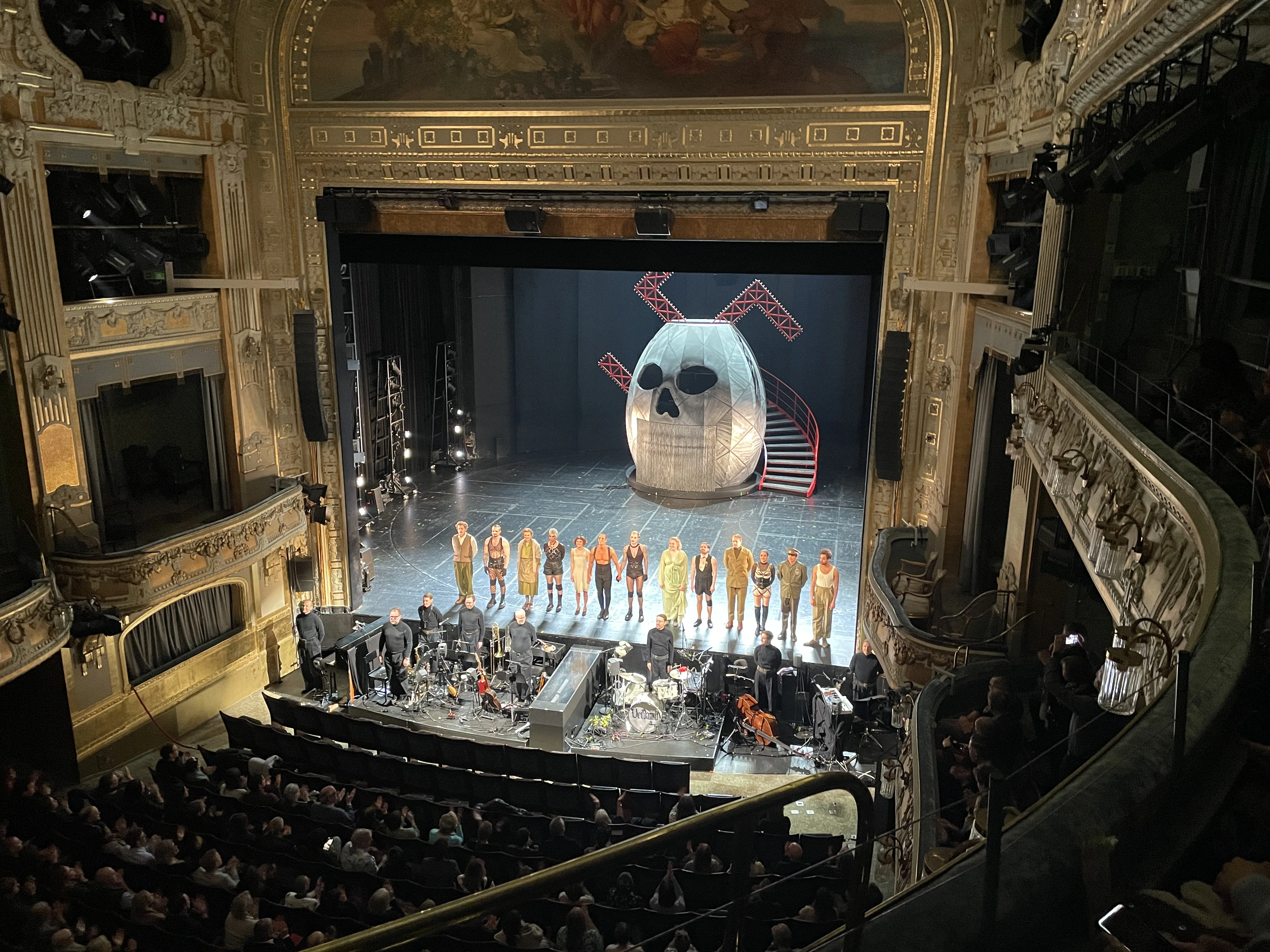
Cabaret in Düsseldorf: Musical Classic at D'haus
Berlin 1929 meets Düsseldorf: Cabaret at D'haus delivers shine, jazz, and abyss in an evening full of pull. On 08.07.2026 at 19:30. #Cabaret #Düsseldorf
Frequently Asked Questions
Reviews
William Egan
15. December 2024
The atmosphere is great. The location near the shopping district is nice. A bit expensive and fancy for my taste. The dinner portions are too small in my opinion, but I am American, so take that for what it's worth.
YYY
29. December 2025
An excellent theater with a strong artistic program. Impressive performances, great atmosphere, and a beautiful venue. A key part of Düsseldorf’s cultural life.
Pepe Pepino
25. January 2026
Great theater with a variety of performances offered. Amazing actors, wonderful atmosphere.
Kaveh Faghihi
29. June 2023
It was a great experience for me. I have always been amazed by the architecture of Schauspielhaus from outside, till for a theater we had the chance to go inside and enjoy every second of the inner beauty, the theater and great atmosphere of this place. I highly recommend it and it would be a new and pleasant experience for you.
Ami
21. December 2025
Amazing building!