
Valentina Maurel
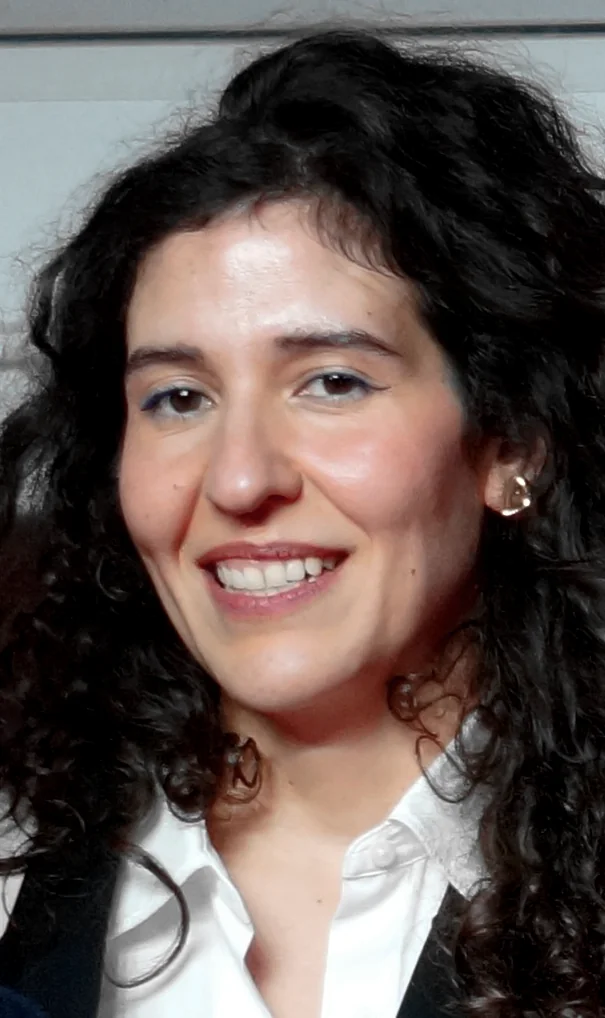
Image from Wikipedia
Image from Wikipedia
Valentina Maurel: The Precise Voice of Modern Author Cinema Between Costa Rica, Belgium, and Cannes
A Director Who Makes Uncertainty a Principle of Style
Valentina Maurel, born on April 16, 1988, in San José, is one of the most intriguing voices in contemporary author cinema. The French-Costa Rican film director and screenwriter has made her mark on the international festival scene with a handful of striking works. Her films revolve around familial tensions, youthful insecurities, and emotional nuances that she explores with great formal clarity and keen observational skills.
Her path has led her early on between continents, educational settings, and aesthetic influences. This autobiographical movement continues to shape her cinema today: Maurel is not interested in smooth developments but in fractures, ambiguities, and the conflicting energies in relationships. It is precisely from this that her work derives its tension and authority.
Biography: From San José to Brussels and into the European Arthouse Scene
Valentina Maurel was born in Costa Rica and studied at the INSAS film school in Brussels. Prior to that, she had already experimented with other educational paths, including stints in Paris and at INRACI, before finally turning to direction. Her career showcases an artist who found her place not through conventions, but through curiosity, detours, and a clear inner necessity to tell stories.
In interviews and portraits, it becomes evident that her artistic formation also stems from her family background: her father is a painter, and her mother is an actress. This connection between visual art and performing arts is reflected in her directorial work, which combines visual precision with psychological intensity. Among her influences are Claire Denis, Lucrecia Martel, and Catherine Breillat; for her youth films, she also looked up to Todd Solondz and Hal Hartley, whose dark humor she particularly appreciates.
The First Breakthrough: Cannes and the Award for “Paul est là”
Maurel's actual international breakthrough came with her short film Paul est là. The work premiered in 2017 in the Cinéfondation of the Cannes Film Festival and won the first prize in that section. French trade media described the film as both simple and risky, as a sensitive and complex portrait that unfolds significant emotional impact through minor shifts.
This early success was more than just a festival triumph. It established Maurel as a director who orchestrates psychological tensions with minimalist precision, who does not explain her characters but takes their uncertainties seriously. This attitude later became a hallmark of her subsequent works and the foundation of her artistic development.
Between Cannes and Critics' Week: “Lucia en el limbo”
In 2019, Maurel returned to Cannes with Lucia en el limbo, this time in the Semaine de la Critique. This short film was also perceived as a sensitive and focused work that centers female experience, transitions, and inner tensions. Her repeated presence in Cannes indicates that Maurel is not seen as a fluke success but as a consistently working author with a clear signature.
The film solidified her reputation as a precise observer of emotional states that do not appear melodramatically heightened or coolly detached. Instead, she creates an atmosphere where every small gesture gains significance. This working method makes her films so well-connected to European arthouse cinema while remaining unmistakable.
The Feature Film Debut: “Tengo sueños eléctricos” as a Major Coming-of-Age Test
With her feature film debut I Have Electric Dreams or Tengo sueños eléctricos, Maurel reached a new artistic level in 2022. The work was invited to compete at the Locarno Film Festival, where it won the Best Director award. Additionally, the film was awarded the Grand Prize “Golden Alexander” at the Thessaloniki International Film Festival.
In terms of content and form, Maurel relied on the mix of intimacy and unease that characterizes her cinema. The film arose from the need to explore a father-child relationship in cinematic form and is read as a continuation of her previously acclaimed short films. Critics especially highlighted the ambivalence in the narrative style and the refusal to compress characters into smooth development lines.
Current Projects: Return to Cannes with “Siempre soy tu animal materno”
In 2026, Maurel remains prominent in international festival discussions. The Festival de Cannes features Siempre soy tu animal materno in its Un Certain Regard program. Here, it becomes evident that her work continues to be closely tied to themes such as origin, family, return, and emotional entanglement. The festival presence already signals that Maurel is expanding her position in author cinema and further refining her cinematic language.
A recent article from Cineuropa describes her as a director who places the contemporary cinema of Costa Rica on the map of international arthouse cinema. At the same time, the interview emphasizes that she remains interested in characters rather than linear plot paths. It is precisely this that generates the tension in her new work: she seeks no definitive solutions, but rather emotional authenticity in open forms.
Cinematic Signature: Ambivalence, Intimacy, and Controlled Breaks
Valentina Maurel works with a directorial aesthetic focused on precision and restraint. Her films thrive on relationships that never seem fully stable and on characters whose inner conflicts are not displayed but gradually revealed. This generates a particular intensity: the drama is not in the grand outburst but in the perpetual shift between closeness and distance.
Stylistically, her work can be described as character-driven. Maurel is interested in psychological nuances, in the economy of glances, pauses, and unspoken words. In this regard, she aligns herself with a tradition of European author cinema where atmosphere, rhythm, and subtext are as significant as action and dialogue.
Cultural Influence and Reception: A Young Author with International Credibility
Her early works were already perceived as remarkably independent at Cannes, and her later festival track from Locarno to Thessaloniki demonstrates her international relevance. The acclaim comes not from mass-appealing mainstream, but from an environment that appreciates stylistic consistency and artistic integrity. This bolsters her authority as a filmmaker.
Maurel represents a form of contemporary cinema that connects personal experience, cultural origins, and formal discipline. Her films visibly anchor Costa Rica in the global arthouse context and simultaneously prove that strong author positions today often arise from border movements. Those who follow her work witness a director who does not manage her themes but rather gives them new forms with persistent curiosity and high sensitivity.
Conclusion: Why Valentina Maurel Remains So Compelling
Valentina Maurel is compelling because she transforms uncertainty into aesthetic strength. Her career shows a clear path from short films through international awards to firmly established feature author cinema. Those interested in precise character development, emotional depth, and demanding European cinema will find in her work a director with a unique voice and real profile.
It is precisely the combination of personal handwriting, festival success, and ongoing artistic development that makes her a voice to watch. Her films deserve attention in theaters, on festival stages, and everywhere the author cinema is still taken seriously as a vibrant form.
Official Channels of Valentina Maurel:
- Instagram: no official profile found
- Facebook: no official profile found
- YouTube: no official profile found
- Spotify: no official profile found
- TikTok: no official profile found