
Ove Sprogøe
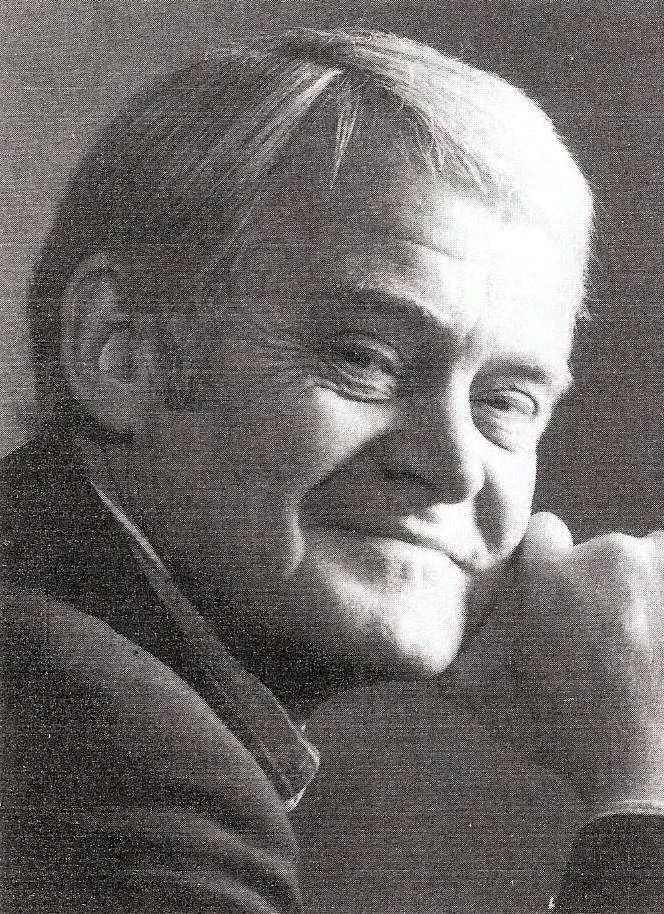
Image from Wikipedia
Image from Wikipedia
Ove Sprogøe – The Danish Actor Who Made Egon Olsen Immortal
A Face That Shaped Danish Film History
Ove Sprogøe, born Ove Wendelboe Sprogøe Petersen, was one of the most distinctive and productive actors in Denmark. Born on December 21, 1919, in Odense and passing away on September 14, 2004, in Tårnby, he transitioned from a stage beginner to a beloved star with an extraordinary presence. He became internationally known primarily as Egon Olsen in the 14 Olsenbande-Films, a role that continues to define his public image to this day. ([en.wikipedia.org](https://en.wikipedia.org/wiki/Ove_Sprog%C3%B8e?utm_source=openai))
Biography: From Odense to the Big Stages
His career did not begin glamorously, but rather solidly and craftily: before embarking on his acting career, Sprogøe worked as a typesetting apprentice and office assistant before making two attempts at the Royal Theatre School and finally getting accepted into the Privatteatrenes elevskole in 1944. He made his stage debut at Folketeatret in 1945 as Nicolai in Nøddebo Præstegård. He showcased early on the blend of precision, dry humor, and clear articulation that would later become his trademark. ([dfi.dk](https://www.dfi.dk/viden-om-film/filmdatabasen/person/ove-sprogoe?utm_source=openai))
Biographical sources describe him as a persistent stage professional, who closely tied himself to Folketeatret after his training, developing an exceptionally broad repertoire there and on other stages. In his private life, Sprogøe remained reserved; sources emphasize his shyness towards public self-presentation and his desire to keep family life out of the spotlight. This sobriety only enhanced the impression of an artist who lived for his work on stage and in front of the camera, not for the spectacle outside of it. ([dfi.dk](https://www.dfi.dk/viden-om-film/filmdatabasen/person/ove-sprogoe?utm_source=openai))
The Path to Becoming a National Treasure
On screen, Sprogøe was initially cast in smaller roles, but he quickly established himself as one of the most reliable performers in Danish film. The Danish Film Database describes him as an actor with sharply defined features and a quick, dry style of dialogue, which early on made him a recognizable comedic character actor. His transformation from a specialist in supporting roles to a beloved public figure was no accident, but rather the result of a long, disciplined career commitment. ([dfi.dk](https://www.dfi.dk/viden-om-film/filmdatabasen/person/ove-sprogoe?utm_source=openai))
Sprogøe had particularly strong chemistry with Dirch Passer, with whom he became a popular comedic duo starting in the 1950s. Sources highlight that Sprogøe often served as the calm, sensible counterpart to Passer's wilder humor, as seen in Ved Kongelunden. This dynamic made him a master of precise comedic timing and an actor who drew humor from control rather than exaggeration. ([lex.dk](https://lex.dk/Ove_Sprog%C3%B8e?utm_source=openai))
The Olsen Gang and the Power of Repetition
The real cultural breakthrough came with the role of Egon Olsen, who is at the center of one of the longest-running and most beloved film series in Danish cinema. The Olsen Gang became a fixture in popular film culture with Sprogøe, Morten Grunwald, and Poul Bundgaard; the series comprised 14 films and has shaped generations of viewers in Denmark and beyond. Egon Olsen became a symbol for the stubborn, scheming, failing, yet indestructible antihero. ([thetvdb.com](https://www.thetvdb.com/series/259674-show?utm_source=openai))
This role granted Sprogøe the status of a national actor without diminishing his versatility. Danish Film Information and Nordisk Film point out that he not only excelled in comedies but also remained visible in serious material and the television landscape, such as Dr. Hansen in Matador. His artistic profile combined popular accessibility with craftsmanship, a combination rarely sustained in Danish acting history. ([dfi.dk](https://www.dfi.dk/viden-om-film/filmdatabasen/person/ove-sprogoe?utm_source=openai))
Filmography, Theater, and an Exceptionally Broad Repertoire
The sources portray a picture of enormous productivity: Sprogøe appeared in over 150 films and on more than 130 theater stages, with some listings claiming 155 and others 159 films. This workload makes him one of the busiest actors in the country. His range extended from farce and revue to classic spoken theatre, absurd forms, and TV satire. ([shop.nordiskfilm.com](https://shop.nordiskfilm.com/shop/11-alle-varer/60-ove-sprogoee---biografi/?utm_source=openai))
His repertoire included classics like Holberg, Molière, and Beckett, alongside plays like Onkel Vanja, Den Stundesløse, or Glengarry Glen Ross. He also remained credible in popular comedies and roles with folk-like directness, as he approached characters based on attitude rather than just punchlines. This dual talent of theatrical culture and accessibility made him a rare complete package within Danish acting. ([shop.nordiskfilm.com](https://shop.nordiskfilm.com/shop/11-alle-varer/60-ove-sprogoee---biografi/?utm_source=openai))
Musical and Performative Aspects of an Actor
Although Ove Sprogøe was not a musician in the strict sense, music played a notably large supporting role in his career. Several sources mention his recitations, musical stage numbers, and his well-known interpretation of Fandens oldemor; additionally, the documentary På cabaret med Ove Sprogøe features a one-man show format with monologues, poems, short texts, and musical accompaniment. This presents Sprogøe as a performer who organized language, rhythm, and stage presence in an almost musical way. ([danskefilm.dk](https://www.danskefilm.dk/skuespiller.php?id=781&utm_source=openai))
This performative dimension explains why he appears across many archival and collection contexts in musical or cabaret settings. His voice, timing, and clear diction made him suitable for revue, recitation, and television satire alike. In the Danish entertainment tradition, he combined comedic performance with almost chanson-like control over sentence melody and emphasis. ([danskefilm.dk](https://www.danskefilm.dk/skuespiller.php?id=781&utm_source=openai))
Critical Reception and Cultural Influence
The reception during his lifetime and afterwards highlights Sprogøe as an actor who shaped Danish film over decades. The Ove Sprogøe Prize, awarded since 2006, and the street named after him, Egon-Olsen Street, demonstrate how firmly his name remains embedded in cultural memory. The fact that a film character and their actor became cultural historical reference points is a sign of extraordinary impact. ([lex.dk](https://lex.dk/Ove_Sprog%C3%B8e_Prisen?utm_source=openai))
Academic literature and film institutions also underscore his position: he was considered one of the most frequently cast Danish actors and one who confidently mastered both comedic and serious roles. Particularly his collaboration with Dirch Passer is described as a comedic constellation with precise balance. Thus, Sprogøe remains relevant not only as Egon Olsen but also as a reference for discipline, timing, and social typification in Scandinavian acting. ([dfi.dk](https://www.dfi.dk/viden-om-film/filmdatabasen/person/ove-sprogoe?utm_source=openai))
Current Projects and Releases
Since Ove Sprogøe passed away in 2004, there are no new artistic projects, albums, or tours from the years 2024 or 2025. Relevant later releases mainly pertain to documentary processing and archival care, such as the portrait production Ove Sprogøe - de største øjeblikke, which was released in 2005. His posthumous presence exists less in current production than in re-releases, honors, and cultural historical remembrance. ([dfi.dk](https://www.dfi.dk/viden-om-film/filmdatabasen/film/ove-sprogoe-de-storste-ojeblikke?utm_source=openai))
Discography, Charts, and Critical Reception
Ove Sprogøe does not have a classic discography in the sense of a musician, but his voice is documented on recordings, recitations, and musical collections. Spotify hosts an artist catalog with popular recordings such as Fiskernes Sang, Man kan vel ikke gøre for at man har charme, or Slå en lille trille, underscoring his presence in the liminal space between acting, singing, and entertainment. This audio-historical trace is certainly important for his perception as a cultural figure. ([open.spotify.com](https://open.spotify.com/artist/7L3iZMCtoV7bVTy96b3uTe?utm_source=openai))
However, the focus of critical reception remains on his film roles, foremost Egon Olsen, but also performances in productions like Ved Kongelunden, Den forsvundne fuldmægtig, or Matador. The sources emphasize his versatility between lightness and seriousness, as well as his ability to imbue characters with instantly recognizable attitudes. Thus, he became not only a part of Danish popular culture but also a benchmark for reliable acting. ([shop.nordiskfilm.com](https://shop.nordiskfilm.com/shop/11-alle-varer/60-ove-sprogoee---biografi/?utm_source=openai))
Conclusion: Why Ove Sprogøe Continues to Fascinate
Ove Sprogøe remains intriguing because he uniquely combined popularity and precision. He was a national actor, character head, comedian, stage performer, and voice artist in one person, driven by iron professionalism and a distinctive aura. Anyone wanting to understand Danish film history cannot overlook him. Those who love the Olsen Gang recognize Egon Olsen as just one part of a much larger artistic universe. ([dfi.dk](https://www.dfi.dk/viden-om-film/filmdatabasen/person/ove-sprogoe?utm_source=openai))
His work demonstrates how enduring good acting can be when based on timing, textual confidence, and character. For this reason, rediscovering his films, television appearances, and stage moments is always worthwhile. Ove Sprogøe is not just seen; he is experienced – a constant presence in an entire film culture. ([lex.dk](https://lex.dk/Ove_Sprog%C3%B8e?utm_source=openai))
Official Channels of Ove Sprogøe:
- Instagram: no official profile found
- Facebook: no official profile found
- YouTube: no official profile found
- Spotify: no official profile found
- TikTok: no official profile found
Sources:
- Danish Film Institute – Ove Sprogøe ([dfi.dk](https://www.dfi.dk/viden-om-film/filmdatabasen/person/ove-sprogoe?utm_source=openai))
- Danskefilm.dk – Ove Sprogøe ([danskefilm.dk](https://www.danskefilm.dk/skuespiller.php?id=781&utm_source=openai))
- Lex – Ove Sprogøe (Danish Biography) ([lex.dk](https://lex.dk/Ove_Sprog%C3%B8e?utm_source=openai))
- Nordisk Film Shop – Ove Sprogøe Biography ([shop.nordiskfilm.com](https://shop.nordiskfilm.com/shop/11-alle-varer/60-ove-sprogoee---biografi/?utm_source=openai))
- Danish Film Institute – Ove Sprogøe - The Greatest Moments ([dfi.dk](https://www.dfi.dk/viden-om-film/filmdatabasen/film/ove-sprogoe-de-storste-ojeblikke?utm_source=openai))
- Spotify – Ove Sprogøe ([open.spotify.com](https://open.spotify.com/artist/7L3iZMCtoV7bVTy96b3uTe?utm_source=openai))
- Wikipedia – Image and Text Source ([de.wikipedia.org](https://de.wikipedia.org/wiki/Ove_Sprog%C3%B8e?utm_source=openai))