
Matthias Schwengler
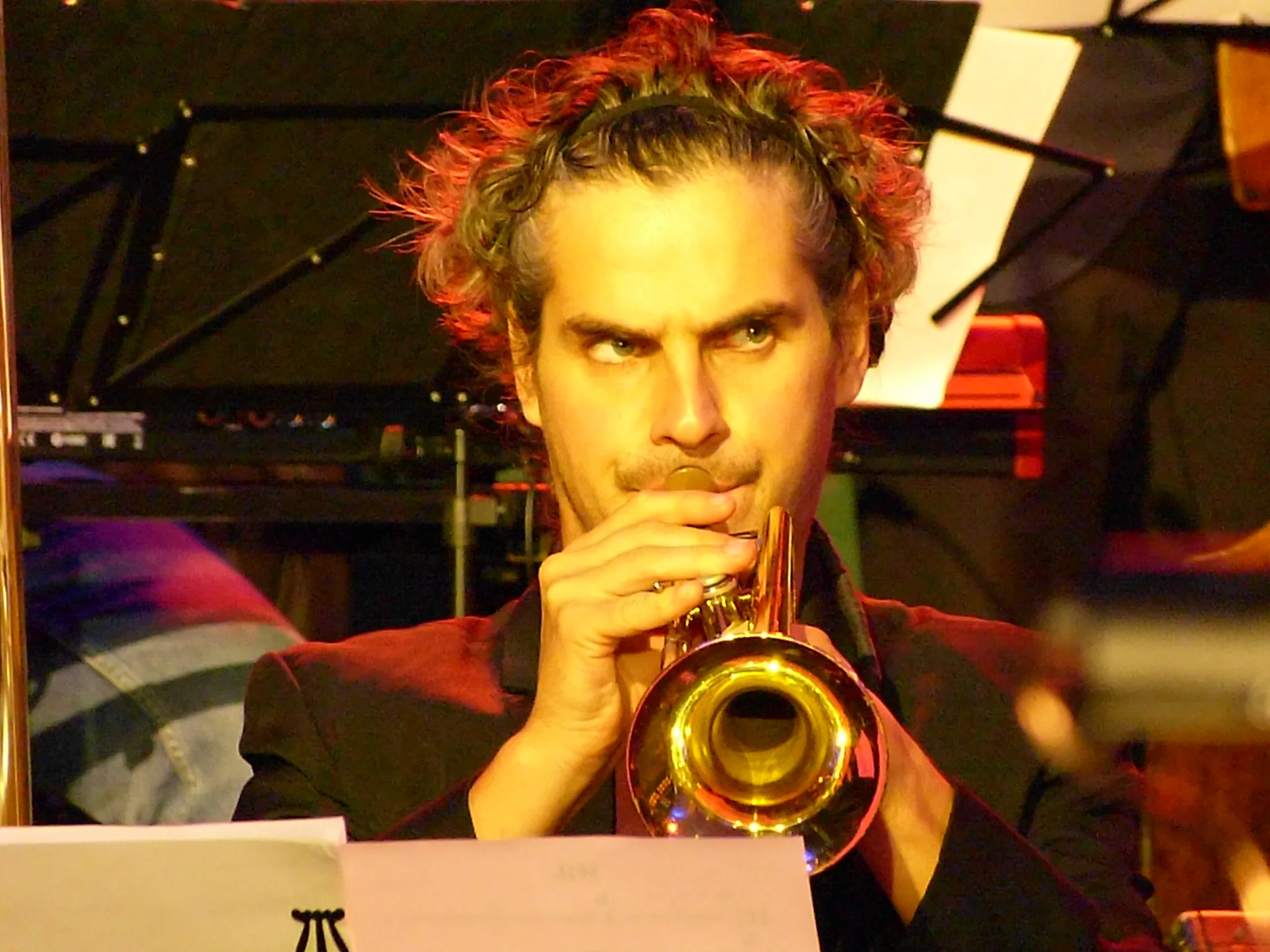
Image from Wikipedia
Image from Wikipedia
Matthias Schwengler: The German Jazz Trumpeter Between Chamber Sound, Balkan Colors, and Contemporary Improvisation
A Musician Who Sees the Trumpet as a Narrative Instrument
Matthias Schwengler, born on October 31, 1986, belongs to a generation of German jazz musicians who do not view virtuosity as an end in itself but as a means of shaping sound. As a trumpeter, flugelhorn player, and composer, he navigates with remarkable stylistic openness between modern jazz, chamber music texture, and improvisational freedom. His work showcases an artistic signature that combines lyrical melody, form-conscious composition, and a keen sensitivity to sound spaces. ([de.wikipedia.org](https://de.wikipedia.org/wiki/Matthias_Schwengler))
What is particularly formative about Schwengler is his desire to think of jazz as a global idiom. His projects incorporate influences from the Balkans, Arabic music traditions, and Latin American contexts without losing their musical identity. This combination of stylistic openness and clear compositional profile makes him intriguing to jazz listeners as well as to an audience searching for new soundscapes. ([open.spotify.com](https://open.spotify.com/artist/0VbM2bdaxo5fP35BFU1QS4?utm_source=openai))
Education and Artistic Influence
Schwengler's musical education is broad and demanding. He studied jazz trumpet at the Hochschule für Musik und Tanz Köln, at the Conservatorium van Amsterdam, and at the Institute of Music at Osnabrück University of Applied Sciences; he completed his master's degree at the Folkwang University of the Arts. These stations indicate a training that links technical precision, stylistic versatility, and a professional compositional language. ([de.wikipedia.org](https://de.wikipedia.org/wiki/Matthias_Schwengler))
An important milestone was his membership in the Federal Jazz Orchestra from 2009 to 2011. Under the direction of Marko Lackner, the album Originals was produced, documenting his early anchor in a high-caliber ensemble culture. His experience in large formations, big bands, and professional orchestras honed not only his playing technique but also his sensitivity to arrangement, sonority, and dynamic dramaturgy. ([de.wikipedia.org](https://de.wikipedia.org/wiki/Matthias_Schwengler))
From Ensemble Playing to His Own Signature
After his studies and early orchestral experiences, Schwengler developed a career significantly shaped by his own projects. In 2015, he founded the trio Soulcrane with Reza Askari and Philipp Brämswig, establishing an ensemble characterized by chamber-music density and subtle interaction. In parallel, he leads the Matthias Schwengler Sextet and works in expanded formations, further highlighting his role as a composer and band leader. ([de.wikipedia.org](https://de.wikipedia.org/wiki/Matthias_Schwengler))
Additionally, Schwengler is a member of the Subway Jazz Orchestra and the Bamesreiter Schwartz Orchestra and has participated in recordings by these formations. This also includes engagements with the WDR Big Band, the East West European Jazz Orchestra, and the Concertgebouw Jazz Orchestra. This breadth shows a musician who is equally at home in the language of modern jazz as in large, orchestral contexts. ([de.wikipedia.org](https://de.wikipedia.org/wiki/Matthias_Schwengler))
Soulcrane: The Core of His Musical Profile
Soulcrane is the center of Schwengler's artistic identity. The trio has developed a sound based on transparency, melodic expansiveness, and wisely balanced tensions. With trumpet, guitar, and bass in the lineup, they create open forms that allow space for improvisation, yet are anchored by precise composition and subtle dynamics. ([de.wikipedia.org](https://de.wikipedia.org/wiki/Matthias_Schwengler))
The later expansion of Soulcrane to include strings or accordionist Laurent Derache opened the sound for new colors. These extensions particularly showcase Schwengler's aesthetic curiosity: he does not think of jazz as a rigid format but as a malleable architecture. The result is music that can feel both more intimate and larger, often with an almost cinematic atmosphere and a clear tendency toward lyrical storytelling. ([de.wikipedia.org](https://de.wikipedia.org/wiki/Matthias_Schwengler))
Discography and Artistic Development
Matthias Schwengler's discography documents a consistent development. Among the notable releases are Soulcrane (2017), Another Step We Take (2020), Soulcrane & Strings (2022), and Dark (2026). This selection already demonstrates a clear trajectory: from establishing a distinct trio identity to opening up to vocal or lyrical guest concepts, culminating in a chamber-music-dense late form. ([de.wikipedia.org](https://de.wikipedia.org/wiki/Matthias_Schwengler))
Particularly, Another Step We Take marked an important step as Schwengler collaborated with saxophonist Matthew Halpin, expanding the Soulcrane sound towards stronger melodic contours. In 2022, Soulcrane & Strings was released on Mons Records, which the label itself described as atmospheric and sonically refined; the inclusion of three cellos and two violas gave the project a darker, more settled texture. In 2026, Dark continues this development, combining recollection, silence, and dark sound poetry with Balkan influences and the industrial heritage of the Ruhr area. ([monsrecords.de](https://monsrecords.de/en/matthias-schwengler-soulcrane-strings/?utm_source=openai))
Current Releases and Projects
Schwengler's recent activities demonstrate enormous productivity. On his Spotify profile, singles for 2026 include One Last Glimpse, Walk of the Mummer, Spaces, and Quiet Little Place, as well as Balkan Express in 2025 and When She Was Minus Three (Live) in 2024. The current releases indicate a phase of high compositional activity, where new pieces, project constellations, and live moments intertwine. ([open.spotify.com](https://open.spotify.com/artist/0VbM2bdaxo5fP35BFU1QS4?utm_source=openai))
Schwengler is also actively performing live. The Spotify tour dates point to numerous concert engagements in Germany, including Hilden, Hamburg, Oderaue, Engelskirchen, Bayreuth, Düsseldorf, and Frankfurt am Main. The fact that his projects are appearing in such diverse venues and concert series highlights the reach of his music across clubs, festivals, and cultural venues. ([open.spotify.com](https://open.spotify.com/artist/0VbM2bdaxo5fP35BFU1QS4?utm_source=openai))
Style: Between Jazz, Balkan Colors, and Chamber Music Depth
Stylistically, Schwengler works with music that emerges from improvisation but does not remain stagnant in the moment. His pieces often unfold a calm, breathing structure, where melodic lines, harmonic shifts, and rhythmic nuances intertwine. The influence of Balkan music is particularly evident, as well as a connection to contemporary European jazz that takes a chamber-music perspective on form and sound. ([open.spotify.com](https://open.spotify.com/artist/0VbM2bdaxo5fP35BFU1QS4?utm_source=openai))
Critics particularly highlight this quality. Mons Records described Soulcrane & Strings as an album that expands the band with an unusual string concept and creates a darker, merging sound space with the brass; Jazz Journal spoke of an even more atmospheric shaping of his already lyrical sound. Such assessments confirm that Schwengler's music does not rely on effects but rather on subtle development, intelligent instrumentation, and precise production. ([monsrecords.de](https://monsrecords.de/en/matthias-schwengler-soulcrane-strings/?utm_source=openai))
Performances, Collaborations, and Cultural Resonance
Schwengler's career is closely linked to collaboration. He has played with musicians like Tom Harrell, Jeff Hamilton, Don Menza, Jerry Bergonzi, and Peter Herbolzheimer, and has also been active in salsa, funk, soul, and pop bands. This versatility not only expands his stylistic vocabulary but also explains why his jazz language feels so flexible and adaptable. ([de.wikipedia.org](https://de.wikipedia.org/wiki/Matthias_Schwengler))
In 2024, he was part of the studio band Klinke Supreme on the ProSieben show TV Total. Such appearances show that Schwengler's musical competence is not limited to the jazz scene but also functions in more popular contexts. This is part of his authority: he can improvise at the highest level while remaining accessible to a broader audience. ([de.wikipedia.org](https://de.wikipedia.org/wiki/Matthias_Schwengler))
Why Matthias Schwengler Remains Exciting
Matthias Schwengler is exciting because he understands jazz as a living, open art form and imbues it with a clear personal signature. His discography shows development rather than repetition, his ensembles indicate curiosity rather than routine, and his sound language combines virtuosity with emotional depth. Those who appreciate modern European jazz aesthetics, strong compositions, and sensitive stage presence will find in him a musician of stature and substance. ([de.wikipedia.org](https://de.wikipedia.org/wiki/Matthias_Schwengler))
This music, especially live, unfolds its full effect. The combination of trumpet, flugelhorn, compositional finesse, and atmospheric ensemble sound makes his concerts experiences that go far beyond mere performances of pieces. Anyone wanting to experience today's jazz scene at its best and most open should hear Matthias Schwengler on stage. ([open.spotify.com](https://open.spotify.com/artist/0VbM2bdaxo5fP35BFU1QS4?utm_source=openai))
Voices of the Fans
On Instagram and Spotify, Matthias Schwengler is perceived as a versatile trumpeter with a unique sound profile; the public profiles and artist descriptions particularly emphasize his stylistic openness and the fusion of jazz with international influences. There were no concrete verified fan quotes from distinctly official social media channels found during the web search, so this remains a factual classification. ([matthiasschwengler.de](https://matthiasschwengler.de/))
Official Channels of Matthias Schwengler:
- Instagram: https://www.instagram.com/matthiasschwengler/
- Facebook: No official profile found
- YouTube: No official profile found
- Spotify: https://open.spotify.com/artist/0VbM2bdaxo5fP35BFU1QS4
- TikTok: No official profile found
Sources:
- Wikipedia – Matthias Schwengler
- Matthias Schwengler – Official Website
- Spotify – Matthias Schwengler
- Mons Records – Soulcrane & Strings
- Matthias Schwengler – Soulcrane & Laurent Derache / Dark
- Jazz in Europe – Interview / Soulcrane
- Jazz Journal – Review: Soulcrane & Strings
- Jazzgeschichten – Matthias Schwengler
- Wikipedia: Image and Text Source