
Hugo Harrer
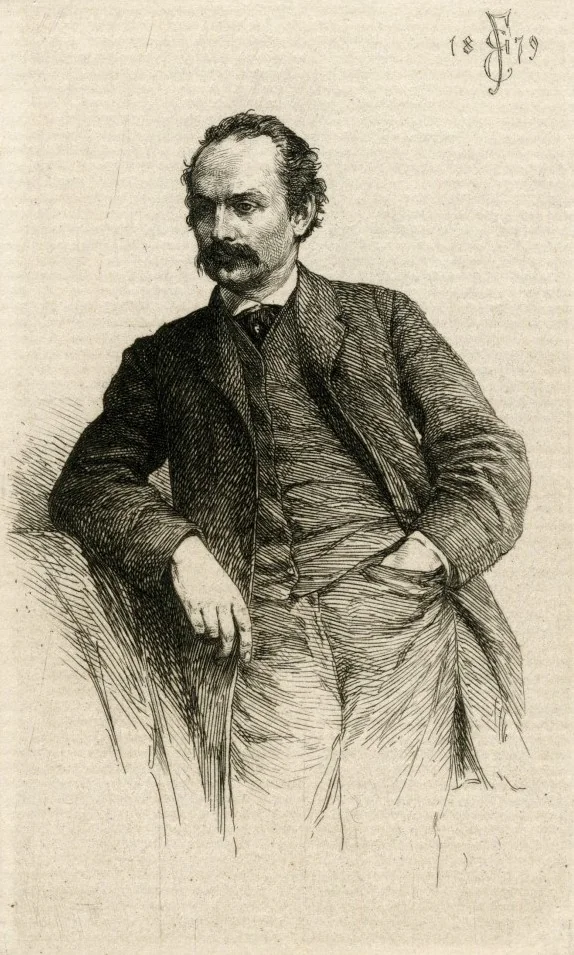
Image from Wikipedia
Image from Wikipedia
Hugo Harrer – the Quiet Realist of the Düsseldorf School
A German landscape and architectural painter between Rome, nature study, and poetic observation
Hugo Paul Harrer (* February 6, 1836 in Eberswalde; † December 10, 1876 in Rome) belongs to those 19th century artists whose work today is primarily characterized by its quiet precision and its close connection to real observation. As a landscape and architectural painter of the Düsseldorf School, he developed a visual language that intertwined nature observation, travel experiences, and architectural accuracy. His art moves between German exhibitions, Italian light, and the search for a modern, unfiltered reality. ([de.wikipedia.org](https://de.wikipedia.org/wiki/Hugo_Harrer?utm_source=openai))
Biographical Beginnings: From Architect's Path to Painting
According to the documented biographical details, Harrer initially began an architectural education but soon turned to painting. Crucial to this was not an academic career in the classical sense, but a self-taught path shaped by careful nature observation and study in the studios of friend artists. This very tension between discipline and independence forms the core of his artistic biography. ([deutsche-biographie.de](https://www.deutsche-biographie.de/sfz26126.html?language=de&utm_source=openai))
The sources provide differing details about his origins and life stages; nevertheless, the profile remains clear: Harrer sought early not formal schooling, but direct access to motives and reality. This approach makes him an interesting representative of that realistic movement which gained importance in the 19th century and consciously distanced itself from idealizing image concepts. His development thus exemplifies an artist who valued observation more highly than academic routine. ([deutsche-biographie.de](https://www.deutsche-biographie.de/sfz26126.html?language=de&utm_source=openai))
Rome as a Living and Working Space
A central turning point in Harrer's life was the lasting connection to Rome. He settled there permanently in 1861; later, he studied in the landscape class of Oswald Achenbach from 1867 to 1868. Rome became for Harrer not only a place of residence but an open air studio where ancient ruins, street scenes, and Italian coastal landscapes became his most important source of inspiration. ([stiftung-volmer.de](https://www.stiftung-volmer.de/artist/321?utm_source=openai))
In Rome, Harrer built a substantial collection of studies and sketches, which he used as the foundation for oil paintings. This gave rise to the special quality of his work: the images do not appear constructed but instead are derived from immediate observation. This reservoir of materials combined with southern light and a finely tuned composition, setting architecture and landscape into a calm, credible dialogue. ([de.wikipedia.org](https://de.wikipedia.org/wiki/Hugo_Harrer?utm_source=openai))
The Artistic Breakthrough: Exhibitions and Presence in the 19th Century
Harrer submitted his works to German art exhibitions and thereby became part of a larger art historical network. His motifs included particularly street scenes, ruins, and Italian coastal landscapes, those pictorial realms that in the 19th century were strongly associated with travel experiences, longing for the south, and realistic perception. These themes made him relatable to the audience, who appreciated precisely observed, atmospherically rich paintings. ([de.wikipedia.org](https://de.wikipedia.org/wiki/Hugo_Harrer?utm_source=openai))
His name also appears in art collections and catalogs of the 19th century, confirming his contemporary relevance. Today, Harrer is primarily encountered in art historical directories, auction databases, and collection contexts, keeping his work visible. Thus, he represents a painting that arose within the historical framework of the Düsseldorf School but maintains an independent signature through its sober observation. ([de.wikipedia.org](https://de.wikipedia.org/wiki/Liste_von_Malern_der_D%C3%BCsseldorfer_Malerschule?utm_source=openai))
Painting Technique, Style, and Visual Language
The Deutsche Biographie expressly describes Harrer as a modern realist who aimed to depict objects exactly as he saw them. This characterization precisely captures the essence of his art: no theatrical exaggeration, but an accurate representation of light, space, and material structure. His paintings gain their tension from depth of observation, not from pathos. ([deutsche-biographie.de](https://www.deutsche-biographie.de/sfz26126.html?language=de&utm_source=openai))
Stylistically, Harrer combines landscape and architectural painting with a sensitive perception of mood. The architecture does not appear merely as a backdrop but as an organizing element in the pictorial space, while the landscape forms the atmospheric counterweight. This balance between construction and nature observation gives his work a calm, controlled elegance. ([stiftung-volmer.de](https://www.stiftung-volmer.de/artist/321?utm_source=openai))
Work, Reception, and Art Historical Classification
Harrer's reception today is more characterized by art history than market noise, but therein lies his quality. Works by him appear in exhibitions, collection holdings, and auction catalogs; an example being a work by Hugo Paul Harrer listed at Dorotheum in 2013. Such confirmations show that his oeuvre remains relevant as part of the 19th century and continues to attract attention from professionals. ([dorotheum.com](https://www.dorotheum.com/en/l/5392782/?utm_source=openai))
The art historical classification as a painter of the Düsseldorf School helps to understand Harrer's position but should not be read too narrowly. His education away from the academy, his orientation towards personal observation, and the Roman reality of life give him a distinct profile within this tradition. This mix of institutional context and individual methodology makes him particularly engaging when considering the 19th century. ([de.wikipedia.org](https://de.wikipedia.org/wiki/Hugo_Harrer?utm_source=openai))
Cultural Echo: Why Hugo Harrer is Still Relevant Today
Harrer's work speaks of an era when artists sought their position between national art centers, southern travel enthusiasm, and realistic analysis. His images preserve the view of 19th century Italy not as romantic folklore, but as a precisely observed experiential space. In doing so, he provides a valuable testament for art lovers who appreciate the subtle distinctions between idealization and a sense of reality. ([gera.de](https://www.gera.de/tourismus-freizeit-kultur/museen/kunstsammlung-gera-/-orangerie/ans-licht-gebracht-schaetze-aus-dem-depot?utm_source=openai))
Especially in a time when the Düsseldorf School is being reconsidered more critically, Harrer is receiving renewed attention. His works demonstrate how far landscape and architectural painting in the 19th century could evolve beyond mere representation to become an independent medium of perception. For those interested in German painting, Italian imagery, and realistic pictorial culture, Harrer represents a quiet but substantial name. ([stiftung-volmer.de](https://www.stiftung-volmer.de/artist/321?utm_source=openai))
Conclusion: A Realistic Perspective of Lasting Power
Hugo Harrer captivates through the connection of self-education, Roman living reality, and sober pictorial observation. His painting lacks loud gestures but exhibits a lasting, concentrated presence, revealing its impact particularly in the details. Anyone looking to understand 19th century landscape and architectural painting should not overlook Harrer. ([deutsche-biographie.de](https://www.deutsche-biographie.de/sfz26126.html?language=de&utm_source=openai))
His work invites the viewer to slow down and re-read the fine gradations of light, space, and structure. That is where his tension lies: Harrer does not just show places but also attitudes of seeing. For art lovers and collectors, he remains an artist worth rediscovering time and again. ([gera.de](https://www.gera.de/tourismus-freizeit-kultur/museen/kunstsammlung-gera-/-orangerie/ans-licht-gebracht-schaetze-aus-dem-depot?utm_source=openai))
Official Channels of Hugo Harrer:
- Instagram: No official profile found
- Facebook: No official profile found
- YouTube: No official profile found
- Spotify: No official profile found
- TikTok: No official profile found
Sources:
- Wikipedia – Hugo Harrer
- Deutsche Biographie – Harrer, Hugo
- Stiftung Sammlung Volmer – Harrer, Hugo Paul
- City of Gera – Ans Licht gebracht. Treasures from the Depot
- Dorotheum – Hugo Paul Harrer, 19th Century Paintings and Watercolours
- State Museums of Berlin – Finding Aid National Gallery
- Wikipedia – List of Painters of the Düsseldorf School
- Wikipedia: Image and Text Source