
Fritz Husemann
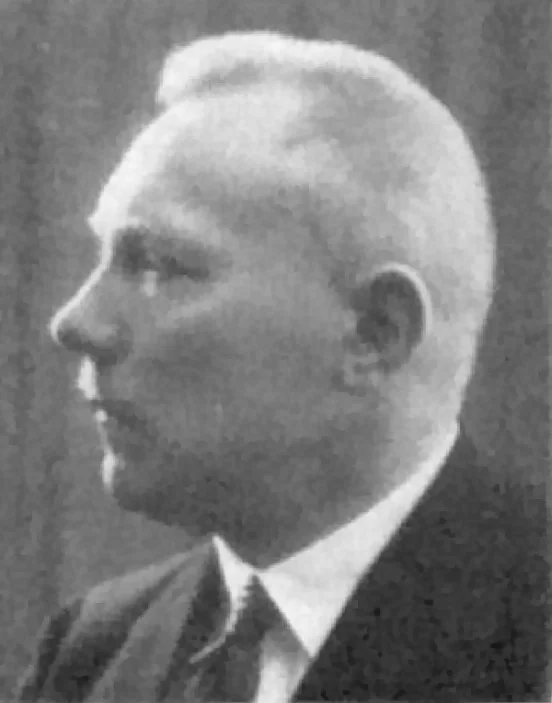
Image from Wikipedia
Image from Wikipedia
Fritz Husemann: Trade Unionist, Democrat, and Unwavering Fighter for the Labor Movement
A Life Dedicated to Solidarity, Political Engagement, and Resistance
Fritz Husemann is considered one of the prominent figures of the German labor movement in the first half of the 20th century. Born as Friedrich Ernst Husemann in 1873 in Leopoldstal, he significantly influenced the social policy of his time as a trade unionist, member of the state parliament, and member of the Reichstag. His biography intertwines a rise from humble beginnings with a consistent commitment to coal miners, democracy, and the self-assertion of trade unions. ([gdw-berlin.de](https://www.gdw-berlin.de/vertiefung/biografien/personenverzeichnis/biografie/view-bio/fritz-husemann?utm_source=openai))
Early Years: Origin from the Working Class
Husemann grew up in impoverished conditions and entered the workforce in the Ruhr area at an early age. After working as a bricklayer and miner, he found not only his profession in the industrial environment of the region but also his political stance. The transition from manual labor to trade union organization was not a rupture but a logical progression: Husemann learned about the realities of workers’ lives not from a distance but through personal experience. ([bochum.de](https://www.bochum.de/Referat-fuer-politische-Gremien-Buergerbeteiligung-und-Kommunikation/Bochum-demokratisch/Erinnerungsorte/Fritz-Husemann?utm_source=openai))
Already in the 1890s, his engagement in the Federation of Coal Miners of Germany intensified. The miners' strike of 1893 acted as a catalyst, as Husemann became increasingly active in representing the interests of workers. This early phase reveals him as an organizer with perseverance, someone who approached social issues not abstractly but practically and collectively. ([bochum.de](https://www.bochum.de/Referat-fuer-politische-Gremien-Buergerbeteiligung-und-Kommunikation/Bochum-demokratisch/Erinnerungsorte/Fritz-Husemann?utm_source=openai))
Rise in the Trade Union Movement
In 1902, Husemann became the executive secretary of the Federation of Coal Miners of Germany, and in 1919 he was appointed chairman of the Federation of Miners of the Mining Industry of Germany. Concurrently, he also worked internationally and took on roles in the International Miners' Federation, where he assumed leadership responsibilities starting in 1919. These positions made him a key figure in the organized miners’ movement, far beyond the regional level. ([gdw-berlin.de](https://www.gdw-berlin.de/vertiefung/biografien/personenverzeichnis/biografie/view-bio/fritz-husemann?utm_source=openai))
His trade union work aimed at improving working conditions, political participation, and strengthening collective rights. Husemann combined organizational strength with a clear social democratic stance and advocated early for democratic participation. Particularly in an industry characterized by hard labor, accident risks, and social insecurity, he gave the miners' voice significant political weight. ([gdw-berlin.de](https://www.gdw-berlin.de/vertiefung/biografien/personenverzeichnis/biografie/view-bio/fritz-husemann?utm_source=openai))
Political Career in Prussia and the Reichstag
After the end of the German Empire, Husemann also came to the forefront politically. He was a member of the Prussian State Parliament from 1919 to 1924 and represented the SPD in the Reichstag from 1924 to 1933. Thus, he operated at the intersection of trade union politics and legislation, utilizing parliamentary spaces to represent the interests of the working class. ([gdw-berlin.de](https://www.gdw-berlin.de/vertiefung/biografien/personenverzeichnis/biografie/view-bio/fritz-husemann?utm_source=openai))
His work in parliament occurred during a time of profound upheaval: inflation, political radicalization, and the fragile stability of the Weimar Republic defined daily life. In this situation, Husemann remained a clearly positioned democrat who did not make social reforms dependent on political chance. Sources depict him as a committed social democrat whose work was grounded in continuity, discipline, and responsibility. ([bochum.de](https://www.bochum.de/Referat-fuer-politische-Gremien-Buergerbeteiligung-und-Kommunikation/Bochum-demokratisch/Erinnerungsorte/Fritz-Husemann?utm_source=openai))
Confrontation with National Socialism
After the transfer of power to the NSDAP in 1933, Husemann was persecuted due to his political stance and trade union activities. He was arrested multiple times but remained in Germany despite opportunities to flee. His decision not to emigrate illustrates the historical tragedy of his biography: Husemann relied on steadfastness and solidarity while the Nazi state systematically eliminated its opponents. ([gdw-berlin.de](https://www.gdw-berlin.de/vertiefung/biografien/personenverzeichnis/biografie/view-bio/fritz-husemann?utm_source=openai))
In March 1935, he was arrested again, deported to the concentration camp Esterwegen, and killed there on April 15, 1935. Officially, it was later stated that he was shot while attempting to escape; however, accounts contradict this version significantly. His death exemplifies the persecution of trade unionists, social democrats, and democratic officials in the "Third Reich." ([gdw-berlin.de](https://www.gdw-berlin.de/vertiefung/biografien/personenverzeichnis/biografie/view-bio/fritz-husemann?utm_source=openai))
Historical Significance and Legacy
Fritz Husemann remains a significant figure in the memory culture of the Ruhr area as a democrat and victim of the Nazis. The city of Bochum honors him as a person who stood up against oppression and for political self-determination. His biography illustrates the close connections between trade union work, parliamentary democracy, and resistance against fascism. ([bochum.de](https://www.bochum.de/Referat-fuer-politische-Gremien-Buergerbeteiligung-und-Kommunikation/Bochum-demokratisch/Erinnerungsorte/Fritz-Husemann?utm_source=openai))
The biographical collections of GDW-Berlin and Deutsche Biographie also categorize him as a formative figure in the labor and trade union milieu. This institutional recognition clearly highlights his significance: Husemann was not only a contemporary witness but also an active shaper of an era marked by social struggles, political hopes, and brutal persecution. Consequently, his life story continues to hold documentary and political relevance today. ([gdw-berlin.de](https://www.gdw-berlin.de/vertiefung/biografien/personenverzeichnis/biografie/view-bio/fritz-husemann?utm_source=openai))
Context: Why Fritz Husemann Remains Important Today
Fritz Husemann represents a form of political responsibility that arises from personal experience. He linked the perspective of the worker with the strategic work of a trade unionist and the will to shape policy as a parliamentarian. This connection gives his biography an extraordinary cohesion and explains why his name continues to carry weight in the memory of the German labor movement. ([bochum.de](https://www.bochum.de/Referat-fuer-politische-Gremien-Buergerbeteiligung-und-Kommunikation/Bochum-demokratisch/Erinnerungsorte/Fritz-Husemann?utm_source=openai))
Anyone engaging with Husemann does not encounter an artist's biography, but rather the life story of a political fighter. Therein lies the tension: a man who came from hard labor, took on responsibility, and stood up for democracy and solidarity until he was murdered by Nazism. His legacy invites us to understand political participation as a concrete, courageous practice. ([bochum.de](https://www.bochum.de/Referat-fuer-politische-Gremien-Buergerbeteiligung-und-Kommunikation/Bochum-demokratisch/Erinnerungsorte/Fritz-Husemann?utm_source=openai))
Conclusion
Fritz Husemann captivates as a personality because his life encapsulates the dramatic history of labor movement, democracy, and persecution in the 20th century. He embodies steadfastness, organizational strength, and the will to not only demand social justice but politically defend it. Anyone interested in German contemporary history, trade union culture, and resistance against National Socialism should engage with his work and consciously acknowledge the memorial sites dedicated to his life. ([bochum.de](https://www.bochum.de/Referat-fuer-politische-Gremien-Buergerbeteiligung-und-Kommunikation/Bochum-demokratisch/Erinnerungsorte/Fritz-Husemann?utm_source=openai))
Official Channels of Fritz Husemann:
- Instagram: No official profile found
- Facebook: No official profile found
- YouTube: No official profile found
- Spotify: No official profile found
- TikTok: No official profile found