
Derya Yıldırım
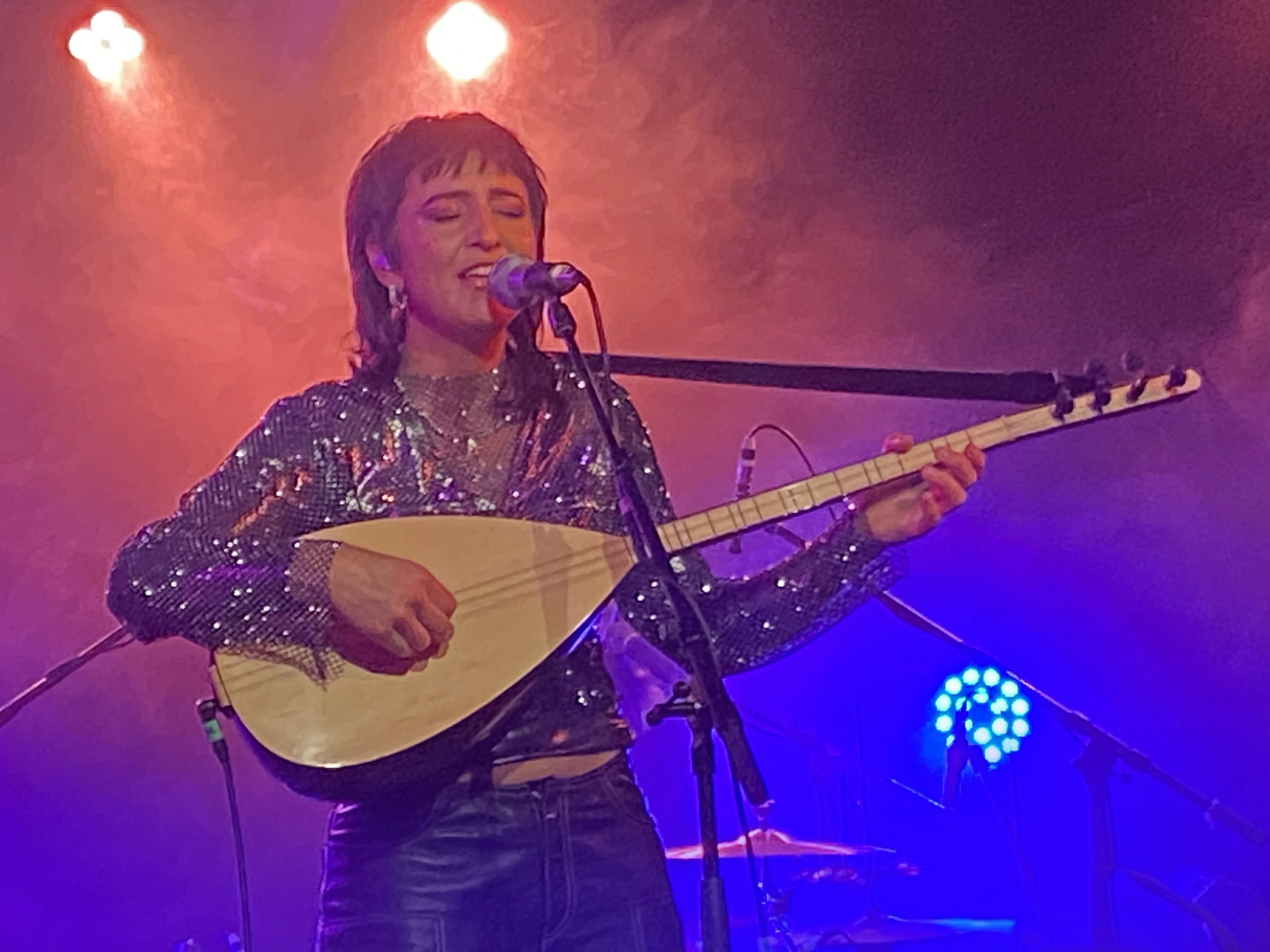
Image from Wikipedia
Image from Wikipedia
Derya Yıldırım: The New Voice of Contemporary Anatolian Music
An Artist Between Hamburg, Anatolia, and the Present of World Music
Derya Yıldırım, born in 1993 in Hamburg, is one of the most distinctive voices of a new generation of musicians who do not merely preserve tradition but set it in motion. As a singer-songwriter, composer, producer, and multi-instrumentalist, she is particularly connected to the Bağlama and sings in Turkish, giving her work a clear cultural anchoring and a distinctive sonic identity. Her music blends Anatolian folk music with pop, psychedelia, soul, and jazz, creating a space where heritage, the present, and artistic freedom intersect. ([deryayildirimmusic.com](https://www.deryayildirimmusic.com/about))
Biographical Roots and Musical Influences
Yıldırım exemplifies a transcultural music career that has emerged from migration experiences, family connections, and stylistic curiosity. The official artist page describes her as an internationally recognized musician and a leading figure in contemporary Anatolian-inspired music, transforming traditional folk music with her voice and Bağlama into new forms. This perspective blossomed into an artistic program early on: not nostalgia, but transformation; not mere preservation, but transmission and reinterpretation. ([deryayildirimmusic.com](https://www.deryayildirimmusic.com/about))
Her education underscores this development with high professional precision. From 2013 to 2016, she studied at the Hamburg University of Music and Theatre, later completing her Bağlama studies under Taner Akyol at the Berlin University of the Arts in 2020. Since 2024, she has been teaching Bağlama at the Pop Academy Baden-Württemberg, combining artistic practice with pedagogical responsibility. This connection of performance, teaching, and curatorial work shapes her profile as a musician with clear authority in the field of contemporary Anatolian music. ([deryayildirimmusic.com](https://www.deryayildirimmusic.com/about))
The Breakthrough with Grup Şimşek
Derya Yıldırım became internationally visible especially with her band Derya Yıldırım & Grup Şimşek. On the press page of her website, the origin of this collaboration is traced back to a festival meeting in Hamburg in 2014, leading to a long-term musical partnership. The lineup created a sound that combines Anatolian folk traditions with psychedelic textures, soul grooves, and improvisational openness. A defining characteristic is the consistent decision to sing the songs exclusively in Turkish, which preserves the emotional core of the music while also making it internationally accessible. ([deryayildirimmusic.com](https://www.deryayildirimmusic.com/press))
The first EP Nem Kaldı was released in 2018, marking the beginning of an independent band identity positioned between folk, psychedelia, and migrant memory. Following that, the debut album Kar Yağar came out in 2019, featuring twelve tracks with original compositions, instrumental pieces, and newly interpreted folk songs. The official music page describes the production as self-produced and recorded in France, as well as a sonic dialogue between Anatolian roots and contemporary psych-pop. The strength of this project lies in its conception of origin not as a boundary but as material for artistic development. ([deryayildirimmusic.com](https://www.deryayildirimmusic.com/music))
Discography as a Journey Through Friendship, Resistance, and Hope
The discography of Derya Yıldırım & Grup Şimşek shows a consistent stylistic refinement. Dost 1 and Dost 2 expanded the concept to encompass community, connectivity, and shared memory; the word “Dost” stands for friendship, camaraderie, and closeness. The official music page emphasizes that the albums consist not only of traditional songs but also of original compositions, and in the case of Dost 1, even a poem written by Derya's aunt Ayşe Yıldırım. This blend of familial tradition, arrangement artistry, and band collective makes the releases more than mere cover collections. ([deryayildirimmusic.com](https://www.deryayildirimmusic.com/music))
With Yarın Yoksa, the ensemble reached a new peak in 2025. The third album was produced by Leon Michels, released on Big Crown Records, and celebrated with a concert in the Great Hall of the Elbphilharmonie in Hamburg, featuring Ensemble Resonanz as a guest. The official page states that the album connects Anatolian tradition with fresh, soulful, psychedelic sound, addressing themes of loss, longing, resistance, and hope. The instrumental parallel release of Yarın Yoksa further showcases how precisely the band works in arrangements and how open their compositions remain for textural and instrumental interpretations. ([deryayildirimmusic.com](https://www.deryayildirimmusic.com/about))
Style, Voice, and Instrumental Identity
Yıldırım's singing possesses a rare connection of clarity, urgency, and emotional warmth. The press describes her music as "psych-soul sounds" with Turkish lyrics, while other sources refer to it as "soulful saz-funk" with a downtempo approach. Overall, a soundscape emerges that does not oppose traditional modes, folk melodies, and modern production aesthetics but organically merges them. This is precisely where her unique expertise lies: she uses the Bağlama not as a folkloric decoration but as a central medium of expression in a contemporary musical language. ([deryayildirimmusic.com](https://www.deryayildirimmusic.com/press))
The musical development of the artist can also be read as an expansion of the repertoire. In addition to band releases, there are solo paths, duo and ensemble works, as well as a notable opening towards stage forms, film, radio art, and installation. Her official website mentions collaborations with Ensemble Resonanz, ERMA Ensemble, Neukölln Opera, and the project "Derya’s Songbook." This versatility showcases an artist who not only writes songs but composes musical spaces. ([deryayildirimmusic.com](https://www.deryayildirimmusic.com/about))
Cultural Influence and Artistic Authority
Yıldırım is already more than a band frontwoman: she acts as a lecturer, jury member, and mediator between the scene, institutions, and the audience. Since 2025, she has served on the jury of Jugend musiziert, where she is responsible for the newly introduced Bağlama category; she was also a juror for the Hamburg music prize Krach + Getöse. Such roles are particularly relevant for an artist of her profile, as she not only creates repertoire but also shapes the conditions for the next generation. Her authority arises not from distance but from direct involvement in musical practice. ([deryayildirimmusic.com](https://www.deryayildirimmusic.com/about))
Her work in film and music theater also broadens the cultural horizon. In 2024, she composed, produced, and performed the complete music for Martina Priessner's documentary Die Möllner Briefe, which premiered at the Berlinale in 2025 and later debuted in German cinema. Additional contributions include Der Russe, der Birken liebt and her role as a musician and protagonist in Cem Kaya's award-winning documentary Aşk, Mark ve Ölüm – Love, D-Mark and Death. These projects demonstrate that her art does not exist in isolation in the concert hall but resonates in societal and audiovisual contexts. ([deryayildirimmusic.com](https://www.deryayildirimmusic.com/about))
Current Projects, Reception, and Presence
The years 2024 and 2025 mark a phase of high productivity and visibility. Alongside the album Yarın Yoksa and its instrumental version, live performances in significant venues and new forms of collaboration have been at the center. Press reviews highlight the combination of Anatolian folk tradition, psychedelia, and soul, pointing out her strong stage presence and the maturity of her band's work. This becomes particularly evident in the reception of the album as a cohesive, long-evolved statement of an ensemble that has refined its own sound over the years. ([deryayildirimmusic.com](https://www.deryayildirimmusic.com/press))
The cultural relevance of this development extends beyond the narrower circle of world music. Derya Yıldırım represents a form of contemporary music that does not simplify identity but articulates it multilaterally. Her songs carry the memory of Anatolian folk songs into a modern production aesthetic, while her performances open this tradition to new listening habits, and her educational work anchors the Bağlama sound in institutional contexts. This gives her work a rarity: it is simultaneously popular, exploratory, and historically conscious. ([deryayildirimmusic.com](https://www.deryayildirimmusic.com/about))
Conclusion: Why Derya Yıldırım is So Exciting Today
Derya Yıldırım fascinates because she does not treat tradition as a backdrop but as a living presence. Her musical career connects Anatolian heritage, artistic independence, and an open, international sound that is convincing both in the studio and on stage. Those who want to understand how folk music can be retold in the present will find in her one of the most credible and exciting voices of her generation. Her live experience is especially worthwhile because her stage is not just a concert but a cultural translation. ([deryayildirimmusic.com](https://www.deryayildirimmusic.com/about))
Official Channels of Derya Yıldırım:
- Instagram: https://www.instagram.com/deryayildirim_official/
- Facebook: no official profile found
- YouTube: https://www.youtube.com/channel/UCzb_F7j1x2ifndYPftBTxBg
- Spotify: https://open.spotify.com/artist/3sOZwUEz343zQBrsgfXEO7?si=6G97vXHpQXiOvJ9Io4XA5g
- TikTok: no official profile found