
Clara Schumann
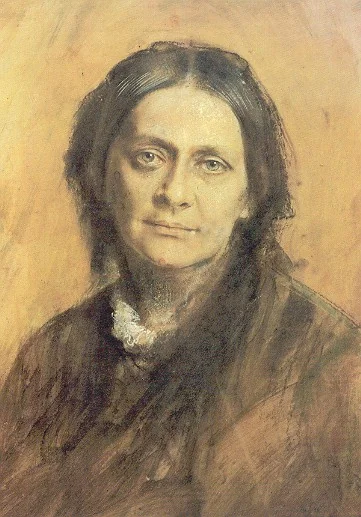
Image from Wikipedia
Image from Wikipedia
Clara Schumann: The Great Pianist of the Romantic Era Whose Art Still Shines Today
A Musician Between Virtuosity, Discipline, and Musical Independence
Clara Schumann is one of the most influential figures in European music history. As a pianist, composer, piano educator, and editor, she shaped an artistic profile of extraordinary brilliance in the 19th century that has resonance far beyond her time. From a young age, she was trained as a prodigy, later becoming a celebrated concert pianist with international renown and a central figure in the romantic concert repertoire. ([britannica.com](https://www.britannica.com/biography/Clara-Schumann))
Her life combined musical excellence, family burdens, and cultural authority in a rare density. Clara Wieck-Schumann shaped the concert practice of the 19th century as much as the reception of Robert Schumann, Johannes Brahms, Chopin, Beethoven, and Bach. At the same time, her own compositional work long remained overshadowed by the male-dominated narrative of music history before it gained increasing recognition since the 1960s. ([de.wikipedia.org](https://de.wikipedia.org/wiki/Clara_Schumann))
Childhood, Education, and Early Breakthrough as a Prodigy
Clara Josephine Wieck was born on September 13, 1819, in Leipzig and received a strictly organized education from her father, Friedrich Wieck, from early childhood. At just five years old, she began systematic piano lessons; soon, theory, harmony, composition, and counterpoint were added. This early training did not make her a mere virtuoso, but a musician with analytical awareness of counterpoint, form, and sound architecture. ([britannica.com](https://www.britannica.com/biography/Clara-Schumann))
Her official debut took place in 1828 at the Gewandhaus in Leipzig when she was nine years old. Even at a young age, she toured through European music centers, performed in Paris and Weimar, and was admired by leading artists of her time. Encounters with Goethe, Paganini, Chopin, Liszt, and Mendelssohn underscore how early her music career flourished at the highest level. ([en.wikipedia.org](https://en.wikipedia.org/wiki/Clara_Schumann))
Particularly the Vienna concert series of 1837/38 marked her international breakthrough. Sold-out halls, enthusiastic reviews, and her appointment as the imperial royal court virtuoso made the then 18-year-old a sensation. Contemporary reports praised her power, precision, and “imposing touch”; she set new standards for the public perception of female virtuosity. ([en.wikipedia.org](https://en.wikipedia.org/wiki/Clara_Schumann))
Robert Schumann, Marriage, Family, and the Dual Role as an Artist
In 1840, Clara married composer Robert Schumann against the fierce resistance of her father. The marriage united two enormous musical temperaments, but it also brought tensions, constraints, and a lasting organizational burden. Between 1841 and 1854, the couple had eight children; despite these family responsibilities, Clara remained committed to her artistic identity and continued to perform. ([britannica.com](https://www.britannica.com/biography/Clara-Schumann))
Clara Schumann took on not only the role of mother in the family but also that of the economic support. Her concert earnings significantly ensured their livelihood, and her performances made Robert Schumann known throughout Europe. As a collaborator, interpreter, and ambassador for his music, she became one of the most important mediators of romantic piano and song art in the 19th century. ([de.wikipedia.org](https://de.wikipedia.org/wiki/Clara_Schumann))
After Robert’s death in 1856, a new phase began in which Clara intensified her concert activity. She performed in Europe with remarkable discipline and remained a celebrated interpreter well into old age. The Berlin Philharmonic aptly characterizes her as a prototype of a modern career woman, who asserted her professionalism, self-assertiveness, and stage presence with extraordinary consistency in an era of significant societal restrictions. ([berliner-philharmoniker.de](https://www.berliner-philharmoniker.de/ueber-uns/orchester/geschichte/anfang/clara-schumann/))
The Repertoire of a Stylist: Beethoven, Bach, Chopin, and the Romantic School
Clara Schumann's artistry was based not only on technical brilliance but also on a highly reflected repertoire policy. She expanded her public program to include works by Scarlatti, Bach, Beethoven, Mendelssohn, Chopin, and Robert Schumann, thus contributing to the establishment of these composers as canonical pillars of late romantic concert life. Her programs combined historical depth with interpretative modernity, giving concert life a new aesthetic authority. ([de.wikipedia.org](https://de.wikipedia.org/wiki/Clara_Schumann))
Her pianistic presence was described by the press as intense, focused, and simultaneously poetic. Her playing aimed not for effect but for inner tension, clarity, and emotional condensation. In this lay her significance as an interpreter: she translated romantic expressions into a precise, controlled, and yet passionate sound ideal. ([berliner-philharmoniker.de](https://www.berliner-philharmoniker.de/ueber-uns/orchester/geschichte/anfang/clara-schumann/))
The Composer: A Body of Work of High Quality and Long Underrated Importance
Clara Schumann composed solo piano works, a piano concerto, chamber music, choral pieces, and songs. Among her best-known works are the four “Fugitive Pieces” or “Quatre Pièces caractéristiques,” the “Three Romances” for violin and piano, the piano trio in G minor, Op. 17, and her songs. Her oeuvre demonstrates a secure mastery of form, melodic line, and idiomatic piano writing. ([britannica.com](https://www.britannica.com/biography/Clara-Schumann))
For a long time, her compositional work remained overshadowed by her career as a pianist and her role within Robert Schumann's milieu. It was not until the 1960s that she was rediscovered as an independent composer; since then, her preserved works have become widely accessible through modern editions, manuscript digitizations, and recordings. This rediscovery has firmly established Clara Schumann in musicological discourse and concert life. ([de.wikipedia.org](https://de.wikipedia.org/wiki/Clara_Schumann))
Her chamber music and songs in particular exhibit a wise balance between lyrical intimacy and structural discipline. In music history, she represents a romantic style that defines sensitivity not as weakness but as compositional precision. Her works deserve attention not as marginal notes of a famous marriage but as substantive contributions to 19th-century music. ([en.wikipedia.org](https://en.wikipedia.org/wiki/Three_Romances_for_Violin_and_Piano?utm_source=openai))
Editor, Educator, and Authority in Musical Life
Clara Schumann also worked as a piano educator and editor. After Robert Schumann’s death, she diligently dedicated herself to his work and contributed to the edition and dissemination of his oeuvre. In doing so, she assumed a key cultural-historical role: she preserved, organized, and conveyed a part of the romantic repertoire with the authority of a practical musician. ([de.wikipedia.org](https://de.wikipedia.org/wiki/Clara_Schumann))
In Leipzig, she taught at the conservatory, and her educational work amplified her influence on the next generation of pianists. As a teacher, she combined technical discipline with musical judgment and imparted an ideal that still resonates in serious piano education today. Her career impressively demonstrates how artistic practice, teaching, and repertoire care mutually enriched each other. ([britannica.com](https://www.britannica.com/biography/Clara-Schumann))
Reception, Cultural Influence, and Contemporary Significance
During her lifetime, Clara Schumann was not only admired but also highly regarded in the musical public. Her concerts, her choice of program, and her interpretive rigor made her a leading figure of the Romantic era. The Berlin Philharmonic and the British music press continue to highlight her historical importance: as a key figure in the concert repertoire, as a stylistically influential pianist, and as a pioneer for female artists in a male-dominated musical world. ([berliner-philharmoniker.de](https://www.berliner-philharmoniker.de/ueber-uns/orchester/geschichte/anfang/clara-schumann/))
Her cultural influence extends far beyond classical interpretation history. In modern reception, Clara Schumann represents musical self-determination, professional excellence, and the connection of art and life practice. The fact that her works are once again regularly performed, recorded, and researched demonstrates the lasting relevance of her musical career. ([goethe.de](https://www.goethe.de/resources/files/pdf357/biografien_komponierende-frauen_deutsch.pdf))
Conclusion: Why Clara Schumann Fascinates Even Today
Clara Schumann is much more than a historical marginal figure of the Romantic era. She was an exceptional pianist with an international breakthrough, a serious composer, a formative educator, and a cultural authority who profoundly influenced the concert life of the 19th century. Her biography intertwines virtuosity, resilience, and artistic precision into a rare overall picture. ([de.wikipedia.org](https://de.wikipedia.org/wiki/Clara_Schumann))
Those who hear Clara Schumann today encounter music that is at once elegant, focused, and deeply personal. In this lies her enduring allure: in the connection of historical greatness and immediate emotional impact. Her concerts, chamber music, and songs invite us to experience the Romantic period not only as an epoch but as a living sound language. ([goethe.de](https://www.goethe.de/resources/files/pdf357/biografien_komponierende-frauen_deutsch.pdf))
Official Channels of Clara Schumann:
- Instagram: No official profile found
- Facebook: No official profile found
- YouTube: No official profile found
- Spotify: No official profile found
- TikTok: No official profile found
Sources:
- Wikipedia - Clara Schumann (German version)
- Britannica - Clara Schumann
- Berlin Philharmonic - Clara Schumann and the Berlin Philharmonic
- Goethe-Institut - Biographies of Women Composers
- Library of Congress - Clara Schumann: Published Scores
- Cambridge Core - Clara Schumann: Changing Identities and Legacies
- AllMusic - Clara Schumann
- Wikipedia: Image and text source
Upcoming Events
The Landscape of Clara Schumann
70 Years of Clara Schumann Music School – Anniversary Concert