
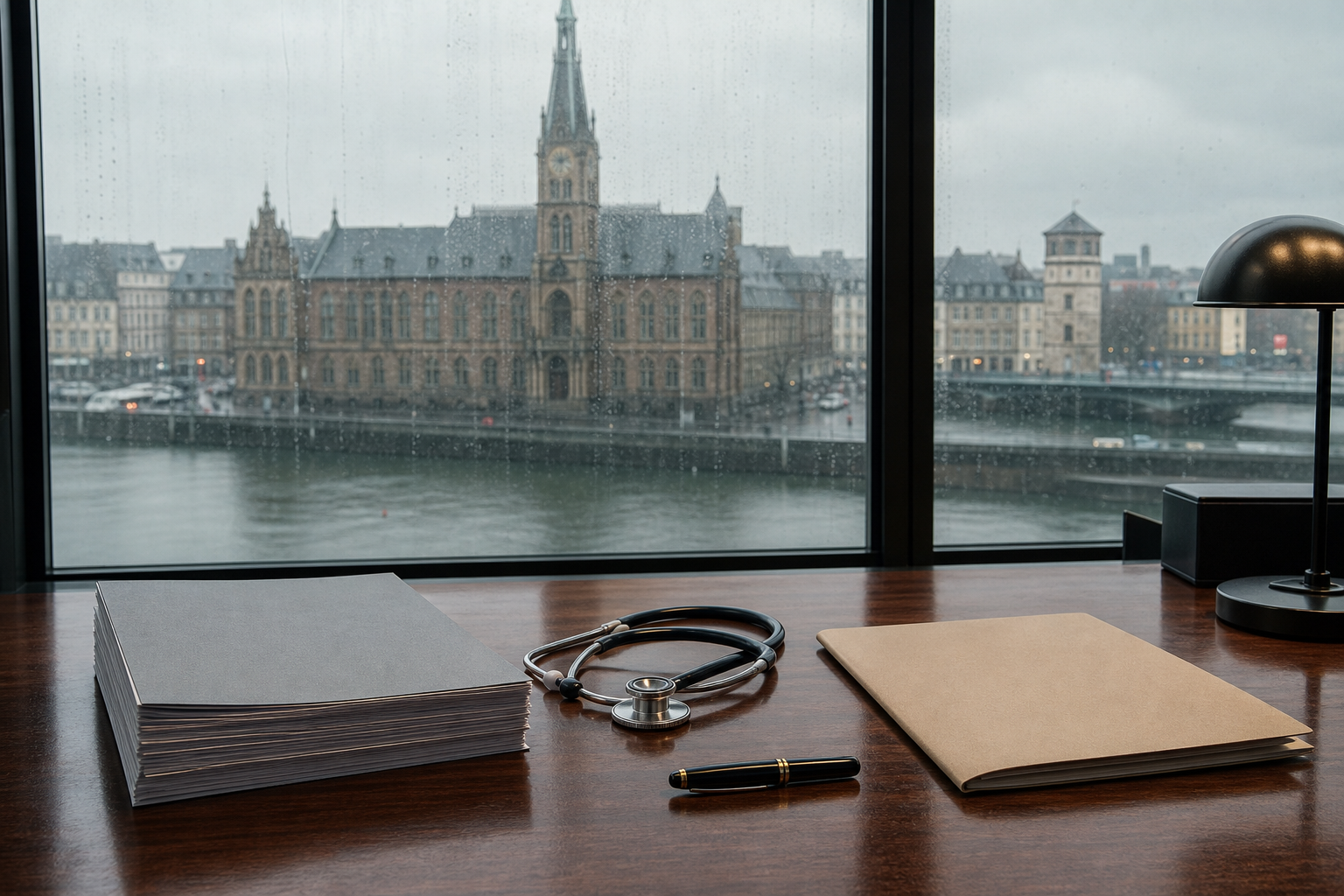
Budget 2026 in Düsseldorf
Düsseldorf cuts aid for undocumented refugees – STAY! Medinetz warns of rejected patients
Ahead of the budget debate in the Düsseldorf city council, pressure is mounting on an aid program that enables people without health insurance and without secure residency status to access medical care. For STAY! Medinetz, significantly fewer funds are planned in the 2026 budget. The organization warns that treatments could be postponed or canceled altogether – with immediate consequences for patients, some of whom are at risk of permanent damage.
The city council will address the 2026 budget on Thursday, March 19. According to current proposals, the austerity measures will also affect STAY! Medinetz: Funds for the clearing center, staff, and emergency fund will drop from a total of 215,000 euros to 160,000 euros – a decrease of about one third. This affects a structure that has for years caught cases that often fall through the cracks of the regular health system.
An established care structure comes under pressure
STAY! was founded in 2009. In the early years, the work was largely based on volunteer commitment. In 2015, a decisive stabilization occurred: The city set up a financially secured clearing center and an emergency fund to give those affected access to medical help, so they would not have to choose between treatment and fear of residency consequences in an acute emergency.
Most recently, 120,000 euros were available for the emergency fund, with another 95,000 euros going to clearing center staff and overhead costs. These funds have now been reduced to a total of 160,000 euros in the 2026 draft budget.
For those affected, the clearing center is more than just an additional service. Many avoid regular doctor or hospital visits because they fear that personal data could be passed on. Legally, the situation is complex:
- The Residence Act regulates in § 87 the transmission of information from public authorities to immigration authorities
- At the same time, medical confidentiality generally continues to apply
In practice, however, as counseling centers report, there is often considerable uncertainty: Those without insurance coverage and no secure status often only go to the doctor when symptoms become unbearable. It is precisely in this gap that STAY! works with the clearing center – organizing treatment, clarifying financing, and trying to make care plannable again.
STAY! sees concrete gaps in care – and growing uncertainty within the team
The organization describes the cut as an intervention that does not just affect "paperwork," but directly determines treatments. If the emergency fund becomes tighter, more people will likely have to be turned away or postponed indefinitely; in addition, surgeries and procedures may more often no longer be covered.
How quickly existential questions can arise is shown by a current case, according to STAY!: A patient with glaucoma needs surgery to prevent impending blindness. The hospital will only perform the procedure if costs are covered. Without sufficient funds in the fund, a medically necessary treatment becomes a question of financing – and time becomes a risk.
Tension is also rising on the personnel level. The organization reports that the future of employees in the clearing center is uncertain. The team also criticizes that the cut came as a surprise and left no planning security – yet continuity is crucial to accompany cases, organize treatment chains, and build trust with a particularly vulnerable target group.
Budget pressure at city hall – political debate about priorities
At city hall, the decision is placed in a broader context: Düsseldorf is under pressure to consolidate. According to the city, the 2026 budget totals around 4.4 billion euros and shows an expected annual deficit; the administration points to savings in the millions. This situation shapes the debate – and shifts the question of which services are considered expendable and which are seen as basic security.
In a joint press conference by CDU and the Greens on March 11, Mirja Cordes (Alliance 90/The Greens) said that cuts and discussions happen every year; organizations could have informed themselves in advance so there would be no unpleasant surprises. For STAY!, this interpretation falls short: Those who rely on medical care in acute situations cannot "plan" for failures – and those who avoid regular access out of fear and uncertainty often lose the last bridge into the system without the clearing center.
In addition, the CDU-Green coalition has already announced that the budget situation in 2027 could become even more difficult and further reviews are pending. For STAY!, this means: Even if the work can just about stay afloat in 2026, the outlook remains fragile – and with it, access to medical help for people who have lived in Düsseldorf for years but must get by without social and legal security.
Thus, the budget decision is not just about a single funding item, but about how the city organizes a minimum level of medical care for people who are hardly reachable in the regular system. The cut shifts this responsibility back into a gray area of donations, individual solutions, and postponed treatments – with consequences that may ultimately become visible in emergency rooms, avoidable complications, and permanent health damage.
Frequently Asked Questions
Sources
- https://www.ddorf-aktuell.de/2026/03/11/duesseldorf-mittel-fuer-stay-medinetz-von-politik-um-ein-drittel-gekuerzt/, 11.03.2026
- https://www.duesseldorf.de/medienportal/pressemitteilung?cHash=f9f49e3c6034a7a2044b08e8d6f671ad&tx_pld_frontpage%5Baction%5D=detail&tx_pld_frontpage%5Bcontroller%5D=FrontendNews&tx_pld_frontpage%5Bnews%5D=64495
- https://www.ddorf-aktuell.de/2015/06/17/recht-auf-medizinische-versorgung-fuer-papierlose-fluechtlinge-in-duesseldorf-45534