
Labor Market in Düsseldorf in Focus
Company Seeks Woman: Düsseldorf Job Event Aims to Ease Career Changes and Re-entry
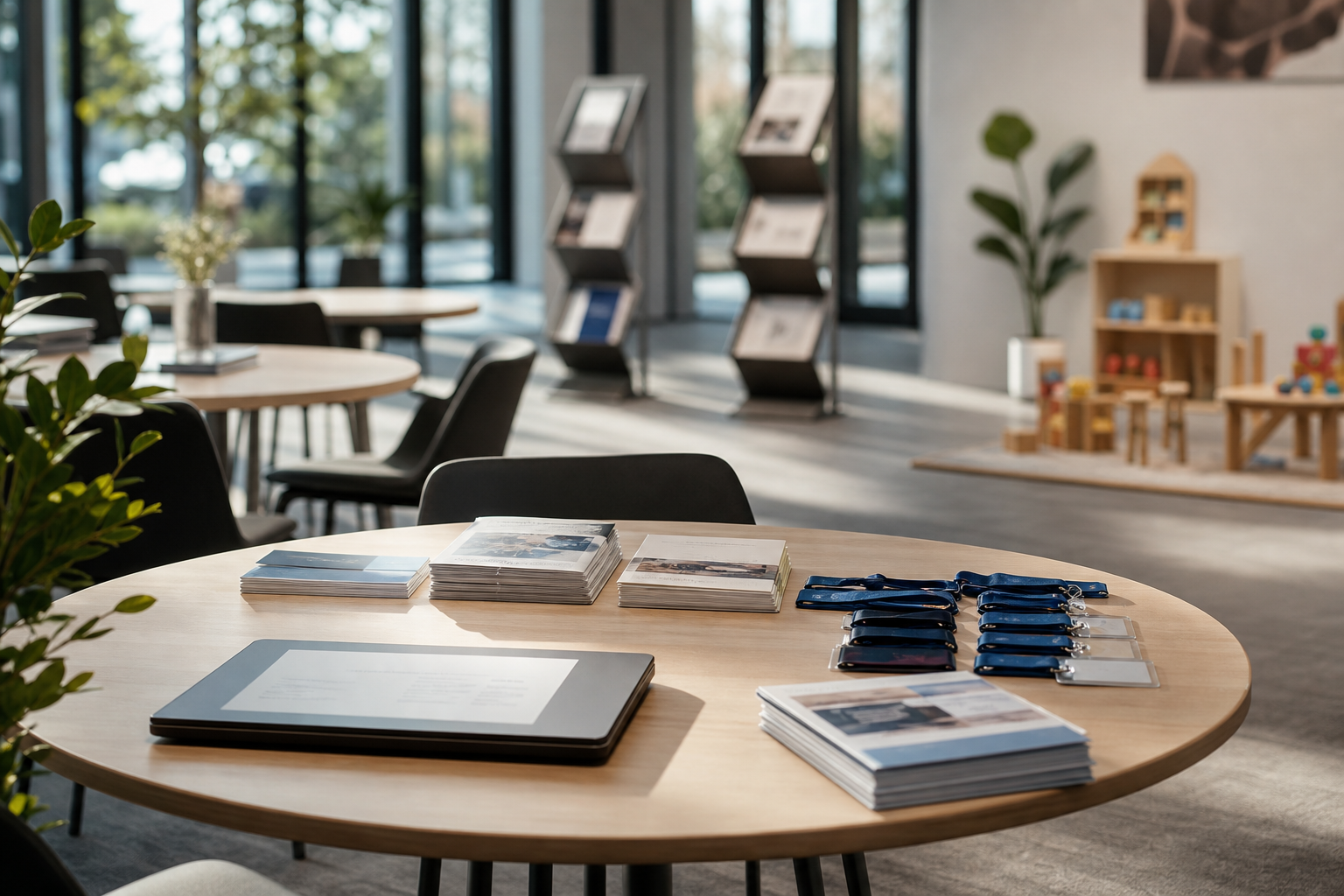
In Düsseldorf, an event is set to specifically bring women and companies together—with short paths to employers, conversation formats, and on-site childcare. The labor market policy approach is clear: career changes, re-entry, and reorientation are to be addressed where skilled workers are lacking and at the same time employment potential is not being fully utilized.
Event Details
“Company Seeks Woman: Talking Together, Learning from Each Other—Women Change the Economy” is organized by the working group “Strengthening Women's Employment.”
The event will take place on Thursday, June 11, 2026, from 10 a.m. to 2 p.m. at the Career Information Center (BIZ) of the Employment Agency Düsseldorf, Grafenberger Allee 300, 40237 Düsseldorf.
Participation is free of charge for women; childcare will be provided if needed.
Further information and registration are available at www.frauenveraendernwirtschaft.de; the event is also listed in the official event calendar of the Federal Employment Agency.
Why the Format Is More Than Just a Networking Event
Many companies have been reporting difficulties filling open positions for years—especially where qualifications are scarce or working conditions are considered unattractive. At the same time, there is a large group of people who would basically like to work but are not immediately available to the labor market or are not actively looking.
This scale can now be statistically classified: According to data from the Federal Statistical Office, in 2025 almost 4.9 million non-employed people (aged 15 to 74) wanted employment. Among them were nearly 1.7 million unemployed and around 3.2 million people in the so-called hidden reserve. Especially for women, caregiving responsibilities were cited as a central reason why they were not actively available to the labor market.
This is crucial for securing skilled workers, because it is not just about “missing applications,” but about concrete barriers to accessing work—from reliable childcare to working time models compatible with family responsibilities.
The Düsseldorf event addresses exactly this interface: it aims to establish contacts, bundle information, and at the same time encourage companies to talk about the framework conditions that actually retain and attract skilled workers.
“Exchange at Eye Level”—and Expectations for Employers
The head of the working group, Sigrid Wolf (DGB), describes the goal as a platform for companies and women “to engage in mutual exchange at eye level and to network with employers.” It is about paths into new professional fields—whether through career changes, re-entry, reorientation, or training—and at the same time about companies learning “how they can position themselves attractively for female employees.”
This names a point that often remains abstract in many debates: When companies are looking for skilled workers, they not only have to advertise positions, but often also adapt structures—such as working hours, planning reliability, return options after family phases, or development prospects for career changers. An event cannot solve this alone, but it can directly confront expectations and realities on both sides—in conversations, not in brochures.
What Is Specifically Planned for June 11
- 10:00 a.m. Check-in
- 10:30 a.m. Opening and welcome by the Taskforce for Work Düsseldorf
- 10:35 a.m. Welcome by Birgitta Kubsch-von Harten (Chairwoman of the Management Board, Employment Agency)
- 10:45 a.m. Keynote by Dr. Lydia Malin (Institute of the German Economy Cologne)
- 11:00 a.m. Panel discussion (Best Practice): “Career Change: Dead End or Career Booster?”
- 11:30 a.m. Introduction of the attending companies
- 11:45 a.m. Break with snacks
- 12:00 p.m. Round tables: Exchange at topic tables between participants and companies
- 1:00 p.m. Come Together at the booths
- 1:40 p.m. Presentation of results and raffle of a business photo shoot
- 2:00 p.m. End
The program will be moderated by Tabea Schneider from the Düsseldorf Chamber of Crafts.
Practical Benefits for Participants
For participants, the practical benefit lies in the directness of the format: those considering a change, re-entry after a break, or a career change can ask questions directly—about qualification paths, entry models, part-time options, learning curves on the job, or recognition of existing skills.
Participating Companies and Their Messages
Schulz & Sohn GmbH
Managing Director and CFO Mark Sethe emphasizes equality and diversity as part of modern corporate management: “Economic success arises where people are given fair opportunities, take on responsibility, and can contribute their perspectives.” More participation in working life is, in his view, a prerequisite for prosperity, growth, and future viability—explicitly also in medium-sized businesses.
Fabian Düesmann Larocque, Head of People & Culture
Fabian Düesmann Larocque points to changing employment biographies: Many career paths today are no longer linear; but precisely in this lie “valuable experiences and perspectives.” This is a relevant message for career changers: What often matters is not the “linear” CV, but whether companies recognize skills, enable transitions, and realistically support development.
Barriers: Pay, Working Hours—and Why This Matters Economically
In the context of the event, inflexible working hours and poor pay are cited as reasons why women's potential is underutilized. The reference to income differences can also be substantiated: According to the Federal Statistical Office, the unadjusted gender pay gap in Germany in 2025 was 16 percent (West: 17 percent, East: 5 percent).
For the decision whether work (again) pays off, such differences are not just a question of fairness, but an economic calculation—especially in households where care work must be organized and working hours dictate availability.
Arrival: Public Transport and Parking
The public transport stop is Schlüterstraße/Arbeitsagentur. Listed are the tram lines U72, U73, U83, 709 as well as the bus lines 725, 733, and 810.
Parking is available at the rear of the agency building (Ivo-Beucker-Straße) as well as in the residential area around the agency.
Not a Cure-All—but a Concrete Lever
A single event will not “solve” the shortage of skilled workers. Its value lies more in the fact that it serves a realistic lever: direct contacts, lower access barriers (free of charge, childcare), concrete information on entry paths—and a framework in which companies must explain what they actually offer employees. Whether this results in hires, qualifications, or long-term retention will only become clear after June 11. However, the structure of the format targets what is often missing in tight labor markets: quick, reliable encounters between demand and potential.
Frequently Asked Questions
Sources
- https://www.ddorf-aktuell.de/2026/05/29/duesseldorf-frauen-veraendern-wirtschaft-veranstaltung-will-fachkraeftemangel-entgegenwirken/, 29.05.262026
- https://web.arbeitsagentur.de/portal/metasuche/suche/veranstaltungen/10000-2001678481-V
- https://www.destatis.de/DE/Presse/Pressemitteilungen/2026/05/PD26_154_13.html
- https://www.destatis.de/DE/Presse/Pressemitteilungen/2025/12/PD25_453_621.html