
Düsseldorf
Jägerhofstraße 1, 40479 Düsseldorf, Deutschland
TMD Theatermuseum Hofgartenhaus Düsseldorf | Directions & Visit
The TMD Theatermuseum Hofgartenhaus Düsseldorf is much more than a classic museum: it combines theater history, archival work, exhibitions, events, and a very special place in the middle of the Hofgarten into a vibrant cultural space. Visitors to the house not only experience a collection of Düsseldorf's theater tradition but also a meeting point for conversations, guided tours, performances, family offerings, and evening formats. Officially, the TMD sees itself as the theater museum and Dumont-Lindemann archive of the state capital Düsseldorf; its location in the Hofgartenhaus makes it a place where architecture, green space, and culture come together directly. This location is a significant advantage for many visitors, as the journey to the museum can begin with a walk through the Hofgarten. The TMD is close to the city center yet quiet enough to serve as a cultural break from urban life. Those looking for a place that connects history, present, and encounters will find here an unusually open museum address. ([duesseldorf.de](https://www.duesseldorf.de/theatermuseum))
Search queries like TMD Theatermuseum Düsseldorf, Theatermuseum Hofgarten Düsseldorf, or Theatermuseum Hofgartenhaus Düsseldorf clearly show what people primarily want to know: Where is the house located, what can be seen there, how to get there, and which events are worth attending? The TMD answers these questions with a clear profile. The museum presents performing arts in exhibitions, educational offerings, performances, drag nights, and voguing balls, appealing not only to traditional museum visitors but also to an audience seeking cultural formats beyond the usual. At the same time, the house is flexibly usable through its café, terrace, balcony, and event spaces, making it a remarkable mix of museum, meeting point, and event location in Düsseldorf. The surrounding area, with the Hofgarten, Schauspielhaus, Goethe-Museum, and Deutsche Oper am Rhein, adds to the attractiveness of the location, as several cultural venues are clustered in close proximity. ([duesseldorf.de](https://www.duesseldorf.de/theatermuseum))
Where is the TMD Theatermuseum Hofgartenhaus Düsseldorf located?
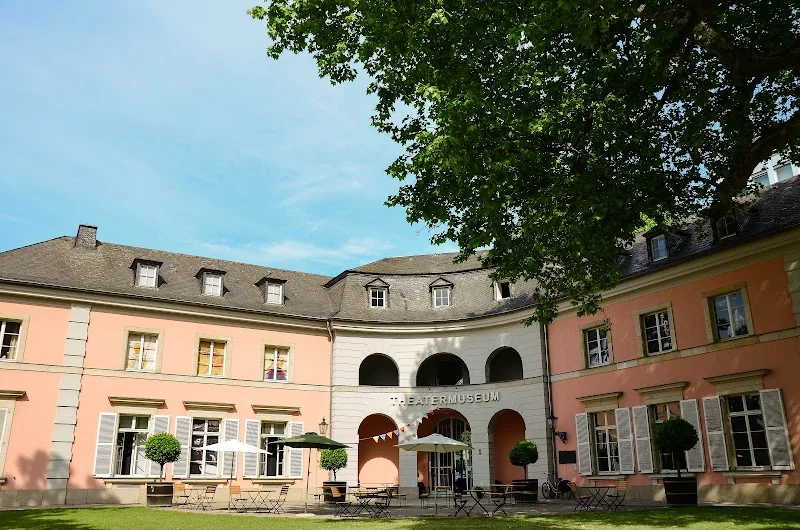
The location of the TMD is one of the strongest reasons why this address is searched so frequently. The museum is located at Jägerhofstraße 1, 40479 Düsseldorf, in the Hofgartenhaus on the edge of the Hofgarten and not far from the city center. The official visitor area describes the entrance as facing the Hofgarten; thus, the access is deliberately not on an anonymous street side but at a place that makes the park connection of the house palpable. Those coming from the city center can reach the museum in just a few minutes and can easily combine the visit with a walk, a café visit, or another cultural stop. This combination of central accessibility and green surroundings is typical for Düsseldorf, but it is particularly beautifully brought together at the TMD. The Hofgartenhaus is not just an address but part of the museum experience. The visit begins outside, with a view of the park and the architecture, and then leads into a house that explicitly sees itself as a meeting place. ([duesseldorf.de](https://www.duesseldorf.de/theatermuseum))
The surrounding area also plays a significant role in the character of the location. Directly nearby are the Goethe-Museum, the Düsseldorf Schauspielhaus, the Deutsche Oper am Rhein, and the Künstlerverein Malkasten. This is interesting for visitors who plan their stay in Düsseldorf culturally and want to combine several destinations. The TMD is thus not isolated but part of a cultural quarter that offers theater, music, literature, and urban history in close proximity. The official website also highlights the Hofgarten as the green heart of the city, aptly describing the atmosphere of the place: the museum and park are so close together that visits almost automatically connect with tranquility, movement, and discovery. So, those searching for the Theatermuseum Hofgartenhaus Düsseldorf are often looking for a place where culture is not only observed but experienced in a vibrant urban space. ([theater-museum.de](https://theater-museum.de/besuchen))
For SEO purposes, the location is particularly strong because it serves multiple search intentions simultaneously: museum visit, Hofgarten, theater history, events, and central location. The TMD is a good meeting point for people who want to experience something special in Düsseldorf without having to travel far. The official location description emphasizes this mix of proximity to the city center, park location, and cultural neighborhood. In practice, this means: one can combine a museum visit with other plans, does not need a long journey to the outskirts, and still ends up in an environment with high quality of stay. The Hofgartenhaus is thus not only a historical building but also a clear point of orientation for visitors who want to get to know Düsseldorf from its cultural side. ([theater-museum.de](https://theater-museum.de/besuchen))
Opening hours, entrance, and barrier-free visit
Those who wish to visit the TMD should keep an eye on the official opening hours. According to the website, the museum is open from Tuesday to Thursday from 12 to 18, on Fridays from 12 to 21, and on Saturdays and Sundays from 12 to 18. Additionally, the homepage points out that the museum is open on all public holidays in May, while it is closed on May 1. This is particularly important for a targeted excursion, as the TMD can be meaningfully visited not only on weekends but also on a longer Friday evening. This is practical for culture enthusiasts who still have time for an exhibition, café, or event after work. The entrance faces the Hofgarten, and according to the visitor page, the terrace is a natural access point. This makes the visit feel less like a strictly formal museum visit and more like an open arrival in a house that invites you to linger. ([theater-museum.de](https://theater-museum.de/))
Regarding accessibility, the TMD openly and concretely describes the conditions. The entrance has a step of 12 centimeters, for which a flat ramp can be positioned if needed, making access to the museum foyer and café easier. The doors to the exhibition and event rooms can be opened to 1.55 meters, which is helpful for many uses. At the same time, the house points out that there is currently no elevator available in the historical Hofgartenhaus and that the toilets are located in the basement, which can be accessed via a narrow, winding staircase. This transparency is very valuable for visitors as it facilitates planning and avoids false expectations. For a historic building, such limitations are understandable, but the museum tries to mitigate them through clear information and solution-oriented hints. ([theater-museum.de](https://theater-museum.de/besuchen))
For planning a visit, it is also worth looking at the atmosphere of the house. The TMD sees itself as a meeting place for a diverse urban society, and this is felt in everyday life: in the café, on the balcony, on the terrace, in exhibitions, and at events. Those coming with children, older adults, or in a group can time their stay to suit their needs. The official website also refers to nearby offerings around the Hofgarten, allowing a visit to be combined with a walk or other destinations in the immediate vicinity. This mix of museum structure, cultural program, and open quality of stay makes the TMD an address that is not only visited once but can be rediscovered repeatedly depending on the event and season. ([theater-museum.de](https://theater-museum.de/besuchen))
Access by public transport, bicycle, and car
The journey to the TMD Theatermuseum Hofgartenhaus Düsseldorf is well-planned thanks to its central location. With public transport, the official visitor page lists several nearby stations: Schadowstraße, Heinrich-Heine-Allee, and Nordstraße for the subway, as well as Schadowstraße, Sternstraße, and Schloß Jägerhof for the tram. Additionally, there are bus stops at Schloß Jägerhof, Sternstraße, Heinrich-Heine-Allee, and Jacobistraße. The museum emphasizes that the further walk from there can be covered in just a few minutes on foot. This information is important as it shows that the TMD is not only theoretically centrally located but also practically very well accessible by bus and train. This is a significant advantage for visitors without a car, as the journey can easily be combined with a city stroll. The proximity to Heinrich-Heine-Allee and Schadowstraße also makes the location easily accessible from many directions. ([theater-museum.de](https://theater-museum.de/besuchen))
The house is also easily reachable by bicycle. The website describes that bicycle paths run through the Hofgarten and that a small number of bicycles can be parked under cover near the entrance, even though there are no classic bike racks. For larger groups or visitors who are cycling in the city, it is also interesting that many bike racks are available between the Düsseldorf Schauspielhaus and Dreischeibenhaus. This fits well with the character of the house, as the TMD is not located in a secluded area but in the center of an urban green space where movement is natural. Those who approach the route leisurely experience the Hofgarten even before the actual museum visit as part of the overall impression. Because the museum is in close proximity to the park, city center, and cultural venues, the bike path is often not only practical but also part of the excursion. ([theater-museum.de](https://theater-museum.de/besuchen))
For drivers, the TMD refers to several parking garages in the vicinity, but with the important note that parking options are located some distance from the Hofgartenhaus. Mentioned are the KII / Schauspielhaus at Gustaf-Gründgens-Platz, PARK ONE underground garage Dreicubenhaus at Gartenstraße 2, the B+B parking garage at Ratingerstraße 50, and the underground garage Grabbeplatz 5. These hints are useful as they provide a realistic picture of the parking situation: while the museum is centrally located, it is not intended as a classic drive-in location. Those arriving by car should plan a few minutes of walking. This is normal in such an inner-city cultural environment and is clearly communicated by the website. Those who want to arrive relaxed should leave early enough and use the proximity of parking garages, city center, and Hofgarten as part of a flexible visit plan. ([theater-museum.de](https://theater-museum.de/besuchen))
Exhibitions, collection, and program at the TMD
The heart of the TMD lies in its collection and in the way this collection is conveyed. The permanent exhibition offers a historical look behind the scenes of the legendary Schauspielhaus Düsseldorf. It works with nine inspiring artists and 42 partly unusual objects that tell the story of the Schauspielhaus and its archiving. This makes the exhibition so exciting: it is not only about big names but also about genres, photographs, stage design drafts, and everyday objects that make theater history very concrete and vivid. The permanent exhibition shows that theater does not only begin on stage but in archives, designs, rehearsals, and production processes. Thus, those who visit the TMD receive not just a historical retrospective but a glimpse into the mechanics of a theater city that continues to resonate in Düsseldorf to this day. ([theater-museum.de](https://theater-museum.de/ausstellungen/dauerausstellung))
Content-wise, the museum focuses on the Schauspielhaus Düsseldorf, founded in 1904 by Louise Dumont and Gustav Lindemann, which was intended as a reform project of German theater. The engagement of Düsseldorf industrialists helped realize the project, and the house quickly became a milestone in German theater and cultural history. This historical line is also visible in today's program, as the TMD sees itself not only as a storage place but as an active site of mediation. The website showcases current special exhibitions, guided tours, and thematic events, including stage art in the 1920s, curator-led tours, and formats related to the anniversary of 100 years of stage art in Düsseldorf. The museum thus connects historical research with contemporary audience experiences, remaining relevant for different target groups. ([theater-museum.de](https://theater-museum.de/ausstellungen/dauerausstellung))
The breadth of the program is also remarkable. The TMD not only shows classic exhibitions but also discussions, poetry slams, crafts, family offerings, and changing special events. The homepage mentions, among other things, the CHANCE festival, Walpurgis Night, an annual exhibition with Ballet am Rhein and Fortuna Düsseldorf, as well as cooperative projects with the Deutsche Oper am Rhein. Additionally, performances and formats such as drag nights and voguing balls consciously position the museum as an open, contemporary cultural venue. This mix is a significant SEO and user factor because seekers using terms like events, program, exhibition, or cultural venue actually mean a very broad but clearly recognizable offering. The TMD provides a fitting response by bringing together historical substance and vibrant presence. ([duesseldorf.de](https://www.duesseldorf.de/theatermuseum))
Lore-Lorentz-Saal, Café Ping & Renting Rooms
A particularly important search term related to the TMD is the Lore-Lorentz-Saal. The room is usable for events, readings, workshops, and private celebrations and can accommodate about 50 to 60 people when seated and up to 90 guests when unseated, according to the official page. It also features a surrounding curtain system that allows the room to be almost completely darkened; without curtains, the view into the Hofgarten can be enjoyed instead. This makes the room attractive for different formats, as it is suitable for both concentrated events and open, atmospheric evenings. Additionally, the foyer, balcony, and terrace can also be rented, provided it allows for the event operations of the TMD. This flexibility is important for SEO relevance as it positions the place not only as a museum but also as a rental location and event space. ([theater-museum.de](https://theater-museum.de/ueber-tmd))
The museum café Ping is another central component of the experience. The official visitor page describes it as a place to linger in the Hofgartenhaus, particularly attractive in the summer season due to the view from the terrace and balcony. During the day, there are hot drinks as well as water and apple spritzer available on a donation basis, and the café is open during events. This sounds deliberately uncomplicated and fits well with the character of the house: not a distant museum café but an open meeting point where one can simply take a lunch break or end a Sunday stroll. For many visitors, this is precisely the difference between a pure exhibition visit and a small city experience. The café adds a low-threshold, social space to the house's program that can extend the museum day. ([theater-museum.de](https://theater-museum.de/besuchen))
Together with the Hofgarten, balcony, terrace, and event rooms, a complete picture emerges that unusually emphasizes the quality of stay for Düsseldorf. The TMD is not only a place for viewing but also for staying. Those who come here can combine a guided tour with coffee, combine an exhibition with an evening format, or use a room for their own event. This is precisely why the house is interesting for different target groups: cultural audiences, families, organizers, researchers, and people simply looking for a place with history and atmosphere. The official self-presentation as a meeting place is thus not just a slogan but genuinely shapes the practical use of the house. ([theater-museum.de](https://theater-museum.de/ueber-tmd))
History of the Hofgartenhaus and the Theatermuseum
The history of the building dates back long before the museum. According to official city history, the Hofgärtnerhaus was built in 1769/70 according to plans by Nicolas de Pigage on behalf of Elector Carl Theodor of the Palatinate. The gardener Behrends moved in the same year. The house developed into a social meeting point where concerts, balls, and amateur theater performances also took place. In 1780, it was expanded and raised, destroyed in 1796 during the bombardment of Düsseldorf by French troops, and rebuilt from 1802 onwards. In the 19th century, it served, among other things, as accommodation, garden restaurant, storage, and library. After its destruction in World War II, it was rebuilt again in 1955 and prepared for the Goethe-Museum. Since 1988, it has housed the theater museum of the state capital. This long history of use and reconstruction explains why the house still exudes so much historical depth today. ([duesseldorf.de](https://www.duesseldorf.de/theatermuseum/th-geschichten/tm-gebaeude))
The museum itself has its origins in 1947 when Gustav Lindemann donated the Dumont-Lindemann archive he had compiled to the city of Düsseldorf. This archive documents the history of the Schauspielhaus Düsseldorf, founded in 1904 and closed in 1933. Initially housed at Ehrenhof, it developed further over the following decades and became the theater museum in the mid-1980s. Today, it operates under the name TMD Theatermuseum Hofgartenhaus Düsseldorf and sees itself as an active place for performing arts. The transformation from archive to museum and finally to TMD shows how a collection can not only be preserved but also conveyed in a contemporary manner. Particularly important is the connection between research, exhibition, and audience contact, which is repeatedly emphasized on the website. ([theater-museum.de](https://theater-museum.de/ueber-tmd))
Also part of the historical core of the museum is the award named after Louise Dumont in memory of the house. The TMD awards the Louise-Dumont-Topas, which honors the actress who captivated all of Europe with her talent and was also socially engaged. The first recipients included Agnes Straub, Hermine Körner, Maria Wimmer, and Maria Becker; in 2015, Nicole Heesters received the Topas. Such details show that the museum not only collects material but actively translates its history into the present. Another important point is the idea of the Hofgartenhaus as a frame of identity for the TMD, which has been emphasized more strongly since 2021. The architecture is even compared to an embrace on the About page, which summarizes the self-understanding as an open, inviting place well. ([theater-museum.de](https://theater-museum.de/ueber-tmd))
Sources:
- TMD Theatermuseum Hofgartenhaus Düsseldorf - Official Website ([theater-museum.de](https://theater-museum.de/))
- State Capital Düsseldorf - Theatermuseum ([duesseldorf.de](https://www.duesseldorf.de/theatermuseum))
- State Capital Düsseldorf - Hofgärtnerhaus and Building History ([duesseldorf.de](https://www.duesseldorf.de/theatermuseum/th-geschichten/tm-gebaeude))
- TMD - About the Museum, History, and Renting Rooms ([theater-museum.de](https://theater-museum.de/ueber-tmd))
- TMD - Permanent Exhibition and Collection ([theater-museum.de](https://theater-museum.de/ausstellungen/dauerausstellung))
Show moreShow less
TMD Theatermuseum Hofgartenhaus Düsseldorf | Directions & Visit
The TMD Theatermuseum Hofgartenhaus Düsseldorf is much more than a classic museum: it combines theater history, archival work, exhibitions, events, and a very special place in the middle of the Hofgarten into a vibrant cultural space. Visitors to the house not only experience a collection of Düsseldorf's theater tradition but also a meeting point for conversations, guided tours, performances, family offerings, and evening formats. Officially, the TMD sees itself as the theater museum and Dumont-Lindemann archive of the state capital Düsseldorf; its location in the Hofgartenhaus makes it a place where architecture, green space, and culture come together directly. This location is a significant advantage for many visitors, as the journey to the museum can begin with a walk through the Hofgarten. The TMD is close to the city center yet quiet enough to serve as a cultural break from urban life. Those looking for a place that connects history, present, and encounters will find here an unusually open museum address. ([duesseldorf.de](https://www.duesseldorf.de/theatermuseum))
Search queries like TMD Theatermuseum Düsseldorf, Theatermuseum Hofgarten Düsseldorf, or Theatermuseum Hofgartenhaus Düsseldorf clearly show what people primarily want to know: Where is the house located, what can be seen there, how to get there, and which events are worth attending? The TMD answers these questions with a clear profile. The museum presents performing arts in exhibitions, educational offerings, performances, drag nights, and voguing balls, appealing not only to traditional museum visitors but also to an audience seeking cultural formats beyond the usual. At the same time, the house is flexibly usable through its café, terrace, balcony, and event spaces, making it a remarkable mix of museum, meeting point, and event location in Düsseldorf. The surrounding area, with the Hofgarten, Schauspielhaus, Goethe-Museum, and Deutsche Oper am Rhein, adds to the attractiveness of the location, as several cultural venues are clustered in close proximity. ([duesseldorf.de](https://www.duesseldorf.de/theatermuseum))
Where is the TMD Theatermuseum Hofgartenhaus Düsseldorf located?
The location of the TMD is one of the strongest reasons why this address is searched so frequently. The museum is located at Jägerhofstraße 1, 40479 Düsseldorf, in the Hofgartenhaus on the edge of the Hofgarten and not far from the city center. The official visitor area describes the entrance as facing the Hofgarten; thus, the access is deliberately not on an anonymous street side but at a place that makes the park connection of the house palpable. Those coming from the city center can reach the museum in just a few minutes and can easily combine the visit with a walk, a café visit, or another cultural stop. This combination of central accessibility and green surroundings is typical for Düsseldorf, but it is particularly beautifully brought together at the TMD. The Hofgartenhaus is not just an address but part of the museum experience. The visit begins outside, with a view of the park and the architecture, and then leads into a house that explicitly sees itself as a meeting place. ([duesseldorf.de](https://www.duesseldorf.de/theatermuseum))
The surrounding area also plays a significant role in the character of the location. Directly nearby are the Goethe-Museum, the Düsseldorf Schauspielhaus, the Deutsche Oper am Rhein, and the Künstlerverein Malkasten. This is interesting for visitors who plan their stay in Düsseldorf culturally and want to combine several destinations. The TMD is thus not isolated but part of a cultural quarter that offers theater, music, literature, and urban history in close proximity. The official website also highlights the Hofgarten as the green heart of the city, aptly describing the atmosphere of the place: the museum and park are so close together that visits almost automatically connect with tranquility, movement, and discovery. So, those searching for the Theatermuseum Hofgartenhaus Düsseldorf are often looking for a place where culture is not only observed but experienced in a vibrant urban space. ([theater-museum.de](https://theater-museum.de/besuchen))
For SEO purposes, the location is particularly strong because it serves multiple search intentions simultaneously: museum visit, Hofgarten, theater history, events, and central location. The TMD is a good meeting point for people who want to experience something special in Düsseldorf without having to travel far. The official location description emphasizes this mix of proximity to the city center, park location, and cultural neighborhood. In practice, this means: one can combine a museum visit with other plans, does not need a long journey to the outskirts, and still ends up in an environment with high quality of stay. The Hofgartenhaus is thus not only a historical building but also a clear point of orientation for visitors who want to get to know Düsseldorf from its cultural side. ([theater-museum.de](https://theater-museum.de/besuchen))
Opening hours, entrance, and barrier-free visit
Those who wish to visit the TMD should keep an eye on the official opening hours. According to the website, the museum is open from Tuesday to Thursday from 12 to 18, on Fridays from 12 to 21, and on Saturdays and Sundays from 12 to 18. Additionally, the homepage points out that the museum is open on all public holidays in May, while it is closed on May 1. This is particularly important for a targeted excursion, as the TMD can be meaningfully visited not only on weekends but also on a longer Friday evening. This is practical for culture enthusiasts who still have time for an exhibition, café, or event after work. The entrance faces the Hofgarten, and according to the visitor page, the terrace is a natural access point. This makes the visit feel less like a strictly formal museum visit and more like an open arrival in a house that invites you to linger. ([theater-museum.de](https://theater-museum.de/))
Regarding accessibility, the TMD openly and concretely describes the conditions. The entrance has a step of 12 centimeters, for which a flat ramp can be positioned if needed, making access to the museum foyer and café easier. The doors to the exhibition and event rooms can be opened to 1.55 meters, which is helpful for many uses. At the same time, the house points out that there is currently no elevator available in the historical Hofgartenhaus and that the toilets are located in the basement, which can be accessed via a narrow, winding staircase. This transparency is very valuable for visitors as it facilitates planning and avoids false expectations. For a historic building, such limitations are understandable, but the museum tries to mitigate them through clear information and solution-oriented hints. ([theater-museum.de](https://theater-museum.de/besuchen))
For planning a visit, it is also worth looking at the atmosphere of the house. The TMD sees itself as a meeting place for a diverse urban society, and this is felt in everyday life: in the café, on the balcony, on the terrace, in exhibitions, and at events. Those coming with children, older adults, or in a group can time their stay to suit their needs. The official website also refers to nearby offerings around the Hofgarten, allowing a visit to be combined with a walk or other destinations in the immediate vicinity. This mix of museum structure, cultural program, and open quality of stay makes the TMD an address that is not only visited once but can be rediscovered repeatedly depending on the event and season. ([theater-museum.de](https://theater-museum.de/besuchen))
Access by public transport, bicycle, and car
The journey to the TMD Theatermuseum Hofgartenhaus Düsseldorf is well-planned thanks to its central location. With public transport, the official visitor page lists several nearby stations: Schadowstraße, Heinrich-Heine-Allee, and Nordstraße for the subway, as well as Schadowstraße, Sternstraße, and Schloß Jägerhof for the tram. Additionally, there are bus stops at Schloß Jägerhof, Sternstraße, Heinrich-Heine-Allee, and Jacobistraße. The museum emphasizes that the further walk from there can be covered in just a few minutes on foot. This information is important as it shows that the TMD is not only theoretically centrally located but also practically very well accessible by bus and train. This is a significant advantage for visitors without a car, as the journey can easily be combined with a city stroll. The proximity to Heinrich-Heine-Allee and Schadowstraße also makes the location easily accessible from many directions. ([theater-museum.de](https://theater-museum.de/besuchen))
The house is also easily reachable by bicycle. The website describes that bicycle paths run through the Hofgarten and that a small number of bicycles can be parked under cover near the entrance, even though there are no classic bike racks. For larger groups or visitors who are cycling in the city, it is also interesting that many bike racks are available between the Düsseldorf Schauspielhaus and Dreischeibenhaus. This fits well with the character of the house, as the TMD is not located in a secluded area but in the center of an urban green space where movement is natural. Those who approach the route leisurely experience the Hofgarten even before the actual museum visit as part of the overall impression. Because the museum is in close proximity to the park, city center, and cultural venues, the bike path is often not only practical but also part of the excursion. ([theater-museum.de](https://theater-museum.de/besuchen))
For drivers, the TMD refers to several parking garages in the vicinity, but with the important note that parking options are located some distance from the Hofgartenhaus. Mentioned are the KII / Schauspielhaus at Gustaf-Gründgens-Platz, PARK ONE underground garage Dreicubenhaus at Gartenstraße 2, the B+B parking garage at Ratingerstraße 50, and the underground garage Grabbeplatz 5. These hints are useful as they provide a realistic picture of the parking situation: while the museum is centrally located, it is not intended as a classic drive-in location. Those arriving by car should plan a few minutes of walking. This is normal in such an inner-city cultural environment and is clearly communicated by the website. Those who want to arrive relaxed should leave early enough and use the proximity of parking garages, city center, and Hofgarten as part of a flexible visit plan. ([theater-museum.de](https://theater-museum.de/besuchen))
Exhibitions, collection, and program at the TMD
The heart of the TMD lies in its collection and in the way this collection is conveyed. The permanent exhibition offers a historical look behind the scenes of the legendary Schauspielhaus Düsseldorf. It works with nine inspiring artists and 42 partly unusual objects that tell the story of the Schauspielhaus and its archiving. This makes the exhibition so exciting: it is not only about big names but also about genres, photographs, stage design drafts, and everyday objects that make theater history very concrete and vivid. The permanent exhibition shows that theater does not only begin on stage but in archives, designs, rehearsals, and production processes. Thus, those who visit the TMD receive not just a historical retrospective but a glimpse into the mechanics of a theater city that continues to resonate in Düsseldorf to this day. ([theater-museum.de](https://theater-museum.de/ausstellungen/dauerausstellung))
Content-wise, the museum focuses on the Schauspielhaus Düsseldorf, founded in 1904 by Louise Dumont and Gustav Lindemann, which was intended as a reform project of German theater. The engagement of Düsseldorf industrialists helped realize the project, and the house quickly became a milestone in German theater and cultural history. This historical line is also visible in today's program, as the TMD sees itself not only as a storage place but as an active site of mediation. The website showcases current special exhibitions, guided tours, and thematic events, including stage art in the 1920s, curator-led tours, and formats related to the anniversary of 100 years of stage art in Düsseldorf. The museum thus connects historical research with contemporary audience experiences, remaining relevant for different target groups. ([theater-museum.de](https://theater-museum.de/ausstellungen/dauerausstellung))
The breadth of the program is also remarkable. The TMD not only shows classic exhibitions but also discussions, poetry slams, crafts, family offerings, and changing special events. The homepage mentions, among other things, the CHANCE festival, Walpurgis Night, an annual exhibition with Ballet am Rhein and Fortuna Düsseldorf, as well as cooperative projects with the Deutsche Oper am Rhein. Additionally, performances and formats such as drag nights and voguing balls consciously position the museum as an open, contemporary cultural venue. This mix is a significant SEO and user factor because seekers using terms like events, program, exhibition, or cultural venue actually mean a very broad but clearly recognizable offering. The TMD provides a fitting response by bringing together historical substance and vibrant presence. ([duesseldorf.de](https://www.duesseldorf.de/theatermuseum))
Lore-Lorentz-Saal, Café Ping & Renting Rooms
A particularly important search term related to the TMD is the Lore-Lorentz-Saal. The room is usable for events, readings, workshops, and private celebrations and can accommodate about 50 to 60 people when seated and up to 90 guests when unseated, according to the official page. It also features a surrounding curtain system that allows the room to be almost completely darkened; without curtains, the view into the Hofgarten can be enjoyed instead. This makes the room attractive for different formats, as it is suitable for both concentrated events and open, atmospheric evenings. Additionally, the foyer, balcony, and terrace can also be rented, provided it allows for the event operations of the TMD. This flexibility is important for SEO relevance as it positions the place not only as a museum but also as a rental location and event space. ([theater-museum.de](https://theater-museum.de/ueber-tmd))
The museum café Ping is another central component of the experience. The official visitor page describes it as a place to linger in the Hofgartenhaus, particularly attractive in the summer season due to the view from the terrace and balcony. During the day, there are hot drinks as well as water and apple spritzer available on a donation basis, and the café is open during events. This sounds deliberately uncomplicated and fits well with the character of the house: not a distant museum café but an open meeting point where one can simply take a lunch break or end a Sunday stroll. For many visitors, this is precisely the difference between a pure exhibition visit and a small city experience. The café adds a low-threshold, social space to the house's program that can extend the museum day. ([theater-museum.de](https://theater-museum.de/besuchen))
Together with the Hofgarten, balcony, terrace, and event rooms, a complete picture emerges that unusually emphasizes the quality of stay for Düsseldorf. The TMD is not only a place for viewing but also for staying. Those who come here can combine a guided tour with coffee, combine an exhibition with an evening format, or use a room for their own event. This is precisely why the house is interesting for different target groups: cultural audiences, families, organizers, researchers, and people simply looking for a place with history and atmosphere. The official self-presentation as a meeting place is thus not just a slogan but genuinely shapes the practical use of the house. ([theater-museum.de](https://theater-museum.de/ueber-tmd))
History of the Hofgartenhaus and the Theatermuseum
The history of the building dates back long before the museum. According to official city history, the Hofgärtnerhaus was built in 1769/70 according to plans by Nicolas de Pigage on behalf of Elector Carl Theodor of the Palatinate. The gardener Behrends moved in the same year. The house developed into a social meeting point where concerts, balls, and amateur theater performances also took place. In 1780, it was expanded and raised, destroyed in 1796 during the bombardment of Düsseldorf by French troops, and rebuilt from 1802 onwards. In the 19th century, it served, among other things, as accommodation, garden restaurant, storage, and library. After its destruction in World War II, it was rebuilt again in 1955 and prepared for the Goethe-Museum. Since 1988, it has housed the theater museum of the state capital. This long history of use and reconstruction explains why the house still exudes so much historical depth today. ([duesseldorf.de](https://www.duesseldorf.de/theatermuseum/th-geschichten/tm-gebaeude))
The museum itself has its origins in 1947 when Gustav Lindemann donated the Dumont-Lindemann archive he had compiled to the city of Düsseldorf. This archive documents the history of the Schauspielhaus Düsseldorf, founded in 1904 and closed in 1933. Initially housed at Ehrenhof, it developed further over the following decades and became the theater museum in the mid-1980s. Today, it operates under the name TMD Theatermuseum Hofgartenhaus Düsseldorf and sees itself as an active place for performing arts. The transformation from archive to museum and finally to TMD shows how a collection can not only be preserved but also conveyed in a contemporary manner. Particularly important is the connection between research, exhibition, and audience contact, which is repeatedly emphasized on the website. ([theater-museum.de](https://theater-museum.de/ueber-tmd))
Also part of the historical core of the museum is the award named after Louise Dumont in memory of the house. The TMD awards the Louise-Dumont-Topas, which honors the actress who captivated all of Europe with her talent and was also socially engaged. The first recipients included Agnes Straub, Hermine Körner, Maria Wimmer, and Maria Becker; in 2015, Nicole Heesters received the Topas. Such details show that the museum not only collects material but actively translates its history into the present. Another important point is the idea of the Hofgartenhaus as a frame of identity for the TMD, which has been emphasized more strongly since 2021. The architecture is even compared to an embrace on the About page, which summarizes the self-understanding as an open, inviting place well. ([theater-museum.de](https://theater-museum.de/ueber-tmd))
Sources:
- TMD Theatermuseum Hofgartenhaus Düsseldorf - Official Website ([theater-museum.de](https://theater-museum.de/))
- State Capital Düsseldorf - Theatermuseum ([duesseldorf.de](https://www.duesseldorf.de/theatermuseum))
- State Capital Düsseldorf - Hofgärtnerhaus and Building History ([duesseldorf.de](https://www.duesseldorf.de/theatermuseum/th-geschichten/tm-gebaeude))
- TMD - About the Museum, History, and Renting Rooms ([theater-museum.de](https://theater-museum.de/ueber-tmd))
- TMD - Permanent Exhibition and Collection ([theater-museum.de](https://theater-museum.de/ausstellungen/dauerausstellung))
TMD Theatermuseum Hofgartenhaus Düsseldorf | Directions & Visit
The TMD Theatermuseum Hofgartenhaus Düsseldorf is much more than a classic museum: it combines theater history, archival work, exhibitions, events, and a very special place in the middle of the Hofgarten into a vibrant cultural space. Visitors to the house not only experience a collection of Düsseldorf's theater tradition but also a meeting point for conversations, guided tours, performances, family offerings, and evening formats. Officially, the TMD sees itself as the theater museum and Dumont-Lindemann archive of the state capital Düsseldorf; its location in the Hofgartenhaus makes it a place where architecture, green space, and culture come together directly. This location is a significant advantage for many visitors, as the journey to the museum can begin with a walk through the Hofgarten. The TMD is close to the city center yet quiet enough to serve as a cultural break from urban life. Those looking for a place that connects history, present, and encounters will find here an unusually open museum address. ([duesseldorf.de](https://www.duesseldorf.de/theatermuseum))
Search queries like TMD Theatermuseum Düsseldorf, Theatermuseum Hofgarten Düsseldorf, or Theatermuseum Hofgartenhaus Düsseldorf clearly show what people primarily want to know: Where is the house located, what can be seen there, how to get there, and which events are worth attending? The TMD answers these questions with a clear profile. The museum presents performing arts in exhibitions, educational offerings, performances, drag nights, and voguing balls, appealing not only to traditional museum visitors but also to an audience seeking cultural formats beyond the usual. At the same time, the house is flexibly usable through its café, terrace, balcony, and event spaces, making it a remarkable mix of museum, meeting point, and event location in Düsseldorf. The surrounding area, with the Hofgarten, Schauspielhaus, Goethe-Museum, and Deutsche Oper am Rhein, adds to the attractiveness of the location, as several cultural venues are clustered in close proximity. ([duesseldorf.de](https://www.duesseldorf.de/theatermuseum))
Where is the TMD Theatermuseum Hofgartenhaus Düsseldorf located?
The location of the TMD is one of the strongest reasons why this address is searched so frequently. The museum is located at Jägerhofstraße 1, 40479 Düsseldorf, in the Hofgartenhaus on the edge of the Hofgarten and not far from the city center. The official visitor area describes the entrance as facing the Hofgarten; thus, the access is deliberately not on an anonymous street side but at a place that makes the park connection of the house palpable. Those coming from the city center can reach the museum in just a few minutes and can easily combine the visit with a walk, a café visit, or another cultural stop. This combination of central accessibility and green surroundings is typical for Düsseldorf, but it is particularly beautifully brought together at the TMD. The Hofgartenhaus is not just an address but part of the museum experience. The visit begins outside, with a view of the park and the architecture, and then leads into a house that explicitly sees itself as a meeting place. ([duesseldorf.de](https://www.duesseldorf.de/theatermuseum))
The surrounding area also plays a significant role in the character of the location. Directly nearby are the Goethe-Museum, the Düsseldorf Schauspielhaus, the Deutsche Oper am Rhein, and the Künstlerverein Malkasten. This is interesting for visitors who plan their stay in Düsseldorf culturally and want to combine several destinations. The TMD is thus not isolated but part of a cultural quarter that offers theater, music, literature, and urban history in close proximity. The official website also highlights the Hofgarten as the green heart of the city, aptly describing the atmosphere of the place: the museum and park are so close together that visits almost automatically connect with tranquility, movement, and discovery. So, those searching for the Theatermuseum Hofgartenhaus Düsseldorf are often looking for a place where culture is not only observed but experienced in a vibrant urban space. ([theater-museum.de](https://theater-museum.de/besuchen))
For SEO purposes, the location is particularly strong because it serves multiple search intentions simultaneously: museum visit, Hofgarten, theater history, events, and central location. The TMD is a good meeting point for people who want to experience something special in Düsseldorf without having to travel far. The official location description emphasizes this mix of proximity to the city center, park location, and cultural neighborhood. In practice, this means: one can combine a museum visit with other plans, does not need a long journey to the outskirts, and still ends up in an environment with high quality of stay. The Hofgartenhaus is thus not only a historical building but also a clear point of orientation for visitors who want to get to know Düsseldorf from its cultural side. ([theater-museum.de](https://theater-museum.de/besuchen))
Opening hours, entrance, and barrier-free visit
Those who wish to visit the TMD should keep an eye on the official opening hours. According to the website, the museum is open from Tuesday to Thursday from 12 to 18, on Fridays from 12 to 21, and on Saturdays and Sundays from 12 to 18. Additionally, the homepage points out that the museum is open on all public holidays in May, while it is closed on May 1. This is particularly important for a targeted excursion, as the TMD can be meaningfully visited not only on weekends but also on a longer Friday evening. This is practical for culture enthusiasts who still have time for an exhibition, café, or event after work. The entrance faces the Hofgarten, and according to the visitor page, the terrace is a natural access point. This makes the visit feel less like a strictly formal museum visit and more like an open arrival in a house that invites you to linger. ([theater-museum.de](https://theater-museum.de/))
Regarding accessibility, the TMD openly and concretely describes the conditions. The entrance has a step of 12 centimeters, for which a flat ramp can be positioned if needed, making access to the museum foyer and café easier. The doors to the exhibition and event rooms can be opened to 1.55 meters, which is helpful for many uses. At the same time, the house points out that there is currently no elevator available in the historical Hofgartenhaus and that the toilets are located in the basement, which can be accessed via a narrow, winding staircase. This transparency is very valuable for visitors as it facilitates planning and avoids false expectations. For a historic building, such limitations are understandable, but the museum tries to mitigate them through clear information and solution-oriented hints. ([theater-museum.de](https://theater-museum.de/besuchen))
For planning a visit, it is also worth looking at the atmosphere of the house. The TMD sees itself as a meeting place for a diverse urban society, and this is felt in everyday life: in the café, on the balcony, on the terrace, in exhibitions, and at events. Those coming with children, older adults, or in a group can time their stay to suit their needs. The official website also refers to nearby offerings around the Hofgarten, allowing a visit to be combined with a walk or other destinations in the immediate vicinity. This mix of museum structure, cultural program, and open quality of stay makes the TMD an address that is not only visited once but can be rediscovered repeatedly depending on the event and season. ([theater-museum.de](https://theater-museum.de/besuchen))
Access by public transport, bicycle, and car
The journey to the TMD Theatermuseum Hofgartenhaus Düsseldorf is well-planned thanks to its central location. With public transport, the official visitor page lists several nearby stations: Schadowstraße, Heinrich-Heine-Allee, and Nordstraße for the subway, as well as Schadowstraße, Sternstraße, and Schloß Jägerhof for the tram. Additionally, there are bus stops at Schloß Jägerhof, Sternstraße, Heinrich-Heine-Allee, and Jacobistraße. The museum emphasizes that the further walk from there can be covered in just a few minutes on foot. This information is important as it shows that the TMD is not only theoretically centrally located but also practically very well accessible by bus and train. This is a significant advantage for visitors without a car, as the journey can easily be combined with a city stroll. The proximity to Heinrich-Heine-Allee and Schadowstraße also makes the location easily accessible from many directions. ([theater-museum.de](https://theater-museum.de/besuchen))
The house is also easily reachable by bicycle. The website describes that bicycle paths run through the Hofgarten and that a small number of bicycles can be parked under cover near the entrance, even though there are no classic bike racks. For larger groups or visitors who are cycling in the city, it is also interesting that many bike racks are available between the Düsseldorf Schauspielhaus and Dreischeibenhaus. This fits well with the character of the house, as the TMD is not located in a secluded area but in the center of an urban green space where movement is natural. Those who approach the route leisurely experience the Hofgarten even before the actual museum visit as part of the overall impression. Because the museum is in close proximity to the park, city center, and cultural venues, the bike path is often not only practical but also part of the excursion. ([theater-museum.de](https://theater-museum.de/besuchen))
For drivers, the TMD refers to several parking garages in the vicinity, but with the important note that parking options are located some distance from the Hofgartenhaus. Mentioned are the KII / Schauspielhaus at Gustaf-Gründgens-Platz, PARK ONE underground garage Dreicubenhaus at Gartenstraße 2, the B+B parking garage at Ratingerstraße 50, and the underground garage Grabbeplatz 5. These hints are useful as they provide a realistic picture of the parking situation: while the museum is centrally located, it is not intended as a classic drive-in location. Those arriving by car should plan a few minutes of walking. This is normal in such an inner-city cultural environment and is clearly communicated by the website. Those who want to arrive relaxed should leave early enough and use the proximity of parking garages, city center, and Hofgarten as part of a flexible visit plan. ([theater-museum.de](https://theater-museum.de/besuchen))
Exhibitions, collection, and program at the TMD
The heart of the TMD lies in its collection and in the way this collection is conveyed. The permanent exhibition offers a historical look behind the scenes of the legendary Schauspielhaus Düsseldorf. It works with nine inspiring artists and 42 partly unusual objects that tell the story of the Schauspielhaus and its archiving. This makes the exhibition so exciting: it is not only about big names but also about genres, photographs, stage design drafts, and everyday objects that make theater history very concrete and vivid. The permanent exhibition shows that theater does not only begin on stage but in archives, designs, rehearsals, and production processes. Thus, those who visit the TMD receive not just a historical retrospective but a glimpse into the mechanics of a theater city that continues to resonate in Düsseldorf to this day. ([theater-museum.de](https://theater-museum.de/ausstellungen/dauerausstellung))
Content-wise, the museum focuses on the Schauspielhaus Düsseldorf, founded in 1904 by Louise Dumont and Gustav Lindemann, which was intended as a reform project of German theater. The engagement of Düsseldorf industrialists helped realize the project, and the house quickly became a milestone in German theater and cultural history. This historical line is also visible in today's program, as the TMD sees itself not only as a storage place but as an active site of mediation. The website showcases current special exhibitions, guided tours, and thematic events, including stage art in the 1920s, curator-led tours, and formats related to the anniversary of 100 years of stage art in Düsseldorf. The museum thus connects historical research with contemporary audience experiences, remaining relevant for different target groups. ([theater-museum.de](https://theater-museum.de/ausstellungen/dauerausstellung))
The breadth of the program is also remarkable. The TMD not only shows classic exhibitions but also discussions, poetry slams, crafts, family offerings, and changing special events. The homepage mentions, among other things, the CHANCE festival, Walpurgis Night, an annual exhibition with Ballet am Rhein and Fortuna Düsseldorf, as well as cooperative projects with the Deutsche Oper am Rhein. Additionally, performances and formats such as drag nights and voguing balls consciously position the museum as an open, contemporary cultural venue. This mix is a significant SEO and user factor because seekers using terms like events, program, exhibition, or cultural venue actually mean a very broad but clearly recognizable offering. The TMD provides a fitting response by bringing together historical substance and vibrant presence. ([duesseldorf.de](https://www.duesseldorf.de/theatermuseum))
Lore-Lorentz-Saal, Café Ping & Renting Rooms
A particularly important search term related to the TMD is the Lore-Lorentz-Saal. The room is usable for events, readings, workshops, and private celebrations and can accommodate about 50 to 60 people when seated and up to 90 guests when unseated, according to the official page. It also features a surrounding curtain system that allows the room to be almost completely darkened; without curtains, the view into the Hofgarten can be enjoyed instead. This makes the room attractive for different formats, as it is suitable for both concentrated events and open, atmospheric evenings. Additionally, the foyer, balcony, and terrace can also be rented, provided it allows for the event operations of the TMD. This flexibility is important for SEO relevance as it positions the place not only as a museum but also as a rental location and event space. ([theater-museum.de](https://theater-museum.de/ueber-tmd))
The museum café Ping is another central component of the experience. The official visitor page describes it as a place to linger in the Hofgartenhaus, particularly attractive in the summer season due to the view from the terrace and balcony. During the day, there are hot drinks as well as water and apple spritzer available on a donation basis, and the café is open during events. This sounds deliberately uncomplicated and fits well with the character of the house: not a distant museum café but an open meeting point where one can simply take a lunch break or end a Sunday stroll. For many visitors, this is precisely the difference between a pure exhibition visit and a small city experience. The café adds a low-threshold, social space to the house's program that can extend the museum day. ([theater-museum.de](https://theater-museum.de/besuchen))
Together with the Hofgarten, balcony, terrace, and event rooms, a complete picture emerges that unusually emphasizes the quality of stay for Düsseldorf. The TMD is not only a place for viewing but also for staying. Those who come here can combine a guided tour with coffee, combine an exhibition with an evening format, or use a room for their own event. This is precisely why the house is interesting for different target groups: cultural audiences, families, organizers, researchers, and people simply looking for a place with history and atmosphere. The official self-presentation as a meeting place is thus not just a slogan but genuinely shapes the practical use of the house. ([theater-museum.de](https://theater-museum.de/ueber-tmd))
History of the Hofgartenhaus and the Theatermuseum
The history of the building dates back long before the museum. According to official city history, the Hofgärtnerhaus was built in 1769/70 according to plans by Nicolas de Pigage on behalf of Elector Carl Theodor of the Palatinate. The gardener Behrends moved in the same year. The house developed into a social meeting point where concerts, balls, and amateur theater performances also took place. In 1780, it was expanded and raised, destroyed in 1796 during the bombardment of Düsseldorf by French troops, and rebuilt from 1802 onwards. In the 19th century, it served, among other things, as accommodation, garden restaurant, storage, and library. After its destruction in World War II, it was rebuilt again in 1955 and prepared for the Goethe-Museum. Since 1988, it has housed the theater museum of the state capital. This long history of use and reconstruction explains why the house still exudes so much historical depth today. ([duesseldorf.de](https://www.duesseldorf.de/theatermuseum/th-geschichten/tm-gebaeude))
The museum itself has its origins in 1947 when Gustav Lindemann donated the Dumont-Lindemann archive he had compiled to the city of Düsseldorf. This archive documents the history of the Schauspielhaus Düsseldorf, founded in 1904 and closed in 1933. Initially housed at Ehrenhof, it developed further over the following decades and became the theater museum in the mid-1980s. Today, it operates under the name TMD Theatermuseum Hofgartenhaus Düsseldorf and sees itself as an active place for performing arts. The transformation from archive to museum and finally to TMD shows how a collection can not only be preserved but also conveyed in a contemporary manner. Particularly important is the connection between research, exhibition, and audience contact, which is repeatedly emphasized on the website. ([theater-museum.de](https://theater-museum.de/ueber-tmd))
Also part of the historical core of the museum is the award named after Louise Dumont in memory of the house. The TMD awards the Louise-Dumont-Topas, which honors the actress who captivated all of Europe with her talent and was also socially engaged. The first recipients included Agnes Straub, Hermine Körner, Maria Wimmer, and Maria Becker; in 2015, Nicole Heesters received the Topas. Such details show that the museum not only collects material but actively translates its history into the present. Another important point is the idea of the Hofgartenhaus as a frame of identity for the TMD, which has been emphasized more strongly since 2021. The architecture is even compared to an embrace on the About page, which summarizes the self-understanding as an open, inviting place well. ([theater-museum.de](https://theater-museum.de/ueber-tmd))
Sources:
- TMD Theatermuseum Hofgartenhaus Düsseldorf - Official Website ([theater-museum.de](https://theater-museum.de/))
- State Capital Düsseldorf - Theatermuseum ([duesseldorf.de](https://www.duesseldorf.de/theatermuseum))
- State Capital Düsseldorf - Hofgärtnerhaus and Building History ([duesseldorf.de](https://www.duesseldorf.de/theatermuseum/th-geschichten/tm-gebaeude))
- TMD - About the Museum, History, and Renting Rooms ([theater-museum.de](https://theater-museum.de/ueber-tmd))
- TMD - Permanent Exhibition and Collection ([theater-museum.de](https://theater-museum.de/ausstellungen/dauerausstellung))
Upcoming Events
No events found
Frequently Asked Questions
Reviews
Casey Stijlaart
18. February 2026
In all honesty, very disappointing. I saw all this great stuff written in reviews, so I decided to go. Checked out if there were parts closed, etc. but no mentions of it. When I got there, just 1 bigger room and a small room was opened. So from everything that was written and shown in the reviews, I saw nothing. Even for that 4€, it wasn’t worth it.
Marie Lehmann
30. December 2025
The Theater Museum in Düsseldorf offers a very interesting insight into the history of theater and artistic archives. The exhibits are nicely arranged, but sometimes the abundance of information can be a bit overwhelming to read. Still, the collection of costumes and stage design sketches is impressive and worth visiting. Ideal for theater enthusiasts and students.
P S
22. April 2023
It is a very pretty little museum about theatre. The exhibition space is limited. The bar is nice and the view from the balcony is lovely. A good place to enjoy the view. I visited for White Night 2023.
Arta Shoja
4. February 2023
It was really cheap but the permanent exhibition doesn’t have much to see and the temporary exhibition depends on when you go but that is also not much (in quantity and sometimes also in quality) so even if you want to go you can’t spend much time on it. Also, it is very uncrowded.
Nandini Verma
4. March 2023
Today I visited this beautiful museum. The fashion exhibition was amazing as well as the location. And to all the tourists and non-German speakers, I specially recommend this museum because the staff is so kind and most importantly they speak English. They explained everything to me about the exhibitions. At the end, I finished my visit with a nice coffee.