
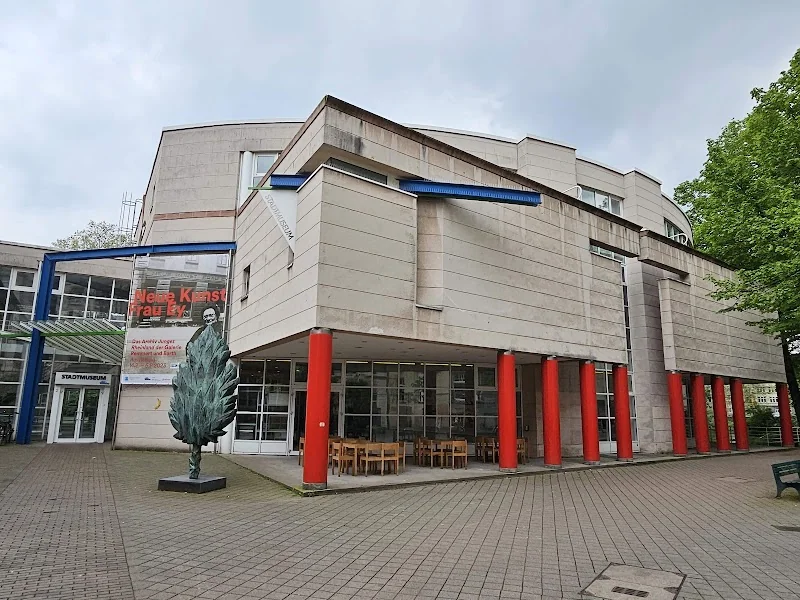
Düsseldorf
Berger Allee 2, 40213 Düsseldorf-Stadtbezirk 1, Deutschland
City Museum Düsseldorf | Admission & Opening Hours
The City Museum Düsseldorf is the first place for many visitors to experience the history of the Rhine metropolis in its full breadth. As the oldest museum in Düsseldorf, it combines historical substance with a lively, participatory approach: It’s not just about viewing objects, but also about thinking, discussing, and shaping together. The house in Palais Spee on Berger Allee showcases the development of the city from prehistoric times to the present, making a wide arc from archaeological finds to art, photography, fashion, and everyday culture. At the same time, the museum is a venue for changing special exhibitions, public tours, workshops, concerts, and events that make the house experience new again and again. Those looking for City Museum Düsseldorf opening hours, admission, current exhibitions, or programs will find a centrally located cultural venue with clear visitor information and a variety of offerings for different target groups. ([duesseldorf.de](https://www.duesseldorf.de/stadtmuseum/ausstellung/archiv/jubilaeum?utm_source=openai))
Opening Hours, Admission & Free Admission
Those planning a visit to the City Museum Düsseldorf should first refer to the official opening hours. The museum is open from Tuesday to Sunday from 11 AM to 6 PM and is closed on Mondays. Additionally, the service page lists several fixed closing days, such as during carnival days, on Easter Monday, Labor Day, Whit Monday, as well as on Christmas Eve, the first Christmas holiday, New Year's Eve, and New Year's Day. At the same time, the museum points out that it is open on several holidays, including Good Friday, Easter Sunday, Ascension Day, Whit Sunday, Corpus Christi, German Unity Day, All Saints' Day, and the second Christmas holiday. Therefore, those searching for City Museum Düsseldorf today, opening hours, or program should consider this information when planning their day, as the house is a classic cultural venue with fixed hours, but also with exceptions on holidays. ([duesseldorf.de](https://www.duesseldorf.de/stadtmuseum/service?utm_source=openai))
In terms of admission, the City Museum Düsseldorf offers a comparatively low-threshold model. Regular admission to the collections and special exhibitions costs 4 euros, reduced 2 euros. Children and teenagers up to the age of 18 can visit the museum for free, and free admission rules apply on Sundays for the entire opening day. Additionally, from Tuesday to Saturday between 5 PM and 6 PM, there is a happy hour with free admission, which is particularly attractive for spontaneous afternoon and evening visits. Discounts are available for students, trainees, groups of ten or more, and holders of certain cards, while various visitor groups such as the press, members of the friends' circle, or individuals with specific permissions can also enter free of charge. For SEO searches related to City Museum Düsseldorf free admission, City Museum Düsseldorf ticket prices, or City Museum Düsseldorf entry, it is worth taking a look at the current service page, as the conditions are presented very transparently here. ([duesseldorf.de](https://www.duesseldorf.de/stadtmuseum/service/eintritt/?utm_source=openai))
The topic of tours is also closely linked to the opening hours. Public tours and workshops take place according to the room plan on Sundays at 3 PM, while additional individual and group tours are available upon request. The museum thus offers not only a classic tour through the exhibition collection but also a structured access for different interests, such as for families, school classes, groups, or culture-interested individuals. This is particularly important information for those searching for City Museum Düsseldorf program or City Museum Düsseldorf today: The visit can be very flexibly combined with a tour, a workshop, or an appointment from the event calendar. This is especially meaningful because the house does not present its content statically but understands itself as a place for active engagement with the city's history. Thus, the visit becomes not only a museum tour but also a concrete cultural experience with planable time slots, clear admission rules, and attractive free contingents. ([duesseldorf.de](https://www.duesseldorf.de/fileadmin/Amt41-206/2024/Sonstiges/41-206_F_Raumplan_105x210_4s_4c_web_bf.pdf))
Directions, Address & Parking
The address of the City Museum Düsseldorf is short and clear: Berger Allee 2, 40213 Düsseldorf. The museum is thus very centrally located in the city center and is easily accessible for both locals and guests from other districts. Especially since the location is in close proximity to the old town, the Rhine, and urban traffic axes, many people specifically search for City Museum Düsseldorf address, directions, and parking. The museum itself emphasizes in its official information primarily public transport access and names several subway lines for this purpose. The stop Benrather Straße is mentioned for the lines U71, U72, U73, and U83, while Heinrich-Heine-Allee is served by the lines U70, U74, U75, U76, U77, U78, and U79. Therefore, those traveling without a car can reach the house very conveniently and save themselves the hassle of finding parking in the city. ([duesseldorf.de](https://www.duesseldorf.de/stadtmuseum/service?utm_source=openai))
When it comes to parking, it is important to clearly distinguish between general visitor spaces and specifically designated parking spaces. The official directions page explicitly mentions parking spaces for people with disabilities at the City Museum. Furthermore, the focus of visitor information is clearly on public transport access, which is typical for a centrally located venue with high visitor frequency. This is helpful for people with mobility restrictions because the access is aligned with the most important routes and the available barrier-free options. Therefore, those searching for City Museum Düsseldorf parking should not only rely on car travel but also consider the mentioned subway stations and the special parking spaces. This is also relevant from an SEO perspective, as many users searching for museum visits primarily seek practical orientation: How do I get there, where do I get off, and what is the situation on-site? The official website answers these questions with a clear focus on accessible stops and barrier-free parking spaces. ([duesseldorf.de](https://www.duesseldorf.de/stadtmuseum/service/anfahrt/?utm_source=openai))
The location in Palais Spee also contributes to the orientation experience. The museum is perceivable as a historical place but is also located in a well-developed urban area that allows for cultural walks. Those wishing to combine their visit with a stroll through the city center, an appointment in the old town, or a walk along the Rhine promenade have short distances from the City Museum. Therefore, for search queries like City Museum Düsseldorf address or City Museum Düsseldorf today, not only the exact location but also the urban context is important: The house is not a remote specialized museum but a central building in the cultural fabric of the city. The official tourism page describes the museum accordingly as a place whose focus is clearly on the city's history. This also results in practical benefits for visitors: The journey is easy, the location is central, and the museum can be easily integrated into a larger Düsseldorf day. ([duesseldorf.de](https://www.duesseldorf.de/int/tourism/discover/museums?utm_source=openai))
Current Exhibition, Program & Concerts
Those searching for City Museum Düsseldorf current exhibition, event, or program will currently encounter a particularly strong theme: Jazz: Düsseldorf/Palermo. The official homepage of the museum names the exhibition running from February 10 to August 9, 2026. This makes it clear that the house not only shows city history but also presents current, thematically focused special exhibitions with international relevance. In this case, it is about a cooperation with the association Düsseldorf-Palermo e. V., thus creating a thematic bridge between Düsseldorf and Palermo, which is excellent for cultural mediation, discussion formats, and accompanying events. For search terms like City Museum Düsseldorf jazz, City Museum Düsseldorf current exhibition, or City Museum Düsseldorf today, this information is particularly important as it directly links the museum visit to a current theme. The exhibition creates a contemporary access to the city by connecting music, atmosphere, and urban relationships. ([duesseldorf.de](https://www.duesseldorf.de/stadtmuseum/?utm_source=openai))
The exhibition includes a lively accompanying program. The homepage regularly lists dates for jazz concerts in the exhibition, an anniversary concert, an Art:Walk festival, thematic tours, and other events. This illustrates that the City Museum Düsseldorf is not only a place of preservation but also a space for cultural presence. Particularly interesting is the connection between music and museum: Concerts in the exhibition context create a special perception of the place because sound, space, and exhibits work together. Additionally, there are mediation formats aimed at different target groups, such as beginner courses, family offerings, holiday workshops, or tours with sign language interpreters. Therefore, those searching for City Museum Düsseldorf events or City Museum Düsseldorf program will find not a static weekly bulletin but a flexible, thematically changing cultural offering that closely aligns with the special exhibitions and seasonal formats. ([duesseldorf.de](https://www.duesseldorf.de/stadtmuseum/?utm_source=openai))
The general educational offerings are also part of the program. The City Museum offers tours, workshops, and projects tailored to different educational needs. Individual and group tours through the collections or the city are possible during opening hours, school classes and daycare centers can be supervised from 9 AM, and upon request, the offerings can also be booked in other languages. This is an important note for families, school groups, and visitors searching for City Museum Düsseldorf concerts or City Museum Düsseldorf program: The house does not understand program merely as an event calendar but as content mediation with musical, historical, and educational elements. The combination of exhibition, concert, tour, and workshop makes the museum a versatile cultural venue that does not limit itself to a single mode of visit but opens multiple paths for engagement with Düsseldorf. ([duesseldorf.de](https://www.duesseldorf.de/stadtmuseum/-ferienangebote/angebote/allgemeine-infos?utm_source=openai))
Collections, History & Special Rooms
The City Museum Düsseldorf is interesting not only because of its program but especially because of its historical depth. The city describes it as the oldest museum in Düsseldorf; it was founded in 1874, and its history is closely linked to the development of the city itself. This is precisely what makes the search queries City Museum Düsseldorf exhibition, City Museum Düsseldorf photos, or City Museum Düsseldorf today so multifaceted, as behind the museum stands not a single theme but a comprehensive view of urban development. The permanent exhibition and collections cover a long period, from prehistoric times through early city history, the 19th century, and the 20th century to the present. The museum thus serves as a kind of historical memory of the city, showing not only objects but also explaining connections. The official descriptions also emphasize that the house is a place for shaping urban processes. This is where its special appeal arises: It is simultaneously an archive, exhibition house, and discussion space. ([duesseldorf.de](https://www.duesseldorf.de/stadtmuseum/ausstellung/archiv/jubilaeum?utm_source=openai))
The collection focuses are broad. The museum displays art, applied arts, archaeology, photography, and fashion, complementing these themes with urban historical testimonies from different epochs. The photographic collection is particularly strong, comprising more than 100,000 photographs according to the official collection, thus forming a significant visual memory of the city. The collection documents architecture, cityscapes, and the cultural, political, and everyday life in Düsseldorf. In addition, the exhibition collection includes paintings, graphics, furniture, weapons, silver, medals, and archaeological finds. This diversity is relevant for visitors because it shows that the City Museum does not have a narrow specialization but is an open history museum that brings together many perspectives on Düsseldorf. Therefore, those searching for City Museum Düsseldorf photos often mean not only image material but also the strong visual dimension of the house itself. This is where one of its greatest advantages lies: History is not conveyed abstractly but made tangible through things, images, and spaces. ([duesseldorf.de](https://www.duesseldorf.de/stadtmuseum/sammlungen/fotografische-sammlung?utm_source=openai))
The rooms of the house also significantly contribute to the perception. The official room plan shows a ground floor, an upper floor, a basement with a café, library, and administration, as well as the Ibach Hall as an event space. Additionally, there are project and educational rooms, a special exhibition, a museum education area, and numerous thematic stations that run through the exhibition. This means for visitors: One does not enter an anonymous museum but a house with a clearly readable structure and functional zones. This spatial division supports the content work because it can accommodate changing exhibitions, projects, events, and educational formats. The room plan also makes it clear that the museum has fixed visitor paths, a ticket office, visitor information, and elevators. For SEO searches related to City Museum Düsseldorf team, City Museum Düsseldorf photos, or City Museum Düsseldorf exhibition, this is a useful note as it shows how strongly the house is organized both content-wise and spatially. History, present, and mediation intertwine here, making the museum a vibrant cultural venue rather than a mere showcase of the past. ([duesseldorf.de](https://www.duesseldorf.de/fileadmin/Amt41-206/2024/Sonstiges/41-206_F_Raumplan_105x210_4s_4c_web_bf.pdf))
Team, Contact & Service
Behind the City Museum Düsseldorf is a clearly defined team that covers various areas of responsibility, thereby making the service character of the house visible. The team page lists, among others, director Dr. Susanne Anna, deputy director Sigrid Kleinbongartz, the scientific directors for the various collections, Svenja Wilken for education and mediation, Petra Meiswinkel in the secretariat, and other contacts. This is important for visitors because it makes it clear: The museum is not only an exhibition but also an organization, communication, and mediation. Those searching for City Museum Düsseldorf team often want to know who is behind the programs, tours, and collections. The official team page answers this very transparently and also shows how broad the tasks are: Collections, library, tour bookings, workshop offerings, administration, friends' circle, and collaborations are managed by different individuals and areas. This creates the impression of a house that works professionally while also being approachable. ([duesseldorf.de](https://www.duesseldorf.de/stadtmuseum/team-stadtmuseum))
The service also includes a well-visible contact structure. The general information page lists the address, the telephone switchboard, and a general email address. This is particularly useful for groups, school classes, or people with specific questions, as the City Museum offers not only regular visits but also tours, workshops, special formats, and bookable offerings. The service page also refers to the possibility of organizing thematic tours, expert lectures, and customer events. This transforms the museum into a flexible partner for educational and cultural questions. For the search terms City Museum Düsseldorf events, City Museum Düsseldorf program, and City Museum Düsseldorf today, this service mindset is a central feature: The house not only delivers content but also the organizational infrastructure to utilize it. The presence of a library, a magazine, and several thematic responsibilities further underscores the scientific and service-oriented claim of the museum. ([duesseldorf.de](https://www.duesseldorf.de/stadtmuseum/service?utm_source=openai))
Particularly interesting is the connection between service and mediation. The City Museum sees itself as a participatory place where visitors can become observers, researchers, and creators. This attitude is reflected in the different contacts for education, collections, tours, and collaborations. Therefore, those planning a group inquiry, a tour, or a specific project will find not only a general contact form but also clearly defined responsibilities. For practice, this means: The house is not tailored to a single type of visitor but is open to individual concerns. Particularly for search queries like City Museum Düsseldorf team or City Museum Düsseldorf address, this transparency plays a significant role as it builds trust and facilitates planning. The official communication suggests that the museum values direct accessibility, professional responsibility, and personal consultation. This is a crucial quality factor in a municipal museum that combines history, education, and events. ([duesseldorf.de](https://www.duesseldorf.de/stadtmuseum/?utm_source=openai))
Accessibility, Tours & Digital Insights
The City Museum Düsseldorf places great importance on accessibility and on offerings that consider various needs. The official page on accessibility explains that the museum offers technical aids, welcomes assistance dogs, and that tours and workshops can be individually adapted, for example, in simple language or with sign language interpreters. Additionally, public offerings that are designed to be as barrier-free as possible are regularly organized. For visitors with mobility restrictions, it is also important that the publicly accessible areas of the museum are almost entirely accessible according to the English overview; among other things, an elevator, barrier-free toilets, loanable aids such as wheelchairs or walkers, and seating are mentioned. This clearly addresses many typical questions that often accompany search terms like City Museum Düsseldorf today, City Museum Düsseldorf team, or general visitor inquiries. The museum clearly conveys: Participation is not an addition here but part of the concept. ([duesseldorf.de](https://www.duesseldorf.de/stadtmuseum/barrierefreiheit-und-gefluechtete?utm_source=openai))
The educational work is also designed for accessibility. The City Museum offers tours, workshops, and other projects aimed at school classes, daycare centers, families, and other groups. The offerings can be linguistically adapted upon request, and there are special formats for blind and visually impaired people as well as for individuals with additional support needs. This adds another dimension to the search queries City Museum Düsseldorf free admission, City Museum Düsseldorf program, or City Museum Düsseldorf events: It is not only about what is shown but also about how it is conveyed. The museum works with tour themes, educational formats, and inclusive approaches to ensure that content does not remain exclusive. This is an important point for families and school groups, as a museum visit thus becomes more planable, understandable, and often more intense. This creates a service understanding that is particularly valuable in cultural work today: open, adaptable, and close to the needs of different guests. ([duesseldorf.de](https://www.duesseldorf.de/stadtmuseum/-ferienangebote/angebote/allgemeine-infos?utm_source=openai))
Another plus point is the digital insights. The City Museum refers to a virtual 3D tour as well as videos and photographs that are made accessible through social media channels and digital contributions. For people who want to get an impression before their visit, this is particularly helpful as spaces, atmosphere, and exhibition contexts can already be explored online. This fits very well with search queries like City Museum Düsseldorf photos, as the museum understands visual communication not only as accompanying material but as part of its mediation. Therefore, those wishing to inform themselves in advance can use the digital level to get to know topics, spaces, and current projects. This is also relevant from an SEO perspective as it shows that the City Museum is not only physically but also digitally present. Together with the clear opening hours, free admission on Sundays, and the current jazz exhibition, a profile emerges that offers visitors both planning security and inspiration. ([duesseldorf.de](https://www.duesseldorf.de/stadtmuseum/?utm_source=openai))
Sources:
- City Museum Düsseldorf - Official Website
- City Museum Düsseldorf - Service / General Information
- City Museum Düsseldorf - Admission
- City Museum Düsseldorf - Directions
- City Museum Düsseldorf - Team
- City Museum Düsseldorf - Accessibility
- State Capital Düsseldorf - History in Focus
- City Museum Düsseldorf - Room Plan PDF
Show moreShow less
City Museum Düsseldorf | Admission & Opening Hours
The City Museum Düsseldorf is the first place for many visitors to experience the history of the Rhine metropolis in its full breadth. As the oldest museum in Düsseldorf, it combines historical substance with a lively, participatory approach: It’s not just about viewing objects, but also about thinking, discussing, and shaping together. The house in Palais Spee on Berger Allee showcases the development of the city from prehistoric times to the present, making a wide arc from archaeological finds to art, photography, fashion, and everyday culture. At the same time, the museum is a venue for changing special exhibitions, public tours, workshops, concerts, and events that make the house experience new again and again. Those looking for City Museum Düsseldorf opening hours, admission, current exhibitions, or programs will find a centrally located cultural venue with clear visitor information and a variety of offerings for different target groups. ([duesseldorf.de](https://www.duesseldorf.de/stadtmuseum/ausstellung/archiv/jubilaeum?utm_source=openai))
Opening Hours, Admission & Free Admission
Those planning a visit to the City Museum Düsseldorf should first refer to the official opening hours. The museum is open from Tuesday to Sunday from 11 AM to 6 PM and is closed on Mondays. Additionally, the service page lists several fixed closing days, such as during carnival days, on Easter Monday, Labor Day, Whit Monday, as well as on Christmas Eve, the first Christmas holiday, New Year's Eve, and New Year's Day. At the same time, the museum points out that it is open on several holidays, including Good Friday, Easter Sunday, Ascension Day, Whit Sunday, Corpus Christi, German Unity Day, All Saints' Day, and the second Christmas holiday. Therefore, those searching for City Museum Düsseldorf today, opening hours, or program should consider this information when planning their day, as the house is a classic cultural venue with fixed hours, but also with exceptions on holidays. ([duesseldorf.de](https://www.duesseldorf.de/stadtmuseum/service?utm_source=openai))
In terms of admission, the City Museum Düsseldorf offers a comparatively low-threshold model. Regular admission to the collections and special exhibitions costs 4 euros, reduced 2 euros. Children and teenagers up to the age of 18 can visit the museum for free, and free admission rules apply on Sundays for the entire opening day. Additionally, from Tuesday to Saturday between 5 PM and 6 PM, there is a happy hour with free admission, which is particularly attractive for spontaneous afternoon and evening visits. Discounts are available for students, trainees, groups of ten or more, and holders of certain cards, while various visitor groups such as the press, members of the friends' circle, or individuals with specific permissions can also enter free of charge. For SEO searches related to City Museum Düsseldorf free admission, City Museum Düsseldorf ticket prices, or City Museum Düsseldorf entry, it is worth taking a look at the current service page, as the conditions are presented very transparently here. ([duesseldorf.de](https://www.duesseldorf.de/stadtmuseum/service/eintritt/?utm_source=openai))
The topic of tours is also closely linked to the opening hours. Public tours and workshops take place according to the room plan on Sundays at 3 PM, while additional individual and group tours are available upon request. The museum thus offers not only a classic tour through the exhibition collection but also a structured access for different interests, such as for families, school classes, groups, or culture-interested individuals. This is particularly important information for those searching for City Museum Düsseldorf program or City Museum Düsseldorf today: The visit can be very flexibly combined with a tour, a workshop, or an appointment from the event calendar. This is especially meaningful because the house does not present its content statically but understands itself as a place for active engagement with the city's history. Thus, the visit becomes not only a museum tour but also a concrete cultural experience with planable time slots, clear admission rules, and attractive free contingents. ([duesseldorf.de](https://www.duesseldorf.de/fileadmin/Amt41-206/2024/Sonstiges/41-206_F_Raumplan_105x210_4s_4c_web_bf.pdf))
Directions, Address & Parking
The address of the City Museum Düsseldorf is short and clear: Berger Allee 2, 40213 Düsseldorf. The museum is thus very centrally located in the city center and is easily accessible for both locals and guests from other districts. Especially since the location is in close proximity to the old town, the Rhine, and urban traffic axes, many people specifically search for City Museum Düsseldorf address, directions, and parking. The museum itself emphasizes in its official information primarily public transport access and names several subway lines for this purpose. The stop Benrather Straße is mentioned for the lines U71, U72, U73, and U83, while Heinrich-Heine-Allee is served by the lines U70, U74, U75, U76, U77, U78, and U79. Therefore, those traveling without a car can reach the house very conveniently and save themselves the hassle of finding parking in the city. ([duesseldorf.de](https://www.duesseldorf.de/stadtmuseum/service?utm_source=openai))
When it comes to parking, it is important to clearly distinguish between general visitor spaces and specifically designated parking spaces. The official directions page explicitly mentions parking spaces for people with disabilities at the City Museum. Furthermore, the focus of visitor information is clearly on public transport access, which is typical for a centrally located venue with high visitor frequency. This is helpful for people with mobility restrictions because the access is aligned with the most important routes and the available barrier-free options. Therefore, those searching for City Museum Düsseldorf parking should not only rely on car travel but also consider the mentioned subway stations and the special parking spaces. This is also relevant from an SEO perspective, as many users searching for museum visits primarily seek practical orientation: How do I get there, where do I get off, and what is the situation on-site? The official website answers these questions with a clear focus on accessible stops and barrier-free parking spaces. ([duesseldorf.de](https://www.duesseldorf.de/stadtmuseum/service/anfahrt/?utm_source=openai))
The location in Palais Spee also contributes to the orientation experience. The museum is perceivable as a historical place but is also located in a well-developed urban area that allows for cultural walks. Those wishing to combine their visit with a stroll through the city center, an appointment in the old town, or a walk along the Rhine promenade have short distances from the City Museum. Therefore, for search queries like City Museum Düsseldorf address or City Museum Düsseldorf today, not only the exact location but also the urban context is important: The house is not a remote specialized museum but a central building in the cultural fabric of the city. The official tourism page describes the museum accordingly as a place whose focus is clearly on the city's history. This also results in practical benefits for visitors: The journey is easy, the location is central, and the museum can be easily integrated into a larger Düsseldorf day. ([duesseldorf.de](https://www.duesseldorf.de/int/tourism/discover/museums?utm_source=openai))
Current Exhibition, Program & Concerts
Those searching for City Museum Düsseldorf current exhibition, event, or program will currently encounter a particularly strong theme: Jazz: Düsseldorf/Palermo. The official homepage of the museum names the exhibition running from February 10 to August 9, 2026. This makes it clear that the house not only shows city history but also presents current, thematically focused special exhibitions with international relevance. In this case, it is about a cooperation with the association Düsseldorf-Palermo e. V., thus creating a thematic bridge between Düsseldorf and Palermo, which is excellent for cultural mediation, discussion formats, and accompanying events. For search terms like City Museum Düsseldorf jazz, City Museum Düsseldorf current exhibition, or City Museum Düsseldorf today, this information is particularly important as it directly links the museum visit to a current theme. The exhibition creates a contemporary access to the city by connecting music, atmosphere, and urban relationships. ([duesseldorf.de](https://www.duesseldorf.de/stadtmuseum/?utm_source=openai))
The exhibition includes a lively accompanying program. The homepage regularly lists dates for jazz concerts in the exhibition, an anniversary concert, an Art:Walk festival, thematic tours, and other events. This illustrates that the City Museum Düsseldorf is not only a place of preservation but also a space for cultural presence. Particularly interesting is the connection between music and museum: Concerts in the exhibition context create a special perception of the place because sound, space, and exhibits work together. Additionally, there are mediation formats aimed at different target groups, such as beginner courses, family offerings, holiday workshops, or tours with sign language interpreters. Therefore, those searching for City Museum Düsseldorf events or City Museum Düsseldorf program will find not a static weekly bulletin but a flexible, thematically changing cultural offering that closely aligns with the special exhibitions and seasonal formats. ([duesseldorf.de](https://www.duesseldorf.de/stadtmuseum/?utm_source=openai))
The general educational offerings are also part of the program. The City Museum offers tours, workshops, and projects tailored to different educational needs. Individual and group tours through the collections or the city are possible during opening hours, school classes and daycare centers can be supervised from 9 AM, and upon request, the offerings can also be booked in other languages. This is an important note for families, school groups, and visitors searching for City Museum Düsseldorf concerts or City Museum Düsseldorf program: The house does not understand program merely as an event calendar but as content mediation with musical, historical, and educational elements. The combination of exhibition, concert, tour, and workshop makes the museum a versatile cultural venue that does not limit itself to a single mode of visit but opens multiple paths for engagement with Düsseldorf. ([duesseldorf.de](https://www.duesseldorf.de/stadtmuseum/-ferienangebote/angebote/allgemeine-infos?utm_source=openai))
Collections, History & Special Rooms
The City Museum Düsseldorf is interesting not only because of its program but especially because of its historical depth. The city describes it as the oldest museum in Düsseldorf; it was founded in 1874, and its history is closely linked to the development of the city itself. This is precisely what makes the search queries City Museum Düsseldorf exhibition, City Museum Düsseldorf photos, or City Museum Düsseldorf today so multifaceted, as behind the museum stands not a single theme but a comprehensive view of urban development. The permanent exhibition and collections cover a long period, from prehistoric times through early city history, the 19th century, and the 20th century to the present. The museum thus serves as a kind of historical memory of the city, showing not only objects but also explaining connections. The official descriptions also emphasize that the house is a place for shaping urban processes. This is where its special appeal arises: It is simultaneously an archive, exhibition house, and discussion space. ([duesseldorf.de](https://www.duesseldorf.de/stadtmuseum/ausstellung/archiv/jubilaeum?utm_source=openai))
The collection focuses are broad. The museum displays art, applied arts, archaeology, photography, and fashion, complementing these themes with urban historical testimonies from different epochs. The photographic collection is particularly strong, comprising more than 100,000 photographs according to the official collection, thus forming a significant visual memory of the city. The collection documents architecture, cityscapes, and the cultural, political, and everyday life in Düsseldorf. In addition, the exhibition collection includes paintings, graphics, furniture, weapons, silver, medals, and archaeological finds. This diversity is relevant for visitors because it shows that the City Museum does not have a narrow specialization but is an open history museum that brings together many perspectives on Düsseldorf. Therefore, those searching for City Museum Düsseldorf photos often mean not only image material but also the strong visual dimension of the house itself. This is where one of its greatest advantages lies: History is not conveyed abstractly but made tangible through things, images, and spaces. ([duesseldorf.de](https://www.duesseldorf.de/stadtmuseum/sammlungen/fotografische-sammlung?utm_source=openai))
The rooms of the house also significantly contribute to the perception. The official room plan shows a ground floor, an upper floor, a basement with a café, library, and administration, as well as the Ibach Hall as an event space. Additionally, there are project and educational rooms, a special exhibition, a museum education area, and numerous thematic stations that run through the exhibition. This means for visitors: One does not enter an anonymous museum but a house with a clearly readable structure and functional zones. This spatial division supports the content work because it can accommodate changing exhibitions, projects, events, and educational formats. The room plan also makes it clear that the museum has fixed visitor paths, a ticket office, visitor information, and elevators. For SEO searches related to City Museum Düsseldorf team, City Museum Düsseldorf photos, or City Museum Düsseldorf exhibition, this is a useful note as it shows how strongly the house is organized both content-wise and spatially. History, present, and mediation intertwine here, making the museum a vibrant cultural venue rather than a mere showcase of the past. ([duesseldorf.de](https://www.duesseldorf.de/fileadmin/Amt41-206/2024/Sonstiges/41-206_F_Raumplan_105x210_4s_4c_web_bf.pdf))
Team, Contact & Service
Behind the City Museum Düsseldorf is a clearly defined team that covers various areas of responsibility, thereby making the service character of the house visible. The team page lists, among others, director Dr. Susanne Anna, deputy director Sigrid Kleinbongartz, the scientific directors for the various collections, Svenja Wilken for education and mediation, Petra Meiswinkel in the secretariat, and other contacts. This is important for visitors because it makes it clear: The museum is not only an exhibition but also an organization, communication, and mediation. Those searching for City Museum Düsseldorf team often want to know who is behind the programs, tours, and collections. The official team page answers this very transparently and also shows how broad the tasks are: Collections, library, tour bookings, workshop offerings, administration, friends' circle, and collaborations are managed by different individuals and areas. This creates the impression of a house that works professionally while also being approachable. ([duesseldorf.de](https://www.duesseldorf.de/stadtmuseum/team-stadtmuseum))
The service also includes a well-visible contact structure. The general information page lists the address, the telephone switchboard, and a general email address. This is particularly useful for groups, school classes, or people with specific questions, as the City Museum offers not only regular visits but also tours, workshops, special formats, and bookable offerings. The service page also refers to the possibility of organizing thematic tours, expert lectures, and customer events. This transforms the museum into a flexible partner for educational and cultural questions. For the search terms City Museum Düsseldorf events, City Museum Düsseldorf program, and City Museum Düsseldorf today, this service mindset is a central feature: The house not only delivers content but also the organizational infrastructure to utilize it. The presence of a library, a magazine, and several thematic responsibilities further underscores the scientific and service-oriented claim of the museum. ([duesseldorf.de](https://www.duesseldorf.de/stadtmuseum/service?utm_source=openai))
Particularly interesting is the connection between service and mediation. The City Museum sees itself as a participatory place where visitors can become observers, researchers, and creators. This attitude is reflected in the different contacts for education, collections, tours, and collaborations. Therefore, those planning a group inquiry, a tour, or a specific project will find not only a general contact form but also clearly defined responsibilities. For practice, this means: The house is not tailored to a single type of visitor but is open to individual concerns. Particularly for search queries like City Museum Düsseldorf team or City Museum Düsseldorf address, this transparency plays a significant role as it builds trust and facilitates planning. The official communication suggests that the museum values direct accessibility, professional responsibility, and personal consultation. This is a crucial quality factor in a municipal museum that combines history, education, and events. ([duesseldorf.de](https://www.duesseldorf.de/stadtmuseum/?utm_source=openai))
Accessibility, Tours & Digital Insights
The City Museum Düsseldorf places great importance on accessibility and on offerings that consider various needs. The official page on accessibility explains that the museum offers technical aids, welcomes assistance dogs, and that tours and workshops can be individually adapted, for example, in simple language or with sign language interpreters. Additionally, public offerings that are designed to be as barrier-free as possible are regularly organized. For visitors with mobility restrictions, it is also important that the publicly accessible areas of the museum are almost entirely accessible according to the English overview; among other things, an elevator, barrier-free toilets, loanable aids such as wheelchairs or walkers, and seating are mentioned. This clearly addresses many typical questions that often accompany search terms like City Museum Düsseldorf today, City Museum Düsseldorf team, or general visitor inquiries. The museum clearly conveys: Participation is not an addition here but part of the concept. ([duesseldorf.de](https://www.duesseldorf.de/stadtmuseum/barrierefreiheit-und-gefluechtete?utm_source=openai))
The educational work is also designed for accessibility. The City Museum offers tours, workshops, and other projects aimed at school classes, daycare centers, families, and other groups. The offerings can be linguistically adapted upon request, and there are special formats for blind and visually impaired people as well as for individuals with additional support needs. This adds another dimension to the search queries City Museum Düsseldorf free admission, City Museum Düsseldorf program, or City Museum Düsseldorf events: It is not only about what is shown but also about how it is conveyed. The museum works with tour themes, educational formats, and inclusive approaches to ensure that content does not remain exclusive. This is an important point for families and school groups, as a museum visit thus becomes more planable, understandable, and often more intense. This creates a service understanding that is particularly valuable in cultural work today: open, adaptable, and close to the needs of different guests. ([duesseldorf.de](https://www.duesseldorf.de/stadtmuseum/-ferienangebote/angebote/allgemeine-infos?utm_source=openai))
Another plus point is the digital insights. The City Museum refers to a virtual 3D tour as well as videos and photographs that are made accessible through social media channels and digital contributions. For people who want to get an impression before their visit, this is particularly helpful as spaces, atmosphere, and exhibition contexts can already be explored online. This fits very well with search queries like City Museum Düsseldorf photos, as the museum understands visual communication not only as accompanying material but as part of its mediation. Therefore, those wishing to inform themselves in advance can use the digital level to get to know topics, spaces, and current projects. This is also relevant from an SEO perspective as it shows that the City Museum is not only physically but also digitally present. Together with the clear opening hours, free admission on Sundays, and the current jazz exhibition, a profile emerges that offers visitors both planning security and inspiration. ([duesseldorf.de](https://www.duesseldorf.de/stadtmuseum/?utm_source=openai))
Sources:
- City Museum Düsseldorf - Official Website
- City Museum Düsseldorf - Service / General Information
- City Museum Düsseldorf - Admission
- City Museum Düsseldorf - Directions
- City Museum Düsseldorf - Team
- City Museum Düsseldorf - Accessibility
- State Capital Düsseldorf - History in Focus
- City Museum Düsseldorf - Room Plan PDF
City Museum Düsseldorf | Admission & Opening Hours
The City Museum Düsseldorf is the first place for many visitors to experience the history of the Rhine metropolis in its full breadth. As the oldest museum in Düsseldorf, it combines historical substance with a lively, participatory approach: It’s not just about viewing objects, but also about thinking, discussing, and shaping together. The house in Palais Spee on Berger Allee showcases the development of the city from prehistoric times to the present, making a wide arc from archaeological finds to art, photography, fashion, and everyday culture. At the same time, the museum is a venue for changing special exhibitions, public tours, workshops, concerts, and events that make the house experience new again and again. Those looking for City Museum Düsseldorf opening hours, admission, current exhibitions, or programs will find a centrally located cultural venue with clear visitor information and a variety of offerings for different target groups. ([duesseldorf.de](https://www.duesseldorf.de/stadtmuseum/ausstellung/archiv/jubilaeum?utm_source=openai))
Opening Hours, Admission & Free Admission
Those planning a visit to the City Museum Düsseldorf should first refer to the official opening hours. The museum is open from Tuesday to Sunday from 11 AM to 6 PM and is closed on Mondays. Additionally, the service page lists several fixed closing days, such as during carnival days, on Easter Monday, Labor Day, Whit Monday, as well as on Christmas Eve, the first Christmas holiday, New Year's Eve, and New Year's Day. At the same time, the museum points out that it is open on several holidays, including Good Friday, Easter Sunday, Ascension Day, Whit Sunday, Corpus Christi, German Unity Day, All Saints' Day, and the second Christmas holiday. Therefore, those searching for City Museum Düsseldorf today, opening hours, or program should consider this information when planning their day, as the house is a classic cultural venue with fixed hours, but also with exceptions on holidays. ([duesseldorf.de](https://www.duesseldorf.de/stadtmuseum/service?utm_source=openai))
In terms of admission, the City Museum Düsseldorf offers a comparatively low-threshold model. Regular admission to the collections and special exhibitions costs 4 euros, reduced 2 euros. Children and teenagers up to the age of 18 can visit the museum for free, and free admission rules apply on Sundays for the entire opening day. Additionally, from Tuesday to Saturday between 5 PM and 6 PM, there is a happy hour with free admission, which is particularly attractive for spontaneous afternoon and evening visits. Discounts are available for students, trainees, groups of ten or more, and holders of certain cards, while various visitor groups such as the press, members of the friends' circle, or individuals with specific permissions can also enter free of charge. For SEO searches related to City Museum Düsseldorf free admission, City Museum Düsseldorf ticket prices, or City Museum Düsseldorf entry, it is worth taking a look at the current service page, as the conditions are presented very transparently here. ([duesseldorf.de](https://www.duesseldorf.de/stadtmuseum/service/eintritt/?utm_source=openai))
The topic of tours is also closely linked to the opening hours. Public tours and workshops take place according to the room plan on Sundays at 3 PM, while additional individual and group tours are available upon request. The museum thus offers not only a classic tour through the exhibition collection but also a structured access for different interests, such as for families, school classes, groups, or culture-interested individuals. This is particularly important information for those searching for City Museum Düsseldorf program or City Museum Düsseldorf today: The visit can be very flexibly combined with a tour, a workshop, or an appointment from the event calendar. This is especially meaningful because the house does not present its content statically but understands itself as a place for active engagement with the city's history. Thus, the visit becomes not only a museum tour but also a concrete cultural experience with planable time slots, clear admission rules, and attractive free contingents. ([duesseldorf.de](https://www.duesseldorf.de/fileadmin/Amt41-206/2024/Sonstiges/41-206_F_Raumplan_105x210_4s_4c_web_bf.pdf))
Directions, Address & Parking
The address of the City Museum Düsseldorf is short and clear: Berger Allee 2, 40213 Düsseldorf. The museum is thus very centrally located in the city center and is easily accessible for both locals and guests from other districts. Especially since the location is in close proximity to the old town, the Rhine, and urban traffic axes, many people specifically search for City Museum Düsseldorf address, directions, and parking. The museum itself emphasizes in its official information primarily public transport access and names several subway lines for this purpose. The stop Benrather Straße is mentioned for the lines U71, U72, U73, and U83, while Heinrich-Heine-Allee is served by the lines U70, U74, U75, U76, U77, U78, and U79. Therefore, those traveling without a car can reach the house very conveniently and save themselves the hassle of finding parking in the city. ([duesseldorf.de](https://www.duesseldorf.de/stadtmuseum/service?utm_source=openai))
When it comes to parking, it is important to clearly distinguish between general visitor spaces and specifically designated parking spaces. The official directions page explicitly mentions parking spaces for people with disabilities at the City Museum. Furthermore, the focus of visitor information is clearly on public transport access, which is typical for a centrally located venue with high visitor frequency. This is helpful for people with mobility restrictions because the access is aligned with the most important routes and the available barrier-free options. Therefore, those searching for City Museum Düsseldorf parking should not only rely on car travel but also consider the mentioned subway stations and the special parking spaces. This is also relevant from an SEO perspective, as many users searching for museum visits primarily seek practical orientation: How do I get there, where do I get off, and what is the situation on-site? The official website answers these questions with a clear focus on accessible stops and barrier-free parking spaces. ([duesseldorf.de](https://www.duesseldorf.de/stadtmuseum/service/anfahrt/?utm_source=openai))
The location in Palais Spee also contributes to the orientation experience. The museum is perceivable as a historical place but is also located in a well-developed urban area that allows for cultural walks. Those wishing to combine their visit with a stroll through the city center, an appointment in the old town, or a walk along the Rhine promenade have short distances from the City Museum. Therefore, for search queries like City Museum Düsseldorf address or City Museum Düsseldorf today, not only the exact location but also the urban context is important: The house is not a remote specialized museum but a central building in the cultural fabric of the city. The official tourism page describes the museum accordingly as a place whose focus is clearly on the city's history. This also results in practical benefits for visitors: The journey is easy, the location is central, and the museum can be easily integrated into a larger Düsseldorf day. ([duesseldorf.de](https://www.duesseldorf.de/int/tourism/discover/museums?utm_source=openai))
Current Exhibition, Program & Concerts
Those searching for City Museum Düsseldorf current exhibition, event, or program will currently encounter a particularly strong theme: Jazz: Düsseldorf/Palermo. The official homepage of the museum names the exhibition running from February 10 to August 9, 2026. This makes it clear that the house not only shows city history but also presents current, thematically focused special exhibitions with international relevance. In this case, it is about a cooperation with the association Düsseldorf-Palermo e. V., thus creating a thematic bridge between Düsseldorf and Palermo, which is excellent for cultural mediation, discussion formats, and accompanying events. For search terms like City Museum Düsseldorf jazz, City Museum Düsseldorf current exhibition, or City Museum Düsseldorf today, this information is particularly important as it directly links the museum visit to a current theme. The exhibition creates a contemporary access to the city by connecting music, atmosphere, and urban relationships. ([duesseldorf.de](https://www.duesseldorf.de/stadtmuseum/?utm_source=openai))
The exhibition includes a lively accompanying program. The homepage regularly lists dates for jazz concerts in the exhibition, an anniversary concert, an Art:Walk festival, thematic tours, and other events. This illustrates that the City Museum Düsseldorf is not only a place of preservation but also a space for cultural presence. Particularly interesting is the connection between music and museum: Concerts in the exhibition context create a special perception of the place because sound, space, and exhibits work together. Additionally, there are mediation formats aimed at different target groups, such as beginner courses, family offerings, holiday workshops, or tours with sign language interpreters. Therefore, those searching for City Museum Düsseldorf events or City Museum Düsseldorf program will find not a static weekly bulletin but a flexible, thematically changing cultural offering that closely aligns with the special exhibitions and seasonal formats. ([duesseldorf.de](https://www.duesseldorf.de/stadtmuseum/?utm_source=openai))
The general educational offerings are also part of the program. The City Museum offers tours, workshops, and projects tailored to different educational needs. Individual and group tours through the collections or the city are possible during opening hours, school classes and daycare centers can be supervised from 9 AM, and upon request, the offerings can also be booked in other languages. This is an important note for families, school groups, and visitors searching for City Museum Düsseldorf concerts or City Museum Düsseldorf program: The house does not understand program merely as an event calendar but as content mediation with musical, historical, and educational elements. The combination of exhibition, concert, tour, and workshop makes the museum a versatile cultural venue that does not limit itself to a single mode of visit but opens multiple paths for engagement with Düsseldorf. ([duesseldorf.de](https://www.duesseldorf.de/stadtmuseum/-ferienangebote/angebote/allgemeine-infos?utm_source=openai))
Collections, History & Special Rooms
The City Museum Düsseldorf is interesting not only because of its program but especially because of its historical depth. The city describes it as the oldest museum in Düsseldorf; it was founded in 1874, and its history is closely linked to the development of the city itself. This is precisely what makes the search queries City Museum Düsseldorf exhibition, City Museum Düsseldorf photos, or City Museum Düsseldorf today so multifaceted, as behind the museum stands not a single theme but a comprehensive view of urban development. The permanent exhibition and collections cover a long period, from prehistoric times through early city history, the 19th century, and the 20th century to the present. The museum thus serves as a kind of historical memory of the city, showing not only objects but also explaining connections. The official descriptions also emphasize that the house is a place for shaping urban processes. This is where its special appeal arises: It is simultaneously an archive, exhibition house, and discussion space. ([duesseldorf.de](https://www.duesseldorf.de/stadtmuseum/ausstellung/archiv/jubilaeum?utm_source=openai))
The collection focuses are broad. The museum displays art, applied arts, archaeology, photography, and fashion, complementing these themes with urban historical testimonies from different epochs. The photographic collection is particularly strong, comprising more than 100,000 photographs according to the official collection, thus forming a significant visual memory of the city. The collection documents architecture, cityscapes, and the cultural, political, and everyday life in Düsseldorf. In addition, the exhibition collection includes paintings, graphics, furniture, weapons, silver, medals, and archaeological finds. This diversity is relevant for visitors because it shows that the City Museum does not have a narrow specialization but is an open history museum that brings together many perspectives on Düsseldorf. Therefore, those searching for City Museum Düsseldorf photos often mean not only image material but also the strong visual dimension of the house itself. This is where one of its greatest advantages lies: History is not conveyed abstractly but made tangible through things, images, and spaces. ([duesseldorf.de](https://www.duesseldorf.de/stadtmuseum/sammlungen/fotografische-sammlung?utm_source=openai))
The rooms of the house also significantly contribute to the perception. The official room plan shows a ground floor, an upper floor, a basement with a café, library, and administration, as well as the Ibach Hall as an event space. Additionally, there are project and educational rooms, a special exhibition, a museum education area, and numerous thematic stations that run through the exhibition. This means for visitors: One does not enter an anonymous museum but a house with a clearly readable structure and functional zones. This spatial division supports the content work because it can accommodate changing exhibitions, projects, events, and educational formats. The room plan also makes it clear that the museum has fixed visitor paths, a ticket office, visitor information, and elevators. For SEO searches related to City Museum Düsseldorf team, City Museum Düsseldorf photos, or City Museum Düsseldorf exhibition, this is a useful note as it shows how strongly the house is organized both content-wise and spatially. History, present, and mediation intertwine here, making the museum a vibrant cultural venue rather than a mere showcase of the past. ([duesseldorf.de](https://www.duesseldorf.de/fileadmin/Amt41-206/2024/Sonstiges/41-206_F_Raumplan_105x210_4s_4c_web_bf.pdf))
Team, Contact & Service
Behind the City Museum Düsseldorf is a clearly defined team that covers various areas of responsibility, thereby making the service character of the house visible. The team page lists, among others, director Dr. Susanne Anna, deputy director Sigrid Kleinbongartz, the scientific directors for the various collections, Svenja Wilken for education and mediation, Petra Meiswinkel in the secretariat, and other contacts. This is important for visitors because it makes it clear: The museum is not only an exhibition but also an organization, communication, and mediation. Those searching for City Museum Düsseldorf team often want to know who is behind the programs, tours, and collections. The official team page answers this very transparently and also shows how broad the tasks are: Collections, library, tour bookings, workshop offerings, administration, friends' circle, and collaborations are managed by different individuals and areas. This creates the impression of a house that works professionally while also being approachable. ([duesseldorf.de](https://www.duesseldorf.de/stadtmuseum/team-stadtmuseum))
The service also includes a well-visible contact structure. The general information page lists the address, the telephone switchboard, and a general email address. This is particularly useful for groups, school classes, or people with specific questions, as the City Museum offers not only regular visits but also tours, workshops, special formats, and bookable offerings. The service page also refers to the possibility of organizing thematic tours, expert lectures, and customer events. This transforms the museum into a flexible partner for educational and cultural questions. For the search terms City Museum Düsseldorf events, City Museum Düsseldorf program, and City Museum Düsseldorf today, this service mindset is a central feature: The house not only delivers content but also the organizational infrastructure to utilize it. The presence of a library, a magazine, and several thematic responsibilities further underscores the scientific and service-oriented claim of the museum. ([duesseldorf.de](https://www.duesseldorf.de/stadtmuseum/service?utm_source=openai))
Particularly interesting is the connection between service and mediation. The City Museum sees itself as a participatory place where visitors can become observers, researchers, and creators. This attitude is reflected in the different contacts for education, collections, tours, and collaborations. Therefore, those planning a group inquiry, a tour, or a specific project will find not only a general contact form but also clearly defined responsibilities. For practice, this means: The house is not tailored to a single type of visitor but is open to individual concerns. Particularly for search queries like City Museum Düsseldorf team or City Museum Düsseldorf address, this transparency plays a significant role as it builds trust and facilitates planning. The official communication suggests that the museum values direct accessibility, professional responsibility, and personal consultation. This is a crucial quality factor in a municipal museum that combines history, education, and events. ([duesseldorf.de](https://www.duesseldorf.de/stadtmuseum/?utm_source=openai))
Accessibility, Tours & Digital Insights
The City Museum Düsseldorf places great importance on accessibility and on offerings that consider various needs. The official page on accessibility explains that the museum offers technical aids, welcomes assistance dogs, and that tours and workshops can be individually adapted, for example, in simple language or with sign language interpreters. Additionally, public offerings that are designed to be as barrier-free as possible are regularly organized. For visitors with mobility restrictions, it is also important that the publicly accessible areas of the museum are almost entirely accessible according to the English overview; among other things, an elevator, barrier-free toilets, loanable aids such as wheelchairs or walkers, and seating are mentioned. This clearly addresses many typical questions that often accompany search terms like City Museum Düsseldorf today, City Museum Düsseldorf team, or general visitor inquiries. The museum clearly conveys: Participation is not an addition here but part of the concept. ([duesseldorf.de](https://www.duesseldorf.de/stadtmuseum/barrierefreiheit-und-gefluechtete?utm_source=openai))
The educational work is also designed for accessibility. The City Museum offers tours, workshops, and other projects aimed at school classes, daycare centers, families, and other groups. The offerings can be linguistically adapted upon request, and there are special formats for blind and visually impaired people as well as for individuals with additional support needs. This adds another dimension to the search queries City Museum Düsseldorf free admission, City Museum Düsseldorf program, or City Museum Düsseldorf events: It is not only about what is shown but also about how it is conveyed. The museum works with tour themes, educational formats, and inclusive approaches to ensure that content does not remain exclusive. This is an important point for families and school groups, as a museum visit thus becomes more planable, understandable, and often more intense. This creates a service understanding that is particularly valuable in cultural work today: open, adaptable, and close to the needs of different guests. ([duesseldorf.de](https://www.duesseldorf.de/stadtmuseum/-ferienangebote/angebote/allgemeine-infos?utm_source=openai))
Another plus point is the digital insights. The City Museum refers to a virtual 3D tour as well as videos and photographs that are made accessible through social media channels and digital contributions. For people who want to get an impression before their visit, this is particularly helpful as spaces, atmosphere, and exhibition contexts can already be explored online. This fits very well with search queries like City Museum Düsseldorf photos, as the museum understands visual communication not only as accompanying material but as part of its mediation. Therefore, those wishing to inform themselves in advance can use the digital level to get to know topics, spaces, and current projects. This is also relevant from an SEO perspective as it shows that the City Museum is not only physically but also digitally present. Together with the clear opening hours, free admission on Sundays, and the current jazz exhibition, a profile emerges that offers visitors both planning security and inspiration. ([duesseldorf.de](https://www.duesseldorf.de/stadtmuseum/?utm_source=openai))
Sources:
- City Museum Düsseldorf - Official Website
- City Museum Düsseldorf - Service / General Information
- City Museum Düsseldorf - Admission
- City Museum Düsseldorf - Directions
- City Museum Düsseldorf - Team
- City Museum Düsseldorf - Accessibility
- State Capital Düsseldorf - History in Focus
- City Museum Düsseldorf - Room Plan PDF
Frequently Asked Questions
Reviews
Travelling Doc
5. September 2023
No queues so buy ticket when there. A good historic overview of Düsseldorf, it set across two main floors from the Middle Ages to the post war. Unfortunately the artefacts are average so it does not wow. There is a chronological order however as unmarked I would recommend asking at the start and staff should also put arrows to direct guests. The latter rooms on the top floor were much more interesting. Spent about 2 hours in the museum.
Olivia
16. May 2024
This museum features a beautiful collection of medieval and Renaissance portraits, furniture, and other fascinating relics. They have lots of information about the history and heritage of Dusseldorf. The museum descriptions are given in both German and English.
Casey Stijlaart
18. February 2026
Great museum, big collection. But it’s hard to navigate through. As I came from the lockers downstairs, I followed the signs to the collection, which lead me upstairs, and ended up at the “end” or well the most recent rather than the beginning of time. A small sign or floor plan where to start or how to walk would be nice.
Adri Baczur
20. September 2023
I went on Wednesday between 5-6pm, which is "happy hour" meaning free entry. There was literally noone else walking around the museum but me. Some great historical artificacts and paintings, but I did get a bit confused between the rooms and which direction to go in to see it all. Nevertheless, I completely recommend. Insightful experience.
Ahmad Nouri
21. August 2023
On Sunday, free entrance. The place is very big, the museum is about Düsseldorf culture, drawings, statues, some old stuff. The place is complicated to follow! I couldn't go from area to area in an organized way and there are many big rooms for two or three small things. The place is nice, but I was not fascinated.