Düsseldorf
Konrad-Adenauer-Platz 1, 40210 Düsseldorf, Deutschland
Düsseldorf City Libraries - Central Library | Opening Hours
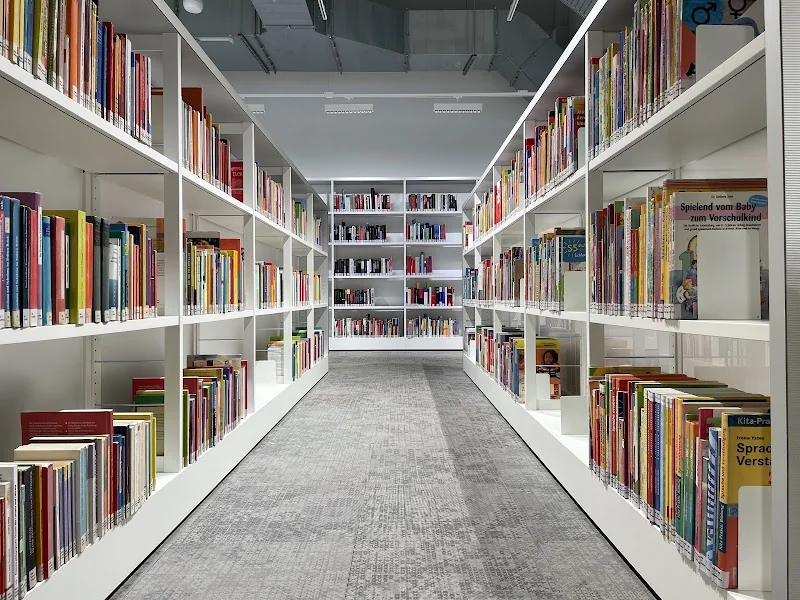
The Düsseldorf City Libraries - Central Library in KAP1 is much more than a place to borrow media. Located at Konrad-Adenauer-Platz 1, directly at the train station square in 40210 Düsseldorf, it combines library, learning space, event area, and urban meeting point into a house with a strong presence in the city center. Those looking for opening hours, photos, reviews, events, or practical information will find a location suitable for both short visits and longer stays. The Central Library caters to families, students, professionals, culture enthusiasts, and people who want to use digital, analog, and social offerings in one place. Its profile emerges from the combination of classic library work with modern usage forms such as Wi-Fi, digital learning, flexible spaces, children's and youth library, music library, workstations, and a café. For this reason, it is not just a lending point in the daily life of many Düsseldorf residents, but a versatile public space with high quality of stay. ([www2.duesseldorf.de](https://www2.duesseldorf.de/stadtbuechereien/adressen-und-oeffnungszeiten?utm_source=openai))
Opening Hours, Address, and Directions to the Central Library
The official address is Konrad-Adenauer-Platz 1, 40210 Düsseldorf, and the location directly at the train station square makes orientation particularly easy. The opening hours are clearly and user-friendly structured: Monday to Friday from 9 AM to 9 PM, Saturday from 9 AM to 6 PM, and Sunday from 11 AM to 6 PM. On weekdays, the library team is present at certain times, and on Saturdays, there is also a limited service window, while Sundays primarily focus on self-directed stays. Additionally, there is an outdoor return option that can be used around the clock. Many visitors also find the Saturday tour at 11 AM interesting, which is offered as an introductory tour; the meeting point is the promenade. The central location in the heart of the city makes the Central Library not only easy to find but also a convenient destination for people who want to combine their library visit with appointments, shopping, or a city stroll. For driving directions, it is particularly important that Düsseldorf provides an urban parking guidance system that helps with orientation in the city center. This makes the Central Library a location that is easily accessible for both spontaneous visits and planned appointments. ([www2.duesseldorf.de](https://www2.duesseldorf.de/stadtbuechereien/adressen-und-oeffnungszeiten?utm_source=openai))
Practical is also the digital access to the collection: The online catalog is available 24/7 and allows for real-time viewing of the media inventory of the entire system of the city libraries. This is particularly helpful for anyone who wants to check in advance whether a title is available or whether a reservation seems sensible. The combination of central location, long opening hours, and additional online service is a key reason why the Central Library is one of the most sought-after locations of the Düsseldorf city libraries. Regular users of the library also benefit from the clear structure of the house: address, times, return options, and tours are transparently communicated, making planning easier for both first-time visitors and regular guests. Especially for search queries like opening hours, directions, or Konrad-Adenauer-Platz, it becomes clear that this location is not only well visible but also very well organized functionally. This makes the Central Library in KAP1 a reliable point of contact in everyday life in Düsseldorf. ([www2.duesseldorf.de](https://www2.duesseldorf.de/stadtbuechereien/standorte/zentralbibliothek?utm_source=openai))
Events, Programs, and Manga Drawing Competition
The Central Library explicitly sees itself as a cultural and educational place. On the official pages, it is described as a platform for democracy, communication, cultural and digital education, knowledge exchange, and literary encounters. Accordingly, the event offerings are diverse: workshops, discussions, lectures, readings, information events, and collaborations with external partners are firmly part of the profile. Particularly important for the search intent of many visitors is the current event calendar, which regularly consolidates exhibitions, tours, music formats, and thematic offerings. In 2026, formats such as music in the online library, an introduction to the music studio, youth offerings, book talks, and tours through KAP1 were included. This shows that the program remains not only broad but also dynamic and varied throughout the year. For SEO searches related to programs, events, or happenings, the Central Library is therefore a strong location because the offerings go far beyond classic library usage and regularly address new target groups. ([www2.duesseldorf.de](https://www2.duesseldorf.de/stadtbuechereien/standorte/zentralbibliothek?utm_source=openai))
A particular crowd-puller is the Manga drawing competition around Japan Day. For 2026, the competition was listed on May 23 at the Central Library, running from 9:30 AM to 5:30 PM; participation is possible without registration but is limited to 800 sheets. The official notices already make it clear how strongly this date is anchored in youth and pop culture: participants pick up a sheet, draw a four-part picture story on a given theme, and submit the sheet on the same day. Participants may bring their own drawing and painting materials. Such formats show that the Central Library not only preserves books but actively organizes cultural participation. Additionally, recurring offerings such as tours with the head of the Central Library, open choir rehearsals, exhibitions, and language-related or musical events are available. For people searching for programs in 2025 or 2026, the Manga drawing competition, youth formats, or special action days, the Central Library thus provides real added value. ([duesseldorf.de](https://www.duesseldorf.de/fileadmin/Amt41-202/stadtbuechereien/pdf/Zentralbibliotheklive.pdf?utm_source=openai))
Children's Library, Youth Library, and Music Library in KAP1
A large part of the attractiveness of the Central Library lies in its specialized areas. The children's library, with 800 square meters, is a discovery space in which media and much more are presented under the motto Düsseldorf and Nature. Right next to it is the youth library, aimed at visitors aged 13 and older, described as a realm for teenagers. The youth library is not only a classic media area but also a place for gaming, cosplay, and community actions. This focus on young target groups makes the Central Library particularly relevant for families, schools, and anyone looking for child-friendly or youth-oriented offerings. Additionally, the student centers in the libraries are an important component of extracurricular learning: central learning media are available for grades 1 to 8, supporting independent learning. Therefore, those searching for children's library, youth library, or learning space will find here not just a mere side department but a significant core of the house. ([duesseldorf.de](https://www.duesseldorf.de/stadtbuechereien/standorte/zentralbibliothek/kinderbibliothek?utm_source=openai))
The music library also has a strong profile in the Central Library. On level 2 of KAP1, around 32,000 scores, CDs, books, music DVDs, and music magazines from all styles and eras are available. This makes the location interesting not only for hobby musicians but also for people who are researching, practicing, or specifically looking for music material. Additionally, the library card allows for borrowing books, CDs, DVDs, scores, games, and language courses, as well as using digital offerings such as Onleihe and PressReader. The combination of children's library, youth library, music library, and general media collections makes the Central Library a location with an unusually broad user spectrum. Those researching with search terms like photos, reviews, or central library Düsseldorf will thus encounter a house that asserts itself in several thematic worlds simultaneously: education, entertainment, music, gaming, family use, and research-related work. The result is a library that remains functional for very different life situations and does not limit itself to a single audience. ([duesseldorf.de](https://www.duesseldorf.de/stadtbuechereien/standorte/zentralbibliothek/musikbibliothek?utm_source=openai))
LibraryLab, Wi-Fi, and Digital Learning Offers
The digital offerings are among the most defining features of the Central Library in KAP1. The LibraryLab was launched in 2017 as an open experimental platform for digital offerings and has been continued in an expanded form in the new Central Library. Topics such as 3D printing, virtual reality, gaming, and collaborative experimentation are at the forefront. The concept is explicitly aimed at digitally interested individuals of all ages, even without technical prior knowledge, and sees itself as a place where people can connect their own projects, exchange, and learning processes. Regular introductions to digital services, workshops on 3D printing and VR, and events around digital topics and gaming are also offered. Thus, the Central Library addresses exactly those search queries that revolve around LibraryLab, digital studio, digital education, and modern library usage. It shows that libraries today are not only places for analog collections but also function as openly accessible learning labs. ([duesseldorf.de](https://www.duesseldorf.de/stadtbuechereien/standorte/zentralbibliothek/librarylab?utm_source=openai))
Additionally, there is very practical digital comfort: free Wi-Fi is available throughout the Central Library, and there are numerous workstations with internet access and PC usage. According to official information, the Central Library offers 600 workstations, of which 60 have PCs and free internet access as well as programs for word processing. There are also three info points where advice and service are bundled. Those wishing to use digital media can not only borrow with the library card but also use Onleihe and PressReader; moreover, PressReader provides access to over 5,000 newspapers and magazines from around the world in 60 languages. For focused work, learning boxes can also be reserved. Booking is free, possible with a valid library card, and can be made up to two weeks before the desired date. Boxes 2 and 3 can be booked for 4 to 8 hours, while boxes 4 to 9 can be booked for a maximum of 4 hours. Additionally, there are open offerings for tours and research training in the Central Library and throughout the entire system of the city libraries. This combination of infrastructure, digital access, and flexible learning spaces makes the Central Library a strong location for anyone looking to work or learn productively in Düsseldorf. ([www2.duesseldorf.de](https://www2.duesseldorf.de/stadtbuechereien/standorte/zentralbibliothek?utm_source=openai))
Accessibility, Xafé, and Quality of Stay
The Central Library in KAP1 is also well positioned in terms of accessibility and quality of stay. Officially, access is step-free, and the rooms are accessible via elevators; the two levels of the library are also connected. This is an important factor for people with mobility impairments and strengthens the claim of the house to be an accessible public place for as many people as possible. The visit is thus not limited to mere borrowing but becomes a comfortable stay in a modern, open building. The library is also organized in such a way that one can orient oneself well on several levels: info points, clear functional areas, and different zones for media, learning, encounters, and events create structure. This combination of accessibility and generous spatial layout is a key reason why the Central Library is often perceived as a friendly, contemporary place to stay. ([duesseldorf.de](https://www.duesseldorf.de/medienportal/pressedienst-einzelansicht/pld/ein-gang-durch-die-inklusive-zentralbibliothek?utm_source=openai))
Another plus is the Xafé in KAP1, which is integrated directly into the use of the house as a library café. Visitors can eat and drink there during the opening hours of the Central Library; the cuisine is influenced by Arabic, Turkish, and Mediterranean flavors, there are also vegan options, and much is prepared almost entirely from scratch. The café arose from the desire of many guests for such an offering and complements the library as a social meeting point. Especially for longer stays, learning phases, or visits with multiple stations, this is a crucial comfort factor. Those who experience the Central Library not just as a functional place but as a place to stay quickly understand why the house is so frequently searched in combination with terms like highlights, atmosphere, or special places. The interplay of café, event areas, learning zones, media spaces, and quiet areas makes the location lively and practical for everyday use. Thus, a place is created where one can not only find media but also spend time, exchange ideas, and perceive the library visit as part of an urban experience. ([duesseldorf.de](https://www.duesseldorf.de/stadtbuechereien/standorte/zentralbibliothek?utm_source=openai))
History of the Location and KAP1 as a Cultural House
The history of the Düsseldorf City Libraries dates back a long way. As early as 1885, the establishment of a public library was decided, and in 1886, the people's library opened with 862 volumes. This early development shows how closely the library is connected to the city's history. The current location in KAP1 is therefore not only a modern building but part of a long development in which the city libraries have repeatedly responded to new societal demands. In May 2017, the Düsseldorf City Council decided to rent an area of 23,320 square meters in a former logistics building of the post office at the train station square. Since spring 2019, a new cultural hotspot has emerged there, combining the Central Library with the FFT. This development marks the transition from a classic library to an open house for learning, culture, and encounters. ([duesseldorf.de](https://www.duesseldorf.de/stadtbuechereien/standorte/zentralbibliothek/kap1?utm_source=openai))
The new Central Library in KAP1 was planned with generous dimensions: two levels with around 8,000 square meters of public space, over 300,000 media, 600 workstations, free Wi-Fi access, several info points, 13 group workrooms, 15 event zones, and its own youth and children's library shape the overall picture. Additionally, the library does not exist as a closed-off place but as an open part of a larger urban ensemble. KAP1 thus becomes a house where media, events, advice, digital education, and social use converge. For search queries related to Central Library Düsseldorf, KAP1, history, special features, or space offerings, this is an important unique selling point. The library thus demonstrates how public cultural institutions can develop in the 21st century: not backward-looking, but open, flexible, and strongly oriented towards the needs of people. This is precisely where the sustainable significance of the Central Library in the Düsseldorf cityscape lies. ([duesseldorf.de](https://www.duesseldorf.de/stadtbuechereien/standorte/zentralbibliothek/kap1?utm_source=openai))
Sources:
- Addresses and Opening Hours - Düsseldorf City Libraries
- Central Library - Düsseldorf City Libraries
- KAP1 - State Capital Düsseldorf
- LibraryLab - State Capital Düsseldorf
- Events Central Library - State Capital Düsseldorf
- Children's Library - State Capital Düsseldorf
- Youth Library - State Capital Düsseldorf
- Music Library - State Capital Düsseldorf
Show moreShow less
Düsseldorf City Libraries - Central Library | Opening Hours
The Düsseldorf City Libraries - Central Library in KAP1 is much more than a place to borrow media. Located at Konrad-Adenauer-Platz 1, directly at the train station square in 40210 Düsseldorf, it combines library, learning space, event area, and urban meeting point into a house with a strong presence in the city center. Those looking for opening hours, photos, reviews, events, or practical information will find a location suitable for both short visits and longer stays. The Central Library caters to families, students, professionals, culture enthusiasts, and people who want to use digital, analog, and social offerings in one place. Its profile emerges from the combination of classic library work with modern usage forms such as Wi-Fi, digital learning, flexible spaces, children's and youth library, music library, workstations, and a café. For this reason, it is not just a lending point in the daily life of many Düsseldorf residents, but a versatile public space with high quality of stay. ([www2.duesseldorf.de](https://www2.duesseldorf.de/stadtbuechereien/adressen-und-oeffnungszeiten?utm_source=openai))
Opening Hours, Address, and Directions to the Central Library
The official address is Konrad-Adenauer-Platz 1, 40210 Düsseldorf, and the location directly at the train station square makes orientation particularly easy. The opening hours are clearly and user-friendly structured: Monday to Friday from 9 AM to 9 PM, Saturday from 9 AM to 6 PM, and Sunday from 11 AM to 6 PM. On weekdays, the library team is present at certain times, and on Saturdays, there is also a limited service window, while Sundays primarily focus on self-directed stays. Additionally, there is an outdoor return option that can be used around the clock. Many visitors also find the Saturday tour at 11 AM interesting, which is offered as an introductory tour; the meeting point is the promenade. The central location in the heart of the city makes the Central Library not only easy to find but also a convenient destination for people who want to combine their library visit with appointments, shopping, or a city stroll. For driving directions, it is particularly important that Düsseldorf provides an urban parking guidance system that helps with orientation in the city center. This makes the Central Library a location that is easily accessible for both spontaneous visits and planned appointments. ([www2.duesseldorf.de](https://www2.duesseldorf.de/stadtbuechereien/adressen-und-oeffnungszeiten?utm_source=openai))
Practical is also the digital access to the collection: The online catalog is available 24/7 and allows for real-time viewing of the media inventory of the entire system of the city libraries. This is particularly helpful for anyone who wants to check in advance whether a title is available or whether a reservation seems sensible. The combination of central location, long opening hours, and additional online service is a key reason why the Central Library is one of the most sought-after locations of the Düsseldorf city libraries. Regular users of the library also benefit from the clear structure of the house: address, times, return options, and tours are transparently communicated, making planning easier for both first-time visitors and regular guests. Especially for search queries like opening hours, directions, or Konrad-Adenauer-Platz, it becomes clear that this location is not only well visible but also very well organized functionally. This makes the Central Library in KAP1 a reliable point of contact in everyday life in Düsseldorf. ([www2.duesseldorf.de](https://www2.duesseldorf.de/stadtbuechereien/standorte/zentralbibliothek?utm_source=openai))
Events, Programs, and Manga Drawing Competition
The Central Library explicitly sees itself as a cultural and educational place. On the official pages, it is described as a platform for democracy, communication, cultural and digital education, knowledge exchange, and literary encounters. Accordingly, the event offerings are diverse: workshops, discussions, lectures, readings, information events, and collaborations with external partners are firmly part of the profile. Particularly important for the search intent of many visitors is the current event calendar, which regularly consolidates exhibitions, tours, music formats, and thematic offerings. In 2026, formats such as music in the online library, an introduction to the music studio, youth offerings, book talks, and tours through KAP1 were included. This shows that the program remains not only broad but also dynamic and varied throughout the year. For SEO searches related to programs, events, or happenings, the Central Library is therefore a strong location because the offerings go far beyond classic library usage and regularly address new target groups. ([www2.duesseldorf.de](https://www2.duesseldorf.de/stadtbuechereien/standorte/zentralbibliothek?utm_source=openai))
A particular crowd-puller is the Manga drawing competition around Japan Day. For 2026, the competition was listed on May 23 at the Central Library, running from 9:30 AM to 5:30 PM; participation is possible without registration but is limited to 800 sheets. The official notices already make it clear how strongly this date is anchored in youth and pop culture: participants pick up a sheet, draw a four-part picture story on a given theme, and submit the sheet on the same day. Participants may bring their own drawing and painting materials. Such formats show that the Central Library not only preserves books but actively organizes cultural participation. Additionally, recurring offerings such as tours with the head of the Central Library, open choir rehearsals, exhibitions, and language-related or musical events are available. For people searching for programs in 2025 or 2026, the Manga drawing competition, youth formats, or special action days, the Central Library thus provides real added value. ([duesseldorf.de](https://www.duesseldorf.de/fileadmin/Amt41-202/stadtbuechereien/pdf/Zentralbibliotheklive.pdf?utm_source=openai))
Children's Library, Youth Library, and Music Library in KAP1
A large part of the attractiveness of the Central Library lies in its specialized areas. The children's library, with 800 square meters, is a discovery space in which media and much more are presented under the motto Düsseldorf and Nature. Right next to it is the youth library, aimed at visitors aged 13 and older, described as a realm for teenagers. The youth library is not only a classic media area but also a place for gaming, cosplay, and community actions. This focus on young target groups makes the Central Library particularly relevant for families, schools, and anyone looking for child-friendly or youth-oriented offerings. Additionally, the student centers in the libraries are an important component of extracurricular learning: central learning media are available for grades 1 to 8, supporting independent learning. Therefore, those searching for children's library, youth library, or learning space will find here not just a mere side department but a significant core of the house. ([duesseldorf.de](https://www.duesseldorf.de/stadtbuechereien/standorte/zentralbibliothek/kinderbibliothek?utm_source=openai))
The music library also has a strong profile in the Central Library. On level 2 of KAP1, around 32,000 scores, CDs, books, music DVDs, and music magazines from all styles and eras are available. This makes the location interesting not only for hobby musicians but also for people who are researching, practicing, or specifically looking for music material. Additionally, the library card allows for borrowing books, CDs, DVDs, scores, games, and language courses, as well as using digital offerings such as Onleihe and PressReader. The combination of children's library, youth library, music library, and general media collections makes the Central Library a location with an unusually broad user spectrum. Those researching with search terms like photos, reviews, or central library Düsseldorf will thus encounter a house that asserts itself in several thematic worlds simultaneously: education, entertainment, music, gaming, family use, and research-related work. The result is a library that remains functional for very different life situations and does not limit itself to a single audience. ([duesseldorf.de](https://www.duesseldorf.de/stadtbuechereien/standorte/zentralbibliothek/musikbibliothek?utm_source=openai))
LibraryLab, Wi-Fi, and Digital Learning Offers
The digital offerings are among the most defining features of the Central Library in KAP1. The LibraryLab was launched in 2017 as an open experimental platform for digital offerings and has been continued in an expanded form in the new Central Library. Topics such as 3D printing, virtual reality, gaming, and collaborative experimentation are at the forefront. The concept is explicitly aimed at digitally interested individuals of all ages, even without technical prior knowledge, and sees itself as a place where people can connect their own projects, exchange, and learning processes. Regular introductions to digital services, workshops on 3D printing and VR, and events around digital topics and gaming are also offered. Thus, the Central Library addresses exactly those search queries that revolve around LibraryLab, digital studio, digital education, and modern library usage. It shows that libraries today are not only places for analog collections but also function as openly accessible learning labs. ([duesseldorf.de](https://www.duesseldorf.de/stadtbuechereien/standorte/zentralbibliothek/librarylab?utm_source=openai))
Additionally, there is very practical digital comfort: free Wi-Fi is available throughout the Central Library, and there are numerous workstations with internet access and PC usage. According to official information, the Central Library offers 600 workstations, of which 60 have PCs and free internet access as well as programs for word processing. There are also three info points where advice and service are bundled. Those wishing to use digital media can not only borrow with the library card but also use Onleihe and PressReader; moreover, PressReader provides access to over 5,000 newspapers and magazines from around the world in 60 languages. For focused work, learning boxes can also be reserved. Booking is free, possible with a valid library card, and can be made up to two weeks before the desired date. Boxes 2 and 3 can be booked for 4 to 8 hours, while boxes 4 to 9 can be booked for a maximum of 4 hours. Additionally, there are open offerings for tours and research training in the Central Library and throughout the entire system of the city libraries. This combination of infrastructure, digital access, and flexible learning spaces makes the Central Library a strong location for anyone looking to work or learn productively in Düsseldorf. ([www2.duesseldorf.de](https://www2.duesseldorf.de/stadtbuechereien/standorte/zentralbibliothek?utm_source=openai))
Accessibility, Xafé, and Quality of Stay
The Central Library in KAP1 is also well positioned in terms of accessibility and quality of stay. Officially, access is step-free, and the rooms are accessible via elevators; the two levels of the library are also connected. This is an important factor for people with mobility impairments and strengthens the claim of the house to be an accessible public place for as many people as possible. The visit is thus not limited to mere borrowing but becomes a comfortable stay in a modern, open building. The library is also organized in such a way that one can orient oneself well on several levels: info points, clear functional areas, and different zones for media, learning, encounters, and events create structure. This combination of accessibility and generous spatial layout is a key reason why the Central Library is often perceived as a friendly, contemporary place to stay. ([duesseldorf.de](https://www.duesseldorf.de/medienportal/pressedienst-einzelansicht/pld/ein-gang-durch-die-inklusive-zentralbibliothek?utm_source=openai))
Another plus is the Xafé in KAP1, which is integrated directly into the use of the house as a library café. Visitors can eat and drink there during the opening hours of the Central Library; the cuisine is influenced by Arabic, Turkish, and Mediterranean flavors, there are also vegan options, and much is prepared almost entirely from scratch. The café arose from the desire of many guests for such an offering and complements the library as a social meeting point. Especially for longer stays, learning phases, or visits with multiple stations, this is a crucial comfort factor. Those who experience the Central Library not just as a functional place but as a place to stay quickly understand why the house is so frequently searched in combination with terms like highlights, atmosphere, or special places. The interplay of café, event areas, learning zones, media spaces, and quiet areas makes the location lively and practical for everyday use. Thus, a place is created where one can not only find media but also spend time, exchange ideas, and perceive the library visit as part of an urban experience. ([duesseldorf.de](https://www.duesseldorf.de/stadtbuechereien/standorte/zentralbibliothek?utm_source=openai))
History of the Location and KAP1 as a Cultural House
The history of the Düsseldorf City Libraries dates back a long way. As early as 1885, the establishment of a public library was decided, and in 1886, the people's library opened with 862 volumes. This early development shows how closely the library is connected to the city's history. The current location in KAP1 is therefore not only a modern building but part of a long development in which the city libraries have repeatedly responded to new societal demands. In May 2017, the Düsseldorf City Council decided to rent an area of 23,320 square meters in a former logistics building of the post office at the train station square. Since spring 2019, a new cultural hotspot has emerged there, combining the Central Library with the FFT. This development marks the transition from a classic library to an open house for learning, culture, and encounters. ([duesseldorf.de](https://www.duesseldorf.de/stadtbuechereien/standorte/zentralbibliothek/kap1?utm_source=openai))
The new Central Library in KAP1 was planned with generous dimensions: two levels with around 8,000 square meters of public space, over 300,000 media, 600 workstations, free Wi-Fi access, several info points, 13 group workrooms, 15 event zones, and its own youth and children's library shape the overall picture. Additionally, the library does not exist as a closed-off place but as an open part of a larger urban ensemble. KAP1 thus becomes a house where media, events, advice, digital education, and social use converge. For search queries related to Central Library Düsseldorf, KAP1, history, special features, or space offerings, this is an important unique selling point. The library thus demonstrates how public cultural institutions can develop in the 21st century: not backward-looking, but open, flexible, and strongly oriented towards the needs of people. This is precisely where the sustainable significance of the Central Library in the Düsseldorf cityscape lies. ([duesseldorf.de](https://www.duesseldorf.de/stadtbuechereien/standorte/zentralbibliothek/kap1?utm_source=openai))
Sources:
- Addresses and Opening Hours - Düsseldorf City Libraries
- Central Library - Düsseldorf City Libraries
- KAP1 - State Capital Düsseldorf
- LibraryLab - State Capital Düsseldorf
- Events Central Library - State Capital Düsseldorf
- Children's Library - State Capital Düsseldorf
- Youth Library - State Capital Düsseldorf
- Music Library - State Capital Düsseldorf
Düsseldorf City Libraries - Central Library | Opening Hours
The Düsseldorf City Libraries - Central Library in KAP1 is much more than a place to borrow media. Located at Konrad-Adenauer-Platz 1, directly at the train station square in 40210 Düsseldorf, it combines library, learning space, event area, and urban meeting point into a house with a strong presence in the city center. Those looking for opening hours, photos, reviews, events, or practical information will find a location suitable for both short visits and longer stays. The Central Library caters to families, students, professionals, culture enthusiasts, and people who want to use digital, analog, and social offerings in one place. Its profile emerges from the combination of classic library work with modern usage forms such as Wi-Fi, digital learning, flexible spaces, children's and youth library, music library, workstations, and a café. For this reason, it is not just a lending point in the daily life of many Düsseldorf residents, but a versatile public space with high quality of stay. ([www2.duesseldorf.de](https://www2.duesseldorf.de/stadtbuechereien/adressen-und-oeffnungszeiten?utm_source=openai))
Opening Hours, Address, and Directions to the Central Library
The official address is Konrad-Adenauer-Platz 1, 40210 Düsseldorf, and the location directly at the train station square makes orientation particularly easy. The opening hours are clearly and user-friendly structured: Monday to Friday from 9 AM to 9 PM, Saturday from 9 AM to 6 PM, and Sunday from 11 AM to 6 PM. On weekdays, the library team is present at certain times, and on Saturdays, there is also a limited service window, while Sundays primarily focus on self-directed stays. Additionally, there is an outdoor return option that can be used around the clock. Many visitors also find the Saturday tour at 11 AM interesting, which is offered as an introductory tour; the meeting point is the promenade. The central location in the heart of the city makes the Central Library not only easy to find but also a convenient destination for people who want to combine their library visit with appointments, shopping, or a city stroll. For driving directions, it is particularly important that Düsseldorf provides an urban parking guidance system that helps with orientation in the city center. This makes the Central Library a location that is easily accessible for both spontaneous visits and planned appointments. ([www2.duesseldorf.de](https://www2.duesseldorf.de/stadtbuechereien/adressen-und-oeffnungszeiten?utm_source=openai))
Practical is also the digital access to the collection: The online catalog is available 24/7 and allows for real-time viewing of the media inventory of the entire system of the city libraries. This is particularly helpful for anyone who wants to check in advance whether a title is available or whether a reservation seems sensible. The combination of central location, long opening hours, and additional online service is a key reason why the Central Library is one of the most sought-after locations of the Düsseldorf city libraries. Regular users of the library also benefit from the clear structure of the house: address, times, return options, and tours are transparently communicated, making planning easier for both first-time visitors and regular guests. Especially for search queries like opening hours, directions, or Konrad-Adenauer-Platz, it becomes clear that this location is not only well visible but also very well organized functionally. This makes the Central Library in KAP1 a reliable point of contact in everyday life in Düsseldorf. ([www2.duesseldorf.de](https://www2.duesseldorf.de/stadtbuechereien/standorte/zentralbibliothek?utm_source=openai))
Events, Programs, and Manga Drawing Competition
The Central Library explicitly sees itself as a cultural and educational place. On the official pages, it is described as a platform for democracy, communication, cultural and digital education, knowledge exchange, and literary encounters. Accordingly, the event offerings are diverse: workshops, discussions, lectures, readings, information events, and collaborations with external partners are firmly part of the profile. Particularly important for the search intent of many visitors is the current event calendar, which regularly consolidates exhibitions, tours, music formats, and thematic offerings. In 2026, formats such as music in the online library, an introduction to the music studio, youth offerings, book talks, and tours through KAP1 were included. This shows that the program remains not only broad but also dynamic and varied throughout the year. For SEO searches related to programs, events, or happenings, the Central Library is therefore a strong location because the offerings go far beyond classic library usage and regularly address new target groups. ([www2.duesseldorf.de](https://www2.duesseldorf.de/stadtbuechereien/standorte/zentralbibliothek?utm_source=openai))
A particular crowd-puller is the Manga drawing competition around Japan Day. For 2026, the competition was listed on May 23 at the Central Library, running from 9:30 AM to 5:30 PM; participation is possible without registration but is limited to 800 sheets. The official notices already make it clear how strongly this date is anchored in youth and pop culture: participants pick up a sheet, draw a four-part picture story on a given theme, and submit the sheet on the same day. Participants may bring their own drawing and painting materials. Such formats show that the Central Library not only preserves books but actively organizes cultural participation. Additionally, recurring offerings such as tours with the head of the Central Library, open choir rehearsals, exhibitions, and language-related or musical events are available. For people searching for programs in 2025 or 2026, the Manga drawing competition, youth formats, or special action days, the Central Library thus provides real added value. ([duesseldorf.de](https://www.duesseldorf.de/fileadmin/Amt41-202/stadtbuechereien/pdf/Zentralbibliotheklive.pdf?utm_source=openai))
Children's Library, Youth Library, and Music Library in KAP1
A large part of the attractiveness of the Central Library lies in its specialized areas. The children's library, with 800 square meters, is a discovery space in which media and much more are presented under the motto Düsseldorf and Nature. Right next to it is the youth library, aimed at visitors aged 13 and older, described as a realm for teenagers. The youth library is not only a classic media area but also a place for gaming, cosplay, and community actions. This focus on young target groups makes the Central Library particularly relevant for families, schools, and anyone looking for child-friendly or youth-oriented offerings. Additionally, the student centers in the libraries are an important component of extracurricular learning: central learning media are available for grades 1 to 8, supporting independent learning. Therefore, those searching for children's library, youth library, or learning space will find here not just a mere side department but a significant core of the house. ([duesseldorf.de](https://www.duesseldorf.de/stadtbuechereien/standorte/zentralbibliothek/kinderbibliothek?utm_source=openai))
The music library also has a strong profile in the Central Library. On level 2 of KAP1, around 32,000 scores, CDs, books, music DVDs, and music magazines from all styles and eras are available. This makes the location interesting not only for hobby musicians but also for people who are researching, practicing, or specifically looking for music material. Additionally, the library card allows for borrowing books, CDs, DVDs, scores, games, and language courses, as well as using digital offerings such as Onleihe and PressReader. The combination of children's library, youth library, music library, and general media collections makes the Central Library a location with an unusually broad user spectrum. Those researching with search terms like photos, reviews, or central library Düsseldorf will thus encounter a house that asserts itself in several thematic worlds simultaneously: education, entertainment, music, gaming, family use, and research-related work. The result is a library that remains functional for very different life situations and does not limit itself to a single audience. ([duesseldorf.de](https://www.duesseldorf.de/stadtbuechereien/standorte/zentralbibliothek/musikbibliothek?utm_source=openai))
LibraryLab, Wi-Fi, and Digital Learning Offers
The digital offerings are among the most defining features of the Central Library in KAP1. The LibraryLab was launched in 2017 as an open experimental platform for digital offerings and has been continued in an expanded form in the new Central Library. Topics such as 3D printing, virtual reality, gaming, and collaborative experimentation are at the forefront. The concept is explicitly aimed at digitally interested individuals of all ages, even without technical prior knowledge, and sees itself as a place where people can connect their own projects, exchange, and learning processes. Regular introductions to digital services, workshops on 3D printing and VR, and events around digital topics and gaming are also offered. Thus, the Central Library addresses exactly those search queries that revolve around LibraryLab, digital studio, digital education, and modern library usage. It shows that libraries today are not only places for analog collections but also function as openly accessible learning labs. ([duesseldorf.de](https://www.duesseldorf.de/stadtbuechereien/standorte/zentralbibliothek/librarylab?utm_source=openai))
Additionally, there is very practical digital comfort: free Wi-Fi is available throughout the Central Library, and there are numerous workstations with internet access and PC usage. According to official information, the Central Library offers 600 workstations, of which 60 have PCs and free internet access as well as programs for word processing. There are also three info points where advice and service are bundled. Those wishing to use digital media can not only borrow with the library card but also use Onleihe and PressReader; moreover, PressReader provides access to over 5,000 newspapers and magazines from around the world in 60 languages. For focused work, learning boxes can also be reserved. Booking is free, possible with a valid library card, and can be made up to two weeks before the desired date. Boxes 2 and 3 can be booked for 4 to 8 hours, while boxes 4 to 9 can be booked for a maximum of 4 hours. Additionally, there are open offerings for tours and research training in the Central Library and throughout the entire system of the city libraries. This combination of infrastructure, digital access, and flexible learning spaces makes the Central Library a strong location for anyone looking to work or learn productively in Düsseldorf. ([www2.duesseldorf.de](https://www2.duesseldorf.de/stadtbuechereien/standorte/zentralbibliothek?utm_source=openai))
Accessibility, Xafé, and Quality of Stay
The Central Library in KAP1 is also well positioned in terms of accessibility and quality of stay. Officially, access is step-free, and the rooms are accessible via elevators; the two levels of the library are also connected. This is an important factor for people with mobility impairments and strengthens the claim of the house to be an accessible public place for as many people as possible. The visit is thus not limited to mere borrowing but becomes a comfortable stay in a modern, open building. The library is also organized in such a way that one can orient oneself well on several levels: info points, clear functional areas, and different zones for media, learning, encounters, and events create structure. This combination of accessibility and generous spatial layout is a key reason why the Central Library is often perceived as a friendly, contemporary place to stay. ([duesseldorf.de](https://www.duesseldorf.de/medienportal/pressedienst-einzelansicht/pld/ein-gang-durch-die-inklusive-zentralbibliothek?utm_source=openai))
Another plus is the Xafé in KAP1, which is integrated directly into the use of the house as a library café. Visitors can eat and drink there during the opening hours of the Central Library; the cuisine is influenced by Arabic, Turkish, and Mediterranean flavors, there are also vegan options, and much is prepared almost entirely from scratch. The café arose from the desire of many guests for such an offering and complements the library as a social meeting point. Especially for longer stays, learning phases, or visits with multiple stations, this is a crucial comfort factor. Those who experience the Central Library not just as a functional place but as a place to stay quickly understand why the house is so frequently searched in combination with terms like highlights, atmosphere, or special places. The interplay of café, event areas, learning zones, media spaces, and quiet areas makes the location lively and practical for everyday use. Thus, a place is created where one can not only find media but also spend time, exchange ideas, and perceive the library visit as part of an urban experience. ([duesseldorf.de](https://www.duesseldorf.de/stadtbuechereien/standorte/zentralbibliothek?utm_source=openai))
History of the Location and KAP1 as a Cultural House
The history of the Düsseldorf City Libraries dates back a long way. As early as 1885, the establishment of a public library was decided, and in 1886, the people's library opened with 862 volumes. This early development shows how closely the library is connected to the city's history. The current location in KAP1 is therefore not only a modern building but part of a long development in which the city libraries have repeatedly responded to new societal demands. In May 2017, the Düsseldorf City Council decided to rent an area of 23,320 square meters in a former logistics building of the post office at the train station square. Since spring 2019, a new cultural hotspot has emerged there, combining the Central Library with the FFT. This development marks the transition from a classic library to an open house for learning, culture, and encounters. ([duesseldorf.de](https://www.duesseldorf.de/stadtbuechereien/standorte/zentralbibliothek/kap1?utm_source=openai))
The new Central Library in KAP1 was planned with generous dimensions: two levels with around 8,000 square meters of public space, over 300,000 media, 600 workstations, free Wi-Fi access, several info points, 13 group workrooms, 15 event zones, and its own youth and children's library shape the overall picture. Additionally, the library does not exist as a closed-off place but as an open part of a larger urban ensemble. KAP1 thus becomes a house where media, events, advice, digital education, and social use converge. For search queries related to Central Library Düsseldorf, KAP1, history, special features, or space offerings, this is an important unique selling point. The library thus demonstrates how public cultural institutions can develop in the 21st century: not backward-looking, but open, flexible, and strongly oriented towards the needs of people. This is precisely where the sustainable significance of the Central Library in the Düsseldorf cityscape lies. ([duesseldorf.de](https://www.duesseldorf.de/stadtbuechereien/standorte/zentralbibliothek/kap1?utm_source=openai))
Sources:
- Addresses and Opening Hours - Düsseldorf City Libraries
- Central Library - Düsseldorf City Libraries
- KAP1 - State Capital Düsseldorf
- LibraryLab - State Capital Düsseldorf
- Events Central Library - State Capital Düsseldorf
- Children's Library - State Capital Düsseldorf
- Youth Library - State Capital Düsseldorf
- Music Library - State Capital Düsseldorf
Upcoming Events
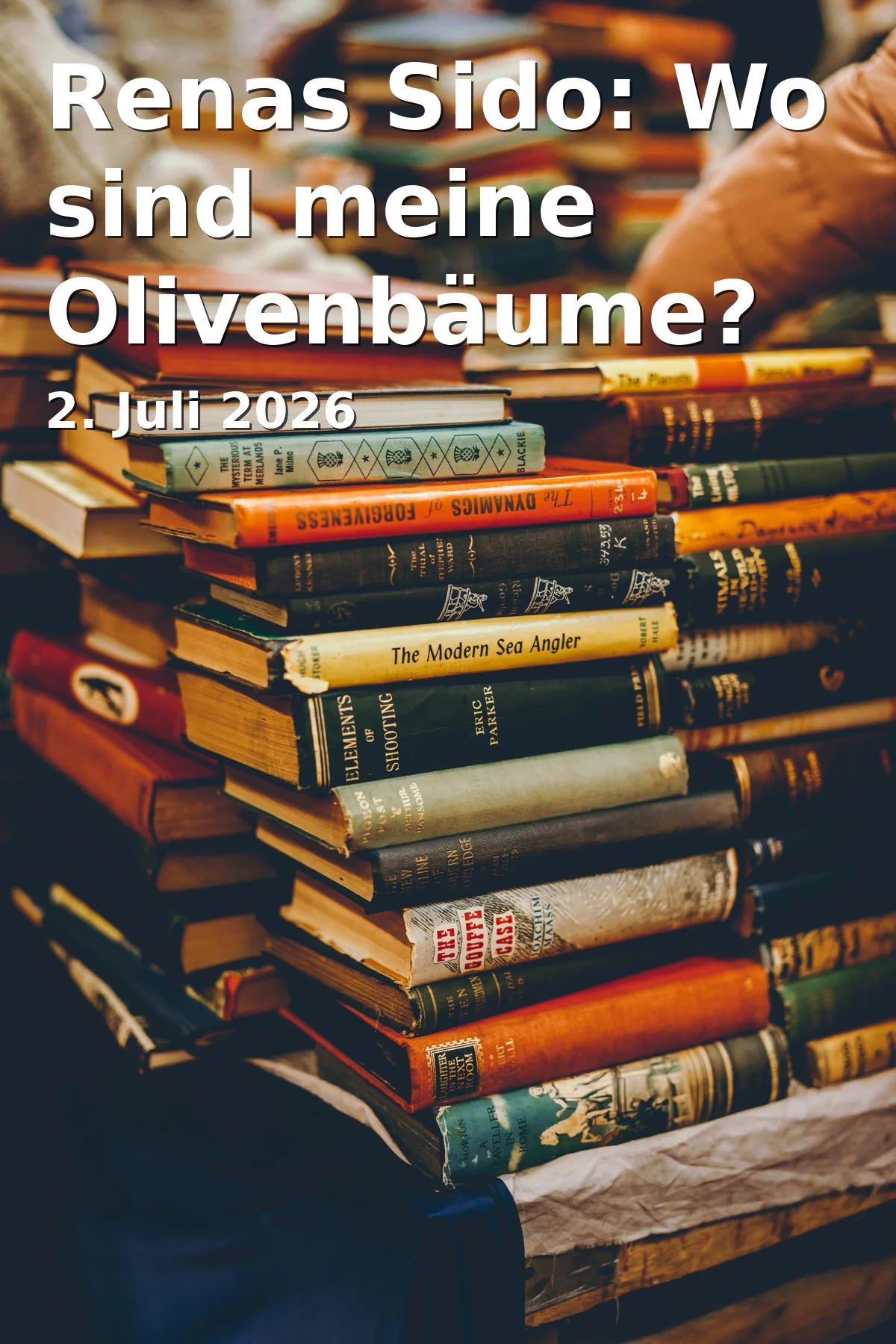
Renas Sido: Where are my olive trees?
Embark on a literary journey with Renas Sido on July 2 and discover stories of origin and loss.
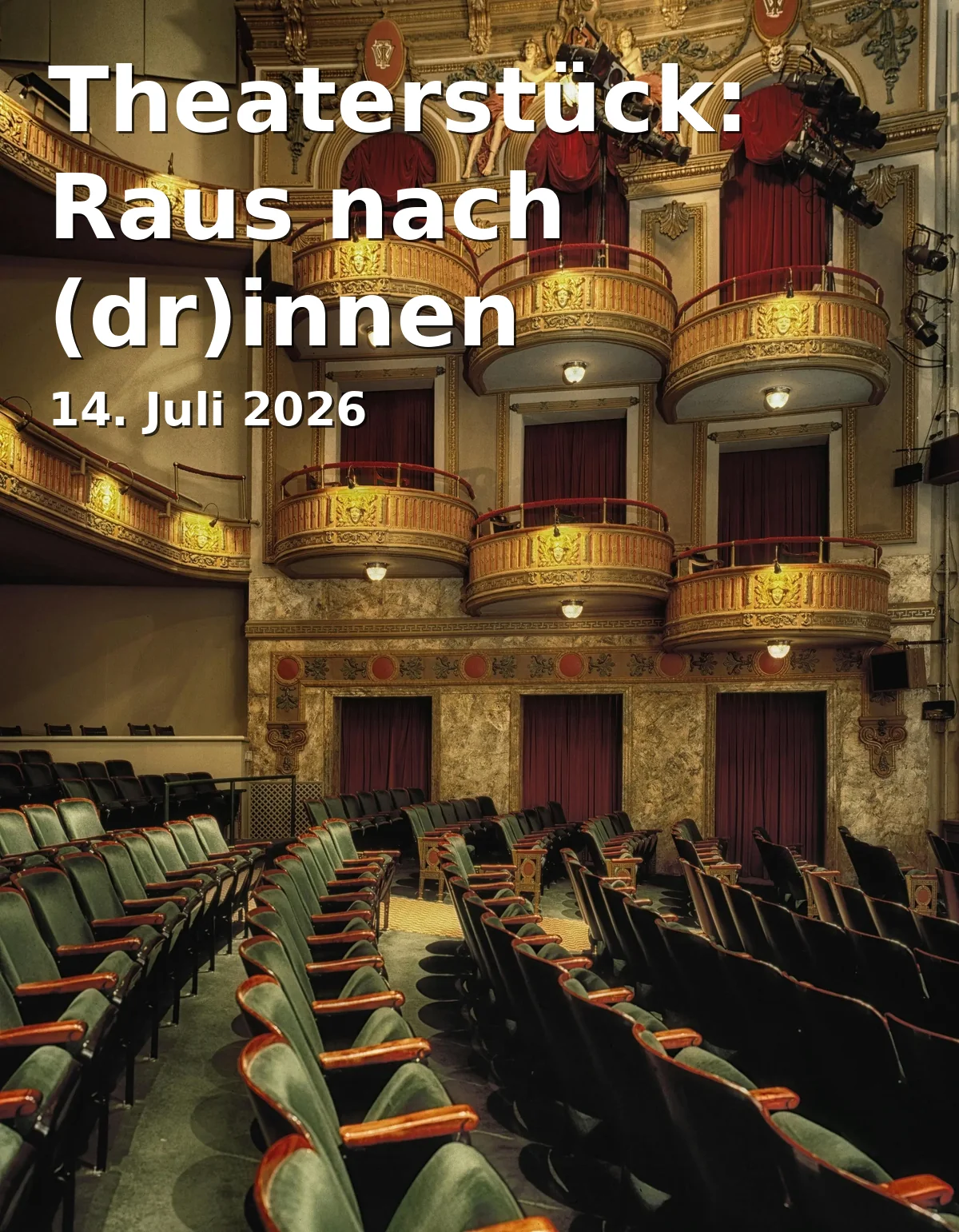
Theater Play: Out to (in)side
Visit the theater play at the closing of the exhibition at the Central Library of Düsseldorf and experience captivating stories.
Frequently Asked Questions
Reviews
Giulia
25. January 2026
I came here because I was travelling by myself and needed somewhere to stay for the afternoon and study. It was clean, organised and welcoming. There are different spaces to sit down, tables, individual desks, and monitors. Great to spend the afternoon in! Such an inclusive public space.
John kozman
12. September 2025
This library has been my second home for almost three months while preparing for my Staatsexamen. It truly reflects the best of Germany: a place that is free and open to everyone. People from all walks of life come here to learn, to focus — each of them with their own goals. The design is fascinating — modern, light-filled, and always clean. I was especially impressed by how well the restrooms are maintained, something that is rare in public spaces. I want to sincerely thank everyone who works here: Marco, the security guard who makes sure the rules are respected and the space stays quiet, the cleaning staff who keep everything spotless, and the reception team who are always welcoming. Thank you, Germany, for investing in such places. This is exactly why people pay taxes — so that money can be channeled into something that benefits everyone.
Ιανουάριος Αλεανδρο
24. January 2026
Cozy. Aesthetic. Couches. The sweatcircle. When I come here I feel like I study medicine cuz everybody, who visits, apparently is. Toilet parfait. Yummy café. Free subscription to rent books and use lockers. Thanks Düsseldorf.
Ami
22. February 2026
An amazing library! very quiet and clean, the perfect place to study and read.
B St
13. May 2025
Central location and big, but it’s not a place to study or read. My local Cafe is quieter than this library, unbelievably out of control and noisy. Never in my life I saw a library like this, looks more like a middle school without principles. Kids running, shouting, and crying, teenage guys sleeping on the couches, ganging up and screaming around the place, girls gossiping and talking to each other loudly, without any consideration for whether they are in their after-school coffee shop. It doesn’t help that there was construction work inside the library (like other noises aren’t enough), and employees not only don’t bother to control the situation but go around in a group of colleagues with their book trolley while loudly talking and laughing. Never expected to see people in Germany who don’t know how to behave in a library.