
Museum Kunstpalast, Ehrenhof 4-5, Düsseldorf
Museum Kunstpalast, Ehrenhof 4-5, 40479 Düsseldorf, Germany
Robert-Schumann-Saal | Program 2026 & Tickets
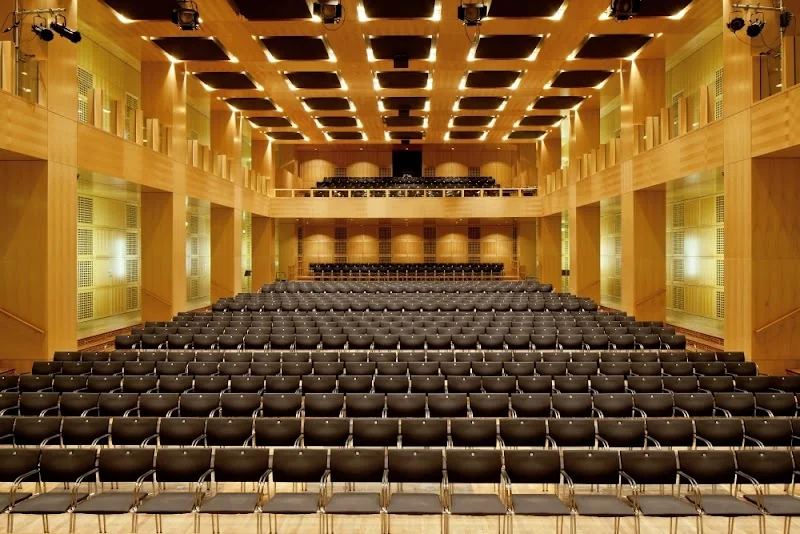
The Robert-Schumann-Saal in the Kunstpalast is one of the finest addresses for culture in Düsseldorf. Located in the basement of the museum complex at Ehrenhof, the hall combines warmly resonant, wood-paneled architecture with modern stage and event technology. Approximately 800 seats create an intimate yet representative atmosphere for chamber music, solo recitals, readings, cabaret, and selected pop formats. The convenient location near the Rhine, Old Town, and Tonhalle, the direct access to the underground garage, and the good accessibility via the Rheinbahn make visiting particularly comfortable. Thanks to its proximity to other cultural venues and exhibition spaces of the Kunstpalast, a concert visit can be excellently combined with a museum tour or a walk along the Rhine riverbank. The program design combines high-profile guest performances with its own series, promotes young talents, and simultaneously opens up to surprising crossover projects. This creates that special mix that has made the hall a meeting point for culture enthusiasts from the entire region for years.
Program 2026 in the Robert-Schumann-Saal: Highlights and Series
The 2026 program of the Robert-Schumann-Saal focuses on diversity with a clear signature. The centerpiece is chamber music evenings with renowned ensembles and soloists, who find optimal conditions in the acoustically finely balanced space. This is complemented by readings in which prominent actors and authors make literature tangible. A fixed element is the collaboration with the traditional Düsseldorf Kom(m)ödchen: In this cooperation, the stars of German-speaking cabaret perform with current programs. This makes the hall attractive for a culture-interested audience that appreciates pointed satire as much as poetic word art or virtuosic piano art.
With the series Discovering Talents, the hall brings award-winning young pianists into the spotlight. Four portrait evenings per season allow for accompanying promising careers from the very beginning. The selection is curated and deliberately offers contrasts between classical core repertoire and fresh program approaches. The platform 440Hz also bridges between classical and pop, jazz, soul, or hip-hop. Under the motto Encounter instead of Drawer, evenings are created that cleverly break traditional concert formats without sacrificing artistic substance. For families and young listeners, child-friendly formats serve as a low-threshold access to music, moderated with wit and temperament, so that the fascination for live experiences can grow early.
A look at the 2026 calendar also shows recurring focal points, such as thematic soirées or musically-literary programs like the duality of word and music. Here, biographies, excerpts from novels, or poetry meet carefully selected pieces of music. This dramaturgical intertwining ensures intense listening experiences and fits excellently with the character of the Robert-Schumann-Saal as a classical chamber music hall in a museum context. Guest performances from external series and festivals expand the spectrum: The Piano Festival Ruhr uses the hall as a venue in Düsseldorf, and Heinersdorff concerts also bring pianists and chamber ensembles to the Ehrenhof. Through the mix of self-productions and curated guest performances, the program remains varied yet recognizable. A practical service: The overall program is continuously updated online, and the season booklet 2026/27 will be published in early May 2026. This allows visitors to note their desired dates early and plan around the start of ticket sales.
Buy Tickets: Online, Box Offices, and Evening Box Office
There are several convenient ways to purchase tickets. The fastest way is through the webshop operated in cooperation with westticket. Here, buyers benefit from a price advantage because the previous flat booking fee is waived; only a service or advance booking fee applies. Tickets can be used as mobile tickets or printed at home; postal delivery is available upon request for a fee. Those who prefer to order by phone can reach westticket via the well-known service number. There, seats can be selected, discounts checked, and orders completed; the fee structure corresponds to the information in online sales.
In addition to digital purchases, the Kunstpalast also offers on-site service: On Fridays between 2 PM and 6 PM, a box office is open in the building. Experience shows that many guests appreciate this option when they prefer advice on seating or want to combine several events. An additional point of contact is the opera shop on Heinrich-Heine-Allee in the city center, which serves as a box office for the Robert-Schumann-Saal. For spontaneous visits, the evening box office in the Robert-Schumann-Saal opens one hour before the event begins. At this time, remaining tickets and returns can usually still be purchased; however, for sold-out evenings, early online purchase is recommended.
Attractive for frequent listeners is the choice subscription, which offers discounts of up to 20 percent when booking multiple self-produced events of the Robert-Schumann-Saal. The subscription can be flexibly assembled and thus fits different interest profiles. Another value-added service is the often integrated public transport use in the VRR: If the ticket states Ticket equals travel authorization, the card also serves as a travel entitlement for the outward and return journey in the specified price level. Those needing tickets for wheelchair spaces can find them in row 22 of the auditorium due to the architecture; they are reserved by phone for events sold through westticket. With this clear, user-friendly ticket logistics, access to the program remains uncomplicated, transparent, and comfortable.
Access and Parking at the Kunstpalast: Underground Garage, Lower Wharf, and Public Transport
The Robert-Schumann-Saal is located in the Ehrenhof ensemble north of Düsseldorf's Old Town and is thus excellently connected to the urban transport network. For travel by Rheinbahn, the stops ERGO-Platz or Klever Straße as well as Tonhalle/Ehrenhof are particularly convenient. Both are just a few minutes' walk away, making it easy to plan a late concert end with bus and train. Those arriving by car or motorcycle can park most conveniently in the underground garage Campus at Kunstpalast, Emilie-Preyer-Platz 1, 40479 Düsseldorf. The garage offers direct underground access on the first basement level of the building, through which visitors can reach the foyer area of the Robert-Schumann-Saal dry-footed during events.
As an additional parking option, the ERGO parking garage is available in the evenings and on weekends, with the entrance located to the left of the garage at Kunstpalast. For particularly busy events or when arriving by tour buses, the parking lot Lower Wharf at Robert-Lehr-Ufer, 40474 Düsseldorf, is recommended, which also offers parking spaces for buses. Navigation devices can easily find the address; from there, it is a short walk along the Rhine promenade and the Ehrenhof to the museum complex. For deliveries and production, the technical information of the house refers to defined loading routes and elevator solutions; however, for the audience, the marked path through the foyer and courtyard is decisive.
Important to know: The main entrance to the Robert-Schumann-Saal is located in the courtyard of the Kunstpalast since the current season. It is accessible via a barrier-free passage from Scheibenstraße; alternatively, two staircases lead into the courtyard. The paths are well signposted on-site, and a site plan makes the routes transparent. Those using the underground garage should follow the marking to the direct access, which is particularly comfortable in rainy weather. Thanks to this combination of proximity to public transport, central location, and parking options, travel can be flexibly adjusted to personal preferences. For visitors who want to combine several program points in the Kunstpalast, finding a parking space is just as uncomplicated as for concert guests who only visit the hall.
Seating Plan and Seats: Auditorium, Balcony, and Accessibility
The hall is classically divided into auditorium and balcony. According to the technical data of the house, the auditorium offers 656 seats in row seating, while the balcony comprises 140 seats; together, this results in a maximum seating capacity of 796. If the stage area is expanded, four rows in the auditorium are removed, and the number of seats is reduced accordingly. For flexible uses, additional seating variants for conferences or banquets are available; for the concert and reading program, row seating with a clear sightline to the stage predominates. The clear hall height, the compact dimensions of the audience area, and the wood-dominated interior architecture contribute to a direct, contoured reproduction that is particularly appreciated in chamber music and spoken word.
For guests with mobility impairments, the hall provides two designated wheelchair spaces in row 22 due to the architectural conditions; these spaces can be reserved by phone for events sold through westticket. The new access in the courtyard is designed to be barrier-free and is accessible from Scheibenstraße. If you use the underground garage Campus at Kunstpalast, the direct access on the first basement level leads without weather influence into the foyer area, from which the hall is accessible without steps. The foyer of the Robert-Schumann-Saal offers around 234 square meters of space for refreshments and encounters; the path layout is clear, and cloakrooms and sanitary areas are clearly signposted. For the audience, this results in short, intuitive paths between the entrance, cloakroom, foyer, and seating rows.
The choice of seating depends on the individual listening and viewing experience. The auditorium conveys an immediate closeness to the stage and a present sound image in which details, articulation, and speech intelligibility stand out particularly. The balcony, on the other hand, offers a slightly elevated view of the stage and an overall more spacious sound experience. Those attending readings often appreciate the middle rows of the auditorium, while piano lovers can choose either the front areas for maximum detail closeness or the middle zones for a balanced mix of direct and ambient sound, depending on their preference. Regardless of the seat, the hall impresses with uniformly good sightlines and acoustics that transparently carry both delicate pianissimi and energetic crescendos.
Readings, Piano Evenings, and Cabaret: What Takes Place in the Hall
The Robert-Schumann-Saal is a place where the cultural lines of Düsseldorf converge. As a chamber music hall, it offers ideal conditions for string quartets, song evenings, and solo recitals, which unfold a special intensity in the clear, warm acoustics. In addition, readings with prominent voices from acting and literature create a closeness in a concentrated setting that is hardly possible in larger venues. In cooperation with the Kom(m)ödchen, well-known cabaret artists regularly perform, whose programs fill the hall with linguistic precision and social observation. Here, the quick effect is not the focus, but rather the art of precise observation, which unfolds its effect in the dense format of the hall.
With the series Discovering Talents, the house opens a visible stage for young pianists. These curated evenings deliberately focus on the artistic development and individual profile of the interpreters. That such a format finds fertile ground in Düsseldorf has tradition: As a city with a rich musical life, a renowned music academy, and the Tonhalle in immediate proximity, Düsseldorf has an audience that is curious and appreciates quality. Looking to the future is also 440Hz, a series that joyfully crosses boundaries between genres. When classical meets pop, jazz, or hip-hop here, a dialogue emerges that redefines the concert as a social space. It is crucial that artistic integrity is always maintained; for this reason, 440Hz fits so harmoniously into the profile of the house.
Guest performances from external organizers complete the picture. Heinersdorff concerts are present in the hall with selected piano and chamber music evenings and regularly bring high-quality programs. In addition, the Piano Festival Ruhr uses the Robert-Schumann-Saal as a Düsseldorf venue. In total, a yearly program emerges that ranges from intimate solo evenings to prominent readings and pointed satire. Those seeking culture in concentrated form will find a stage here that combines closeness and excellence. It is hardly surprising that photography enthusiasts appreciate the hall for its timeless wooden ambiance and clear lines: Visually, the space also radiates the calm sovereignty associated with classical concert culture.
History, Architecture, and Location in Ehrenhof
The Robert-Schumann-Saal is part of the Museum Kunstpalast, whose building ensemble was constructed in 1925/26 as part of the GeSoLei exhibition based on plans by Wilhelm Kreis at Ehrenhof. In the late 1990s, the complex was comprehensively reorganized according to designs by Cologne architect Oswald Mathias Ungers and reopened in 2001. Ungers not only shaped the museum spaces with his clear, geometric architectural language but also designed the Robert-Schumann-Saal as a classical chamber music hall in the basement. The wood paneling, the precise proportioning of stage and audience area, and the reduction to essential architectural elements give the hall its characteristic appearance and an acoustics that offers both warmth and transparency.
The location in Ehrenhof anchors the hall in a vibrant cultural quarter. In immediate proximity are the Tonhalle, NRW-Forum, and other institutions, allowing multiple cultural offerings to be combined in one evening. For the urban context, this means short distances, visible presence, and openness. The hall itself is both part of and a counterpart to art: Concerts, readings, and cabaret take place just a few meters from changing exhibitions, creating a rare connection between visual and performing arts. This spatial proximity is inspiring and shapes the self-understanding of the house.
Practically speaking, the well-thought-out infrastructure pays off. In addition to the convenient transport connections and the underground garage with direct access, the Robert-Schumann-Saal is equipped with modern sound, lighting, and video technology that allows for flexible use for cultural and corporate events. Backstage areas, cloakrooms, and foyer spaces are organized so that even tightly scheduled concert days run smoothly. For organizers, this combination of architectural quality, reliable technology, and urban location is a clear argument; for the audience, it results in what matters: a calm, high-class live experience in the heart of Düsseldorf. Thus, the name of the hall, which recalls Robert Schumann, is not only a historical reference but also a claim to artistic standards that are fulfilled anew every evening.
Sources:
- Kunstpalast Düsseldorf - Robert-Schumann-Saal, Program and Service
- Kunstpalast Düsseldorf - Tickets & Service Robert-Schumann-Saal
- Kunstpalast Düsseldorf - Technical Data Robert-Schumann-Saal (PDF)
- Düsseldorf Convention - Kunstpalast Event Spaces
- Piano Festival Ruhr - Venue Kunstpalast Düsseldorf
- Parkopedia - Parking at Museum Kunstpalast Ehrenhof
- Cultural Portal Düsseldorf - Robert-Schumann-Saal Portrait
- Wikipedia - Museum Kunstpalast Düsseldorf (Background)
Show moreShow less
Robert-Schumann-Saal | Program 2026 & Tickets
The Robert-Schumann-Saal in the Kunstpalast is one of the finest addresses for culture in Düsseldorf. Located in the basement of the museum complex at Ehrenhof, the hall combines warmly resonant, wood-paneled architecture with modern stage and event technology. Approximately 800 seats create an intimate yet representative atmosphere for chamber music, solo recitals, readings, cabaret, and selected pop formats. The convenient location near the Rhine, Old Town, and Tonhalle, the direct access to the underground garage, and the good accessibility via the Rheinbahn make visiting particularly comfortable. Thanks to its proximity to other cultural venues and exhibition spaces of the Kunstpalast, a concert visit can be excellently combined with a museum tour or a walk along the Rhine riverbank. The program design combines high-profile guest performances with its own series, promotes young talents, and simultaneously opens up to surprising crossover projects. This creates that special mix that has made the hall a meeting point for culture enthusiasts from the entire region for years.
Program 2026 in the Robert-Schumann-Saal: Highlights and Series
The 2026 program of the Robert-Schumann-Saal focuses on diversity with a clear signature. The centerpiece is chamber music evenings with renowned ensembles and soloists, who find optimal conditions in the acoustically finely balanced space. This is complemented by readings in which prominent actors and authors make literature tangible. A fixed element is the collaboration with the traditional Düsseldorf Kom(m)ödchen: In this cooperation, the stars of German-speaking cabaret perform with current programs. This makes the hall attractive for a culture-interested audience that appreciates pointed satire as much as poetic word art or virtuosic piano art.
With the series Discovering Talents, the hall brings award-winning young pianists into the spotlight. Four portrait evenings per season allow for accompanying promising careers from the very beginning. The selection is curated and deliberately offers contrasts between classical core repertoire and fresh program approaches. The platform 440Hz also bridges between classical and pop, jazz, soul, or hip-hop. Under the motto Encounter instead of Drawer, evenings are created that cleverly break traditional concert formats without sacrificing artistic substance. For families and young listeners, child-friendly formats serve as a low-threshold access to music, moderated with wit and temperament, so that the fascination for live experiences can grow early.
A look at the 2026 calendar also shows recurring focal points, such as thematic soirées or musically-literary programs like the duality of word and music. Here, biographies, excerpts from novels, or poetry meet carefully selected pieces of music. This dramaturgical intertwining ensures intense listening experiences and fits excellently with the character of the Robert-Schumann-Saal as a classical chamber music hall in a museum context. Guest performances from external series and festivals expand the spectrum: The Piano Festival Ruhr uses the hall as a venue in Düsseldorf, and Heinersdorff concerts also bring pianists and chamber ensembles to the Ehrenhof. Through the mix of self-productions and curated guest performances, the program remains varied yet recognizable. A practical service: The overall program is continuously updated online, and the season booklet 2026/27 will be published in early May 2026. This allows visitors to note their desired dates early and plan around the start of ticket sales.
Buy Tickets: Online, Box Offices, and Evening Box Office
There are several convenient ways to purchase tickets. The fastest way is through the webshop operated in cooperation with westticket. Here, buyers benefit from a price advantage because the previous flat booking fee is waived; only a service or advance booking fee applies. Tickets can be used as mobile tickets or printed at home; postal delivery is available upon request for a fee. Those who prefer to order by phone can reach westticket via the well-known service number. There, seats can be selected, discounts checked, and orders completed; the fee structure corresponds to the information in online sales.
In addition to digital purchases, the Kunstpalast also offers on-site service: On Fridays between 2 PM and 6 PM, a box office is open in the building. Experience shows that many guests appreciate this option when they prefer advice on seating or want to combine several events. An additional point of contact is the opera shop on Heinrich-Heine-Allee in the city center, which serves as a box office for the Robert-Schumann-Saal. For spontaneous visits, the evening box office in the Robert-Schumann-Saal opens one hour before the event begins. At this time, remaining tickets and returns can usually still be purchased; however, for sold-out evenings, early online purchase is recommended.
Attractive for frequent listeners is the choice subscription, which offers discounts of up to 20 percent when booking multiple self-produced events of the Robert-Schumann-Saal. The subscription can be flexibly assembled and thus fits different interest profiles. Another value-added service is the often integrated public transport use in the VRR: If the ticket states Ticket equals travel authorization, the card also serves as a travel entitlement for the outward and return journey in the specified price level. Those needing tickets for wheelchair spaces can find them in row 22 of the auditorium due to the architecture; they are reserved by phone for events sold through westticket. With this clear, user-friendly ticket logistics, access to the program remains uncomplicated, transparent, and comfortable.
Access and Parking at the Kunstpalast: Underground Garage, Lower Wharf, and Public Transport
The Robert-Schumann-Saal is located in the Ehrenhof ensemble north of Düsseldorf's Old Town and is thus excellently connected to the urban transport network. For travel by Rheinbahn, the stops ERGO-Platz or Klever Straße as well as Tonhalle/Ehrenhof are particularly convenient. Both are just a few minutes' walk away, making it easy to plan a late concert end with bus and train. Those arriving by car or motorcycle can park most conveniently in the underground garage Campus at Kunstpalast, Emilie-Preyer-Platz 1, 40479 Düsseldorf. The garage offers direct underground access on the first basement level of the building, through which visitors can reach the foyer area of the Robert-Schumann-Saal dry-footed during events.
As an additional parking option, the ERGO parking garage is available in the evenings and on weekends, with the entrance located to the left of the garage at Kunstpalast. For particularly busy events or when arriving by tour buses, the parking lot Lower Wharf at Robert-Lehr-Ufer, 40474 Düsseldorf, is recommended, which also offers parking spaces for buses. Navigation devices can easily find the address; from there, it is a short walk along the Rhine promenade and the Ehrenhof to the museum complex. For deliveries and production, the technical information of the house refers to defined loading routes and elevator solutions; however, for the audience, the marked path through the foyer and courtyard is decisive.
Important to know: The main entrance to the Robert-Schumann-Saal is located in the courtyard of the Kunstpalast since the current season. It is accessible via a barrier-free passage from Scheibenstraße; alternatively, two staircases lead into the courtyard. The paths are well signposted on-site, and a site plan makes the routes transparent. Those using the underground garage should follow the marking to the direct access, which is particularly comfortable in rainy weather. Thanks to this combination of proximity to public transport, central location, and parking options, travel can be flexibly adjusted to personal preferences. For visitors who want to combine several program points in the Kunstpalast, finding a parking space is just as uncomplicated as for concert guests who only visit the hall.
Seating Plan and Seats: Auditorium, Balcony, and Accessibility
The hall is classically divided into auditorium and balcony. According to the technical data of the house, the auditorium offers 656 seats in row seating, while the balcony comprises 140 seats; together, this results in a maximum seating capacity of 796. If the stage area is expanded, four rows in the auditorium are removed, and the number of seats is reduced accordingly. For flexible uses, additional seating variants for conferences or banquets are available; for the concert and reading program, row seating with a clear sightline to the stage predominates. The clear hall height, the compact dimensions of the audience area, and the wood-dominated interior architecture contribute to a direct, contoured reproduction that is particularly appreciated in chamber music and spoken word.
For guests with mobility impairments, the hall provides two designated wheelchair spaces in row 22 due to the architectural conditions; these spaces can be reserved by phone for events sold through westticket. The new access in the courtyard is designed to be barrier-free and is accessible from Scheibenstraße. If you use the underground garage Campus at Kunstpalast, the direct access on the first basement level leads without weather influence into the foyer area, from which the hall is accessible without steps. The foyer of the Robert-Schumann-Saal offers around 234 square meters of space for refreshments and encounters; the path layout is clear, and cloakrooms and sanitary areas are clearly signposted. For the audience, this results in short, intuitive paths between the entrance, cloakroom, foyer, and seating rows.
The choice of seating depends on the individual listening and viewing experience. The auditorium conveys an immediate closeness to the stage and a present sound image in which details, articulation, and speech intelligibility stand out particularly. The balcony, on the other hand, offers a slightly elevated view of the stage and an overall more spacious sound experience. Those attending readings often appreciate the middle rows of the auditorium, while piano lovers can choose either the front areas for maximum detail closeness or the middle zones for a balanced mix of direct and ambient sound, depending on their preference. Regardless of the seat, the hall impresses with uniformly good sightlines and acoustics that transparently carry both delicate pianissimi and energetic crescendos.
Readings, Piano Evenings, and Cabaret: What Takes Place in the Hall
The Robert-Schumann-Saal is a place where the cultural lines of Düsseldorf converge. As a chamber music hall, it offers ideal conditions for string quartets, song evenings, and solo recitals, which unfold a special intensity in the clear, warm acoustics. In addition, readings with prominent voices from acting and literature create a closeness in a concentrated setting that is hardly possible in larger venues. In cooperation with the Kom(m)ödchen, well-known cabaret artists regularly perform, whose programs fill the hall with linguistic precision and social observation. Here, the quick effect is not the focus, but rather the art of precise observation, which unfolds its effect in the dense format of the hall.
With the series Discovering Talents, the house opens a visible stage for young pianists. These curated evenings deliberately focus on the artistic development and individual profile of the interpreters. That such a format finds fertile ground in Düsseldorf has tradition: As a city with a rich musical life, a renowned music academy, and the Tonhalle in immediate proximity, Düsseldorf has an audience that is curious and appreciates quality. Looking to the future is also 440Hz, a series that joyfully crosses boundaries between genres. When classical meets pop, jazz, or hip-hop here, a dialogue emerges that redefines the concert as a social space. It is crucial that artistic integrity is always maintained; for this reason, 440Hz fits so harmoniously into the profile of the house.
Guest performances from external organizers complete the picture. Heinersdorff concerts are present in the hall with selected piano and chamber music evenings and regularly bring high-quality programs. In addition, the Piano Festival Ruhr uses the Robert-Schumann-Saal as a Düsseldorf venue. In total, a yearly program emerges that ranges from intimate solo evenings to prominent readings and pointed satire. Those seeking culture in concentrated form will find a stage here that combines closeness and excellence. It is hardly surprising that photography enthusiasts appreciate the hall for its timeless wooden ambiance and clear lines: Visually, the space also radiates the calm sovereignty associated with classical concert culture.
History, Architecture, and Location in Ehrenhof
The Robert-Schumann-Saal is part of the Museum Kunstpalast, whose building ensemble was constructed in 1925/26 as part of the GeSoLei exhibition based on plans by Wilhelm Kreis at Ehrenhof. In the late 1990s, the complex was comprehensively reorganized according to designs by Cologne architect Oswald Mathias Ungers and reopened in 2001. Ungers not only shaped the museum spaces with his clear, geometric architectural language but also designed the Robert-Schumann-Saal as a classical chamber music hall in the basement. The wood paneling, the precise proportioning of stage and audience area, and the reduction to essential architectural elements give the hall its characteristic appearance and an acoustics that offers both warmth and transparency.
The location in Ehrenhof anchors the hall in a vibrant cultural quarter. In immediate proximity are the Tonhalle, NRW-Forum, and other institutions, allowing multiple cultural offerings to be combined in one evening. For the urban context, this means short distances, visible presence, and openness. The hall itself is both part of and a counterpart to art: Concerts, readings, and cabaret take place just a few meters from changing exhibitions, creating a rare connection between visual and performing arts. This spatial proximity is inspiring and shapes the self-understanding of the house.
Practically speaking, the well-thought-out infrastructure pays off. In addition to the convenient transport connections and the underground garage with direct access, the Robert-Schumann-Saal is equipped with modern sound, lighting, and video technology that allows for flexible use for cultural and corporate events. Backstage areas, cloakrooms, and foyer spaces are organized so that even tightly scheduled concert days run smoothly. For organizers, this combination of architectural quality, reliable technology, and urban location is a clear argument; for the audience, it results in what matters: a calm, high-class live experience in the heart of Düsseldorf. Thus, the name of the hall, which recalls Robert Schumann, is not only a historical reference but also a claim to artistic standards that are fulfilled anew every evening.
Sources:
- Kunstpalast Düsseldorf - Robert-Schumann-Saal, Program and Service
- Kunstpalast Düsseldorf - Tickets & Service Robert-Schumann-Saal
- Kunstpalast Düsseldorf - Technical Data Robert-Schumann-Saal (PDF)
- Düsseldorf Convention - Kunstpalast Event Spaces
- Piano Festival Ruhr - Venue Kunstpalast Düsseldorf
- Parkopedia - Parking at Museum Kunstpalast Ehrenhof
- Cultural Portal Düsseldorf - Robert-Schumann-Saal Portrait
- Wikipedia - Museum Kunstpalast Düsseldorf (Background)
Robert-Schumann-Saal | Program 2026 & Tickets
The Robert-Schumann-Saal in the Kunstpalast is one of the finest addresses for culture in Düsseldorf. Located in the basement of the museum complex at Ehrenhof, the hall combines warmly resonant, wood-paneled architecture with modern stage and event technology. Approximately 800 seats create an intimate yet representative atmosphere for chamber music, solo recitals, readings, cabaret, and selected pop formats. The convenient location near the Rhine, Old Town, and Tonhalle, the direct access to the underground garage, and the good accessibility via the Rheinbahn make visiting particularly comfortable. Thanks to its proximity to other cultural venues and exhibition spaces of the Kunstpalast, a concert visit can be excellently combined with a museum tour or a walk along the Rhine riverbank. The program design combines high-profile guest performances with its own series, promotes young talents, and simultaneously opens up to surprising crossover projects. This creates that special mix that has made the hall a meeting point for culture enthusiasts from the entire region for years.
Program 2026 in the Robert-Schumann-Saal: Highlights and Series
The 2026 program of the Robert-Schumann-Saal focuses on diversity with a clear signature. The centerpiece is chamber music evenings with renowned ensembles and soloists, who find optimal conditions in the acoustically finely balanced space. This is complemented by readings in which prominent actors and authors make literature tangible. A fixed element is the collaboration with the traditional Düsseldorf Kom(m)ödchen: In this cooperation, the stars of German-speaking cabaret perform with current programs. This makes the hall attractive for a culture-interested audience that appreciates pointed satire as much as poetic word art or virtuosic piano art.
With the series Discovering Talents, the hall brings award-winning young pianists into the spotlight. Four portrait evenings per season allow for accompanying promising careers from the very beginning. The selection is curated and deliberately offers contrasts between classical core repertoire and fresh program approaches. The platform 440Hz also bridges between classical and pop, jazz, soul, or hip-hop. Under the motto Encounter instead of Drawer, evenings are created that cleverly break traditional concert formats without sacrificing artistic substance. For families and young listeners, child-friendly formats serve as a low-threshold access to music, moderated with wit and temperament, so that the fascination for live experiences can grow early.
A look at the 2026 calendar also shows recurring focal points, such as thematic soirées or musically-literary programs like the duality of word and music. Here, biographies, excerpts from novels, or poetry meet carefully selected pieces of music. This dramaturgical intertwining ensures intense listening experiences and fits excellently with the character of the Robert-Schumann-Saal as a classical chamber music hall in a museum context. Guest performances from external series and festivals expand the spectrum: The Piano Festival Ruhr uses the hall as a venue in Düsseldorf, and Heinersdorff concerts also bring pianists and chamber ensembles to the Ehrenhof. Through the mix of self-productions and curated guest performances, the program remains varied yet recognizable. A practical service: The overall program is continuously updated online, and the season booklet 2026/27 will be published in early May 2026. This allows visitors to note their desired dates early and plan around the start of ticket sales.
Buy Tickets: Online, Box Offices, and Evening Box Office
There are several convenient ways to purchase tickets. The fastest way is through the webshop operated in cooperation with westticket. Here, buyers benefit from a price advantage because the previous flat booking fee is waived; only a service or advance booking fee applies. Tickets can be used as mobile tickets or printed at home; postal delivery is available upon request for a fee. Those who prefer to order by phone can reach westticket via the well-known service number. There, seats can be selected, discounts checked, and orders completed; the fee structure corresponds to the information in online sales.
In addition to digital purchases, the Kunstpalast also offers on-site service: On Fridays between 2 PM and 6 PM, a box office is open in the building. Experience shows that many guests appreciate this option when they prefer advice on seating or want to combine several events. An additional point of contact is the opera shop on Heinrich-Heine-Allee in the city center, which serves as a box office for the Robert-Schumann-Saal. For spontaneous visits, the evening box office in the Robert-Schumann-Saal opens one hour before the event begins. At this time, remaining tickets and returns can usually still be purchased; however, for sold-out evenings, early online purchase is recommended.
Attractive for frequent listeners is the choice subscription, which offers discounts of up to 20 percent when booking multiple self-produced events of the Robert-Schumann-Saal. The subscription can be flexibly assembled and thus fits different interest profiles. Another value-added service is the often integrated public transport use in the VRR: If the ticket states Ticket equals travel authorization, the card also serves as a travel entitlement for the outward and return journey in the specified price level. Those needing tickets for wheelchair spaces can find them in row 22 of the auditorium due to the architecture; they are reserved by phone for events sold through westticket. With this clear, user-friendly ticket logistics, access to the program remains uncomplicated, transparent, and comfortable.
Access and Parking at the Kunstpalast: Underground Garage, Lower Wharf, and Public Transport
The Robert-Schumann-Saal is located in the Ehrenhof ensemble north of Düsseldorf's Old Town and is thus excellently connected to the urban transport network. For travel by Rheinbahn, the stops ERGO-Platz or Klever Straße as well as Tonhalle/Ehrenhof are particularly convenient. Both are just a few minutes' walk away, making it easy to plan a late concert end with bus and train. Those arriving by car or motorcycle can park most conveniently in the underground garage Campus at Kunstpalast, Emilie-Preyer-Platz 1, 40479 Düsseldorf. The garage offers direct underground access on the first basement level of the building, through which visitors can reach the foyer area of the Robert-Schumann-Saal dry-footed during events.
As an additional parking option, the ERGO parking garage is available in the evenings and on weekends, with the entrance located to the left of the garage at Kunstpalast. For particularly busy events or when arriving by tour buses, the parking lot Lower Wharf at Robert-Lehr-Ufer, 40474 Düsseldorf, is recommended, which also offers parking spaces for buses. Navigation devices can easily find the address; from there, it is a short walk along the Rhine promenade and the Ehrenhof to the museum complex. For deliveries and production, the technical information of the house refers to defined loading routes and elevator solutions; however, for the audience, the marked path through the foyer and courtyard is decisive.
Important to know: The main entrance to the Robert-Schumann-Saal is located in the courtyard of the Kunstpalast since the current season. It is accessible via a barrier-free passage from Scheibenstraße; alternatively, two staircases lead into the courtyard. The paths are well signposted on-site, and a site plan makes the routes transparent. Those using the underground garage should follow the marking to the direct access, which is particularly comfortable in rainy weather. Thanks to this combination of proximity to public transport, central location, and parking options, travel can be flexibly adjusted to personal preferences. For visitors who want to combine several program points in the Kunstpalast, finding a parking space is just as uncomplicated as for concert guests who only visit the hall.
Seating Plan and Seats: Auditorium, Balcony, and Accessibility
The hall is classically divided into auditorium and balcony. According to the technical data of the house, the auditorium offers 656 seats in row seating, while the balcony comprises 140 seats; together, this results in a maximum seating capacity of 796. If the stage area is expanded, four rows in the auditorium are removed, and the number of seats is reduced accordingly. For flexible uses, additional seating variants for conferences or banquets are available; for the concert and reading program, row seating with a clear sightline to the stage predominates. The clear hall height, the compact dimensions of the audience area, and the wood-dominated interior architecture contribute to a direct, contoured reproduction that is particularly appreciated in chamber music and spoken word.
For guests with mobility impairments, the hall provides two designated wheelchair spaces in row 22 due to the architectural conditions; these spaces can be reserved by phone for events sold through westticket. The new access in the courtyard is designed to be barrier-free and is accessible from Scheibenstraße. If you use the underground garage Campus at Kunstpalast, the direct access on the first basement level leads without weather influence into the foyer area, from which the hall is accessible without steps. The foyer of the Robert-Schumann-Saal offers around 234 square meters of space for refreshments and encounters; the path layout is clear, and cloakrooms and sanitary areas are clearly signposted. For the audience, this results in short, intuitive paths between the entrance, cloakroom, foyer, and seating rows.
The choice of seating depends on the individual listening and viewing experience. The auditorium conveys an immediate closeness to the stage and a present sound image in which details, articulation, and speech intelligibility stand out particularly. The balcony, on the other hand, offers a slightly elevated view of the stage and an overall more spacious sound experience. Those attending readings often appreciate the middle rows of the auditorium, while piano lovers can choose either the front areas for maximum detail closeness or the middle zones for a balanced mix of direct and ambient sound, depending on their preference. Regardless of the seat, the hall impresses with uniformly good sightlines and acoustics that transparently carry both delicate pianissimi and energetic crescendos.
Readings, Piano Evenings, and Cabaret: What Takes Place in the Hall
The Robert-Schumann-Saal is a place where the cultural lines of Düsseldorf converge. As a chamber music hall, it offers ideal conditions for string quartets, song evenings, and solo recitals, which unfold a special intensity in the clear, warm acoustics. In addition, readings with prominent voices from acting and literature create a closeness in a concentrated setting that is hardly possible in larger venues. In cooperation with the Kom(m)ödchen, well-known cabaret artists regularly perform, whose programs fill the hall with linguistic precision and social observation. Here, the quick effect is not the focus, but rather the art of precise observation, which unfolds its effect in the dense format of the hall.
With the series Discovering Talents, the house opens a visible stage for young pianists. These curated evenings deliberately focus on the artistic development and individual profile of the interpreters. That such a format finds fertile ground in Düsseldorf has tradition: As a city with a rich musical life, a renowned music academy, and the Tonhalle in immediate proximity, Düsseldorf has an audience that is curious and appreciates quality. Looking to the future is also 440Hz, a series that joyfully crosses boundaries between genres. When classical meets pop, jazz, or hip-hop here, a dialogue emerges that redefines the concert as a social space. It is crucial that artistic integrity is always maintained; for this reason, 440Hz fits so harmoniously into the profile of the house.
Guest performances from external organizers complete the picture. Heinersdorff concerts are present in the hall with selected piano and chamber music evenings and regularly bring high-quality programs. In addition, the Piano Festival Ruhr uses the Robert-Schumann-Saal as a Düsseldorf venue. In total, a yearly program emerges that ranges from intimate solo evenings to prominent readings and pointed satire. Those seeking culture in concentrated form will find a stage here that combines closeness and excellence. It is hardly surprising that photography enthusiasts appreciate the hall for its timeless wooden ambiance and clear lines: Visually, the space also radiates the calm sovereignty associated with classical concert culture.
History, Architecture, and Location in Ehrenhof
The Robert-Schumann-Saal is part of the Museum Kunstpalast, whose building ensemble was constructed in 1925/26 as part of the GeSoLei exhibition based on plans by Wilhelm Kreis at Ehrenhof. In the late 1990s, the complex was comprehensively reorganized according to designs by Cologne architect Oswald Mathias Ungers and reopened in 2001. Ungers not only shaped the museum spaces with his clear, geometric architectural language but also designed the Robert-Schumann-Saal as a classical chamber music hall in the basement. The wood paneling, the precise proportioning of stage and audience area, and the reduction to essential architectural elements give the hall its characteristic appearance and an acoustics that offers both warmth and transparency.
The location in Ehrenhof anchors the hall in a vibrant cultural quarter. In immediate proximity are the Tonhalle, NRW-Forum, and other institutions, allowing multiple cultural offerings to be combined in one evening. For the urban context, this means short distances, visible presence, and openness. The hall itself is both part of and a counterpart to art: Concerts, readings, and cabaret take place just a few meters from changing exhibitions, creating a rare connection between visual and performing arts. This spatial proximity is inspiring and shapes the self-understanding of the house.
Practically speaking, the well-thought-out infrastructure pays off. In addition to the convenient transport connections and the underground garage with direct access, the Robert-Schumann-Saal is equipped with modern sound, lighting, and video technology that allows for flexible use for cultural and corporate events. Backstage areas, cloakrooms, and foyer spaces are organized so that even tightly scheduled concert days run smoothly. For organizers, this combination of architectural quality, reliable technology, and urban location is a clear argument; for the audience, it results in what matters: a calm, high-class live experience in the heart of Düsseldorf. Thus, the name of the hall, which recalls Robert Schumann, is not only a historical reference but also a claim to artistic standards that are fulfilled anew every evening.
Sources:
- Kunstpalast Düsseldorf - Robert-Schumann-Saal, Program and Service
- Kunstpalast Düsseldorf - Tickets & Service Robert-Schumann-Saal
- Kunstpalast Düsseldorf - Technical Data Robert-Schumann-Saal (PDF)
- Düsseldorf Convention - Kunstpalast Event Spaces
- Piano Festival Ruhr - Venue Kunstpalast Düsseldorf
- Parkopedia - Parking at Museum Kunstpalast Ehrenhof
- Cultural Portal Düsseldorf - Robert-Schumann-Saal Portrait
- Wikipedia - Museum Kunstpalast Düsseldorf (Background)
Upcoming Events
No events found
Frequently Asked Questions
Reviews
Bogdan Ivanytsia
27. January 2023
This venue is great. The hall is beautiful and spacious, the reception is lovely. My biggest concern though was only 2 entry points for such a big hall which created lines. Otherwise lovely experience.
Daniel Sato Vidal
3. November 2022
Great concert hall with good acoustics. Only downside the bar is outside and no drinks are allowed inside.
Stan C
28. April 2025
Went to a piano concert there recently. Cozy atmosphere and great acoustics.
Kua Namsaeng
16. January 2020
Nice place to visit!
Holger Buchner
27. November 2022
Traditional midsize concert venue. Brilliant acoustic.