
Düsseldorf
Kaiser-Friedrich-Ring, 40547 Düsseldorf, Deutschland
Rheinwiesen Düsseldorf Niederkassel | Rhine Fair & Parking
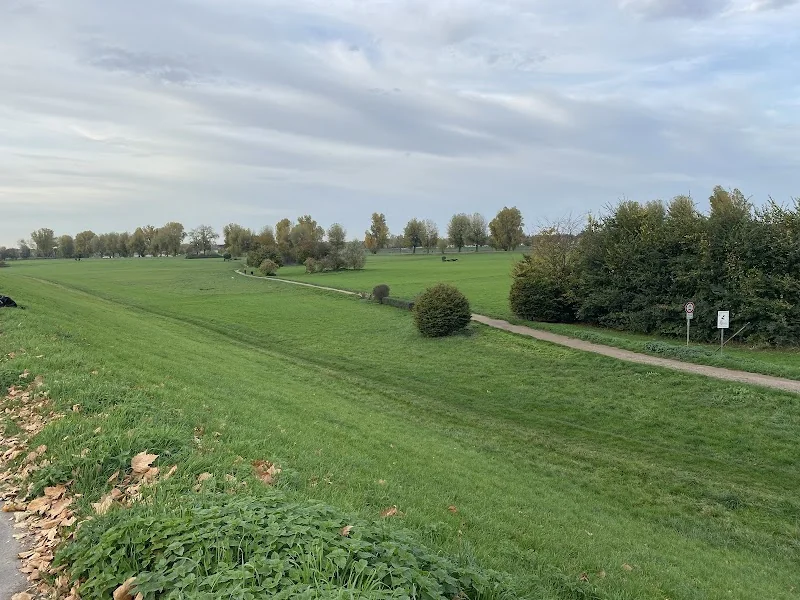
The Rheinwiesen Düsseldorf Niederkassel are one of the most well-known open spaces on the left bank of the Rhine in Düsseldorf. The city describes the Oberkasseler Rheinwiesen as a riverbank area between river kilometer 742 and 748; on the land side, the area is bordered by dike and bank areas. In everyday life, the area is an open place for recreation, and during special occasions, it becomes a large stage by the water. This dual identity makes the Rheinwiesen so exciting for visitors: here, expansiveness, Rhine views, and urban proximity come together, which leads to inquiries about photos, images, parking, and access. Those interested in the Rheinwiesen are not just looking for a location on the map but a place that is part of typical Düsseldorf moments: strolling, watching, marveling, celebrating, and experiencing the Rhine up close. The most well-known use is the Rhine Fair, but even outside the folk festival, the meadows remain a prominent part of the urban Rhine panorama. ([duesseldorf.de](https://www.duesseldorf.de/stadtrecht/2/23/23-101))
Rhine Fair 2026 on the Oberkasseler Rheinwiesen
For many people, the Rheinwiesen are primarily the site of the Rhine Fair, and this is where the most important keyword cluster around the area comes into play. According to the official Düsseldorf tourism pages, the Rhine Fair will return to the Oberkasseler Rheinwiesen from July 17 to 26, 2026. The event combines rides, culinary highlights, and the traditional shooting festival of the St. Sebastianus Shooting Club into a ten-day summer event on the Rhine. The city states that the area will quickly transform into its own district, as around four million visitors come together during the fair days. This is an important note for anyone searching for programs, dates, opening hours, or events: the Rheinwiesen are not just a backdrop during this time, but the center of one of Germany's largest folk festivals. ([visitduesseldorf.de](https://www.visitduesseldorf.de/event/rheinkirmes-duesseldorf-9bf2084cd2))
Regarding the program, the official information helps with classification without going into unsubstantiated details. For 2026, the city mentions the large fireworks show on the last Friday of the fair, which is July 24, 2026. Additionally, drone shows are scheduled for Tuesday, July 21, and Friday, July 24. This clearly shows why search queries like rheinwiesen düsseldorf niederkassel fotos, programm rheinkirmes 2026, or feuerwerk rheinkirmes fit so well with this location: the Rheinwiesen are an event location in summer with light, movement, Rhine views, and a very strong visual identity. Visitors to the area experience not only rides and stalls but also a mix of tradition and modern staging that can be found in few places in this form. ([visitduesseldorf.de](https://www.visitduesseldorf.de/en/calendar-of-events/rhine-fair-duesseldorf-b115130f91))
At the same time, the Rhine Fair should not be understood as a rigid single event with fixed locations, but as a lively mix of changing showmen, attractions, and gastronomy. The official city and tourism pages speak of numerous showmen from Germany and abroad and a diverse offering for the whole family, from classic attractions to modern rides. This is exactly why keywords like programm rheinkirmes 2026 or rheinkirmes düsseldorf fit so well together: those searching usually want to know not only when the fair takes place but also how the area will be utilized this year. For content planning, it is important not to mention invented program points but to take the documented key data and describe the experience around it clearly. The Rheinwiesen provide the right backdrop for this because they are open, large, and directly by the water. ([visitduesseldorf.de](https://www.duesseldorf.de/erleben/veranstaltungen/rheinkirmes-duesseldorf))
Parking and Access to the Rheinwiesen
The search interest around parking and access is particularly high at the Rheinwiesen because the immediate surroundings are deliberately relieved of traffic during the Rhine Fair. The state capital makes it clear that there are no public parking spaces available in the immediate vicinity in Düsseldorf-Oberkassel. Therefore, the city primarily recommends arriving by public transport or by bicycle. For those arriving from the left bank, park-and-ride spaces are mentioned along the lines U70, U75, and U76, such as Haus Meer with 470 parking spaces and Simon-Gatzweiler-Platz with 200 parking spaces. Those coming from the south can use the P+R lot at Am Südfriedhof with 160 parking spaces or the Südpark with 250 parking spaces. From the east, Gerresheim Hospital with 100 parking spaces and Staufenplatz with 300 parking spaces are recommended. These details are particularly helpful for visitors because they make the way to the fair much more manageable. ([duesseldorf.de](https://www.duesseldorf.de/medienportal/pressedienst-einzelansicht/pld/auf-komfortablen-wegen-zur-rheinkirmes))
Additionally, the practical infrastructure includes extra parking offers in the wider vicinity of the event. The city mentions a special parking lot for people with disabilities at the Rheinkniebrücke as well as free parking spaces at the Vodafone campus and in the parking garage of the Provinzial insurance company on weekends or at specific times. For cyclists, there are two large parking lots north of the Oberkasseler Brücke and at Kaiser-Wilhelm-Ring; at the same time, there is a clear prohibition on parking bicycles at bridge railings and protective fences throughout the fairgrounds to keep emergency routes clear. Equally important are the official taxi stands at Luegplatz and the southern entrance, as well as the notices regarding traffic restrictions for certain residential areas. So, anyone searching for rheinkirmes düsseldorf parken gets the most important answer here: do not park directly on site, but use the designated alternatives and cover the last meters by train, on foot, or by bike. ([duesseldorf.de](https://www.duesseldorf.de/medienportal/pressedienst-einzelansicht/pld/auf-komfortablen-wegen-zur-rheinkirmes))
Those planning their arrival should also be aware of the logical structure of the fair's surroundings. The city names Luegplatz as a stop near the fair and describes that different subway and tram lines lead there from the P+R lots. For many visitors, this is even more convenient than arriving by car because the last meters remain predictable, allowing the visit to focus better on the actual event. During the event, there are traffic restrictions and traffic monitoring in the immediate vicinity of the Rheinwiesen to reduce parking search traffic and burdens on residents. Therefore, anyone looking for a stress-free solution should not improvise on-site but plan the trip as the city recommends: park outside, transfer, walk short distances, and enjoy the rest of the day relaxed. ([duesseldorf.de](https://www.duesseldorf.de/medienportal/pressedienst-einzelansicht/pld/auf-komfortablen-wegen-zur-rheinkirmes))
Photos, Rhine Views, and the Best Motifs at the Rheinwiesen
The search terms photos, images of rheinwiesen düsseldorf niederkassel, and rheinwiesen düsseldorf niederkassel photos clearly show what attracts many people to this place: the special imagery of water, expansiveness, and urban scenery. Visit Düsseldorf describes the Rheinwiesen as a place where the river meadows on the Oberkasseler side between the Rheinkniebrücke and the Oberkasseler Brücke create the flair of a giant stage. This is not an exaggerated formulation but a quite accurate summary of what one sees on site. The area appears open, generous, and simultaneously urban. This is exactly why the Rheinwiesen are suitable for both calm landscape photos and vibrant event motifs. Those starting an image search will find not only the atmosphere of a folk festival but also the classic Düsseldorf Rhine view with a wide sky and distinctive bridge architecture. ([visitduesseldorf.de](https://www.visitduesseldorf.de/attraktionen/rheinwiesen-rhine-meadow-c9574c4c7b))
Particularly attractive are the perspectives from the surrounding bridges and from the opposite bank. The city points out that events at the Rheinwiesen can also be viewed from places like the Old Town promenade. For the Rhine Fair, this means: rides, lighting effects, and fireworks can be experienced not only in the midst of the action but also from a slightly more distanced, panoramic perspective. Those searching for images of the Rheinwiesen should always consider the surroundings, as the actual strength of the location lies in its interplay with the Rhine and the skyline. Even outside the fair, the area is photogenic because people grill on the meadows, fly kites, and the wide sky over the river creates a calm, almost park-like atmosphere. This explains why the Rheinwiesen function not only as an event space but year-round as a place for strong Rhine motifs. ([visitduesseldorf.de](https://www.visitduesseldorf.de/attraktionen/rheinwiesen-rhine-meadow-c9574c4c7b))
For images and social media content, the location is particularly strong because it offers two motifs simultaneously: the open landscape and the urban event scene. During the day, you see meadows, riverbanks, and bridges; at night, clear contrasts and colorful reflections in the water emerge from the fair lights. This results in motifs that appear without much staging and still immediately look like Düsseldorf. Those taking pictures of the Rheinwiesen benefit from the natural lines of the river, from the bridges as frames, and from the fact that the area is very wide and thus photographically well-readable. This is exactly why the Rheinwiesen are also used for fireworks and large productions: the area provides an unobstructed view instead of blocking it. This is an objective location advantage that is directly reflected in search queries and in the visual perception of the location. ([visitduesseldorf.de](https://www.visitduesseldorf.de/attraktionen/rheinwiesen-rhine-meadow-c9574c4c7b))
History, Use, and Special Rules of the Oberkasseler Rheinwiesen
Behind the popular leisure and event location is a clear urban order. The statute of the state capital Düsseldorf from 1975 defines the Oberkasseler Rheinwiesen as a riverbank area between river kilometer 742 and 748 and simultaneously states that the area serves the recreation of the Düsseldorf population. Events of all kinds are generally prohibited there; however, traditional events are expressly permitted, including the shooting festival of the St. Sebastianus Shooting Club Düsseldorf-Oberkassel, the shooting and folk festival of the St. Sebastianus Shooting Club Düsseldorf 1316, and an annual circus performance. From an SEO perspective, this is exciting because it describes the Rheinwiesen as a place with a very specific character: not just any park, but a protected, historically grown open space that is only opened for large public events in selected cases. This exclusivity makes the area so significant for the Rhine Fair. ([duesseldorf.de](https://www.duesseldorf.de/stadtrecht/2/23/23-101))
The combination of tradition, public space, and large events is also reflected in the safety and organizational structure. The city reports that the Oberkasseler Rheinwiesen transform into a small district during the Rhine Fair, where police, regulatory office, and fire department work closely together. The fire department operates its own fire and rescue station for the fair days at the access to the southern entrance at Kaiser-Wilhelm-Ring to respond quickly to fires, technical assistance, or medical emergencies. These measures have been tested for years and are evaluated together after each Rhine Fair. For visitors, this is a reassuring point and simultaneously a hint that while the Rheinwiesen may appear open and relaxed, they are managed in an extremely professional manner. Understanding the address also helps to understand Düsseldorf a bit better: here, recreation, large events, and safety concepts come together. ([duesseldorf.de](https://www.duesseldorf.de/aktuelles/news/detailansicht/newsdetail/sicherheit-auf-rheinkirmes-feuerwehr-polizei-und-ordnungsamt-sind-vorbereitet))
The rules of the Oberkasseler Rheinwiesen also show that this place is always a refuge. The statute explicitly limits the use to recreation and a few traditional exceptions. This keeps the area interesting not only for individual large events but also as a public landscape space that cannot be arbitrarily built over or constantly used. This is a good signal for SEO texts: the Rheinwiesen can be described as an event destination without losing their character as a green Rhine location. Those using the term Rheinwiesen Düsseldorf Niederkassel often seek exactly this combination of nature, tradition, and event culture. The official urban order makes it clear that this combination is intentional and has been regulated for decades. ([duesseldorf.de](https://www.duesseldorf.de/stadtrecht/2/23/23-101))
Barrier-Free Access, Bicycle Parking, and Practical Visitor Information
For many search queries related to the Rheinwiesen, it is not only about the event itself but also about the practical question of how to make the visit as pleasant as possible. The city emphasizes that the festival site is generally accessible on foot and that utility conduits, emergency exits, and rescue routes are equipped with barrier-free cable bridges. This is an important detail because the area is naturally heavily frequented during large events and should still remain as accessible as possible. For people with limited mobility, the information about the special parking lot at the Rheinkniebrücke is also relevant. Those arriving by bicycle benefit from the designated bicycle parking spaces north of the Oberkasseler Brücke and at Kaiser-Wilhelm-Ring. At the same time, there is a clear prohibition on parking bicycles at railings and protective fences on the premises to keep pathways and access clear. This is not only a matter of order but primarily of safety. ([duesseldorf.de](https://www.duesseldorf.de/leben-in-duesseldorf/verkehr/detail/newsdetail/rheinkirmes-tipps-zur-an-und-abreise-1))
Also, regarding the seating plan, the location of the Rheinwiesen is particularly unique: the area is not a hall with a fixed seating plan but an open festival and recreational landscape. This means that there is no central seating plan for the entire area; reservations, seating, or fixed areas can only exist at individual tents, offerings, or events. Therefore, those searching for seating plans, best places, or parking in connection with the Rhine Fair should understand the area more like a large, flexible outdoor space rather than a concert hall. It is also practical that taxi stands are set up at the entrances, and the city clearly recommends planning to arrive by train, on foot, or by bicycle. For many visitors, this is the best way: to arrive stress-free, experience the Rheinwiesen, and enjoy the special mix of air, light, and space. ([duesseldorf.de](https://www.duesseldorf.de/stadtrecht/2/23/23-101))
In the end, the strength of the Rheinwiesen Düsseldorf Niederkassel is their versatility: in everyday life, an open place to breathe, during the Rhine Fair, a huge meeting point full of light, pace, and Rhine panorama. Those searching for photos, parking, access, or the program will find a location here that is both urban and close to nature. This is precisely why the location has high search value for Düsseldorf travelers, families, photo enthusiasts, and fair visitors alike. The Rheinwiesen work so well as an SEO topic because they answer specific questions while also carrying a genuine promise of experience. Those on-site immediately understand why the area has been such an integral part of summer in Düsseldorf for decades. ([visitduesseldorf.de](https://www.visitduesseldorf.de/event/rheinkirmes-duesseldorf-9bf2084cd2))
Sources:
Mehr anzeigenWeniger anzeigen
Rheinwiesen Düsseldorf Niederkassel | Rhine Fair & Parking
The Rheinwiesen Düsseldorf Niederkassel are one of the most well-known open spaces on the left bank of the Rhine in Düsseldorf. The city describes the Oberkasseler Rheinwiesen as a riverbank area between river kilometer 742 and 748; on the land side, the area is bordered by dike and bank areas. In everyday life, the area is an open place for recreation, and during special occasions, it becomes a large stage by the water. This dual identity makes the Rheinwiesen so exciting for visitors: here, expansiveness, Rhine views, and urban proximity come together, which leads to inquiries about photos, images, parking, and access. Those interested in the Rheinwiesen are not just looking for a location on the map but a place that is part of typical Düsseldorf moments: strolling, watching, marveling, celebrating, and experiencing the Rhine up close. The most well-known use is the Rhine Fair, but even outside the folk festival, the meadows remain a prominent part of the urban Rhine panorama. ([duesseldorf.de](https://www.duesseldorf.de/stadtrecht/2/23/23-101))
Rhine Fair 2026 on the Oberkasseler Rheinwiesen
For many people, the Rheinwiesen are primarily the site of the Rhine Fair, and this is where the most important keyword cluster around the area comes into play. According to the official Düsseldorf tourism pages, the Rhine Fair will return to the Oberkasseler Rheinwiesen from July 17 to 26, 2026. The event combines rides, culinary highlights, and the traditional shooting festival of the St. Sebastianus Shooting Club into a ten-day summer event on the Rhine. The city states that the area will quickly transform into its own district, as around four million visitors come together during the fair days. This is an important note for anyone searching for programs, dates, opening hours, or events: the Rheinwiesen are not just a backdrop during this time, but the center of one of Germany's largest folk festivals. ([visitduesseldorf.de](https://www.visitduesseldorf.de/event/rheinkirmes-duesseldorf-9bf2084cd2))
Regarding the program, the official information helps with classification without going into unsubstantiated details. For 2026, the city mentions the large fireworks show on the last Friday of the fair, which is July 24, 2026. Additionally, drone shows are scheduled for Tuesday, July 21, and Friday, July 24. This clearly shows why search queries like rheinwiesen düsseldorf niederkassel fotos, programm rheinkirmes 2026, or feuerwerk rheinkirmes fit so well with this location: the Rheinwiesen are an event location in summer with light, movement, Rhine views, and a very strong visual identity. Visitors to the area experience not only rides and stalls but also a mix of tradition and modern staging that can be found in few places in this form. ([visitduesseldorf.de](https://www.visitduesseldorf.de/en/calendar-of-events/rhine-fair-duesseldorf-b115130f91))
At the same time, the Rhine Fair should not be understood as a rigid single event with fixed locations, but as a lively mix of changing showmen, attractions, and gastronomy. The official city and tourism pages speak of numerous showmen from Germany and abroad and a diverse offering for the whole family, from classic attractions to modern rides. This is exactly why keywords like programm rheinkirmes 2026 or rheinkirmes düsseldorf fit so well together: those searching usually want to know not only when the fair takes place but also how the area will be utilized this year. For content planning, it is important not to mention invented program points but to take the documented key data and describe the experience around it clearly. The Rheinwiesen provide the right backdrop for this because they are open, large, and directly by the water. ([visitduesseldorf.de](https://www.duesseldorf.de/erleben/veranstaltungen/rheinkirmes-duesseldorf))
Parking and Access to the Rheinwiesen
The search interest around parking and access is particularly high at the Rheinwiesen because the immediate surroundings are deliberately relieved of traffic during the Rhine Fair. The state capital makes it clear that there are no public parking spaces available in the immediate vicinity in Düsseldorf-Oberkassel. Therefore, the city primarily recommends arriving by public transport or by bicycle. For those arriving from the left bank, park-and-ride spaces are mentioned along the lines U70, U75, and U76, such as Haus Meer with 470 parking spaces and Simon-Gatzweiler-Platz with 200 parking spaces. Those coming from the south can use the P+R lot at Am Südfriedhof with 160 parking spaces or the Südpark with 250 parking spaces. From the east, Gerresheim Hospital with 100 parking spaces and Staufenplatz with 300 parking spaces are recommended. These details are particularly helpful for visitors because they make the way to the fair much more manageable. ([duesseldorf.de](https://www.duesseldorf.de/medienportal/pressedienst-einzelansicht/pld/auf-komfortablen-wegen-zur-rheinkirmes))
Additionally, the practical infrastructure includes extra parking offers in the wider vicinity of the event. The city mentions a special parking lot for people with disabilities at the Rheinkniebrücke as well as free parking spaces at the Vodafone campus and in the parking garage of the Provinzial insurance company on weekends or at specific times. For cyclists, there are two large parking lots north of the Oberkasseler Brücke and at Kaiser-Wilhelm-Ring; at the same time, there is a clear prohibition on parking bicycles at bridge railings and protective fences throughout the fairgrounds to keep emergency routes clear. Equally important are the official taxi stands at Luegplatz and the southern entrance, as well as the notices regarding traffic restrictions for certain residential areas. So, anyone searching for rheinkirmes düsseldorf parken gets the most important answer here: do not park directly on site, but use the designated alternatives and cover the last meters by train, on foot, or by bike. ([duesseldorf.de](https://www.duesseldorf.de/medienportal/pressedienst-einzelansicht/pld/auf-komfortablen-wegen-zur-rheinkirmes))
Those planning their arrival should also be aware of the logical structure of the fair's surroundings. The city names Luegplatz as a stop near the fair and describes that different subway and tram lines lead there from the P+R lots. For many visitors, this is even more convenient than arriving by car because the last meters remain predictable, allowing the visit to focus better on the actual event. During the event, there are traffic restrictions and traffic monitoring in the immediate vicinity of the Rheinwiesen to reduce parking search traffic and burdens on residents. Therefore, anyone looking for a stress-free solution should not improvise on-site but plan the trip as the city recommends: park outside, transfer, walk short distances, and enjoy the rest of the day relaxed. ([duesseldorf.de](https://www.duesseldorf.de/medienportal/pressedienst-einzelansicht/pld/auf-komfortablen-wegen-zur-rheinkirmes))
Photos, Rhine Views, and the Best Motifs at the Rheinwiesen
The search terms photos, images of rheinwiesen düsseldorf niederkassel, and rheinwiesen düsseldorf niederkassel photos clearly show what attracts many people to this place: the special imagery of water, expansiveness, and urban scenery. Visit Düsseldorf describes the Rheinwiesen as a place where the river meadows on the Oberkasseler side between the Rheinkniebrücke and the Oberkasseler Brücke create the flair of a giant stage. This is not an exaggerated formulation but a quite accurate summary of what one sees on site. The area appears open, generous, and simultaneously urban. This is exactly why the Rheinwiesen are suitable for both calm landscape photos and vibrant event motifs. Those starting an image search will find not only the atmosphere of a folk festival but also the classic Düsseldorf Rhine view with a wide sky and distinctive bridge architecture. ([visitduesseldorf.de](https://www.visitduesseldorf.de/attraktionen/rheinwiesen-rhine-meadow-c9574c4c7b))
Particularly attractive are the perspectives from the surrounding bridges and from the opposite bank. The city points out that events at the Rheinwiesen can also be viewed from places like the Old Town promenade. For the Rhine Fair, this means: rides, lighting effects, and fireworks can be experienced not only in the midst of the action but also from a slightly more distanced, panoramic perspective. Those searching for images of the Rheinwiesen should always consider the surroundings, as the actual strength of the location lies in its interplay with the Rhine and the skyline. Even outside the fair, the area is photogenic because people grill on the meadows, fly kites, and the wide sky over the river creates a calm, almost park-like atmosphere. This explains why the Rheinwiesen function not only as an event space but year-round as a place for strong Rhine motifs. ([visitduesseldorf.de](https://www.visitduesseldorf.de/attraktionen/rheinwiesen-rhine-meadow-c9574c4c7b))
For images and social media content, the location is particularly strong because it offers two motifs simultaneously: the open landscape and the urban event scene. During the day, you see meadows, riverbanks, and bridges; at night, clear contrasts and colorful reflections in the water emerge from the fair lights. This results in motifs that appear without much staging and still immediately look like Düsseldorf. Those taking pictures of the Rheinwiesen benefit from the natural lines of the river, from the bridges as frames, and from the fact that the area is very wide and thus photographically well-readable. This is exactly why the Rheinwiesen are also used for fireworks and large productions: the area provides an unobstructed view instead of blocking it. This is an objective location advantage that is directly reflected in search queries and in the visual perception of the location. ([visitduesseldorf.de](https://www.visitduesseldorf.de/attraktionen/rheinwiesen-rhine-meadow-c9574c4c7b))
History, Use, and Special Rules of the Oberkasseler Rheinwiesen
Behind the popular leisure and event location is a clear urban order. The statute of the state capital Düsseldorf from 1975 defines the Oberkasseler Rheinwiesen as a riverbank area between river kilometer 742 and 748 and simultaneously states that the area serves the recreation of the Düsseldorf population. Events of all kinds are generally prohibited there; however, traditional events are expressly permitted, including the shooting festival of the St. Sebastianus Shooting Club Düsseldorf-Oberkassel, the shooting and folk festival of the St. Sebastianus Shooting Club Düsseldorf 1316, and an annual circus performance. From an SEO perspective, this is exciting because it describes the Rheinwiesen as a place with a very specific character: not just any park, but a protected, historically grown open space that is only opened for large public events in selected cases. This exclusivity makes the area so significant for the Rhine Fair. ([duesseldorf.de](https://www.duesseldorf.de/stadtrecht/2/23/23-101))
The combination of tradition, public space, and large events is also reflected in the safety and organizational structure. The city reports that the Oberkasseler Rheinwiesen transform into a small district during the Rhine Fair, where police, regulatory office, and fire department work closely together. The fire department operates its own fire and rescue station for the fair days at the access to the southern entrance at Kaiser-Wilhelm-Ring to respond quickly to fires, technical assistance, or medical emergencies. These measures have been tested for years and are evaluated together after each Rhine Fair. For visitors, this is a reassuring point and simultaneously a hint that while the Rheinwiesen may appear open and relaxed, they are managed in an extremely professional manner. Understanding the address also helps to understand Düsseldorf a bit better: here, recreation, large events, and safety concepts come together. ([duesseldorf.de](https://www.duesseldorf.de/aktuelles/news/detailansicht/newsdetail/sicherheit-auf-rheinkirmes-feuerwehr-polizei-und-ordnungsamt-sind-vorbereitet))
The rules of the Oberkasseler Rheinwiesen also show that this place is always a refuge. The statute explicitly limits the use to recreation and a few traditional exceptions. This keeps the area interesting not only for individual large events but also as a public landscape space that cannot be arbitrarily built over or constantly used. This is a good signal for SEO texts: the Rheinwiesen can be described as an event destination without losing their character as a green Rhine location. Those using the term Rheinwiesen Düsseldorf Niederkassel often seek exactly this combination of nature, tradition, and event culture. The official urban order makes it clear that this combination is intentional and has been regulated for decades. ([duesseldorf.de](https://www.duesseldorf.de/stadtrecht/2/23/23-101))
Barrier-Free Access, Bicycle Parking, and Practical Visitor Information
For many search queries related to the Rheinwiesen, it is not only about the event itself but also about the practical question of how to make the visit as pleasant as possible. The city emphasizes that the festival site is generally accessible on foot and that utility conduits, emergency exits, and rescue routes are equipped with barrier-free cable bridges. This is an important detail because the area is naturally heavily frequented during large events and should still remain as accessible as possible. For people with limited mobility, the information about the special parking lot at the Rheinkniebrücke is also relevant. Those arriving by bicycle benefit from the designated bicycle parking spaces north of the Oberkasseler Brücke and at Kaiser-Wilhelm-Ring. At the same time, there is a clear prohibition on parking bicycles at railings and protective fences on the premises to keep pathways and access clear. This is not only a matter of order but primarily of safety. ([duesseldorf.de](https://www.duesseldorf.de/leben-in-duesseldorf/verkehr/detail/newsdetail/rheinkirmes-tipps-zur-an-und-abreise-1))
Also, regarding the seating plan, the location of the Rheinwiesen is particularly unique: the area is not a hall with a fixed seating plan but an open festival and recreational landscape. This means that there is no central seating plan for the entire area; reservations, seating, or fixed areas can only exist at individual tents, offerings, or events. Therefore, those searching for seating plans, best places, or parking in connection with the Rhine Fair should understand the area more like a large, flexible outdoor space rather than a concert hall. It is also practical that taxi stands are set up at the entrances, and the city clearly recommends planning to arrive by train, on foot, or by bicycle. For many visitors, this is the best way: to arrive stress-free, experience the Rheinwiesen, and enjoy the special mix of air, light, and space. ([duesseldorf.de](https://www.duesseldorf.de/stadtrecht/2/23/23-101))
In the end, the strength of the Rheinwiesen Düsseldorf Niederkassel is their versatility: in everyday life, an open place to breathe, during the Rhine Fair, a huge meeting point full of light, pace, and Rhine panorama. Those searching for photos, parking, access, or the program will find a location here that is both urban and close to nature. This is precisely why the location has high search value for Düsseldorf travelers, families, photo enthusiasts, and fair visitors alike. The Rheinwiesen work so well as an SEO topic because they answer specific questions while also carrying a genuine promise of experience. Those on-site immediately understand why the area has been such an integral part of summer in Düsseldorf for decades. ([visitduesseldorf.de](https://www.visitduesseldorf.de/event/rheinkirmes-duesseldorf-9bf2084cd2))
Sources:
Rheinwiesen Düsseldorf Niederkassel | Rhine Fair & Parking
The Rheinwiesen Düsseldorf Niederkassel are one of the most well-known open spaces on the left bank of the Rhine in Düsseldorf. The city describes the Oberkasseler Rheinwiesen as a riverbank area between river kilometer 742 and 748; on the land side, the area is bordered by dike and bank areas. In everyday life, the area is an open place for recreation, and during special occasions, it becomes a large stage by the water. This dual identity makes the Rheinwiesen so exciting for visitors: here, expansiveness, Rhine views, and urban proximity come together, which leads to inquiries about photos, images, parking, and access. Those interested in the Rheinwiesen are not just looking for a location on the map but a place that is part of typical Düsseldorf moments: strolling, watching, marveling, celebrating, and experiencing the Rhine up close. The most well-known use is the Rhine Fair, but even outside the folk festival, the meadows remain a prominent part of the urban Rhine panorama. ([duesseldorf.de](https://www.duesseldorf.de/stadtrecht/2/23/23-101))
Rhine Fair 2026 on the Oberkasseler Rheinwiesen
For many people, the Rheinwiesen are primarily the site of the Rhine Fair, and this is where the most important keyword cluster around the area comes into play. According to the official Düsseldorf tourism pages, the Rhine Fair will return to the Oberkasseler Rheinwiesen from July 17 to 26, 2026. The event combines rides, culinary highlights, and the traditional shooting festival of the St. Sebastianus Shooting Club into a ten-day summer event on the Rhine. The city states that the area will quickly transform into its own district, as around four million visitors come together during the fair days. This is an important note for anyone searching for programs, dates, opening hours, or events: the Rheinwiesen are not just a backdrop during this time, but the center of one of Germany's largest folk festivals. ([visitduesseldorf.de](https://www.visitduesseldorf.de/event/rheinkirmes-duesseldorf-9bf2084cd2))
Regarding the program, the official information helps with classification without going into unsubstantiated details. For 2026, the city mentions the large fireworks show on the last Friday of the fair, which is July 24, 2026. Additionally, drone shows are scheduled for Tuesday, July 21, and Friday, July 24. This clearly shows why search queries like rheinwiesen düsseldorf niederkassel fotos, programm rheinkirmes 2026, or feuerwerk rheinkirmes fit so well with this location: the Rheinwiesen are an event location in summer with light, movement, Rhine views, and a very strong visual identity. Visitors to the area experience not only rides and stalls but also a mix of tradition and modern staging that can be found in few places in this form. ([visitduesseldorf.de](https://www.visitduesseldorf.de/en/calendar-of-events/rhine-fair-duesseldorf-b115130f91))
At the same time, the Rhine Fair should not be understood as a rigid single event with fixed locations, but as a lively mix of changing showmen, attractions, and gastronomy. The official city and tourism pages speak of numerous showmen from Germany and abroad and a diverse offering for the whole family, from classic attractions to modern rides. This is exactly why keywords like programm rheinkirmes 2026 or rheinkirmes düsseldorf fit so well together: those searching usually want to know not only when the fair takes place but also how the area will be utilized this year. For content planning, it is important not to mention invented program points but to take the documented key data and describe the experience around it clearly. The Rheinwiesen provide the right backdrop for this because they are open, large, and directly by the water. ([visitduesseldorf.de](https://www.duesseldorf.de/erleben/veranstaltungen/rheinkirmes-duesseldorf))
Parking and Access to the Rheinwiesen
The search interest around parking and access is particularly high at the Rheinwiesen because the immediate surroundings are deliberately relieved of traffic during the Rhine Fair. The state capital makes it clear that there are no public parking spaces available in the immediate vicinity in Düsseldorf-Oberkassel. Therefore, the city primarily recommends arriving by public transport or by bicycle. For those arriving from the left bank, park-and-ride spaces are mentioned along the lines U70, U75, and U76, such as Haus Meer with 470 parking spaces and Simon-Gatzweiler-Platz with 200 parking spaces. Those coming from the south can use the P+R lot at Am Südfriedhof with 160 parking spaces or the Südpark with 250 parking spaces. From the east, Gerresheim Hospital with 100 parking spaces and Staufenplatz with 300 parking spaces are recommended. These details are particularly helpful for visitors because they make the way to the fair much more manageable. ([duesseldorf.de](https://www.duesseldorf.de/medienportal/pressedienst-einzelansicht/pld/auf-komfortablen-wegen-zur-rheinkirmes))
Additionally, the practical infrastructure includes extra parking offers in the wider vicinity of the event. The city mentions a special parking lot for people with disabilities at the Rheinkniebrücke as well as free parking spaces at the Vodafone campus and in the parking garage of the Provinzial insurance company on weekends or at specific times. For cyclists, there are two large parking lots north of the Oberkasseler Brücke and at Kaiser-Wilhelm-Ring; at the same time, there is a clear prohibition on parking bicycles at bridge railings and protective fences throughout the fairgrounds to keep emergency routes clear. Equally important are the official taxi stands at Luegplatz and the southern entrance, as well as the notices regarding traffic restrictions for certain residential areas. So, anyone searching for rheinkirmes düsseldorf parken gets the most important answer here: do not park directly on site, but use the designated alternatives and cover the last meters by train, on foot, or by bike. ([duesseldorf.de](https://www.duesseldorf.de/medienportal/pressedienst-einzelansicht/pld/auf-komfortablen-wegen-zur-rheinkirmes))
Those planning their arrival should also be aware of the logical structure of the fair's surroundings. The city names Luegplatz as a stop near the fair and describes that different subway and tram lines lead there from the P+R lots. For many visitors, this is even more convenient than arriving by car because the last meters remain predictable, allowing the visit to focus better on the actual event. During the event, there are traffic restrictions and traffic monitoring in the immediate vicinity of the Rheinwiesen to reduce parking search traffic and burdens on residents. Therefore, anyone looking for a stress-free solution should not improvise on-site but plan the trip as the city recommends: park outside, transfer, walk short distances, and enjoy the rest of the day relaxed. ([duesseldorf.de](https://www.duesseldorf.de/medienportal/pressedienst-einzelansicht/pld/auf-komfortablen-wegen-zur-rheinkirmes))
Photos, Rhine Views, and the Best Motifs at the Rheinwiesen
The search terms photos, images of rheinwiesen düsseldorf niederkassel, and rheinwiesen düsseldorf niederkassel photos clearly show what attracts many people to this place: the special imagery of water, expansiveness, and urban scenery. Visit Düsseldorf describes the Rheinwiesen as a place where the river meadows on the Oberkasseler side between the Rheinkniebrücke and the Oberkasseler Brücke create the flair of a giant stage. This is not an exaggerated formulation but a quite accurate summary of what one sees on site. The area appears open, generous, and simultaneously urban. This is exactly why the Rheinwiesen are suitable for both calm landscape photos and vibrant event motifs. Those starting an image search will find not only the atmosphere of a folk festival but also the classic Düsseldorf Rhine view with a wide sky and distinctive bridge architecture. ([visitduesseldorf.de](https://www.visitduesseldorf.de/attraktionen/rheinwiesen-rhine-meadow-c9574c4c7b))
Particularly attractive are the perspectives from the surrounding bridges and from the opposite bank. The city points out that events at the Rheinwiesen can also be viewed from places like the Old Town promenade. For the Rhine Fair, this means: rides, lighting effects, and fireworks can be experienced not only in the midst of the action but also from a slightly more distanced, panoramic perspective. Those searching for images of the Rheinwiesen should always consider the surroundings, as the actual strength of the location lies in its interplay with the Rhine and the skyline. Even outside the fair, the area is photogenic because people grill on the meadows, fly kites, and the wide sky over the river creates a calm, almost park-like atmosphere. This explains why the Rheinwiesen function not only as an event space but year-round as a place for strong Rhine motifs. ([visitduesseldorf.de](https://www.visitduesseldorf.de/attraktionen/rheinwiesen-rhine-meadow-c9574c4c7b))
For images and social media content, the location is particularly strong because it offers two motifs simultaneously: the open landscape and the urban event scene. During the day, you see meadows, riverbanks, and bridges; at night, clear contrasts and colorful reflections in the water emerge from the fair lights. This results in motifs that appear without much staging and still immediately look like Düsseldorf. Those taking pictures of the Rheinwiesen benefit from the natural lines of the river, from the bridges as frames, and from the fact that the area is very wide and thus photographically well-readable. This is exactly why the Rheinwiesen are also used for fireworks and large productions: the area provides an unobstructed view instead of blocking it. This is an objective location advantage that is directly reflected in search queries and in the visual perception of the location. ([visitduesseldorf.de](https://www.visitduesseldorf.de/attraktionen/rheinwiesen-rhine-meadow-c9574c4c7b))
History, Use, and Special Rules of the Oberkasseler Rheinwiesen
Behind the popular leisure and event location is a clear urban order. The statute of the state capital Düsseldorf from 1975 defines the Oberkasseler Rheinwiesen as a riverbank area between river kilometer 742 and 748 and simultaneously states that the area serves the recreation of the Düsseldorf population. Events of all kinds are generally prohibited there; however, traditional events are expressly permitted, including the shooting festival of the St. Sebastianus Shooting Club Düsseldorf-Oberkassel, the shooting and folk festival of the St. Sebastianus Shooting Club Düsseldorf 1316, and an annual circus performance. From an SEO perspective, this is exciting because it describes the Rheinwiesen as a place with a very specific character: not just any park, but a protected, historically grown open space that is only opened for large public events in selected cases. This exclusivity makes the area so significant for the Rhine Fair. ([duesseldorf.de](https://www.duesseldorf.de/stadtrecht/2/23/23-101))
The combination of tradition, public space, and large events is also reflected in the safety and organizational structure. The city reports that the Oberkasseler Rheinwiesen transform into a small district during the Rhine Fair, where police, regulatory office, and fire department work closely together. The fire department operates its own fire and rescue station for the fair days at the access to the southern entrance at Kaiser-Wilhelm-Ring to respond quickly to fires, technical assistance, or medical emergencies. These measures have been tested for years and are evaluated together after each Rhine Fair. For visitors, this is a reassuring point and simultaneously a hint that while the Rheinwiesen may appear open and relaxed, they are managed in an extremely professional manner. Understanding the address also helps to understand Düsseldorf a bit better: here, recreation, large events, and safety concepts come together. ([duesseldorf.de](https://www.duesseldorf.de/aktuelles/news/detailansicht/newsdetail/sicherheit-auf-rheinkirmes-feuerwehr-polizei-und-ordnungsamt-sind-vorbereitet))
The rules of the Oberkasseler Rheinwiesen also show that this place is always a refuge. The statute explicitly limits the use to recreation and a few traditional exceptions. This keeps the area interesting not only for individual large events but also as a public landscape space that cannot be arbitrarily built over or constantly used. This is a good signal for SEO texts: the Rheinwiesen can be described as an event destination without losing their character as a green Rhine location. Those using the term Rheinwiesen Düsseldorf Niederkassel often seek exactly this combination of nature, tradition, and event culture. The official urban order makes it clear that this combination is intentional and has been regulated for decades. ([duesseldorf.de](https://www.duesseldorf.de/stadtrecht/2/23/23-101))
Barrier-Free Access, Bicycle Parking, and Practical Visitor Information
For many search queries related to the Rheinwiesen, it is not only about the event itself but also about the practical question of how to make the visit as pleasant as possible. The city emphasizes that the festival site is generally accessible on foot and that utility conduits, emergency exits, and rescue routes are equipped with barrier-free cable bridges. This is an important detail because the area is naturally heavily frequented during large events and should still remain as accessible as possible. For people with limited mobility, the information about the special parking lot at the Rheinkniebrücke is also relevant. Those arriving by bicycle benefit from the designated bicycle parking spaces north of the Oberkasseler Brücke and at Kaiser-Wilhelm-Ring. At the same time, there is a clear prohibition on parking bicycles at railings and protective fences on the premises to keep pathways and access clear. This is not only a matter of order but primarily of safety. ([duesseldorf.de](https://www.duesseldorf.de/leben-in-duesseldorf/verkehr/detail/newsdetail/rheinkirmes-tipps-zur-an-und-abreise-1))
Also, regarding the seating plan, the location of the Rheinwiesen is particularly unique: the area is not a hall with a fixed seating plan but an open festival and recreational landscape. This means that there is no central seating plan for the entire area; reservations, seating, or fixed areas can only exist at individual tents, offerings, or events. Therefore, those searching for seating plans, best places, or parking in connection with the Rhine Fair should understand the area more like a large, flexible outdoor space rather than a concert hall. It is also practical that taxi stands are set up at the entrances, and the city clearly recommends planning to arrive by train, on foot, or by bicycle. For many visitors, this is the best way: to arrive stress-free, experience the Rheinwiesen, and enjoy the special mix of air, light, and space. ([duesseldorf.de](https://www.duesseldorf.de/stadtrecht/2/23/23-101))
In the end, the strength of the Rheinwiesen Düsseldorf Niederkassel is their versatility: in everyday life, an open place to breathe, during the Rhine Fair, a huge meeting point full of light, pace, and Rhine panorama. Those searching for photos, parking, access, or the program will find a location here that is both urban and close to nature. This is precisely why the location has high search value for Düsseldorf travelers, families, photo enthusiasts, and fair visitors alike. The Rheinwiesen work so well as an SEO topic because they answer specific questions while also carrying a genuine promise of experience. Those on-site immediately understand why the area has been such an integral part of summer in Düsseldorf for decades. ([visitduesseldorf.de](https://www.visitduesseldorf.de/event/rheinkirmes-duesseldorf-9bf2084cd2))
Sources:
Frequently Asked Questions
Reviews
Lit N.
10. April 2021
top
Paul
22. March 2025
Very nice walking and seating area to relax idyllically next to the sheep and get away from the noise and hustle of the other riverbank.
Jochen Braun
8. June 2023
Beautiful and very spacious. A request in advance: Dear people, young and old, it's great to have a place where you can sit in the green in the sun for free. Please take your own trash home with you or throw it in the bins! Please be less rude! You can really enjoy sports here, ride your bike, or just sit in the sun and admire the Rhine.
David-jonas Frei
21. April 2026
Nice beach by the Rhine
Kai Amelung
17. September 2023
It's a lovely walk from the Oberkasseler Bridge to the Theodor-Heuss Bridge into the Rhine meadows near Niederkassel. There are beautiful sightlines to the Tonhalle, the district government, and of course the Rhine. The old trees are remarkable.