
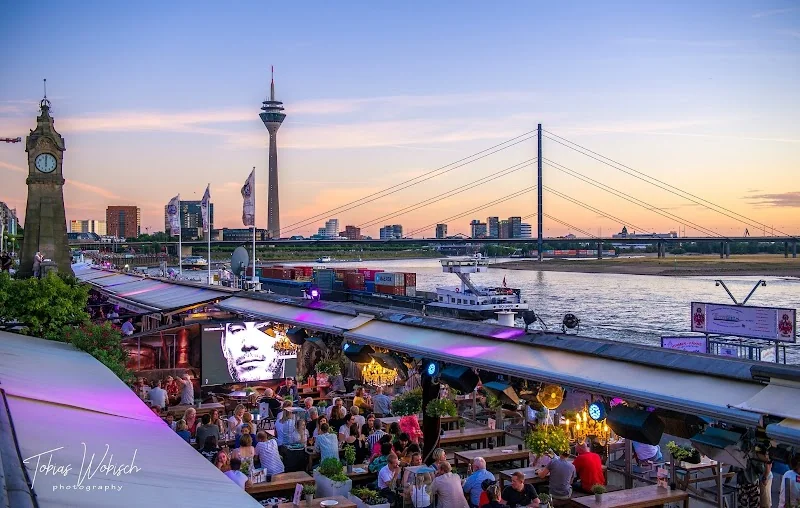
Mannesmannufer, Untere Rheinwerft, Düsseldorf
Untere Rheinwerft, 40213 Düsseldorf, Germany
Rhine Embankment Promenade Düsseldorf | Directions & Parking
The Rhine Embankment Promenade in Düsseldorf is one of those places where you can understand the city in just a few steps: Here, the old town, the Rhine, architecture, leisure, and urban ease come together directly. Between Untere Rheinwerft, Burgplatz, and the riverbanks at the Landtag unfolds one of the city's most famous promenades, which is not only popular with tourists but has also become an integral part of everyday life for many Düsseldorf residents. The official tourism website describes the promenade as a section approximately 1.5 kilometers long, designed between 1990 and 1997 according to the plans of architect Niklaus Fritschi, made possible by the construction of the Rhine Embankment Tunnel. This transformed a traffic-dominated Rhine front into a public space with quality for staying, views of the river, and a direct connection to the old town. Historical documents from the city also confirm the great symbolic significance of the opening in 1995, when around 1.5 million people attended the inauguration over a weekend. To this day, the promenade is therefore not just a path but also a space for experiences, viewpoints, and a stage at the same time. ([visitduesseldorf.de](https://www.visitduesseldorf.de/en/sights/rhine-embankment-promenade/))
History and Development of the Rhine Embankment Promenade
Anyone walking along the Rhine Embankment Promenade today sees primarily the result of an urban planning decision that has sustainably changed Düsseldorf. In the past, traffic along the riverbank clearly separated the old town from the water. This separation was eliminated with the Rhine Embankment Tunnel: the regional road traffic disappeared underground, and above it, an urban promenade was created that brought the Rhine back to the center of the urban experience. The official tourist site emphasizes that the area was developed between 1990 and 1997 according to Niklaus Fritschi's plans and that the construction of the tunnel was a prerequisite for the current quality of the facility. The city's history adds that the opening in 1995 was associated with extraordinary public interest. This combination of traffic relief, open space planning, and new accessibility explains why the Rhine Embankment Promenade is still considered an example of successful urban development. It is not merely a riverbank but the visible result of a fundamental rethinking: away from a car-oriented riverbank towards a public urban space for people. ([visitduesseldorf.de](https://www.visitduesseldorf.de/en/sights/rhine-embankment-promenade/))
The spatial context is also important for understanding the development. According to the official description, the promenade lies between the old town and the Rhine and is part of a Rhine front that connects many significant places. The area extends from Burgplatz, Schlossturm, and the river sections towards the Landtag to the areas now used as walking and leisure space. The urban green planning document describes the Rhine Embankment Promenade as an outstanding open space element of urban district 01. This formulation already shows that it is not intended as a secondary facility but as a central urban landscape with tourist, social, and design functions. The path along the water was thus from the beginning more than just a riverbank redesign: it became a reclamation of an entire urban experience. Especially in Düsseldorf, where the relationships to the Rhine are traditionally strong, the promenade has reintegrated the river into everyday life. ([visitduesseldorf.de](https://www.visitduesseldorf.de/en/sights/rhine-embankment-promenade/))
Additionally, the promenade still functions as a place of collective memory. The city of Düsseldorf showcases the history of the Rhine Embankment Promenade in exhibitions and tours because several development lines of the city can be read from it: the historical Rhine front, the relocation of traffic, urban upgrading, and the return of the river as a public space. The promenade is thus also an example of how a city can retell itself not only architecturally but also culturally. Anyone walking there today sees cafés, open staircases, rows of trees, and sightlines; those who engage with the history recognize a precisely planned response to the previous isolation of the old town from the water. This interplay of past and present makes the Rhine Embankment Promenade one of the most characteristic places in Düsseldorf. ([duesseldorf.de](https://www.duesseldorf.de/stadtbuechereien/veranstaltungen/veranstaltungstipps/veranstaltungstippsdetails/newsdetail/die-geschichte-der-rheinuferpromenade-kabinett-ausstellung-im-schifffahrtmuseum?utm_source=openai))
Directions and Parking around the Rhine Embankment Promenade
For many visitors, the question of directions is crucial, and this is where the Rhine Embankment Promenade showcases one of its greatest strengths: it is centrally located, easily accessible on foot, and can be excellently combined with public transport. The official tourist information cites the nearest parking option as the Rhine Embankment parking garage, which can be accessed via the Rhine Embankment Tunnel; as a destination hint, it recommends the exit towards the old town. Further municipal hints also refer to the old town parking garage as well as nearby parking options in the vicinity of the Rhine Embankment Tunnel and Grabbeplatz. For guests arriving by car, this is practical because the promenade itself is a pedestrian and leisure zone, and one can sensibly park the vehicle in one of the surrounding parking garages instead of searching directly at the river. This is particularly important on heavily frequented days, as the promenade is located in an area that is also strongly influenced by events, visits to the old town, and tourist traffic. ([visitduesseldorf.de](https://www.visitduesseldorf.de/informieren/tourist-information/haeufig-gestellte-fragen-tourist-information-duesseldorf?utm_source=openai))
Public transport is also comfortable. The tourist site and the city's visitor information mention the Heinrich-Heine-Allee stop as a central connection; from there, one can reach the old town and the Rhine in just a few minutes on foot. According to the city's accessibility information, the Rhine Embankment Promenade is also within walking distance of Heinrich-Heine-Allee. For many travelers, this is the most pleasant solution because one can move directly into the city center and then walk to the Rhine without detours. Those traveling by tram or bus also benefit from the fact that the old town is connected to several central lines. This reduces the effort that one would otherwise have with parking searches and one-way streets in city center locations. This is a clear advantage, especially for day guests who are only planning a short stay. ([duesseldorf.de](https://www.duesseldorf.de/stadtmuseum/service/anfahrt/?utm_source=openai))
Düsseldorf has also developed suitable solutions for larger visitor flows around the Rhine. The city regularly refers to P+R offers at heavily attended events, which facilitate the transfer to buses and trains and relieve the city center. This is particularly relevant because the promenade is often visited together with the old town, events, and the Rhine front. Therefore, those who want to arrive comfortably should not drive directly to the water but rather use a parking garage in the center or a park-and-ride offer and walk the last stretch. This often makes the visit more relaxed: one gets out of the car, arrives at the old town, and experiences the river only when the urban space opens up. This also fits the content of this place, as the Rhine Embankment Promenade is primarily intended as a space for walking and staying, not as a transit area. ([duesseldorf.de](https://www.duesseldorf.de/verkehrsmanagement/mobil-in-duesseldorf/mit-dem-auto/park-ride?utm_source=openai))
An additional practical point: The promenade is located in an area that is also intensively considered for accessibility and visitor guidance. Official information pages from the city and the tourism association make it clear that the environment between the old town, Burgplatz, and the Rhine is designed for short distances. Those wishing to visit the Rhine Embankment Promenade as part of a city stroll can therefore easily combine the tour with the old town, Burgplatz, or the Shipping Museum. For guests who want not only to arrive quickly but also to be comfortable on the way, this combination of parking garage, public transport, and walking is particularly pleasant. The Rhine Embankment Promenade is indeed a destination that one consciously reaches and does not just drive to. ([visitduesseldorf.de](https://www.visitduesseldorf.de/informieren/tourist-information/haeufig-gestellte-fragen-tourist-information-duesseldorf?utm_source=openai))
Sights along the Promenade: Old Town, Burgplatz, and Landtag
The Rhine Embankment Promenade should not be viewed in isolation, as its real charm arises from the places it connects. On one side lies the old town, which the official tourism site describes as a historical center with more than 260 dining and drinking options. On the other side, the riverbanks open towards the Landtag and Rhine Tower, that is, towards the architecture that shapes Düsseldorf as a modern state capital. In between lies Burgplatz as a connecting link between the city and the river. This sequence makes the walk so varied: one transitions within minutes from narrow alleys and brewery atmosphere to wide views of the Rhine and back to urban landscapes. ([visitduesseldorf.de](https://www.visitduesseldorf.de/attraktionen/altstadt-19519f54f5?utm_source=openai))
Especially striking is Burgplatz. It is considered one of the most beautiful squares of the post-war period and directly connects the old town and the Rhine. There stands the Schlossturm, the last remaining part of the former castle, which now houses the Shipping Museum. The square is thus not only a photo motif but also a historical junction where the city's past remains visible. The stairs down to the Rhine are a popular place to linger, especially at sunset. From there, looking at the promenade, one quickly recognizes why Düsseldorf maintains this area so intensively: Here, city history is told in an open, usable space. The direct transition from Burgplatz to the Rhine Embankment Promenade is also a good example of how closely culture, leisure, and urban space are intertwined here. ([visitduesseldorf.de](https://www.visitduesseldorf.de/attraktionen/burgplatz-764bcaa200?utm_source=openai))
The Landtag of North Rhine-Westphalia also belongs in this picture. Official tourism information describes the Landtag as a building whose surroundings were urbanly upgraded after its establishment in 1988 through the Rhine Embankment Tunnel, Rhine Embankment Promenade, and Rhine Park Bilk. The Landtag is located directly at the foot of the Rhine Tower and is thus part of that Rhine axis, which offers visitors particularly striking sightlines. Viewed from the riverbank, Düsseldorf presents itself here from its representative side: parliamentary architecture on one side, open river promenade on the other, with the water of the Rhine in between. This spatial tension is what makes the paths along the river so appealing. One does not only experience a river but the city in its public and political dimension. ([visitduesseldorf.de](https://www.visitduesseldorf.de/sehenswuerdigkeiten/landtag-nordrhein-westfalen/?utm_source=openai))
For orientation in the immediate vicinity, the historical water level clock at the Rhine Embankment Promenade, located near the old town and long in operation, is also important. Such details are typical for this section of the riverbank: The promenade consists not only of a long path but also of a series of small and large reference points that enrich the stay. Those strolling here repeatedly find anchor points for short breaks, photos, or detours into the old town. This makes the Rhine Embankment Promenade a kind of urban clamp between history, gastronomy, and views of the Rhine. Those who want to understand the place should therefore not just cross it once but consciously experience it in connection with Burgplatz, Schlossturm, old town, and Landtag. ([visitduesseldorf.de](https://www.visitduesseldorf.de/attraktionen/pegeluhr-2c1140bae9?utm_source=openai))
That is exactly why the promenade fits so well into any Düsseldorf tour: It offers the transition from narrow streets to vast expanses, from history to modern urban planning, and from quiet strolling to vibrant urban scenes. The official description mentions cafés, casemates, a wide open staircase, and urban beaches in summer. In this mix lies the true quality of the place. Those who want to truly experience Düsseldorf will sooner or later end up here, as the Rhine Embankment Promenade brings together the typical themes of the city: Rhine, old town, culture, architecture, and urban lifestyle. ([visitduesseldorf.de](https://www.visitduesseldorf.de/en/sights/rhine-embankment-promenade/))
Walking, Cycling, and Leisure at the Rhine
The Rhine Embankment Promenade is primarily a place for movement and stay. The urban green planning document describes it as a 1.5-kilometer-long promenade with walking and cycling paths, about 600 plane trees, and numerous benches. Additionally, there is the well-known open staircase at Burgplatz, which is considered a meeting point for Düsseldorf residents and guests. This equipment explains why the promenade functions not only on weekends but also in everyday life. One can walk here, observe the Rhine, take a short break, or use the path as part of a longer urban route. The facility is designed for people to stay, not just pass through. ([duesseldorf.de](https://www.duesseldorf.de/fileadmin/Amt68/gartenamt/pdf/gruenplanung/Bericht_01.pdf))
The promenade is particularly attractive for running and leisure activities. The green planning framework plan explicitly mentions strolling, sunbathing, jogging, cycling, inline skating, skateboarding, and pétanque as typical uses. Thus, the Rhine Embankment Promenade is one of the most versatile open spaces in the center of Düsseldorf. Those out in the morning often experience the place as calm and clear; those coming in the evening see strollers, cyclists, people with dogs, and many who simply sit on the river benches. This diversity is no coincidence but part of the planning. The promenade combines public accessibility with an atmosphere that is suitable for both fast movement and slow lingering. ([duesseldorf.de](https://www.duesseldorf.de/fileadmin/Amt68/gartenamt/pdf/gruenplanung/Bericht_01.pdf))
The design also supports this spectrum of use. Official texts about the promenade emphasize the long avenue, the direct sightlines to the Rhine, and the quality of the stay area. The combination of water, trees, seating options, and wide pathways makes the place particularly pleasant. Unlike many inner-city riverbanks, there is not just a narrow walking strip here, but a thoughtfully designed promenade that offers space for different speeds. This is a significant advantage for visitors: one can experience the same place in very different ways. Some come for their run, others for a walk with ice cream or a drink, and still others for a photo stop or for the way from the parking garage to the old town. Everyone finds their own pace. ([visitduesseldorf.de](https://www.visitduesseldorf.de/en/sights/rhine-embankment-promenade/))
The hours around sunset are particularly popular. The official tourism description highlights the mild winds, spectacular sunsets, and the gastronomy with views of the Rhine. This is of great importance for a promenade, as many river paths are attractive during the day but lose quality in the evening. Here it is different: it is precisely the evening that defines the character of the place. Then light and water reflect, the city silhouette becomes softer, and the view from the riverbank or from the open staircases towards Oberkassel becomes a typical Düsseldorf moment. Those who want to photograph the city or simply experience it will likely find here the most concentrated form of Rhine atmosphere. ([visitduesseldorf.de](https://www.visitduesseldorf.de/en/sights/rhine-embankment-promenade/))
The promenade functions not only for individuals but also as a social meeting point. The open staircase at Burgplatz, the benches along the path, and the open riverbank invite people to sit together, talk, or just look at the water. Especially in a city like Düsseldorf, which is very urban on one hand and strongly shaped by the river on the other, a space is created here that connects both properties. For visitors, this is particularly valuable because one can dive directly into the typical lifestyle of the city without much planning effort. The Rhine Embankment Promenade is thus a prime example of an urban open space that naturally combines movement, relaxation, and social interaction. ([duesseldorf.de](https://www.duesseldorf.de/fileadmin/Amt68/gartenamt/pdf/gruenplanung/Bericht_01.pdf))
Events and Highlights at the Rhine
The Rhine Embankment Promenade is not only a place for daily walks but also one of Düsseldorf's most important stages. The official city planning explicitly names it as a venue for open-air uses, and the tourism and city pages repeatedly show how often the place is used for larger formats. Particularly well-known is the Japan Day Düsseldorf/NRW, where stage programs, dance, music, martial arts, and numerous cultural offerings take place along the Rhine Embankment Promenade. Such large events illustrate that the promenade is much more than a beautiful backdrop: it is a functioning event space that can accommodate many people while simultaneously creating atmosphere. ([duesseldorf.de](https://www.duesseldorf.de/fileadmin/Amt68/gartenamt/pdf/gruenplanung/Bericht_01.pdf))
The alltours cinema at the Rhine also showcases this special role. The official Visit Düsseldorf page describes it as an open-air cinema that attracts tens of thousands of visitors to the Rhine every year. This means that the promenade is seasonally played anew: sometimes as a cultural venue, sometimes as a festival zone, sometimes as a relaxed evening spot with a view of the river. This versatility is one of the strongest arguments for the promenade as a location and excursion destination. Those who stroll during the day experience a different atmosphere than someone who comes in the evening for an event. However, the place remains the same: open, visible, close to the water, and right in the city. ([duesseldorf.de](https://www.duesseldorf.de/attraktionen/alltours-kino-open-air-kino-am-rhein-03bb7f2693?utm_source=openai))
The city's communications also frequently indicate that the Rhine Embankment Promenade is integrated into the city's festival and safety concept. This is evident not only at major events but also in lighting, traffic management, and temporary adjustments. Düsseldorf evidently treats this area as a sensitive and highly frequented urban space. For visitors, this is a good sign: where so much attention is paid to design and organization, public space is usually particularly usable. The promenade remains attractive even as uses and occasions change throughout the year. ([duesseldorf.de](https://www.duesseldorf.de/aktuelles/news/detailansicht/newsdetail/kugelleuchten-an-der-rheinuferpromenade-werden-erneuert-1?utm_source=openai))
When considering the Rhine Embankment Promenade throughout the year, one quickly recognizes a recurring pattern. In spring and summer, walks, cycling, urban beach atmosphere, and events dominate; in autumn and winter, the place becomes quieter but remains significant as a viewing and walking space. The official tourism description speaks of restaurants with views of the casemates, sunsets, and urban life by the water. This mix of gastronomy, strolling, and event culture makes the place a permanent magnet. It is not tied to a single event but benefits from the interplay between everyday life and large events. This is a central reason why the Rhine Embankment Promenade has established itself as a landmark of the city in recent decades. ([duesseldorf.de](https://www.visitduesseldorf.de/en/sights/rhine-embankment-promenade/))
For the search intent of many users, this is precisely the crucial point: Those searching for Rhine Embankment Promenade Düsseldorf, directions, parking, programs, or events usually mean a place that functions both in everyday life and during events. The promenade fulfills exactly this profile. It is one of the most beautiful Rhine locations in the city, easily accessible, offers many classic Düsseldorf motifs, and simultaneously serves as a reliable place for programs, festivals, and seasonal highlights. Thus, it is not just a path by the water but a fully-fledged urban destination with very high quality for staying. ([visitduesseldorf.de](https://www.visitduesseldorf.de/en/sights/rhine-embankment-promenade/))
Sources:
- Visit Düsseldorf - Rhine Embankment Promenade
- State Capital Düsseldorf - City History 1995
- State Capital Düsseldorf - Green Planning Framework
- Visit Düsseldorf - Old Town
- Visit Düsseldorf - Burgplatz
- Visit Düsseldorf - Landtag of North Rhine-Westphalia
- Visit Düsseldorf - Tourist Information FAQ
- Visit Düsseldorf - alltours Cinema at the Rhine
- State Capital Düsseldorf - Japan Day Düsseldorf/NRW 2025
Show moreShow less
Rhine Embankment Promenade Düsseldorf | Directions & Parking
The Rhine Embankment Promenade in Düsseldorf is one of those places where you can understand the city in just a few steps: Here, the old town, the Rhine, architecture, leisure, and urban ease come together directly. Between Untere Rheinwerft, Burgplatz, and the riverbanks at the Landtag unfolds one of the city's most famous promenades, which is not only popular with tourists but has also become an integral part of everyday life for many Düsseldorf residents. The official tourism website describes the promenade as a section approximately 1.5 kilometers long, designed between 1990 and 1997 according to the plans of architect Niklaus Fritschi, made possible by the construction of the Rhine Embankment Tunnel. This transformed a traffic-dominated Rhine front into a public space with quality for staying, views of the river, and a direct connection to the old town. Historical documents from the city also confirm the great symbolic significance of the opening in 1995, when around 1.5 million people attended the inauguration over a weekend. To this day, the promenade is therefore not just a path but also a space for experiences, viewpoints, and a stage at the same time. ([visitduesseldorf.de](https://www.visitduesseldorf.de/en/sights/rhine-embankment-promenade/))
History and Development of the Rhine Embankment Promenade
Anyone walking along the Rhine Embankment Promenade today sees primarily the result of an urban planning decision that has sustainably changed Düsseldorf. In the past, traffic along the riverbank clearly separated the old town from the water. This separation was eliminated with the Rhine Embankment Tunnel: the regional road traffic disappeared underground, and above it, an urban promenade was created that brought the Rhine back to the center of the urban experience. The official tourist site emphasizes that the area was developed between 1990 and 1997 according to Niklaus Fritschi's plans and that the construction of the tunnel was a prerequisite for the current quality of the facility. The city's history adds that the opening in 1995 was associated with extraordinary public interest. This combination of traffic relief, open space planning, and new accessibility explains why the Rhine Embankment Promenade is still considered an example of successful urban development. It is not merely a riverbank but the visible result of a fundamental rethinking: away from a car-oriented riverbank towards a public urban space for people. ([visitduesseldorf.de](https://www.visitduesseldorf.de/en/sights/rhine-embankment-promenade/))
The spatial context is also important for understanding the development. According to the official description, the promenade lies between the old town and the Rhine and is part of a Rhine front that connects many significant places. The area extends from Burgplatz, Schlossturm, and the river sections towards the Landtag to the areas now used as walking and leisure space. The urban green planning document describes the Rhine Embankment Promenade as an outstanding open space element of urban district 01. This formulation already shows that it is not intended as a secondary facility but as a central urban landscape with tourist, social, and design functions. The path along the water was thus from the beginning more than just a riverbank redesign: it became a reclamation of an entire urban experience. Especially in Düsseldorf, where the relationships to the Rhine are traditionally strong, the promenade has reintegrated the river into everyday life. ([visitduesseldorf.de](https://www.visitduesseldorf.de/en/sights/rhine-embankment-promenade/))
Additionally, the promenade still functions as a place of collective memory. The city of Düsseldorf showcases the history of the Rhine Embankment Promenade in exhibitions and tours because several development lines of the city can be read from it: the historical Rhine front, the relocation of traffic, urban upgrading, and the return of the river as a public space. The promenade is thus also an example of how a city can retell itself not only architecturally but also culturally. Anyone walking there today sees cafés, open staircases, rows of trees, and sightlines; those who engage with the history recognize a precisely planned response to the previous isolation of the old town from the water. This interplay of past and present makes the Rhine Embankment Promenade one of the most characteristic places in Düsseldorf. ([duesseldorf.de](https://www.duesseldorf.de/stadtbuechereien/veranstaltungen/veranstaltungstipps/veranstaltungstippsdetails/newsdetail/die-geschichte-der-rheinuferpromenade-kabinett-ausstellung-im-schifffahrtmuseum?utm_source=openai))
Directions and Parking around the Rhine Embankment Promenade
For many visitors, the question of directions is crucial, and this is where the Rhine Embankment Promenade showcases one of its greatest strengths: it is centrally located, easily accessible on foot, and can be excellently combined with public transport. The official tourist information cites the nearest parking option as the Rhine Embankment parking garage, which can be accessed via the Rhine Embankment Tunnel; as a destination hint, it recommends the exit towards the old town. Further municipal hints also refer to the old town parking garage as well as nearby parking options in the vicinity of the Rhine Embankment Tunnel and Grabbeplatz. For guests arriving by car, this is practical because the promenade itself is a pedestrian and leisure zone, and one can sensibly park the vehicle in one of the surrounding parking garages instead of searching directly at the river. This is particularly important on heavily frequented days, as the promenade is located in an area that is also strongly influenced by events, visits to the old town, and tourist traffic. ([visitduesseldorf.de](https://www.visitduesseldorf.de/informieren/tourist-information/haeufig-gestellte-fragen-tourist-information-duesseldorf?utm_source=openai))
Public transport is also comfortable. The tourist site and the city's visitor information mention the Heinrich-Heine-Allee stop as a central connection; from there, one can reach the old town and the Rhine in just a few minutes on foot. According to the city's accessibility information, the Rhine Embankment Promenade is also within walking distance of Heinrich-Heine-Allee. For many travelers, this is the most pleasant solution because one can move directly into the city center and then walk to the Rhine without detours. Those traveling by tram or bus also benefit from the fact that the old town is connected to several central lines. This reduces the effort that one would otherwise have with parking searches and one-way streets in city center locations. This is a clear advantage, especially for day guests who are only planning a short stay. ([duesseldorf.de](https://www.duesseldorf.de/stadtmuseum/service/anfahrt/?utm_source=openai))
Düsseldorf has also developed suitable solutions for larger visitor flows around the Rhine. The city regularly refers to P+R offers at heavily attended events, which facilitate the transfer to buses and trains and relieve the city center. This is particularly relevant because the promenade is often visited together with the old town, events, and the Rhine front. Therefore, those who want to arrive comfortably should not drive directly to the water but rather use a parking garage in the center or a park-and-ride offer and walk the last stretch. This often makes the visit more relaxed: one gets out of the car, arrives at the old town, and experiences the river only when the urban space opens up. This also fits the content of this place, as the Rhine Embankment Promenade is primarily intended as a space for walking and staying, not as a transit area. ([duesseldorf.de](https://www.duesseldorf.de/verkehrsmanagement/mobil-in-duesseldorf/mit-dem-auto/park-ride?utm_source=openai))
An additional practical point: The promenade is located in an area that is also intensively considered for accessibility and visitor guidance. Official information pages from the city and the tourism association make it clear that the environment between the old town, Burgplatz, and the Rhine is designed for short distances. Those wishing to visit the Rhine Embankment Promenade as part of a city stroll can therefore easily combine the tour with the old town, Burgplatz, or the Shipping Museum. For guests who want not only to arrive quickly but also to be comfortable on the way, this combination of parking garage, public transport, and walking is particularly pleasant. The Rhine Embankment Promenade is indeed a destination that one consciously reaches and does not just drive to. ([visitduesseldorf.de](https://www.visitduesseldorf.de/informieren/tourist-information/haeufig-gestellte-fragen-tourist-information-duesseldorf?utm_source=openai))
Sights along the Promenade: Old Town, Burgplatz, and Landtag
The Rhine Embankment Promenade should not be viewed in isolation, as its real charm arises from the places it connects. On one side lies the old town, which the official tourism site describes as a historical center with more than 260 dining and drinking options. On the other side, the riverbanks open towards the Landtag and Rhine Tower, that is, towards the architecture that shapes Düsseldorf as a modern state capital. In between lies Burgplatz as a connecting link between the city and the river. This sequence makes the walk so varied: one transitions within minutes from narrow alleys and brewery atmosphere to wide views of the Rhine and back to urban landscapes. ([visitduesseldorf.de](https://www.visitduesseldorf.de/attraktionen/altstadt-19519f54f5?utm_source=openai))
Especially striking is Burgplatz. It is considered one of the most beautiful squares of the post-war period and directly connects the old town and the Rhine. There stands the Schlossturm, the last remaining part of the former castle, which now houses the Shipping Museum. The square is thus not only a photo motif but also a historical junction where the city's past remains visible. The stairs down to the Rhine are a popular place to linger, especially at sunset. From there, looking at the promenade, one quickly recognizes why Düsseldorf maintains this area so intensively: Here, city history is told in an open, usable space. The direct transition from Burgplatz to the Rhine Embankment Promenade is also a good example of how closely culture, leisure, and urban space are intertwined here. ([visitduesseldorf.de](https://www.visitduesseldorf.de/attraktionen/burgplatz-764bcaa200?utm_source=openai))
The Landtag of North Rhine-Westphalia also belongs in this picture. Official tourism information describes the Landtag as a building whose surroundings were urbanly upgraded after its establishment in 1988 through the Rhine Embankment Tunnel, Rhine Embankment Promenade, and Rhine Park Bilk. The Landtag is located directly at the foot of the Rhine Tower and is thus part of that Rhine axis, which offers visitors particularly striking sightlines. Viewed from the riverbank, Düsseldorf presents itself here from its representative side: parliamentary architecture on one side, open river promenade on the other, with the water of the Rhine in between. This spatial tension is what makes the paths along the river so appealing. One does not only experience a river but the city in its public and political dimension. ([visitduesseldorf.de](https://www.visitduesseldorf.de/sehenswuerdigkeiten/landtag-nordrhein-westfalen/?utm_source=openai))
For orientation in the immediate vicinity, the historical water level clock at the Rhine Embankment Promenade, located near the old town and long in operation, is also important. Such details are typical for this section of the riverbank: The promenade consists not only of a long path but also of a series of small and large reference points that enrich the stay. Those strolling here repeatedly find anchor points for short breaks, photos, or detours into the old town. This makes the Rhine Embankment Promenade a kind of urban clamp between history, gastronomy, and views of the Rhine. Those who want to understand the place should therefore not just cross it once but consciously experience it in connection with Burgplatz, Schlossturm, old town, and Landtag. ([visitduesseldorf.de](https://www.visitduesseldorf.de/attraktionen/pegeluhr-2c1140bae9?utm_source=openai))
That is exactly why the promenade fits so well into any Düsseldorf tour: It offers the transition from narrow streets to vast expanses, from history to modern urban planning, and from quiet strolling to vibrant urban scenes. The official description mentions cafés, casemates, a wide open staircase, and urban beaches in summer. In this mix lies the true quality of the place. Those who want to truly experience Düsseldorf will sooner or later end up here, as the Rhine Embankment Promenade brings together the typical themes of the city: Rhine, old town, culture, architecture, and urban lifestyle. ([visitduesseldorf.de](https://www.visitduesseldorf.de/en/sights/rhine-embankment-promenade/))
Walking, Cycling, and Leisure at the Rhine
The Rhine Embankment Promenade is primarily a place for movement and stay. The urban green planning document describes it as a 1.5-kilometer-long promenade with walking and cycling paths, about 600 plane trees, and numerous benches. Additionally, there is the well-known open staircase at Burgplatz, which is considered a meeting point for Düsseldorf residents and guests. This equipment explains why the promenade functions not only on weekends but also in everyday life. One can walk here, observe the Rhine, take a short break, or use the path as part of a longer urban route. The facility is designed for people to stay, not just pass through. ([duesseldorf.de](https://www.duesseldorf.de/fileadmin/Amt68/gartenamt/pdf/gruenplanung/Bericht_01.pdf))
The promenade is particularly attractive for running and leisure activities. The green planning framework plan explicitly mentions strolling, sunbathing, jogging, cycling, inline skating, skateboarding, and pétanque as typical uses. Thus, the Rhine Embankment Promenade is one of the most versatile open spaces in the center of Düsseldorf. Those out in the morning often experience the place as calm and clear; those coming in the evening see strollers, cyclists, people with dogs, and many who simply sit on the river benches. This diversity is no coincidence but part of the planning. The promenade combines public accessibility with an atmosphere that is suitable for both fast movement and slow lingering. ([duesseldorf.de](https://www.duesseldorf.de/fileadmin/Amt68/gartenamt/pdf/gruenplanung/Bericht_01.pdf))
The design also supports this spectrum of use. Official texts about the promenade emphasize the long avenue, the direct sightlines to the Rhine, and the quality of the stay area. The combination of water, trees, seating options, and wide pathways makes the place particularly pleasant. Unlike many inner-city riverbanks, there is not just a narrow walking strip here, but a thoughtfully designed promenade that offers space for different speeds. This is a significant advantage for visitors: one can experience the same place in very different ways. Some come for their run, others for a walk with ice cream or a drink, and still others for a photo stop or for the way from the parking garage to the old town. Everyone finds their own pace. ([visitduesseldorf.de](https://www.visitduesseldorf.de/en/sights/rhine-embankment-promenade/))
The hours around sunset are particularly popular. The official tourism description highlights the mild winds, spectacular sunsets, and the gastronomy with views of the Rhine. This is of great importance for a promenade, as many river paths are attractive during the day but lose quality in the evening. Here it is different: it is precisely the evening that defines the character of the place. Then light and water reflect, the city silhouette becomes softer, and the view from the riverbank or from the open staircases towards Oberkassel becomes a typical Düsseldorf moment. Those who want to photograph the city or simply experience it will likely find here the most concentrated form of Rhine atmosphere. ([visitduesseldorf.de](https://www.visitduesseldorf.de/en/sights/rhine-embankment-promenade/))
The promenade functions not only for individuals but also as a social meeting point. The open staircase at Burgplatz, the benches along the path, and the open riverbank invite people to sit together, talk, or just look at the water. Especially in a city like Düsseldorf, which is very urban on one hand and strongly shaped by the river on the other, a space is created here that connects both properties. For visitors, this is particularly valuable because one can dive directly into the typical lifestyle of the city without much planning effort. The Rhine Embankment Promenade is thus a prime example of an urban open space that naturally combines movement, relaxation, and social interaction. ([duesseldorf.de](https://www.duesseldorf.de/fileadmin/Amt68/gartenamt/pdf/gruenplanung/Bericht_01.pdf))
Events and Highlights at the Rhine
The Rhine Embankment Promenade is not only a place for daily walks but also one of Düsseldorf's most important stages. The official city planning explicitly names it as a venue for open-air uses, and the tourism and city pages repeatedly show how often the place is used for larger formats. Particularly well-known is the Japan Day Düsseldorf/NRW, where stage programs, dance, music, martial arts, and numerous cultural offerings take place along the Rhine Embankment Promenade. Such large events illustrate that the promenade is much more than a beautiful backdrop: it is a functioning event space that can accommodate many people while simultaneously creating atmosphere. ([duesseldorf.de](https://www.duesseldorf.de/fileadmin/Amt68/gartenamt/pdf/gruenplanung/Bericht_01.pdf))
The alltours cinema at the Rhine also showcases this special role. The official Visit Düsseldorf page describes it as an open-air cinema that attracts tens of thousands of visitors to the Rhine every year. This means that the promenade is seasonally played anew: sometimes as a cultural venue, sometimes as a festival zone, sometimes as a relaxed evening spot with a view of the river. This versatility is one of the strongest arguments for the promenade as a location and excursion destination. Those who stroll during the day experience a different atmosphere than someone who comes in the evening for an event. However, the place remains the same: open, visible, close to the water, and right in the city. ([duesseldorf.de](https://www.duesseldorf.de/attraktionen/alltours-kino-open-air-kino-am-rhein-03bb7f2693?utm_source=openai))
The city's communications also frequently indicate that the Rhine Embankment Promenade is integrated into the city's festival and safety concept. This is evident not only at major events but also in lighting, traffic management, and temporary adjustments. Düsseldorf evidently treats this area as a sensitive and highly frequented urban space. For visitors, this is a good sign: where so much attention is paid to design and organization, public space is usually particularly usable. The promenade remains attractive even as uses and occasions change throughout the year. ([duesseldorf.de](https://www.duesseldorf.de/aktuelles/news/detailansicht/newsdetail/kugelleuchten-an-der-rheinuferpromenade-werden-erneuert-1?utm_source=openai))
When considering the Rhine Embankment Promenade throughout the year, one quickly recognizes a recurring pattern. In spring and summer, walks, cycling, urban beach atmosphere, and events dominate; in autumn and winter, the place becomes quieter but remains significant as a viewing and walking space. The official tourism description speaks of restaurants with views of the casemates, sunsets, and urban life by the water. This mix of gastronomy, strolling, and event culture makes the place a permanent magnet. It is not tied to a single event but benefits from the interplay between everyday life and large events. This is a central reason why the Rhine Embankment Promenade has established itself as a landmark of the city in recent decades. ([duesseldorf.de](https://www.visitduesseldorf.de/en/sights/rhine-embankment-promenade/))
For the search intent of many users, this is precisely the crucial point: Those searching for Rhine Embankment Promenade Düsseldorf, directions, parking, programs, or events usually mean a place that functions both in everyday life and during events. The promenade fulfills exactly this profile. It is one of the most beautiful Rhine locations in the city, easily accessible, offers many classic Düsseldorf motifs, and simultaneously serves as a reliable place for programs, festivals, and seasonal highlights. Thus, it is not just a path by the water but a fully-fledged urban destination with very high quality for staying. ([visitduesseldorf.de](https://www.visitduesseldorf.de/en/sights/rhine-embankment-promenade/))
Sources:
- Visit Düsseldorf - Rhine Embankment Promenade
- State Capital Düsseldorf - City History 1995
- State Capital Düsseldorf - Green Planning Framework
- Visit Düsseldorf - Old Town
- Visit Düsseldorf - Burgplatz
- Visit Düsseldorf - Landtag of North Rhine-Westphalia
- Visit Düsseldorf - Tourist Information FAQ
- Visit Düsseldorf - alltours Cinema at the Rhine
- State Capital Düsseldorf - Japan Day Düsseldorf/NRW 2025
Rhine Embankment Promenade Düsseldorf | Directions & Parking
The Rhine Embankment Promenade in Düsseldorf is one of those places where you can understand the city in just a few steps: Here, the old town, the Rhine, architecture, leisure, and urban ease come together directly. Between Untere Rheinwerft, Burgplatz, and the riverbanks at the Landtag unfolds one of the city's most famous promenades, which is not only popular with tourists but has also become an integral part of everyday life for many Düsseldorf residents. The official tourism website describes the promenade as a section approximately 1.5 kilometers long, designed between 1990 and 1997 according to the plans of architect Niklaus Fritschi, made possible by the construction of the Rhine Embankment Tunnel. This transformed a traffic-dominated Rhine front into a public space with quality for staying, views of the river, and a direct connection to the old town. Historical documents from the city also confirm the great symbolic significance of the opening in 1995, when around 1.5 million people attended the inauguration over a weekend. To this day, the promenade is therefore not just a path but also a space for experiences, viewpoints, and a stage at the same time. ([visitduesseldorf.de](https://www.visitduesseldorf.de/en/sights/rhine-embankment-promenade/))
History and Development of the Rhine Embankment Promenade
Anyone walking along the Rhine Embankment Promenade today sees primarily the result of an urban planning decision that has sustainably changed Düsseldorf. In the past, traffic along the riverbank clearly separated the old town from the water. This separation was eliminated with the Rhine Embankment Tunnel: the regional road traffic disappeared underground, and above it, an urban promenade was created that brought the Rhine back to the center of the urban experience. The official tourist site emphasizes that the area was developed between 1990 and 1997 according to Niklaus Fritschi's plans and that the construction of the tunnel was a prerequisite for the current quality of the facility. The city's history adds that the opening in 1995 was associated with extraordinary public interest. This combination of traffic relief, open space planning, and new accessibility explains why the Rhine Embankment Promenade is still considered an example of successful urban development. It is not merely a riverbank but the visible result of a fundamental rethinking: away from a car-oriented riverbank towards a public urban space for people. ([visitduesseldorf.de](https://www.visitduesseldorf.de/en/sights/rhine-embankment-promenade/))
The spatial context is also important for understanding the development. According to the official description, the promenade lies between the old town and the Rhine and is part of a Rhine front that connects many significant places. The area extends from Burgplatz, Schlossturm, and the river sections towards the Landtag to the areas now used as walking and leisure space. The urban green planning document describes the Rhine Embankment Promenade as an outstanding open space element of urban district 01. This formulation already shows that it is not intended as a secondary facility but as a central urban landscape with tourist, social, and design functions. The path along the water was thus from the beginning more than just a riverbank redesign: it became a reclamation of an entire urban experience. Especially in Düsseldorf, where the relationships to the Rhine are traditionally strong, the promenade has reintegrated the river into everyday life. ([visitduesseldorf.de](https://www.visitduesseldorf.de/en/sights/rhine-embankment-promenade/))
Additionally, the promenade still functions as a place of collective memory. The city of Düsseldorf showcases the history of the Rhine Embankment Promenade in exhibitions and tours because several development lines of the city can be read from it: the historical Rhine front, the relocation of traffic, urban upgrading, and the return of the river as a public space. The promenade is thus also an example of how a city can retell itself not only architecturally but also culturally. Anyone walking there today sees cafés, open staircases, rows of trees, and sightlines; those who engage with the history recognize a precisely planned response to the previous isolation of the old town from the water. This interplay of past and present makes the Rhine Embankment Promenade one of the most characteristic places in Düsseldorf. ([duesseldorf.de](https://www.duesseldorf.de/stadtbuechereien/veranstaltungen/veranstaltungstipps/veranstaltungstippsdetails/newsdetail/die-geschichte-der-rheinuferpromenade-kabinett-ausstellung-im-schifffahrtmuseum?utm_source=openai))
Directions and Parking around the Rhine Embankment Promenade
For many visitors, the question of directions is crucial, and this is where the Rhine Embankment Promenade showcases one of its greatest strengths: it is centrally located, easily accessible on foot, and can be excellently combined with public transport. The official tourist information cites the nearest parking option as the Rhine Embankment parking garage, which can be accessed via the Rhine Embankment Tunnel; as a destination hint, it recommends the exit towards the old town. Further municipal hints also refer to the old town parking garage as well as nearby parking options in the vicinity of the Rhine Embankment Tunnel and Grabbeplatz. For guests arriving by car, this is practical because the promenade itself is a pedestrian and leisure zone, and one can sensibly park the vehicle in one of the surrounding parking garages instead of searching directly at the river. This is particularly important on heavily frequented days, as the promenade is located in an area that is also strongly influenced by events, visits to the old town, and tourist traffic. ([visitduesseldorf.de](https://www.visitduesseldorf.de/informieren/tourist-information/haeufig-gestellte-fragen-tourist-information-duesseldorf?utm_source=openai))
Public transport is also comfortable. The tourist site and the city's visitor information mention the Heinrich-Heine-Allee stop as a central connection; from there, one can reach the old town and the Rhine in just a few minutes on foot. According to the city's accessibility information, the Rhine Embankment Promenade is also within walking distance of Heinrich-Heine-Allee. For many travelers, this is the most pleasant solution because one can move directly into the city center and then walk to the Rhine without detours. Those traveling by tram or bus also benefit from the fact that the old town is connected to several central lines. This reduces the effort that one would otherwise have with parking searches and one-way streets in city center locations. This is a clear advantage, especially for day guests who are only planning a short stay. ([duesseldorf.de](https://www.duesseldorf.de/stadtmuseum/service/anfahrt/?utm_source=openai))
Düsseldorf has also developed suitable solutions for larger visitor flows around the Rhine. The city regularly refers to P+R offers at heavily attended events, which facilitate the transfer to buses and trains and relieve the city center. This is particularly relevant because the promenade is often visited together with the old town, events, and the Rhine front. Therefore, those who want to arrive comfortably should not drive directly to the water but rather use a parking garage in the center or a park-and-ride offer and walk the last stretch. This often makes the visit more relaxed: one gets out of the car, arrives at the old town, and experiences the river only when the urban space opens up. This also fits the content of this place, as the Rhine Embankment Promenade is primarily intended as a space for walking and staying, not as a transit area. ([duesseldorf.de](https://www.duesseldorf.de/verkehrsmanagement/mobil-in-duesseldorf/mit-dem-auto/park-ride?utm_source=openai))
An additional practical point: The promenade is located in an area that is also intensively considered for accessibility and visitor guidance. Official information pages from the city and the tourism association make it clear that the environment between the old town, Burgplatz, and the Rhine is designed for short distances. Those wishing to visit the Rhine Embankment Promenade as part of a city stroll can therefore easily combine the tour with the old town, Burgplatz, or the Shipping Museum. For guests who want not only to arrive quickly but also to be comfortable on the way, this combination of parking garage, public transport, and walking is particularly pleasant. The Rhine Embankment Promenade is indeed a destination that one consciously reaches and does not just drive to. ([visitduesseldorf.de](https://www.visitduesseldorf.de/informieren/tourist-information/haeufig-gestellte-fragen-tourist-information-duesseldorf?utm_source=openai))
Sights along the Promenade: Old Town, Burgplatz, and Landtag
The Rhine Embankment Promenade should not be viewed in isolation, as its real charm arises from the places it connects. On one side lies the old town, which the official tourism site describes as a historical center with more than 260 dining and drinking options. On the other side, the riverbanks open towards the Landtag and Rhine Tower, that is, towards the architecture that shapes Düsseldorf as a modern state capital. In between lies Burgplatz as a connecting link between the city and the river. This sequence makes the walk so varied: one transitions within minutes from narrow alleys and brewery atmosphere to wide views of the Rhine and back to urban landscapes. ([visitduesseldorf.de](https://www.visitduesseldorf.de/attraktionen/altstadt-19519f54f5?utm_source=openai))
Especially striking is Burgplatz. It is considered one of the most beautiful squares of the post-war period and directly connects the old town and the Rhine. There stands the Schlossturm, the last remaining part of the former castle, which now houses the Shipping Museum. The square is thus not only a photo motif but also a historical junction where the city's past remains visible. The stairs down to the Rhine are a popular place to linger, especially at sunset. From there, looking at the promenade, one quickly recognizes why Düsseldorf maintains this area so intensively: Here, city history is told in an open, usable space. The direct transition from Burgplatz to the Rhine Embankment Promenade is also a good example of how closely culture, leisure, and urban space are intertwined here. ([visitduesseldorf.de](https://www.visitduesseldorf.de/attraktionen/burgplatz-764bcaa200?utm_source=openai))
The Landtag of North Rhine-Westphalia also belongs in this picture. Official tourism information describes the Landtag as a building whose surroundings were urbanly upgraded after its establishment in 1988 through the Rhine Embankment Tunnel, Rhine Embankment Promenade, and Rhine Park Bilk. The Landtag is located directly at the foot of the Rhine Tower and is thus part of that Rhine axis, which offers visitors particularly striking sightlines. Viewed from the riverbank, Düsseldorf presents itself here from its representative side: parliamentary architecture on one side, open river promenade on the other, with the water of the Rhine in between. This spatial tension is what makes the paths along the river so appealing. One does not only experience a river but the city in its public and political dimension. ([visitduesseldorf.de](https://www.visitduesseldorf.de/sehenswuerdigkeiten/landtag-nordrhein-westfalen/?utm_source=openai))
For orientation in the immediate vicinity, the historical water level clock at the Rhine Embankment Promenade, located near the old town and long in operation, is also important. Such details are typical for this section of the riverbank: The promenade consists not only of a long path but also of a series of small and large reference points that enrich the stay. Those strolling here repeatedly find anchor points for short breaks, photos, or detours into the old town. This makes the Rhine Embankment Promenade a kind of urban clamp between history, gastronomy, and views of the Rhine. Those who want to understand the place should therefore not just cross it once but consciously experience it in connection with Burgplatz, Schlossturm, old town, and Landtag. ([visitduesseldorf.de](https://www.visitduesseldorf.de/attraktionen/pegeluhr-2c1140bae9?utm_source=openai))
That is exactly why the promenade fits so well into any Düsseldorf tour: It offers the transition from narrow streets to vast expanses, from history to modern urban planning, and from quiet strolling to vibrant urban scenes. The official description mentions cafés, casemates, a wide open staircase, and urban beaches in summer. In this mix lies the true quality of the place. Those who want to truly experience Düsseldorf will sooner or later end up here, as the Rhine Embankment Promenade brings together the typical themes of the city: Rhine, old town, culture, architecture, and urban lifestyle. ([visitduesseldorf.de](https://www.visitduesseldorf.de/en/sights/rhine-embankment-promenade/))
Walking, Cycling, and Leisure at the Rhine
The Rhine Embankment Promenade is primarily a place for movement and stay. The urban green planning document describes it as a 1.5-kilometer-long promenade with walking and cycling paths, about 600 plane trees, and numerous benches. Additionally, there is the well-known open staircase at Burgplatz, which is considered a meeting point for Düsseldorf residents and guests. This equipment explains why the promenade functions not only on weekends but also in everyday life. One can walk here, observe the Rhine, take a short break, or use the path as part of a longer urban route. The facility is designed for people to stay, not just pass through. ([duesseldorf.de](https://www.duesseldorf.de/fileadmin/Amt68/gartenamt/pdf/gruenplanung/Bericht_01.pdf))
The promenade is particularly attractive for running and leisure activities. The green planning framework plan explicitly mentions strolling, sunbathing, jogging, cycling, inline skating, skateboarding, and pétanque as typical uses. Thus, the Rhine Embankment Promenade is one of the most versatile open spaces in the center of Düsseldorf. Those out in the morning often experience the place as calm and clear; those coming in the evening see strollers, cyclists, people with dogs, and many who simply sit on the river benches. This diversity is no coincidence but part of the planning. The promenade combines public accessibility with an atmosphere that is suitable for both fast movement and slow lingering. ([duesseldorf.de](https://www.duesseldorf.de/fileadmin/Amt68/gartenamt/pdf/gruenplanung/Bericht_01.pdf))
The design also supports this spectrum of use. Official texts about the promenade emphasize the long avenue, the direct sightlines to the Rhine, and the quality of the stay area. The combination of water, trees, seating options, and wide pathways makes the place particularly pleasant. Unlike many inner-city riverbanks, there is not just a narrow walking strip here, but a thoughtfully designed promenade that offers space for different speeds. This is a significant advantage for visitors: one can experience the same place in very different ways. Some come for their run, others for a walk with ice cream or a drink, and still others for a photo stop or for the way from the parking garage to the old town. Everyone finds their own pace. ([visitduesseldorf.de](https://www.visitduesseldorf.de/en/sights/rhine-embankment-promenade/))
The hours around sunset are particularly popular. The official tourism description highlights the mild winds, spectacular sunsets, and the gastronomy with views of the Rhine. This is of great importance for a promenade, as many river paths are attractive during the day but lose quality in the evening. Here it is different: it is precisely the evening that defines the character of the place. Then light and water reflect, the city silhouette becomes softer, and the view from the riverbank or from the open staircases towards Oberkassel becomes a typical Düsseldorf moment. Those who want to photograph the city or simply experience it will likely find here the most concentrated form of Rhine atmosphere. ([visitduesseldorf.de](https://www.visitduesseldorf.de/en/sights/rhine-embankment-promenade/))
The promenade functions not only for individuals but also as a social meeting point. The open staircase at Burgplatz, the benches along the path, and the open riverbank invite people to sit together, talk, or just look at the water. Especially in a city like Düsseldorf, which is very urban on one hand and strongly shaped by the river on the other, a space is created here that connects both properties. For visitors, this is particularly valuable because one can dive directly into the typical lifestyle of the city without much planning effort. The Rhine Embankment Promenade is thus a prime example of an urban open space that naturally combines movement, relaxation, and social interaction. ([duesseldorf.de](https://www.duesseldorf.de/fileadmin/Amt68/gartenamt/pdf/gruenplanung/Bericht_01.pdf))
Events and Highlights at the Rhine
The Rhine Embankment Promenade is not only a place for daily walks but also one of Düsseldorf's most important stages. The official city planning explicitly names it as a venue for open-air uses, and the tourism and city pages repeatedly show how often the place is used for larger formats. Particularly well-known is the Japan Day Düsseldorf/NRW, where stage programs, dance, music, martial arts, and numerous cultural offerings take place along the Rhine Embankment Promenade. Such large events illustrate that the promenade is much more than a beautiful backdrop: it is a functioning event space that can accommodate many people while simultaneously creating atmosphere. ([duesseldorf.de](https://www.duesseldorf.de/fileadmin/Amt68/gartenamt/pdf/gruenplanung/Bericht_01.pdf))
The alltours cinema at the Rhine also showcases this special role. The official Visit Düsseldorf page describes it as an open-air cinema that attracts tens of thousands of visitors to the Rhine every year. This means that the promenade is seasonally played anew: sometimes as a cultural venue, sometimes as a festival zone, sometimes as a relaxed evening spot with a view of the river. This versatility is one of the strongest arguments for the promenade as a location and excursion destination. Those who stroll during the day experience a different atmosphere than someone who comes in the evening for an event. However, the place remains the same: open, visible, close to the water, and right in the city. ([duesseldorf.de](https://www.duesseldorf.de/attraktionen/alltours-kino-open-air-kino-am-rhein-03bb7f2693?utm_source=openai))
The city's communications also frequently indicate that the Rhine Embankment Promenade is integrated into the city's festival and safety concept. This is evident not only at major events but also in lighting, traffic management, and temporary adjustments. Düsseldorf evidently treats this area as a sensitive and highly frequented urban space. For visitors, this is a good sign: where so much attention is paid to design and organization, public space is usually particularly usable. The promenade remains attractive even as uses and occasions change throughout the year. ([duesseldorf.de](https://www.duesseldorf.de/aktuelles/news/detailansicht/newsdetail/kugelleuchten-an-der-rheinuferpromenade-werden-erneuert-1?utm_source=openai))
When considering the Rhine Embankment Promenade throughout the year, one quickly recognizes a recurring pattern. In spring and summer, walks, cycling, urban beach atmosphere, and events dominate; in autumn and winter, the place becomes quieter but remains significant as a viewing and walking space. The official tourism description speaks of restaurants with views of the casemates, sunsets, and urban life by the water. This mix of gastronomy, strolling, and event culture makes the place a permanent magnet. It is not tied to a single event but benefits from the interplay between everyday life and large events. This is a central reason why the Rhine Embankment Promenade has established itself as a landmark of the city in recent decades. ([duesseldorf.de](https://www.visitduesseldorf.de/en/sights/rhine-embankment-promenade/))
For the search intent of many users, this is precisely the crucial point: Those searching for Rhine Embankment Promenade Düsseldorf, directions, parking, programs, or events usually mean a place that functions both in everyday life and during events. The promenade fulfills exactly this profile. It is one of the most beautiful Rhine locations in the city, easily accessible, offers many classic Düsseldorf motifs, and simultaneously serves as a reliable place for programs, festivals, and seasonal highlights. Thus, it is not just a path by the water but a fully-fledged urban destination with very high quality for staying. ([visitduesseldorf.de](https://www.visitduesseldorf.de/en/sights/rhine-embankment-promenade/))
Sources:
- Visit Düsseldorf - Rhine Embankment Promenade
- State Capital Düsseldorf - City History 1995
- State Capital Düsseldorf - Green Planning Framework
- Visit Düsseldorf - Old Town
- Visit Düsseldorf - Burgplatz
- Visit Düsseldorf - Landtag of North Rhine-Westphalia
- Visit Düsseldorf - Tourist Information FAQ
- Visit Düsseldorf - alltours Cinema at the Rhine
- State Capital Düsseldorf - Japan Day Düsseldorf/NRW 2025
Upcoming Events
No events found
Frequently Asked Questions
Reviews
Pau Aliagas
8. November 2025
Though it's packed with touristic restaurants, the place is awesome and worth a trip. Wonderful views, many people but never a sense of overcrowded. People are kind, food is good and weather is nice too. A very good place to enjoy.
Giorgi Tsitlidze
5. November 2025
One of the best places in Düsseldorf for a peaceful walk or evening run 🌇 Perfect river vibes, chill breeze, and beautiful sunset views over the Rhine. You can grab a drink, walk your dog, or just sit and watch the boats go by — pure calm energy.
RosTeK Vlog
7. August 2025
This place is amazing view lovely view you have some restaurants but dont eat eat there Just drink as food is old and low quality. Also you can watch The ships going down there. Really cool place to have a rest and come down :)
Chris C
3. December 2024
In town to visit Christmas market. This area was beautiful both day and night. Plenty of food and drink options available. One free public restroom (others charge 1 euro). Vendors all over with traditional German souvenirs as well as something for everyone. Absolutely would recommend if in area around the holidays.
Dmytro Kravchenko
2. June 2025
Rheinpromenade is one of our favorite spots for family walks with our child. A wide, peaceful riverside with beautiful views of the Rhine, lots of open space where our little one can run around safely, and we can relax on a bench with a coffee. The atmosphere is calm, it’s clean, green, and most importantly — it feels safe and quiet. It’s especially beautiful here at sunset. A perfect place to spend quality time with your family or just enjoy a peaceful moment in nature. Highly recommend to anyone who appreciates simple things — fresh air, nice views, and a cozy vibe.