
Düsseldorf
Universitätsstraße 1, 40225 Düsseldorf, Deutschland
Philosophical Faculty Building 23.01 | Calendar & History
Building 23.01 at Heinrich Heine University Düsseldorf is not just any place on campus, but a building with a clear identity: Here, lecture halls, events, and orientation points come together that are relevant for students, teachers, guests, and visitors alike. Those looking for the Philosophical Faculty, for dates, for the current program, or for practical information on how to get there and parking will quickly find themselves at this complex, which plays a visible role in everyday life at HHU. The faculty itself describes itself as modernly structured, international, and practice-oriented; on the campus in southern Düsseldorf, it is closely linked to teaching, research, and public exchange. This mix of academic everyday life and open event usage makes Building 23.01 so interesting. It stands for large lectures, festive occasions, concerts, and orientation days, but also for the small logistics behind it: Where is the entrance, how do I get there by bus or train, where can I park, and how do I find images or a room plan? The following sections therefore categorize the building according to the most common search motives and connect keyword analysis with real facts from the campus. ([philo.hhu.de](https://www.philo.hhu.de/fakultaet-1))
Calendar, Events, and Dates at the Philosophical Faculty
The keyword “calendar” is particularly important for Building 23.01 because the place regularly serves as a stage for events that go far beyond normal teaching operations. On the homepage of the Philosophical Faculty, there is a section “Events and Dates” with current entries and direct access to all dates. Public lectures, information evenings, and other faculty formats are announced there; the homepage exemplarily shows several upcoming events and refers to a complete overview of dates. For seekers, this means: Those who want to know what is happening around Building 23.01 should not only look for a single room but keep an eye on the faculty's calendar. Additionally, the HHU course catalog is relevant because it organizes the courses of the semester. The university provides a central electronic directory that can be filtered by faculties and institutes. In practice, this results in two levels: on the one hand, the official faculty calendar with public dates, and on the other hand, the course schedule for students. This distinction is particularly helpful for search queries for “philosophical faculty calendar,” “dates,” or “program,” as not everything that takes place in and around Building 23.01 is published in the same format. ([philo.hhu.de](https://www.philo.hhu.de/))
Building 23.01 is not only a passive place where events take place but a space with recurring program functions. The faculty uses its event pages for lectures, discussions, and orientation offers; examples from current announcements show a wide range from scientific evenings to information events for prospective students. This makes it understandable why “calendar” is such a strong search signal: Visitors want to know not only the address but also to see specifically whether a lecture, a public series, or a special faculty event is currently taking place. Other HHU units also use the location: For example, exam celebrations of the Medical Faculty take place in lecture hall 3A of Building 23.01, and lecture series such as the Forum Neuzeit are held in lecture hall 3B. Additionally, recruiting and orientation events, semester concerts, or other festive dates are organized on campus. This is valuable for SEO because the building thus appears as a recurring meeting point with real program density and not just as a structure on the campus map. ([medizin.hhu.de](https://www.medizin.hhu.de/studium-und-lehre/veranstaltungen/examensfeier?utm_source=openai))
Lecture Halls 3A, 3B, 3C, and 3D: Equipment, Seating, and Room Atmosphere
The most defining information about Building 23.01 is its lecture hall structure. In the CampusExplorer and the HHU lecture hall wiki, lecture halls 3A, 3B, 3C, and 3D are assigned to Building 23.01; all are located on level U1. Lecture hall 3A is particularly important, as it is classified as a very large hall with 609 fixed seats. This size explains why the room is used for festive and well-attended events. The lecture hall has fixed seating, several technical connections, projection and sound technology for teaching and event operations, as well as an induction hearing area. For barrier-free use, access points are documented via level 00 or U1, and HHU points out the nearest disabled toilet in the area of 23.01 U1. The standard equipment also speaks for a highly frequented teaching and event space: HDMI and VGA connections, Wi-Fi, microphones, camera technology, and a lectern are part of the documented media technology. Therefore, search queries for “seating plan” or “best seats” often contain the desire to understand the spatial structure. Officially and most reliably, the look at the HHU lecture hall documentation, which describes capacity, technical equipment, and access, is the best source. ([wiki.hhu.de](https://wiki.hhu.de/pages/viewpage.action?pageId=20810316))
The atmosphere of a large lecture hall like 3A is created not only by its size but also by its usage. Celebrations, lectures, and public appearances take place in this room, which have different requirements than a normal seminar. HHU describes the building in the context of its modernization with a new outdoor staircase, renovated foyers, renewed floors, and a new ventilation system; this indicates a place designed for high visitor numbers and different formats. It is also important for visitors that the lecture halls are easily identifiable on campus and that the CampusExplorer helps with orientation. In everyday life, this means: Building 23.01 is not a quiet office building but an active event space with clear lecture hall architecture. For students of the Philosophical Faculty, for guests of public lectures, and for families at exam celebrations, the room is often the first point of contact with the faculty. Those who search for “philosophical faculty building” are usually looking for exactly this combination of space, event, and practical usability. Therefore, the lecture hall structure is a core component of any meaningful description of the location. ([hhu.de](https://www.hhu.de/en/about-hhu/press-and-marketing/current-news/press-releases-hhu/news-detailansicht/interimshoersaal-uebergeben-arbeiten-an-gebaeude-2301-beginnen))
Access, Public Transport, and Parking on the HHU Campus
For the search terms “access” and “parking,” the official campus location of HHU is crucial. The university and the university hospital are located on a shared campus in southern Düsseldorf, only about 3.5 kilometers from the city center and the main train station. This makes Building 23.01 relatively easily accessible from an urban perspective, although the campus may seem large to first-time visitors. HHU points out that the campus is served by several bus and tram stops, and the Rheinbahn timetable information helps with route planning. Stops include, among others, Universität Ost/Botanischer Garten, Universität Mitte, Universität Nord/Christophstraße, Südpark, Universität Mensa, Universität Süd, Universität Südost, Uni-Kliniken, Moorenstraße, Chlodwigstraße, and Prof.-Dessauer-Weg. Additionally, the Philosophical Faculty refers to the timetable information from Rheinbahn, VRR, and Deutsche Bahn. This is important for the visitor logic of Building 23.01 because one should not rely on a single stop but must consider the specific destination on campus. Those coming from the city center can orient themselves by the official access routes; those walking from the main campus will find the paths between faculty buildings, lecture halls, and parking lots on the campus map. ([hhu.de](https://www.hhu.de/die-hhu/kontakt-und-services/lageplan-und-anfahrt))
Regarding parking, HHU is surprisingly clear: there are designated parking spaces on campus, and these are free; incorrectly parked vehicles can be removed at a cost. For visitors to Building 23.01, it is initially important to use the designated areas and plan enough time for the walk. The campus map names various parking areas, including parking lot 23a with 231 spaces and parking lot 23b with 45 spaces; further parking areas and disabled parking spaces are also marked on campus. This is helpful when searching for “parking lot,” “parking,” or “access,” as the query usually targets not only the street space but the specific campus logistics. Those arriving by bike also find good conditions: HHU describes the campus as well accessible by bike and well connected to the city's bike path network. For SEO and user value, this information is particularly strong as it positions the location as practical and not just as a special place. Building 23.01 benefits from the fact that HHU offers a complete mobility infrastructure: stops, bike racks, parking spaces, and a public campus map that structures the paths to the buildings. ([philo.hhu.de](https://www.philo.hhu.de/fakultaet-1/dekanat/kontakt-und-anfahrt))
History, Modernization, and Development of Building 23.01
The history of Building 23.01 is closely linked to the structural development of the Philosophical Faculty area. An official HHU press release from 2012 documents that work on lecture halls 3A, 3B, 3C, and 3D and the foyer began at that time. The modernization initially included pollutant removal, followed by gutting work, a new ventilation system, a sprinkler system for the foyer area, new floors, and a new outdoor staircase with seating areas. The university also mentioned that the roof was to receive openings for lighting. This is important for the perception of the building as it explains why 23.01 is experienced today as a functional and at the same time representative lecture hall building. The modernization was therefore not only cosmetic but also structurally and safety-wise profound. At the same time, HHU provided a temporary lecture hall during the transition period, which offered 600 seats and was barrier-free. This historical episode explains why the lecture hall area 23.01 has often been used as a central large space for events in the following years and why it repeatedly appears in university communication and faculty everyday life. ([hhu.de](https://www.hhu.de/en/about-hhu/press-and-marketing/current-news/press-releases-hhu/news-detailansicht/interimshoersaal-uebergeben-arbeiten-an-gebaeude-2301-beginnen))
Even in the years following the modernization, Building 23.01 remained a prominent place on campus. Official announcements show that the hall is used for special occasions, such as public lectures with access controls, exam celebrations, and cultural formats. The CampusExplorer also mentions that in front of lecture hall 3A stands the Heine Stone, which has been associated with a Heine stanza since 1993 and makes the university's historical connection visible. The building is thus not only a renovation object from the past but a place where HHU practically stages its academic identity: large rooms, visible campus art, public events, and a clear reference to the namesake Heinrich Heine. Search queries for “history” often target two levels at once: the construction history and the significance of the place in university life. Building 23.01 unites both. It is a lecture hall building that has become a representative event venue for the Philosophical Faculty and other HHU units after a major modernization phase. ([hhu.de](https://www.hhu.de/en/about-hhu/press-and-marketing/current-news/press-releases-hhu/news-detailansicht/interimshoersaal-uebergeben-arbeiten-an-gebaeude-2301-beginnen))
Images, Orientation, and the First Impression on Site
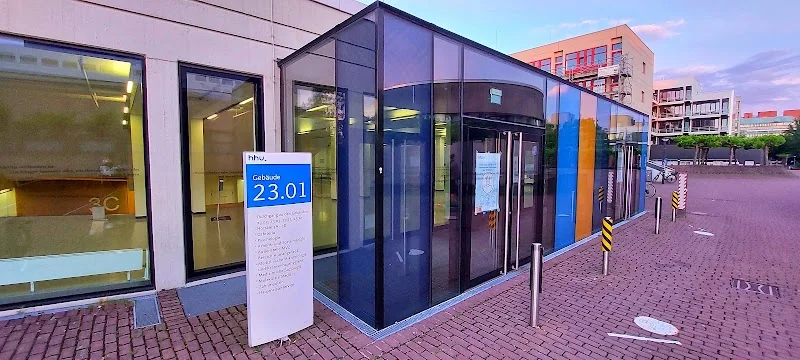
The search term “images” is particularly relevant for Building 23.01 because many visitors want to know what the place looks like and where they should best enter before their first visit. HHU offers several digital orientation aids for this purpose. The CampusExplorer provides images, 360° shots, panorama tours, campus art, and downloadable plans. Additionally, there is the campus sitemap, in which the lecture halls and buildings, including 23.01, appear as separate points. This is useful for anyone who works visually or wants to build a mental map of the campus before a visit. In practice, this means: Those searching for “images of philosophical faculty building 23.01 Düsseldorf” usually want not just a single photo but a reliable orientation aid. The CampusExplorer fulfills this role perfectly as it consolidates buildings, lecture halls, parking lots, and paths in a visual environment. This is strong for SEO as visual searches are often combined with navigation needs. Especially for first-time visitors, parents at celebrations, external guests at lectures, or students in their first semester, this visual entry is often crucial. ([cx.phil.hhu.de](https://cx.phil.hhu.de/campus-vita?utm_source=openai))
The first impression of Building 23.01 is additionally shaped by its location within the campus structure. The HHU campus map shows the building in the vicinity of the rectorate, library, other faculty buildings, and the central campus area. This embedding makes the place pleasant for visitors: one is not isolated in a peripheral building but in a well-connected university space with paths, stops, gastronomy, and service points. The campus is described by the university itself as a “small city in itself,” and this formulation also fits well with 23.01, as the building mediates between teaching, events, and wayfinding in everyday life. For example, those coming to an exam celebration or a public lecture not only find the right lecture hall but also clear indications for access, parking areas, and the surrounding buildings. This is why it is worthwhile to consider the entire campus image when searching for images rather than stopping at an isolated building representation. 23.01 appears on site as a hub: it is visible, multifunctional, and well remembered due to its lecture halls, foyer, and event culture. ([hhu.de](https://www.hhu.de/die-hhu/kontakt-und-services/lageplan-und-anfahrt))
Philosophical Faculty, Campus Life, and Practical Visitor Information
Building 23.01 is not detached from the Philosophical Faculty but reflects its character very well. The faculty describes itself as modern, international, practice-oriented, and closely linked to the economic and cultural region of Düsseldorf. According to its own representation, it comprises 11 institutes, around 7,500 students, about 70 professors, and numerous scientific and administrative staff. For visitors, this means: entering 23.01 means experiencing not just a lecture hall but a visible part of a large intellectual, cultural, and social science ecosystem. This also explains why events from different areas can take place in and around the building, from public lectures to festive acts to orientation formats. The campus character of HHU particularly supports this mix of everyday operations and public accessibility. The faculty maintains a clear separation on its homepage between prospective students, faculty members, and public information, so that search queries for “events,” “calendar,” or “stories” can cover very different user intentions. Building 23.01 is therefore a typical multipurpose location of a campus university: academic, communicative, and practical at the same time. ([philo.hhu.de](https://www.philo.hhu.de/))
For the visit on site, three questions are usually crucial in the end: How do I get there, how do I find the right room, and what can I expect there? The official answer from HHU is pleasantly concrete. The campus is located near the center and main station, is accessible via several public transport stops, offers bike parking spaces, and designated free parking areas. Lecture hall 3A is large, technically well-equipped, and barrier-free accessible; therefore, Building 23.01 is a place where larger events can also be professionally handled. Those looking for photos can orient themselves using the CampusExplorer; those looking for events use the faculty calendar; those arriving by car follow the campus signage and parking instructions. This makes Building 23.01 a very well-researched location with high practical usability. This mix of facts, orientation, and public activity makes the location attractive for search engines and understandable for visitors. The Philosophical Faculty presents itself here not as an abstract administrative unit but as a vibrant part of the campus where learning, listening, celebrating, and arriving naturally belong together. ([philo.hhu.de](https://www.philo.hhu.de/fakultaet-1/dekanat/kontakt-und-anfahrt))
Sources:
Show moreShow less
Philosophical Faculty Building 23.01 | Calendar & History
Building 23.01 at Heinrich Heine University Düsseldorf is not just any place on campus, but a building with a clear identity: Here, lecture halls, events, and orientation points come together that are relevant for students, teachers, guests, and visitors alike. Those looking for the Philosophical Faculty, for dates, for the current program, or for practical information on how to get there and parking will quickly find themselves at this complex, which plays a visible role in everyday life at HHU. The faculty itself describes itself as modernly structured, international, and practice-oriented; on the campus in southern Düsseldorf, it is closely linked to teaching, research, and public exchange. This mix of academic everyday life and open event usage makes Building 23.01 so interesting. It stands for large lectures, festive occasions, concerts, and orientation days, but also for the small logistics behind it: Where is the entrance, how do I get there by bus or train, where can I park, and how do I find images or a room plan? The following sections therefore categorize the building according to the most common search motives and connect keyword analysis with real facts from the campus. ([philo.hhu.de](https://www.philo.hhu.de/fakultaet-1))
Calendar, Events, and Dates at the Philosophical Faculty
The keyword “calendar” is particularly important for Building 23.01 because the place regularly serves as a stage for events that go far beyond normal teaching operations. On the homepage of the Philosophical Faculty, there is a section “Events and Dates” with current entries and direct access to all dates. Public lectures, information evenings, and other faculty formats are announced there; the homepage exemplarily shows several upcoming events and refers to a complete overview of dates. For seekers, this means: Those who want to know what is happening around Building 23.01 should not only look for a single room but keep an eye on the faculty's calendar. Additionally, the HHU course catalog is relevant because it organizes the courses of the semester. The university provides a central electronic directory that can be filtered by faculties and institutes. In practice, this results in two levels: on the one hand, the official faculty calendar with public dates, and on the other hand, the course schedule for students. This distinction is particularly helpful for search queries for “philosophical faculty calendar,” “dates,” or “program,” as not everything that takes place in and around Building 23.01 is published in the same format. ([philo.hhu.de](https://www.philo.hhu.de/))
Building 23.01 is not only a passive place where events take place but a space with recurring program functions. The faculty uses its event pages for lectures, discussions, and orientation offers; examples from current announcements show a wide range from scientific evenings to information events for prospective students. This makes it understandable why “calendar” is such a strong search signal: Visitors want to know not only the address but also to see specifically whether a lecture, a public series, or a special faculty event is currently taking place. Other HHU units also use the location: For example, exam celebrations of the Medical Faculty take place in lecture hall 3A of Building 23.01, and lecture series such as the Forum Neuzeit are held in lecture hall 3B. Additionally, recruiting and orientation events, semester concerts, or other festive dates are organized on campus. This is valuable for SEO because the building thus appears as a recurring meeting point with real program density and not just as a structure on the campus map. ([medizin.hhu.de](https://www.medizin.hhu.de/studium-und-lehre/veranstaltungen/examensfeier?utm_source=openai))
Lecture Halls 3A, 3B, 3C, and 3D: Equipment, Seating, and Room Atmosphere
The most defining information about Building 23.01 is its lecture hall structure. In the CampusExplorer and the HHU lecture hall wiki, lecture halls 3A, 3B, 3C, and 3D are assigned to Building 23.01; all are located on level U1. Lecture hall 3A is particularly important, as it is classified as a very large hall with 609 fixed seats. This size explains why the room is used for festive and well-attended events. The lecture hall has fixed seating, several technical connections, projection and sound technology for teaching and event operations, as well as an induction hearing area. For barrier-free use, access points are documented via level 00 or U1, and HHU points out the nearest disabled toilet in the area of 23.01 U1. The standard equipment also speaks for a highly frequented teaching and event space: HDMI and VGA connections, Wi-Fi, microphones, camera technology, and a lectern are part of the documented media technology. Therefore, search queries for “seating plan” or “best seats” often contain the desire to understand the spatial structure. Officially and most reliably, the look at the HHU lecture hall documentation, which describes capacity, technical equipment, and access, is the best source. ([wiki.hhu.de](https://wiki.hhu.de/pages/viewpage.action?pageId=20810316))
The atmosphere of a large lecture hall like 3A is created not only by its size but also by its usage. Celebrations, lectures, and public appearances take place in this room, which have different requirements than a normal seminar. HHU describes the building in the context of its modernization with a new outdoor staircase, renovated foyers, renewed floors, and a new ventilation system; this indicates a place designed for high visitor numbers and different formats. It is also important for visitors that the lecture halls are easily identifiable on campus and that the CampusExplorer helps with orientation. In everyday life, this means: Building 23.01 is not a quiet office building but an active event space with clear lecture hall architecture. For students of the Philosophical Faculty, for guests of public lectures, and for families at exam celebrations, the room is often the first point of contact with the faculty. Those who search for “philosophical faculty building” are usually looking for exactly this combination of space, event, and practical usability. Therefore, the lecture hall structure is a core component of any meaningful description of the location. ([hhu.de](https://www.hhu.de/en/about-hhu/press-and-marketing/current-news/press-releases-hhu/news-detailansicht/interimshoersaal-uebergeben-arbeiten-an-gebaeude-2301-beginnen))
Access, Public Transport, and Parking on the HHU Campus
For the search terms “access” and “parking,” the official campus location of HHU is crucial. The university and the university hospital are located on a shared campus in southern Düsseldorf, only about 3.5 kilometers from the city center and the main train station. This makes Building 23.01 relatively easily accessible from an urban perspective, although the campus may seem large to first-time visitors. HHU points out that the campus is served by several bus and tram stops, and the Rheinbahn timetable information helps with route planning. Stops include, among others, Universität Ost/Botanischer Garten, Universität Mitte, Universität Nord/Christophstraße, Südpark, Universität Mensa, Universität Süd, Universität Südost, Uni-Kliniken, Moorenstraße, Chlodwigstraße, and Prof.-Dessauer-Weg. Additionally, the Philosophical Faculty refers to the timetable information from Rheinbahn, VRR, and Deutsche Bahn. This is important for the visitor logic of Building 23.01 because one should not rely on a single stop but must consider the specific destination on campus. Those coming from the city center can orient themselves by the official access routes; those walking from the main campus will find the paths between faculty buildings, lecture halls, and parking lots on the campus map. ([hhu.de](https://www.hhu.de/die-hhu/kontakt-und-services/lageplan-und-anfahrt))
Regarding parking, HHU is surprisingly clear: there are designated parking spaces on campus, and these are free; incorrectly parked vehicles can be removed at a cost. For visitors to Building 23.01, it is initially important to use the designated areas and plan enough time for the walk. The campus map names various parking areas, including parking lot 23a with 231 spaces and parking lot 23b with 45 spaces; further parking areas and disabled parking spaces are also marked on campus. This is helpful when searching for “parking lot,” “parking,” or “access,” as the query usually targets not only the street space but the specific campus logistics. Those arriving by bike also find good conditions: HHU describes the campus as well accessible by bike and well connected to the city's bike path network. For SEO and user value, this information is particularly strong as it positions the location as practical and not just as a special place. Building 23.01 benefits from the fact that HHU offers a complete mobility infrastructure: stops, bike racks, parking spaces, and a public campus map that structures the paths to the buildings. ([philo.hhu.de](https://www.philo.hhu.de/fakultaet-1/dekanat/kontakt-und-anfahrt))
History, Modernization, and Development of Building 23.01
The history of Building 23.01 is closely linked to the structural development of the Philosophical Faculty area. An official HHU press release from 2012 documents that work on lecture halls 3A, 3B, 3C, and 3D and the foyer began at that time. The modernization initially included pollutant removal, followed by gutting work, a new ventilation system, a sprinkler system for the foyer area, new floors, and a new outdoor staircase with seating areas. The university also mentioned that the roof was to receive openings for lighting. This is important for the perception of the building as it explains why 23.01 is experienced today as a functional and at the same time representative lecture hall building. The modernization was therefore not only cosmetic but also structurally and safety-wise profound. At the same time, HHU provided a temporary lecture hall during the transition period, which offered 600 seats and was barrier-free. This historical episode explains why the lecture hall area 23.01 has often been used as a central large space for events in the following years and why it repeatedly appears in university communication and faculty everyday life. ([hhu.de](https://www.hhu.de/en/about-hhu/press-and-marketing/current-news/press-releases-hhu/news-detailansicht/interimshoersaal-uebergeben-arbeiten-an-gebaeude-2301-beginnen))
Even in the years following the modernization, Building 23.01 remained a prominent place on campus. Official announcements show that the hall is used for special occasions, such as public lectures with access controls, exam celebrations, and cultural formats. The CampusExplorer also mentions that in front of lecture hall 3A stands the Heine Stone, which has been associated with a Heine stanza since 1993 and makes the university's historical connection visible. The building is thus not only a renovation object from the past but a place where HHU practically stages its academic identity: large rooms, visible campus art, public events, and a clear reference to the namesake Heinrich Heine. Search queries for “history” often target two levels at once: the construction history and the significance of the place in university life. Building 23.01 unites both. It is a lecture hall building that has become a representative event venue for the Philosophical Faculty and other HHU units after a major modernization phase. ([hhu.de](https://www.hhu.de/en/about-hhu/press-and-marketing/current-news/press-releases-hhu/news-detailansicht/interimshoersaal-uebergeben-arbeiten-an-gebaeude-2301-beginnen))
Images, Orientation, and the First Impression on Site
The search term “images” is particularly relevant for Building 23.01 because many visitors want to know what the place looks like and where they should best enter before their first visit. HHU offers several digital orientation aids for this purpose. The CampusExplorer provides images, 360° shots, panorama tours, campus art, and downloadable plans. Additionally, there is the campus sitemap, in which the lecture halls and buildings, including 23.01, appear as separate points. This is useful for anyone who works visually or wants to build a mental map of the campus before a visit. In practice, this means: Those searching for “images of philosophical faculty building 23.01 Düsseldorf” usually want not just a single photo but a reliable orientation aid. The CampusExplorer fulfills this role perfectly as it consolidates buildings, lecture halls, parking lots, and paths in a visual environment. This is strong for SEO as visual searches are often combined with navigation needs. Especially for first-time visitors, parents at celebrations, external guests at lectures, or students in their first semester, this visual entry is often crucial. ([cx.phil.hhu.de](https://cx.phil.hhu.de/campus-vita?utm_source=openai))
The first impression of Building 23.01 is additionally shaped by its location within the campus structure. The HHU campus map shows the building in the vicinity of the rectorate, library, other faculty buildings, and the central campus area. This embedding makes the place pleasant for visitors: one is not isolated in a peripheral building but in a well-connected university space with paths, stops, gastronomy, and service points. The campus is described by the university itself as a “small city in itself,” and this formulation also fits well with 23.01, as the building mediates between teaching, events, and wayfinding in everyday life. For example, those coming to an exam celebration or a public lecture not only find the right lecture hall but also clear indications for access, parking areas, and the surrounding buildings. This is why it is worthwhile to consider the entire campus image when searching for images rather than stopping at an isolated building representation. 23.01 appears on site as a hub: it is visible, multifunctional, and well remembered due to its lecture halls, foyer, and event culture. ([hhu.de](https://www.hhu.de/die-hhu/kontakt-und-services/lageplan-und-anfahrt))
Philosophical Faculty, Campus Life, and Practical Visitor Information
Building 23.01 is not detached from the Philosophical Faculty but reflects its character very well. The faculty describes itself as modern, international, practice-oriented, and closely linked to the economic and cultural region of Düsseldorf. According to its own representation, it comprises 11 institutes, around 7,500 students, about 70 professors, and numerous scientific and administrative staff. For visitors, this means: entering 23.01 means experiencing not just a lecture hall but a visible part of a large intellectual, cultural, and social science ecosystem. This also explains why events from different areas can take place in and around the building, from public lectures to festive acts to orientation formats. The campus character of HHU particularly supports this mix of everyday operations and public accessibility. The faculty maintains a clear separation on its homepage between prospective students, faculty members, and public information, so that search queries for “events,” “calendar,” or “stories” can cover very different user intentions. Building 23.01 is therefore a typical multipurpose location of a campus university: academic, communicative, and practical at the same time. ([philo.hhu.de](https://www.philo.hhu.de/))
For the visit on site, three questions are usually crucial in the end: How do I get there, how do I find the right room, and what can I expect there? The official answer from HHU is pleasantly concrete. The campus is located near the center and main station, is accessible via several public transport stops, offers bike parking spaces, and designated free parking areas. Lecture hall 3A is large, technically well-equipped, and barrier-free accessible; therefore, Building 23.01 is a place where larger events can also be professionally handled. Those looking for photos can orient themselves using the CampusExplorer; those looking for events use the faculty calendar; those arriving by car follow the campus signage and parking instructions. This makes Building 23.01 a very well-researched location with high practical usability. This mix of facts, orientation, and public activity makes the location attractive for search engines and understandable for visitors. The Philosophical Faculty presents itself here not as an abstract administrative unit but as a vibrant part of the campus where learning, listening, celebrating, and arriving naturally belong together. ([philo.hhu.de](https://www.philo.hhu.de/fakultaet-1/dekanat/kontakt-und-anfahrt))
Sources:
Philosophical Faculty Building 23.01 | Calendar & History
Building 23.01 at Heinrich Heine University Düsseldorf is not just any place on campus, but a building with a clear identity: Here, lecture halls, events, and orientation points come together that are relevant for students, teachers, guests, and visitors alike. Those looking for the Philosophical Faculty, for dates, for the current program, or for practical information on how to get there and parking will quickly find themselves at this complex, which plays a visible role in everyday life at HHU. The faculty itself describes itself as modernly structured, international, and practice-oriented; on the campus in southern Düsseldorf, it is closely linked to teaching, research, and public exchange. This mix of academic everyday life and open event usage makes Building 23.01 so interesting. It stands for large lectures, festive occasions, concerts, and orientation days, but also for the small logistics behind it: Where is the entrance, how do I get there by bus or train, where can I park, and how do I find images or a room plan? The following sections therefore categorize the building according to the most common search motives and connect keyword analysis with real facts from the campus. ([philo.hhu.de](https://www.philo.hhu.de/fakultaet-1))
Calendar, Events, and Dates at the Philosophical Faculty
The keyword “calendar” is particularly important for Building 23.01 because the place regularly serves as a stage for events that go far beyond normal teaching operations. On the homepage of the Philosophical Faculty, there is a section “Events and Dates” with current entries and direct access to all dates. Public lectures, information evenings, and other faculty formats are announced there; the homepage exemplarily shows several upcoming events and refers to a complete overview of dates. For seekers, this means: Those who want to know what is happening around Building 23.01 should not only look for a single room but keep an eye on the faculty's calendar. Additionally, the HHU course catalog is relevant because it organizes the courses of the semester. The university provides a central electronic directory that can be filtered by faculties and institutes. In practice, this results in two levels: on the one hand, the official faculty calendar with public dates, and on the other hand, the course schedule for students. This distinction is particularly helpful for search queries for “philosophical faculty calendar,” “dates,” or “program,” as not everything that takes place in and around Building 23.01 is published in the same format. ([philo.hhu.de](https://www.philo.hhu.de/))
Building 23.01 is not only a passive place where events take place but a space with recurring program functions. The faculty uses its event pages for lectures, discussions, and orientation offers; examples from current announcements show a wide range from scientific evenings to information events for prospective students. This makes it understandable why “calendar” is such a strong search signal: Visitors want to know not only the address but also to see specifically whether a lecture, a public series, or a special faculty event is currently taking place. Other HHU units also use the location: For example, exam celebrations of the Medical Faculty take place in lecture hall 3A of Building 23.01, and lecture series such as the Forum Neuzeit are held in lecture hall 3B. Additionally, recruiting and orientation events, semester concerts, or other festive dates are organized on campus. This is valuable for SEO because the building thus appears as a recurring meeting point with real program density and not just as a structure on the campus map. ([medizin.hhu.de](https://www.medizin.hhu.de/studium-und-lehre/veranstaltungen/examensfeier?utm_source=openai))
Lecture Halls 3A, 3B, 3C, and 3D: Equipment, Seating, and Room Atmosphere
The most defining information about Building 23.01 is its lecture hall structure. In the CampusExplorer and the HHU lecture hall wiki, lecture halls 3A, 3B, 3C, and 3D are assigned to Building 23.01; all are located on level U1. Lecture hall 3A is particularly important, as it is classified as a very large hall with 609 fixed seats. This size explains why the room is used for festive and well-attended events. The lecture hall has fixed seating, several technical connections, projection and sound technology for teaching and event operations, as well as an induction hearing area. For barrier-free use, access points are documented via level 00 or U1, and HHU points out the nearest disabled toilet in the area of 23.01 U1. The standard equipment also speaks for a highly frequented teaching and event space: HDMI and VGA connections, Wi-Fi, microphones, camera technology, and a lectern are part of the documented media technology. Therefore, search queries for “seating plan” or “best seats” often contain the desire to understand the spatial structure. Officially and most reliably, the look at the HHU lecture hall documentation, which describes capacity, technical equipment, and access, is the best source. ([wiki.hhu.de](https://wiki.hhu.de/pages/viewpage.action?pageId=20810316))
The atmosphere of a large lecture hall like 3A is created not only by its size but also by its usage. Celebrations, lectures, and public appearances take place in this room, which have different requirements than a normal seminar. HHU describes the building in the context of its modernization with a new outdoor staircase, renovated foyers, renewed floors, and a new ventilation system; this indicates a place designed for high visitor numbers and different formats. It is also important for visitors that the lecture halls are easily identifiable on campus and that the CampusExplorer helps with orientation. In everyday life, this means: Building 23.01 is not a quiet office building but an active event space with clear lecture hall architecture. For students of the Philosophical Faculty, for guests of public lectures, and for families at exam celebrations, the room is often the first point of contact with the faculty. Those who search for “philosophical faculty building” are usually looking for exactly this combination of space, event, and practical usability. Therefore, the lecture hall structure is a core component of any meaningful description of the location. ([hhu.de](https://www.hhu.de/en/about-hhu/press-and-marketing/current-news/press-releases-hhu/news-detailansicht/interimshoersaal-uebergeben-arbeiten-an-gebaeude-2301-beginnen))
Access, Public Transport, and Parking on the HHU Campus
For the search terms “access” and “parking,” the official campus location of HHU is crucial. The university and the university hospital are located on a shared campus in southern Düsseldorf, only about 3.5 kilometers from the city center and the main train station. This makes Building 23.01 relatively easily accessible from an urban perspective, although the campus may seem large to first-time visitors. HHU points out that the campus is served by several bus and tram stops, and the Rheinbahn timetable information helps with route planning. Stops include, among others, Universität Ost/Botanischer Garten, Universität Mitte, Universität Nord/Christophstraße, Südpark, Universität Mensa, Universität Süd, Universität Südost, Uni-Kliniken, Moorenstraße, Chlodwigstraße, and Prof.-Dessauer-Weg. Additionally, the Philosophical Faculty refers to the timetable information from Rheinbahn, VRR, and Deutsche Bahn. This is important for the visitor logic of Building 23.01 because one should not rely on a single stop but must consider the specific destination on campus. Those coming from the city center can orient themselves by the official access routes; those walking from the main campus will find the paths between faculty buildings, lecture halls, and parking lots on the campus map. ([hhu.de](https://www.hhu.de/die-hhu/kontakt-und-services/lageplan-und-anfahrt))
Regarding parking, HHU is surprisingly clear: there are designated parking spaces on campus, and these are free; incorrectly parked vehicles can be removed at a cost. For visitors to Building 23.01, it is initially important to use the designated areas and plan enough time for the walk. The campus map names various parking areas, including parking lot 23a with 231 spaces and parking lot 23b with 45 spaces; further parking areas and disabled parking spaces are also marked on campus. This is helpful when searching for “parking lot,” “parking,” or “access,” as the query usually targets not only the street space but the specific campus logistics. Those arriving by bike also find good conditions: HHU describes the campus as well accessible by bike and well connected to the city's bike path network. For SEO and user value, this information is particularly strong as it positions the location as practical and not just as a special place. Building 23.01 benefits from the fact that HHU offers a complete mobility infrastructure: stops, bike racks, parking spaces, and a public campus map that structures the paths to the buildings. ([philo.hhu.de](https://www.philo.hhu.de/fakultaet-1/dekanat/kontakt-und-anfahrt))
History, Modernization, and Development of Building 23.01
The history of Building 23.01 is closely linked to the structural development of the Philosophical Faculty area. An official HHU press release from 2012 documents that work on lecture halls 3A, 3B, 3C, and 3D and the foyer began at that time. The modernization initially included pollutant removal, followed by gutting work, a new ventilation system, a sprinkler system for the foyer area, new floors, and a new outdoor staircase with seating areas. The university also mentioned that the roof was to receive openings for lighting. This is important for the perception of the building as it explains why 23.01 is experienced today as a functional and at the same time representative lecture hall building. The modernization was therefore not only cosmetic but also structurally and safety-wise profound. At the same time, HHU provided a temporary lecture hall during the transition period, which offered 600 seats and was barrier-free. This historical episode explains why the lecture hall area 23.01 has often been used as a central large space for events in the following years and why it repeatedly appears in university communication and faculty everyday life. ([hhu.de](https://www.hhu.de/en/about-hhu/press-and-marketing/current-news/press-releases-hhu/news-detailansicht/interimshoersaal-uebergeben-arbeiten-an-gebaeude-2301-beginnen))
Even in the years following the modernization, Building 23.01 remained a prominent place on campus. Official announcements show that the hall is used for special occasions, such as public lectures with access controls, exam celebrations, and cultural formats. The CampusExplorer also mentions that in front of lecture hall 3A stands the Heine Stone, which has been associated with a Heine stanza since 1993 and makes the university's historical connection visible. The building is thus not only a renovation object from the past but a place where HHU practically stages its academic identity: large rooms, visible campus art, public events, and a clear reference to the namesake Heinrich Heine. Search queries for “history” often target two levels at once: the construction history and the significance of the place in university life. Building 23.01 unites both. It is a lecture hall building that has become a representative event venue for the Philosophical Faculty and other HHU units after a major modernization phase. ([hhu.de](https://www.hhu.de/en/about-hhu/press-and-marketing/current-news/press-releases-hhu/news-detailansicht/interimshoersaal-uebergeben-arbeiten-an-gebaeude-2301-beginnen))
Images, Orientation, and the First Impression on Site
The search term “images” is particularly relevant for Building 23.01 because many visitors want to know what the place looks like and where they should best enter before their first visit. HHU offers several digital orientation aids for this purpose. The CampusExplorer provides images, 360° shots, panorama tours, campus art, and downloadable plans. Additionally, there is the campus sitemap, in which the lecture halls and buildings, including 23.01, appear as separate points. This is useful for anyone who works visually or wants to build a mental map of the campus before a visit. In practice, this means: Those searching for “images of philosophical faculty building 23.01 Düsseldorf” usually want not just a single photo but a reliable orientation aid. The CampusExplorer fulfills this role perfectly as it consolidates buildings, lecture halls, parking lots, and paths in a visual environment. This is strong for SEO as visual searches are often combined with navigation needs. Especially for first-time visitors, parents at celebrations, external guests at lectures, or students in their first semester, this visual entry is often crucial. ([cx.phil.hhu.de](https://cx.phil.hhu.de/campus-vita?utm_source=openai))
The first impression of Building 23.01 is additionally shaped by its location within the campus structure. The HHU campus map shows the building in the vicinity of the rectorate, library, other faculty buildings, and the central campus area. This embedding makes the place pleasant for visitors: one is not isolated in a peripheral building but in a well-connected university space with paths, stops, gastronomy, and service points. The campus is described by the university itself as a “small city in itself,” and this formulation also fits well with 23.01, as the building mediates between teaching, events, and wayfinding in everyday life. For example, those coming to an exam celebration or a public lecture not only find the right lecture hall but also clear indications for access, parking areas, and the surrounding buildings. This is why it is worthwhile to consider the entire campus image when searching for images rather than stopping at an isolated building representation. 23.01 appears on site as a hub: it is visible, multifunctional, and well remembered due to its lecture halls, foyer, and event culture. ([hhu.de](https://www.hhu.de/die-hhu/kontakt-und-services/lageplan-und-anfahrt))
Philosophical Faculty, Campus Life, and Practical Visitor Information
Building 23.01 is not detached from the Philosophical Faculty but reflects its character very well. The faculty describes itself as modern, international, practice-oriented, and closely linked to the economic and cultural region of Düsseldorf. According to its own representation, it comprises 11 institutes, around 7,500 students, about 70 professors, and numerous scientific and administrative staff. For visitors, this means: entering 23.01 means experiencing not just a lecture hall but a visible part of a large intellectual, cultural, and social science ecosystem. This also explains why events from different areas can take place in and around the building, from public lectures to festive acts to orientation formats. The campus character of HHU particularly supports this mix of everyday operations and public accessibility. The faculty maintains a clear separation on its homepage between prospective students, faculty members, and public information, so that search queries for “events,” “calendar,” or “stories” can cover very different user intentions. Building 23.01 is therefore a typical multipurpose location of a campus university: academic, communicative, and practical at the same time. ([philo.hhu.de](https://www.philo.hhu.de/))
For the visit on site, three questions are usually crucial in the end: How do I get there, how do I find the right room, and what can I expect there? The official answer from HHU is pleasantly concrete. The campus is located near the center and main station, is accessible via several public transport stops, offers bike parking spaces, and designated free parking areas. Lecture hall 3A is large, technically well-equipped, and barrier-free accessible; therefore, Building 23.01 is a place where larger events can also be professionally handled. Those looking for photos can orient themselves using the CampusExplorer; those looking for events use the faculty calendar; those arriving by car follow the campus signage and parking instructions. This makes Building 23.01 a very well-researched location with high practical usability. This mix of facts, orientation, and public activity makes the location attractive for search engines and understandable for visitors. The Philosophical Faculty presents itself here not as an abstract administrative unit but as a vibrant part of the campus where learning, listening, celebrating, and arriving naturally belong together. ([philo.hhu.de](https://www.philo.hhu.de/fakultaet-1/dekanat/kontakt-und-anfahrt))
Sources:
Upcoming Events
No events found
Frequently Asked Questions
Reviews
No reviews found