
Düsseldorf
Gebäude 6, Münsterstraße 156, 40476 Düsseldorf, Deutschland
Peter Behrens School of Arts | Architecture & Design
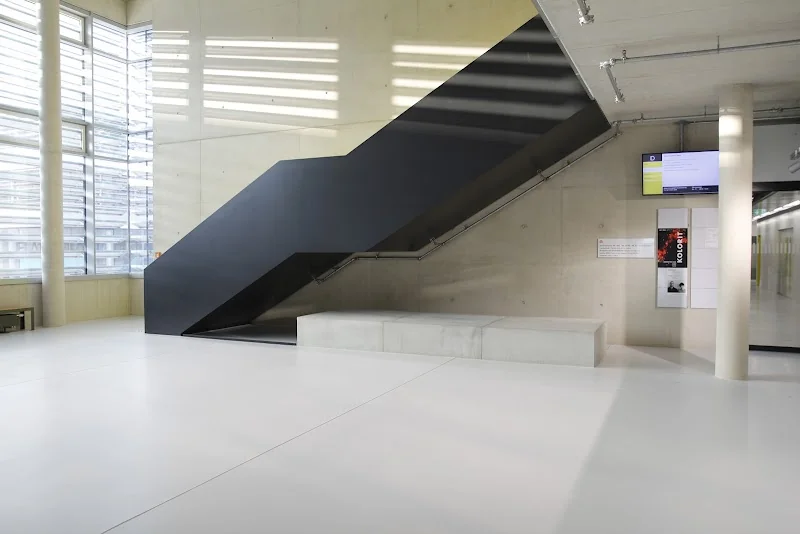
The Peter Behrens School of Arts at the Düsseldorf University of Applied Sciences is for many seekers much more than just a name on a university page. Those searching for architecture, design, photos, directions, or building 6 in Düsseldorf will find a place here where design education, project work, and a clear practical relevance come together. The PBSA is the collective name for the departments of architecture and design at the Düsseldorf University of Applied Sciences and is located on the Derendorf campus at Münsterstraße 156. This is particularly important for those interested in getting an impression of the location: this is not about a classic event hall, but rather a modern university environment with workshops, studios, projects, and student public. The official self-presentation emphasizes the close connection between architecture and design, the international orientation, and the work on current issues. The historical roots are also remarkable, as the school traces its history back to Düsseldorf's design and training traditions that date back to the 19th century. ([pbsa.hs-duesseldorf.de](https://pbsa.hs-duesseldorf.de/))
Architecture and Interior Architecture at PBSA
Those specifically searching for the Peter Behrens School of Arts Department of Architecture, Architecture Düsseldorf, or Interior Architecture PBSA usually want to quickly understand how the study program is structured and what defines the field. At PBSA, there is no strict separation between architecture and interior architecture in the bachelor's program. Instead, the study begins jointly and imparts the fundamentals of both areas in the first semesters. In semesters 1 and 2, fundamental skills in design, representation, construction, history, and materials science are at the center. This is followed by an orientation phase in which students sharpen their spatial perception and get to know the different contents of architecture and interior architecture in depth. This structure is particularly interesting for people who do not yet want to commit to one of the two disciplines during their research. The standard duration of the bachelor's program is six semesters, and according to the official description, the program is primarily in German, although English is available upon request in many courses. ([pbsa.hs-duesseldorf.de](https://pbsa.hs-duesseldorf.de/student-affairs/study-programmes/bachelor-architecture-and-interior-architecture))
For inquiries related to Peter Behrens School of Arts architecture, the master's area is also important because the professional specialization is more clearly defined here. In the master's program, architecture and interior architecture are treated separately, allowing students to deepen their direction purposefully. According to the official study description, there are specialized master's programs, including Architecture and Interior Architecture; the academic profile is complemented by Civic Design and the interdisciplinary Master of Exhibition Design in cooperation with the design department. This opens up career perspectives in design, planning, preservation, project development, urban and regional planning, construction management, communication in the architectural context, and related fields. For the location perspective, this is particularly relevant because the PBSA is not only a place of study but also a place where the next generations of planners prepare for practice, responsibility, and societal tasks. ([pbsa.hs-duesseldorf.de](https://pbsa.hs-duesseldorf.de/student-affairs/study-programmes/bachelor-architecture-and-interior-architecture))
Design, Projects, and Exhibitions
Many inquiries about the Peter Behrens School of Arts revolve not only around the architecture department but also around design, photos, and the general impression of the place. This is plausible, as the PBSA is the collective name for the departments of architecture and design. The official site describes a large student body and numerous educators who work together on four bachelor's programs, five master's programs, and one interdisciplinary master's program. Projects, exhibitions, and collaborations are mentioned, and this is precisely what makes the location so interesting for outsiders: here, not only semester works are created, but also publicly visible results that shape the school's creative profile. Therefore, those looking for impressions, images, or a kind of visual reference will find the strongest presence through student works, exhibition formats, and current news from the departments. The combination of architecture, design, and real work processes creates a location that is very suitable for content related to projects, work environments, and the creative university culture. ([pbsa.hs-duesseldorf.de](https://pbsa.hs-duesseldorf.de/?utm_source=openai))
A particularly important keyword in this context is the architecture exhibition. The official exhibition page shows that the architecture department opens its doors at the end of the summer semester and around 150 young architects from bachelor's and master's programs provide insights into their work. The areas of architecture, architecture/interior architecture, civic design, and interior architecture are mentioned. For seekers, this is a clear indication that the PBSA is not just a learning place behind closed doors, but regularly allows a public view of results, themes, and methods. Those searching for Peter Behrens School of Arts photos often think of such moments: presented models, exhibition situations, work statuses, and final projects. The official communication also makes it clear that the final projects of the architecture and design departments are sometimes presented digitally. This creates a hybrid impression of physical presence in building 6 and public visibility through digital channels. ([pbsa.hs-duesseldorf.de](https://pbsa.hs-duesseldorf.de/werkschau-architektur))
Directions, Building 6, and Parking at Campus Derendorf
For anyone searching for Peter Behrens School of Arts Düsseldorf, Building 6, or Münsterstraße 156 Düsseldorf, the exact location on the Derendorf campus is crucial. The Düsseldorf University of Applied Sciences lists Münsterstraße 156 as the postal address and explicitly assigns Building 6 to the Peter Behrens School of Arts, i.e., the area of architecture and design. The architecture student council additionally states that they are located in room 06.1.006. This is practical for visitors because it not only provides the correct address but also indicates which part of the building they are arriving at. For a location page, this is important as it facilitates orientation and directly addresses the search intent regarding directions, location, and specific building information. Therefore, anyone wanting to know where the PBSA architecture faculty is actually located will find the answer clearly at the Derendorf campus in Düsseldorf. ([hs-duesseldorf.de](https://www.hs-duesseldorf.de/gebaeudeplan))
Regarding parking, the official location is also specific. The HSD describes the underground garage at the Derendorf campus as a non-public parking garage. Guests can take a paper ticket upon entry at the barrier, which initially allows parking for 45 minutes; for longer stays, the ticket must be validated at the reception in building 4 before exiting. Additionally, access is described via Toulouser Allee and Münsterstraße, while the campus is also accessible on foot via Münsterstraße, Toulouser Allee, and Rather Straße. This information is particularly valuable for inquiries such as parking campus derendorf or directions campus derendorf, as it not only confirms the existence of parking options but also explains the specific logic on site. Therefore, those visiting the PBSA should not expect a classic public parking garage, but rather a university infrastructure with its own rules and clear visitor guidelines. ([hs-duesseldorf.de](https://www.hs-duesseldorf.de/gebaeudeplan))
History of Peter Behrens and the School of Arts
The name of the location is closely associated with a central figure in modern design and architectural history. Peter Behrens was a painter, architect, and designer and is considered a formative figure of the early 20th century. The official historical account of the PBSA describes him as an artist who touched nearly all genres and advocated for a holistic approach to shaping life areas. His role as an artistic advisor at AEG in Berlin was particularly important, where he not only influenced buildings but also products, graphics, and advertising materials. This made him an early model of the modern industrial designer. For a page about the Peter Behrens School of Arts, this is more than just a historical background: it explains why the name still stands for the connection between design, technology, architecture, and social relevance. Therefore, those searching for Peter Behrens School of Architecture do not randomly land at a place named after an interdisciplinary pioneer. ([pbsa.hs-duesseldorf.de](https://pbsa.hs-duesseldorf.de/profil/geschichte))
The history of the school itself is also remarkable. Its roots, according to the official account, lie in the art school founded in 1883 in Düsseldorf, where architecture and applied arts played a central role early on. After several upheavals, reforms, and new foundations, the basis for the current departments of architecture and design was established during the development of higher education. Since 2015, the close interdisciplinary collaboration has been made visible under the name Peter Behrens School of Arts. At the same time, the school emphasizes its international orientation, its relationships with universities abroad, and formats such as Intra- and Extra-Muros weeks, which integrate excursions and projects into everyday study life. This is precisely what makes the location interesting for seekers: it combines historical depth with a modern understanding of teaching and a clear opening to the outside. ([pbsa.hs-duesseldorf.de](https://pbsa.hs-duesseldorf.de/profil/geschichte))
Study Programs, Master's, and International Perspectives
Those searching for Peter Behrens School of Arts Design, Peter Behrens School of Arts Department of Design, or Peter Behrens School of Architecture are often interested not only in the location but also in the specific academic profile. The official PBSA page describes the offerings as a combination of architecture and design with several bachelor's and master's programs. For the area of architecture and interior architecture, it is particularly important that both directions are initially taught together in the bachelor's program. This is an advantage for many prospective students as they gain an early broad overview before specializing during their studies. In the master's program, however, the disciplines are clearly distinguished. Additionally, the Master of Exhibition Design further highlights the collaboration between architecture and design. The study programs are strongly focused on design, analysis, technical fundamentals, and conceptual work, which is also reflected in the modules on construction, typologies, urban planning, and history. ([pbsa.hs-duesseldorf.de](https://pbsa.hs-duesseldorf.de/student-affairs/study-programmes/bachelor-architecture-and-interior-architecture))
The location in Düsseldorf further enhances this practical orientation. The official PBSA presentation points out that students benefit from the diverse offerings of the city and the region, including companies, museums, creative hubs, culture, advertising, and fashion. Additionally, modern workshops, project-based teaching, and a university environment are supported by services such as study counseling, eCampus, Moodle, library, and other facilities. The architecture student council and the student structures on site are also visible and contribute to keeping everyday life in building 6 vibrant and well-organized. For seekers wanting to get a serious impression of the architecture department, this connection of study, practice, service, and environment is particularly relevant. It explains why the Peter Behrens School of Arts functions not only as a name but also as a location with a clear identity. ([pbsa.hs-duesseldorf.de](https://pbsa.hs-duesseldorf.de/?utm_source=openai))
Sources:
- Peter Behrens School of Arts - Official Website
- Peter Behrens School of Arts - History
- Düsseldorf University of Applied Sciences - Directions and Building Plan
- Peter Behrens School of Arts - Bachelor Architecture and Interior Architecture
- Peter Behrens School of Arts - Architecture Exhibition
- Peter Behrens School of Arts - Architecture Student Council
Show moreShow less
Peter Behrens School of Arts | Architecture & Design
The Peter Behrens School of Arts at the Düsseldorf University of Applied Sciences is for many seekers much more than just a name on a university page. Those searching for architecture, design, photos, directions, or building 6 in Düsseldorf will find a place here where design education, project work, and a clear practical relevance come together. The PBSA is the collective name for the departments of architecture and design at the Düsseldorf University of Applied Sciences and is located on the Derendorf campus at Münsterstraße 156. This is particularly important for those interested in getting an impression of the location: this is not about a classic event hall, but rather a modern university environment with workshops, studios, projects, and student public. The official self-presentation emphasizes the close connection between architecture and design, the international orientation, and the work on current issues. The historical roots are also remarkable, as the school traces its history back to Düsseldorf's design and training traditions that date back to the 19th century. ([pbsa.hs-duesseldorf.de](https://pbsa.hs-duesseldorf.de/))
Architecture and Interior Architecture at PBSA
Those specifically searching for the Peter Behrens School of Arts Department of Architecture, Architecture Düsseldorf, or Interior Architecture PBSA usually want to quickly understand how the study program is structured and what defines the field. At PBSA, there is no strict separation between architecture and interior architecture in the bachelor's program. Instead, the study begins jointly and imparts the fundamentals of both areas in the first semesters. In semesters 1 and 2, fundamental skills in design, representation, construction, history, and materials science are at the center. This is followed by an orientation phase in which students sharpen their spatial perception and get to know the different contents of architecture and interior architecture in depth. This structure is particularly interesting for people who do not yet want to commit to one of the two disciplines during their research. The standard duration of the bachelor's program is six semesters, and according to the official description, the program is primarily in German, although English is available upon request in many courses. ([pbsa.hs-duesseldorf.de](https://pbsa.hs-duesseldorf.de/student-affairs/study-programmes/bachelor-architecture-and-interior-architecture))
For inquiries related to Peter Behrens School of Arts architecture, the master's area is also important because the professional specialization is more clearly defined here. In the master's program, architecture and interior architecture are treated separately, allowing students to deepen their direction purposefully. According to the official study description, there are specialized master's programs, including Architecture and Interior Architecture; the academic profile is complemented by Civic Design and the interdisciplinary Master of Exhibition Design in cooperation with the design department. This opens up career perspectives in design, planning, preservation, project development, urban and regional planning, construction management, communication in the architectural context, and related fields. For the location perspective, this is particularly relevant because the PBSA is not only a place of study but also a place where the next generations of planners prepare for practice, responsibility, and societal tasks. ([pbsa.hs-duesseldorf.de](https://pbsa.hs-duesseldorf.de/student-affairs/study-programmes/bachelor-architecture-and-interior-architecture))
Design, Projects, and Exhibitions
Many inquiries about the Peter Behrens School of Arts revolve not only around the architecture department but also around design, photos, and the general impression of the place. This is plausible, as the PBSA is the collective name for the departments of architecture and design. The official site describes a large student body and numerous educators who work together on four bachelor's programs, five master's programs, and one interdisciplinary master's program. Projects, exhibitions, and collaborations are mentioned, and this is precisely what makes the location so interesting for outsiders: here, not only semester works are created, but also publicly visible results that shape the school's creative profile. Therefore, those looking for impressions, images, or a kind of visual reference will find the strongest presence through student works, exhibition formats, and current news from the departments. The combination of architecture, design, and real work processes creates a location that is very suitable for content related to projects, work environments, and the creative university culture. ([pbsa.hs-duesseldorf.de](https://pbsa.hs-duesseldorf.de/?utm_source=openai))
A particularly important keyword in this context is the architecture exhibition. The official exhibition page shows that the architecture department opens its doors at the end of the summer semester and around 150 young architects from bachelor's and master's programs provide insights into their work. The areas of architecture, architecture/interior architecture, civic design, and interior architecture are mentioned. For seekers, this is a clear indication that the PBSA is not just a learning place behind closed doors, but regularly allows a public view of results, themes, and methods. Those searching for Peter Behrens School of Arts photos often think of such moments: presented models, exhibition situations, work statuses, and final projects. The official communication also makes it clear that the final projects of the architecture and design departments are sometimes presented digitally. This creates a hybrid impression of physical presence in building 6 and public visibility through digital channels. ([pbsa.hs-duesseldorf.de](https://pbsa.hs-duesseldorf.de/werkschau-architektur))
Directions, Building 6, and Parking at Campus Derendorf
For anyone searching for Peter Behrens School of Arts Düsseldorf, Building 6, or Münsterstraße 156 Düsseldorf, the exact location on the Derendorf campus is crucial. The Düsseldorf University of Applied Sciences lists Münsterstraße 156 as the postal address and explicitly assigns Building 6 to the Peter Behrens School of Arts, i.e., the area of architecture and design. The architecture student council additionally states that they are located in room 06.1.006. This is practical for visitors because it not only provides the correct address but also indicates which part of the building they are arriving at. For a location page, this is important as it facilitates orientation and directly addresses the search intent regarding directions, location, and specific building information. Therefore, anyone wanting to know where the PBSA architecture faculty is actually located will find the answer clearly at the Derendorf campus in Düsseldorf. ([hs-duesseldorf.de](https://www.hs-duesseldorf.de/gebaeudeplan))
Regarding parking, the official location is also specific. The HSD describes the underground garage at the Derendorf campus as a non-public parking garage. Guests can take a paper ticket upon entry at the barrier, which initially allows parking for 45 minutes; for longer stays, the ticket must be validated at the reception in building 4 before exiting. Additionally, access is described via Toulouser Allee and Münsterstraße, while the campus is also accessible on foot via Münsterstraße, Toulouser Allee, and Rather Straße. This information is particularly valuable for inquiries such as parking campus derendorf or directions campus derendorf, as it not only confirms the existence of parking options but also explains the specific logic on site. Therefore, those visiting the PBSA should not expect a classic public parking garage, but rather a university infrastructure with its own rules and clear visitor guidelines. ([hs-duesseldorf.de](https://www.hs-duesseldorf.de/gebaeudeplan))
History of Peter Behrens and the School of Arts
The name of the location is closely associated with a central figure in modern design and architectural history. Peter Behrens was a painter, architect, and designer and is considered a formative figure of the early 20th century. The official historical account of the PBSA describes him as an artist who touched nearly all genres and advocated for a holistic approach to shaping life areas. His role as an artistic advisor at AEG in Berlin was particularly important, where he not only influenced buildings but also products, graphics, and advertising materials. This made him an early model of the modern industrial designer. For a page about the Peter Behrens School of Arts, this is more than just a historical background: it explains why the name still stands for the connection between design, technology, architecture, and social relevance. Therefore, those searching for Peter Behrens School of Architecture do not randomly land at a place named after an interdisciplinary pioneer. ([pbsa.hs-duesseldorf.de](https://pbsa.hs-duesseldorf.de/profil/geschichte))
The history of the school itself is also remarkable. Its roots, according to the official account, lie in the art school founded in 1883 in Düsseldorf, where architecture and applied arts played a central role early on. After several upheavals, reforms, and new foundations, the basis for the current departments of architecture and design was established during the development of higher education. Since 2015, the close interdisciplinary collaboration has been made visible under the name Peter Behrens School of Arts. At the same time, the school emphasizes its international orientation, its relationships with universities abroad, and formats such as Intra- and Extra-Muros weeks, which integrate excursions and projects into everyday study life. This is precisely what makes the location interesting for seekers: it combines historical depth with a modern understanding of teaching and a clear opening to the outside. ([pbsa.hs-duesseldorf.de](https://pbsa.hs-duesseldorf.de/profil/geschichte))
Study Programs, Master's, and International Perspectives
Those searching for Peter Behrens School of Arts Design, Peter Behrens School of Arts Department of Design, or Peter Behrens School of Architecture are often interested not only in the location but also in the specific academic profile. The official PBSA page describes the offerings as a combination of architecture and design with several bachelor's and master's programs. For the area of architecture and interior architecture, it is particularly important that both directions are initially taught together in the bachelor's program. This is an advantage for many prospective students as they gain an early broad overview before specializing during their studies. In the master's program, however, the disciplines are clearly distinguished. Additionally, the Master of Exhibition Design further highlights the collaboration between architecture and design. The study programs are strongly focused on design, analysis, technical fundamentals, and conceptual work, which is also reflected in the modules on construction, typologies, urban planning, and history. ([pbsa.hs-duesseldorf.de](https://pbsa.hs-duesseldorf.de/student-affairs/study-programmes/bachelor-architecture-and-interior-architecture))
The location in Düsseldorf further enhances this practical orientation. The official PBSA presentation points out that students benefit from the diverse offerings of the city and the region, including companies, museums, creative hubs, culture, advertising, and fashion. Additionally, modern workshops, project-based teaching, and a university environment are supported by services such as study counseling, eCampus, Moodle, library, and other facilities. The architecture student council and the student structures on site are also visible and contribute to keeping everyday life in building 6 vibrant and well-organized. For seekers wanting to get a serious impression of the architecture department, this connection of study, practice, service, and environment is particularly relevant. It explains why the Peter Behrens School of Arts functions not only as a name but also as a location with a clear identity. ([pbsa.hs-duesseldorf.de](https://pbsa.hs-duesseldorf.de/?utm_source=openai))
Sources:
- Peter Behrens School of Arts - Official Website
- Peter Behrens School of Arts - History
- Düsseldorf University of Applied Sciences - Directions and Building Plan
- Peter Behrens School of Arts - Bachelor Architecture and Interior Architecture
- Peter Behrens School of Arts - Architecture Exhibition
- Peter Behrens School of Arts - Architecture Student Council
Peter Behrens School of Arts | Architecture & Design
The Peter Behrens School of Arts at the Düsseldorf University of Applied Sciences is for many seekers much more than just a name on a university page. Those searching for architecture, design, photos, directions, or building 6 in Düsseldorf will find a place here where design education, project work, and a clear practical relevance come together. The PBSA is the collective name for the departments of architecture and design at the Düsseldorf University of Applied Sciences and is located on the Derendorf campus at Münsterstraße 156. This is particularly important for those interested in getting an impression of the location: this is not about a classic event hall, but rather a modern university environment with workshops, studios, projects, and student public. The official self-presentation emphasizes the close connection between architecture and design, the international orientation, and the work on current issues. The historical roots are also remarkable, as the school traces its history back to Düsseldorf's design and training traditions that date back to the 19th century. ([pbsa.hs-duesseldorf.de](https://pbsa.hs-duesseldorf.de/))
Architecture and Interior Architecture at PBSA
Those specifically searching for the Peter Behrens School of Arts Department of Architecture, Architecture Düsseldorf, or Interior Architecture PBSA usually want to quickly understand how the study program is structured and what defines the field. At PBSA, there is no strict separation between architecture and interior architecture in the bachelor's program. Instead, the study begins jointly and imparts the fundamentals of both areas in the first semesters. In semesters 1 and 2, fundamental skills in design, representation, construction, history, and materials science are at the center. This is followed by an orientation phase in which students sharpen their spatial perception and get to know the different contents of architecture and interior architecture in depth. This structure is particularly interesting for people who do not yet want to commit to one of the two disciplines during their research. The standard duration of the bachelor's program is six semesters, and according to the official description, the program is primarily in German, although English is available upon request in many courses. ([pbsa.hs-duesseldorf.de](https://pbsa.hs-duesseldorf.de/student-affairs/study-programmes/bachelor-architecture-and-interior-architecture))
For inquiries related to Peter Behrens School of Arts architecture, the master's area is also important because the professional specialization is more clearly defined here. In the master's program, architecture and interior architecture are treated separately, allowing students to deepen their direction purposefully. According to the official study description, there are specialized master's programs, including Architecture and Interior Architecture; the academic profile is complemented by Civic Design and the interdisciplinary Master of Exhibition Design in cooperation with the design department. This opens up career perspectives in design, planning, preservation, project development, urban and regional planning, construction management, communication in the architectural context, and related fields. For the location perspective, this is particularly relevant because the PBSA is not only a place of study but also a place where the next generations of planners prepare for practice, responsibility, and societal tasks. ([pbsa.hs-duesseldorf.de](https://pbsa.hs-duesseldorf.de/student-affairs/study-programmes/bachelor-architecture-and-interior-architecture))
Design, Projects, and Exhibitions
Many inquiries about the Peter Behrens School of Arts revolve not only around the architecture department but also around design, photos, and the general impression of the place. This is plausible, as the PBSA is the collective name for the departments of architecture and design. The official site describes a large student body and numerous educators who work together on four bachelor's programs, five master's programs, and one interdisciplinary master's program. Projects, exhibitions, and collaborations are mentioned, and this is precisely what makes the location so interesting for outsiders: here, not only semester works are created, but also publicly visible results that shape the school's creative profile. Therefore, those looking for impressions, images, or a kind of visual reference will find the strongest presence through student works, exhibition formats, and current news from the departments. The combination of architecture, design, and real work processes creates a location that is very suitable for content related to projects, work environments, and the creative university culture. ([pbsa.hs-duesseldorf.de](https://pbsa.hs-duesseldorf.de/?utm_source=openai))
A particularly important keyword in this context is the architecture exhibition. The official exhibition page shows that the architecture department opens its doors at the end of the summer semester and around 150 young architects from bachelor's and master's programs provide insights into their work. The areas of architecture, architecture/interior architecture, civic design, and interior architecture are mentioned. For seekers, this is a clear indication that the PBSA is not just a learning place behind closed doors, but regularly allows a public view of results, themes, and methods. Those searching for Peter Behrens School of Arts photos often think of such moments: presented models, exhibition situations, work statuses, and final projects. The official communication also makes it clear that the final projects of the architecture and design departments are sometimes presented digitally. This creates a hybrid impression of physical presence in building 6 and public visibility through digital channels. ([pbsa.hs-duesseldorf.de](https://pbsa.hs-duesseldorf.de/werkschau-architektur))
Directions, Building 6, and Parking at Campus Derendorf
For anyone searching for Peter Behrens School of Arts Düsseldorf, Building 6, or Münsterstraße 156 Düsseldorf, the exact location on the Derendorf campus is crucial. The Düsseldorf University of Applied Sciences lists Münsterstraße 156 as the postal address and explicitly assigns Building 6 to the Peter Behrens School of Arts, i.e., the area of architecture and design. The architecture student council additionally states that they are located in room 06.1.006. This is practical for visitors because it not only provides the correct address but also indicates which part of the building they are arriving at. For a location page, this is important as it facilitates orientation and directly addresses the search intent regarding directions, location, and specific building information. Therefore, anyone wanting to know where the PBSA architecture faculty is actually located will find the answer clearly at the Derendorf campus in Düsseldorf. ([hs-duesseldorf.de](https://www.hs-duesseldorf.de/gebaeudeplan))
Regarding parking, the official location is also specific. The HSD describes the underground garage at the Derendorf campus as a non-public parking garage. Guests can take a paper ticket upon entry at the barrier, which initially allows parking for 45 minutes; for longer stays, the ticket must be validated at the reception in building 4 before exiting. Additionally, access is described via Toulouser Allee and Münsterstraße, while the campus is also accessible on foot via Münsterstraße, Toulouser Allee, and Rather Straße. This information is particularly valuable for inquiries such as parking campus derendorf or directions campus derendorf, as it not only confirms the existence of parking options but also explains the specific logic on site. Therefore, those visiting the PBSA should not expect a classic public parking garage, but rather a university infrastructure with its own rules and clear visitor guidelines. ([hs-duesseldorf.de](https://www.hs-duesseldorf.de/gebaeudeplan))
History of Peter Behrens and the School of Arts
The name of the location is closely associated with a central figure in modern design and architectural history. Peter Behrens was a painter, architect, and designer and is considered a formative figure of the early 20th century. The official historical account of the PBSA describes him as an artist who touched nearly all genres and advocated for a holistic approach to shaping life areas. His role as an artistic advisor at AEG in Berlin was particularly important, where he not only influenced buildings but also products, graphics, and advertising materials. This made him an early model of the modern industrial designer. For a page about the Peter Behrens School of Arts, this is more than just a historical background: it explains why the name still stands for the connection between design, technology, architecture, and social relevance. Therefore, those searching for Peter Behrens School of Architecture do not randomly land at a place named after an interdisciplinary pioneer. ([pbsa.hs-duesseldorf.de](https://pbsa.hs-duesseldorf.de/profil/geschichte))
The history of the school itself is also remarkable. Its roots, according to the official account, lie in the art school founded in 1883 in Düsseldorf, where architecture and applied arts played a central role early on. After several upheavals, reforms, and new foundations, the basis for the current departments of architecture and design was established during the development of higher education. Since 2015, the close interdisciplinary collaboration has been made visible under the name Peter Behrens School of Arts. At the same time, the school emphasizes its international orientation, its relationships with universities abroad, and formats such as Intra- and Extra-Muros weeks, which integrate excursions and projects into everyday study life. This is precisely what makes the location interesting for seekers: it combines historical depth with a modern understanding of teaching and a clear opening to the outside. ([pbsa.hs-duesseldorf.de](https://pbsa.hs-duesseldorf.de/profil/geschichte))
Study Programs, Master's, and International Perspectives
Those searching for Peter Behrens School of Arts Design, Peter Behrens School of Arts Department of Design, or Peter Behrens School of Architecture are often interested not only in the location but also in the specific academic profile. The official PBSA page describes the offerings as a combination of architecture and design with several bachelor's and master's programs. For the area of architecture and interior architecture, it is particularly important that both directions are initially taught together in the bachelor's program. This is an advantage for many prospective students as they gain an early broad overview before specializing during their studies. In the master's program, however, the disciplines are clearly distinguished. Additionally, the Master of Exhibition Design further highlights the collaboration between architecture and design. The study programs are strongly focused on design, analysis, technical fundamentals, and conceptual work, which is also reflected in the modules on construction, typologies, urban planning, and history. ([pbsa.hs-duesseldorf.de](https://pbsa.hs-duesseldorf.de/student-affairs/study-programmes/bachelor-architecture-and-interior-architecture))
The location in Düsseldorf further enhances this practical orientation. The official PBSA presentation points out that students benefit from the diverse offerings of the city and the region, including companies, museums, creative hubs, culture, advertising, and fashion. Additionally, modern workshops, project-based teaching, and a university environment are supported by services such as study counseling, eCampus, Moodle, library, and other facilities. The architecture student council and the student structures on site are also visible and contribute to keeping everyday life in building 6 vibrant and well-organized. For seekers wanting to get a serious impression of the architecture department, this connection of study, practice, service, and environment is particularly relevant. It explains why the Peter Behrens School of Arts functions not only as a name but also as a location with a clear identity. ([pbsa.hs-duesseldorf.de](https://pbsa.hs-duesseldorf.de/?utm_source=openai))
Sources:
- Peter Behrens School of Arts - Official Website
- Peter Behrens School of Arts - History
- Düsseldorf University of Applied Sciences - Directions and Building Plan
- Peter Behrens School of Arts - Bachelor Architecture and Interior Architecture
- Peter Behrens School of Arts - Architecture Exhibition
- Peter Behrens School of Arts - Architecture Student Council
Upcoming Events
No events found
Frequently Asked Questions
Reviews
Christian Happe
24. June 2023
The model workshop is a dream. Helpful and extremely friendly staff from the intern to the boss. Especially noteworthy is that the workshop is open beyond the usual operating hours and everyone receives very knowledgeable assistance. The machine park is available to every student after an introduction.
Max Schade
23. January 2021
The PBSA is a very modern and well-equipped faculty of an architecture school in Europe (since moving to the new buildings). It includes one of the largest model making and prototype workshops in Europe. The study program here is divided into a combined architecture/interior design bachelor's and either a structural or interior specialization in the master's program. In addition to the classic subjects, there is also a focus on exhibition construction, digital planning (BIM), and recently urban design. Besides the employed lecturers, there are also international guest professors in the upper semesters, from countries like Japan, Sweden, Italy, or the Netherlands. While the first two semesters teach the basics, later you can choose your courses, focusing either more on interior design or, for example, landscape architecture. In the master's program, the content is specified according to your choice, and the final topic can also be chosen and developed by yourself. The only criticism that many future employers have of the university is that it does not deal enough with everyday activities of later professional life (building applications/DIN standards, execution planning). Therefore, contrary to the repeated advice from professors, it is important to gain practical experience (and earn some money) as early as possible as a working student. Lastly, the PBSA places a strong emphasis on self-motivation and initiative, which is why students with high support needs have to work a lot on their own.
Robin R
10. September 2019
Very good university!
M
15. December 2024
No comment
신예슬
23. March 2022
No comment