Düsseldorf
Bolkerstraße 36, 40213 Düsseldorf, Deutschland
Neanderkirche Düsseldorf | Program & Concerts
The Neanderkirche in Düsseldorf is much more than a classic old town church: it combines Protestant worship culture, high-quality church music, and a historic site that is visible right in the Bolkerstraße. Those looking for Neanderkirche Düsseldorf programs, services, concerts, or organ concerts will find a house with centuries-old history, clear Reformed architecture, barrier-free access, and around 500 seats. The church belongs to the Protestant parish of Düsseldorf-Mitte, is the oldest Protestant church in the city, and is open on weekends as an open church for quiet visits and reflection. The mix of spirituality, music, and old town location makes it interesting for locals as well as for guests who want to experience an authentic Düsseldorf landmark. ([evdus.de](https://www.evdus.de/evangelisch-vor-ort/mitte/mitte-neanderkirche))
Program and Services in the Neanderkirche Düsseldorf
When combining the word program with the Neanderkirche Düsseldorf, most people first think of services, musical formats, and seasonal events. This is precisely where the strength of this church lies: it is not only a sacred space but a vibrant place with a clearly structured yet very diverse calendar. According to the Protestant Church in Düsseldorf, the congregations celebrate worship every Sunday at 11 a.m. Additionally, there is regularly the evening:church, a monthly service at 6 p.m. with music, dialogue, community, and communion. Several times a year, family services take place, tailored to children, parents, and grandparents, and are intentionally shorter and intergenerational. It is also important for visitors that the Neanderkirche, as an open church, is generally accessible on Friday and Saturday afternoons as well as on Sundays after the service. This makes it easy to combine a visit with a walk through the old town, even if there is no concert or major festive service taking place. ([evdus.de](https://www.evdus.de/evangelisch-vor-ort/mitte/mitte-gottesdienste))
Especially attractive for searching for Neanderkirche Düsseldorf events is the current half-year program 2026. There, alongside the night singing, musical services, matinees, and the summer organ concerts appear. On Pentecost Sunday 2026, for example, a service with works by Heinrich Schütz and Felix Mendelssohn Bartholdy is planned, with Pastor Antje Brunotte preaching and the choir of the Neanderkirche singing under the direction of Sebastian Klein. For Easter 2026, the program notes festive music in the service with Mozart's Coronation Mass. So, those not only searching for the term program but for a real overview of the religious and cultural offerings will find in the Neanderkirche a place with clear structure and changing accents. This is practical for visitors, as the service, family format, and music program can be very well combined. ([neandermusik.de](https://www.neandermusik.de/programm1.html))
The Düsseldorf-Mitte parish also makes it clear that church cafés take place in the Neanderkirche and that the worship life is intentionally designed to be open and inviting. This fits with the location in the old town, where the church does not appear as a closed sight but as part of a vibrant neighborhood. For people specifically looking for Neanderkirche Düsseldorf services, it is especially important: The place is not only interesting for major holidays. Even on regular Sundays, during family services, or at the evening:church, the Neanderkirche offers a reliable spiritual offering. This keeps it relevant for the community, for guests from the neighborhood, and for music lovers alike. ([evdus.de](https://www.evdus.de/evangelisch-vor-ort/mitte/mitte-gottesdienste))
Concerts, Choir, and Organ Concerts in the Neanderkirche
The strongest search intention around Neanderkirche Düsseldorf concerts and Neanderkirche Düsseldorf organ concerts meets a place where music has played a significant role for decades. The official music page makes it clear that church music here is not a side role but a focus of community life. The choir of the Neanderkirche was founded in 1961 and today includes around 90 members. Since July 2003, Sebastian Klein has shaped the church music offerings as Neanderkantor. The choir regularly designs cantata services, worship music, oratorio performances, concerts, and also open singing. In addition, there are thematic concert series for Epiphany, Passion season, and Advent season, as well as chamber concerts and the summer organ concerts. This makes the Neanderkirche an extremely concrete and regionally relevant place for those specifically looking for choir, concert, or organ. ([neandermusik.de](https://www.neandermusik.de/freundeskreis.html))
Particularly important is the current concert practice: The program subpage lists for 2026, among other things, the Johannes Passion by Johann Sebastian Bach on Palm Sunday, the Coronation Mass by Wolfgang Amadeus Mozart on Easter Sunday, as well as several matinees and the start of the summer organ concerts. This series has tradition: According to the official page, the summer organ concerts have been held for over 50 years, annually from late June to mid-September with 12 to 14 concerts, organized by the Protestant Cantors' Convention and editorially supervised by the cantor of the Neanderkirche. This is a strong unique selling point for Neanderkirche Düsseldorf events, as it is not only about individual events but about a grown cultural series with a steady audience. Many of the concerts are performed by organists from Düsseldorf, while guests from both Germany and abroad regularly participate. ([neandermusik.de](https://www.neandermusik.de/programm1.html))
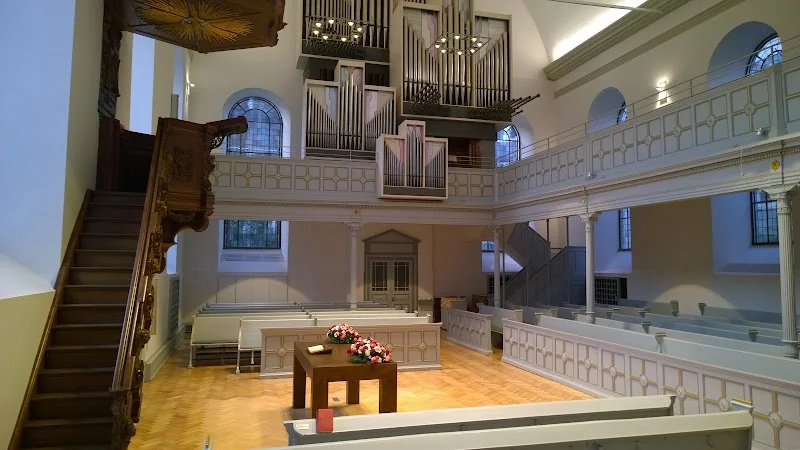
The organ itself also contributes to the church's reputation. The organ built by Rieger in 1965 follows the idea of a European organ that unites various organ traditions of the continent. On the community site, it is described as a model for modern organ building; the execution with 47 registers and 4,000 combinations shows that this is an instrument of great flexibility. For concerts, the church's acoustics are also a crucial factor: The location page of the Düsseldorf Festival describes the Neanderkirche as particularly suitable for chamber music and emphasizes the good acoustics. In practice, this explains why the church is so popular for both sacred music and ensemble concerts, choir performances, and organ evenings. So, those searching for Neanderkirche Düsseldorf concerts, organ, or choir will find a music center with a developed profile, clear tradition, and a current program ranging from worship to solo concerts. ([evdus.de](https://www.evdus.de/evangelisch-vor-ort/mitte/mitte-neanderkirche))
Directions, Parking, and Accessibility at Bolkerstraße 36
In search queries like Neanderkirche Bolkerstraße Düsseldorf or Neanderkirche Düsseldorf parking, it almost always concerns the same practical question: How do I get to the old town most easily and where do I leave the car? The answer from the official pages is pleasantly clear. The Neanderkirche is located at Bolkerstraße 36 in the center of Düsseldorf's old town and is well connected via the Heinrich-Heine-Allee stop. The Protestant Church in Düsseldorf mentions several subway lines there, including U70, U74, U75, U76, U77, U78, and U79, as well as trams like 703, 706, 712, 713, and 715, and bus lines 780, 782, and 785. The location page of the Düsseldorf Festival adds the practical walking distance: It is about a five-minute walk from Heinrich-Heine-Allee. For guests arriving by public transport, the Neanderkirche is therefore very easy to reach. ([evdus.de](https://www.evdus.de/evangelisch-vor-ort/mitte/mitte-neanderkirche))
Those arriving by car should know that the old town itself offers limited space, and nearby parking options are usually in surrounding parking garages. The location page names suitable parking garages K21, Grabbeplatz, and Kunsthalle Düsseldorf on Mutter-Ey-Straße. This is particularly important for concert visitors, as it allows for a relatively stress-free evening planning. Combined with the central location, this also explains why many people connect a visit to the church with a walk through the old town. Clear information is also available for barrier-free use: The church is barrier-free accessible, and there is also an induction loop for hearing aid users. This makes the Neanderkirche not only a historic building but also a place that consciously pays attention to accessibility. ([evdus.de](https://www.evdus.de/evangelisch-vor-ort/mitte/mitte-neanderkirche))
These practical tips are important for SEO relevance because they address real user questions: Those searching for Neanderkirche Düsseldorf parking or directions usually want to know quickly if the visit is uncomplicated. Here, the location is clearly advantageous: right in the old town, a few minutes from the traffic junction Heinrich-Heine-Allee, with parking garages nearby and without architectural barriers for access. The church is thus also well usable for older visitors, people with hearing support, or guests who just want to stop by for a visit. Especially in a densely built downtown area, this combination of central location and barrier-free access is a real plus. ([evdus.de](https://www.evdus.de/evangelisch-vor-ort/mitte/mitte-neanderkirche))
History, Joachim Neander, and Baroque Architecture
The history of the Neanderkirche Düsseldorf is closely linked to the religious development of the city. As early as the early 16th century, a small Reformed community gathered in Düsseldorf, initially using a prayer house on Bolkerstraße. During the reign of Elector Johann Wilhelm II, also known as Jan Wellem, the construction of a church was finally approved, presumably under the condition that it be built in an enclosed courtyard. Between 1683 and 1687, the house of worship was built on the site of the prayer house; thus, the Neanderkirche is the oldest Protestant church in Düsseldorf. This historical depth is a central reason why many users are interested not only in the program but also in the history and uniqueness of the building. At the same time, the location in the old town makes it clear how closely religious history and urban change are intertwined here. ([evdus.de](https://www.evdus.de/evangelisch-vor-ort/mitte/mitte-neanderkirche))
The current name of the church goes back to Joachim Neander, a theologian and poet born in Bremen, who preached on Bolkerstraße and taught at the local Latin school. The naming took place in 1916. On the community pages, Neander is described as a spiritual and literary figure who remains present today through his songs and worship culture. This makes the church not only a historic building but also a memorial to a significant personality of Protestant hymnody. This connection is particularly important for search queries like pastor Neanderkirche Düsseldorf or Joachim Neander Düsseldorf, as it explains why the name of the church has been so strongly associated with music and faith over the years. ([evdus.de](https://www.evdus.de/evangelisch-vor-ort/mitte/mitte-neanderkirche))
Architecturally, the Neanderkirche shows early Baroque forms with Reformed severity. The church is described as a hall church with a barrel vault, and the interior is centered on the pulpit, following a typical Reformed church architecture. The tower features a baroque dome with a lantern and a gilded trumpet angel, reminiscent of the announcing angel. At the same time, the interior appears deliberately simple and clear, thus less ornate than many other Baroque churches. Particularly striking is that the church is now openly visible from Bolkerstraße: The houses in front were destroyed in World War II and were not rebuilt. In 2015, the church was extensively renovated. This results in an image that connects history, war consequences, restoration, and current use into a very dense site profile. Those searching for photos or special features will therefore find not only a pretty facade but a building with clear historical layering. ([evdus.de](https://www.evdus.de/evangelisch-vor-ort/mitte/mitte-neanderkirche))
Christmas, Advent Singing, and Special Musical Services
Even if many people search for Neanderkirche Düsseldorf Christmas, the best access is usually the view of the seasonal music and service formats of the community. The official pages show that the Neanderkirche is particularly active musically during the Advent season, Passion season, and for major festivals. The music page explicitly mentions concert series for Epiphany, Passion, and Advent, in addition to chamber concerts and the summer organ concerts. It is clear: The annual cycle is shaped not only by Sunday services but also by a distinctly pronounced spiritual music calendar. So, those searching for Advent singing, Christmas music, or festive church music should keep an eye on the programs of the community and the friends' circle, as the seasonal formats appear bundled there. ([neandermusik.de](https://www.neandermusik.de/freundeskreis.html?utm_source=openai))
A good example of this form of musical community preference is the current program 2026. It includes, among other things, the cantata service on New Year's Day, the Johannes Passion on Palm Sunday, the Coronation Mass on Easter Sunday, and several matinees. This shows that the Neanderkirche does not see great spiritual music as an exception but as a fixed part of its profile. Additionally, the choir regularly participates in cantata services, worship music, and oratorio projects. For visitors, this is exactly what is interesting when searching for Neanderkirche Düsseldorf Christmas or Advent singing: The church offers not only an abstract festive feeling but concrete musical forms that meaningfully connect liturgy and concert. ([neandermusik.de](https://www.neandermusik.de/programm1.html))
The community formats also speak for a vibrant, not merely representative church culture. The service information points to family services, the music program to open singing, and the choir rehearsal schedule features Taizé singing during the Passion season. This creates a profile for the Neanderkirche that extends beyond Christmas: It is about festivity, but also about participation, singing along, and shared experiences. Especially for people seeking a calm, musically rich alternative to large event venues, this is a strong plus. Thus, during the Christmas and Advent season, the Neanderkirche becomes a place where spirituality, music, and old town atmosphere particularly intensify. ([evdus.de](https://www.evdus.de/evangelisch-vor-ort/mitte/mitte-gottesdienste))
Photos, Old Town Flair, and Visiting Tips for the Neanderkirche
Those searching for Neanderkirche Düsseldorf photos are usually looking for more than just a building; they seek an impression: How does the church appear in the urban space, what does it look like inside, and why is it interesting for photo motifs? Here, the location in the old town plays a significant role. The Neanderkirche is now openly visible from Bolkerstraße because the houses in front were destroyed in World War II and were not rebuilt. As a result, the Baroque house of worship stands surprisingly free in the densely built old town structure. Additionally, there is the distinctive tower with the gilded trumpet angel weather vane, which immediately catches the eye. This combination of a freestanding facade, historic tower, and the calm, Reformed interior architecture makes the church visually very distinctive. ([evdus.de](https://www.evdus.de/evangelisch-vor-ort/mitte/mitte-neanderkirche))
For the visit, it is worthwhile to understand the church not only as a photo spot but also as an acoustic and atmospheric space. The location page describes the Neanderkirche as very centrally located, with around 500 seats and acoustics particularly suitable for chamber music. This explains why the space is so appreciated for concerts and organ evenings: it is not monumental in the sense of a large cathedral space but approachable and clear. So, those planning a quiet visit can use the open church on weekends, experience the interior with the pulpit orientation and barrel vault, and then directly continue into the old town. For many guests, this transition from culture, faith, and urban experience is what makes the Neanderkirche special. ([duesseldorf-festival.de](https://duesseldorf-festival.de/en/location/neanderkirche/))
A practical visiting tip is: The most pleasant combination is arriving by public transport via Heinrich-Heine-Allee and a short walk, as this allows one to reach the old town without searching for parking. Those arriving by car should plan for the mentioned parking garages and especially allow some time reserve for concert dates. For all who prefer atmosphere over mere data, the Neanderkirche is a place where one experiences history, music, and quiet presence simultaneously. This is exactly why it functions so well as a search target for photos, programs, organs, concerts, and old town visits. ([evdus.de](https://www.evdus.de/evangelisch-vor-ort/mitte/mitte-neanderkirche))
Sources:
Mehr anzeigenWeniger anzeigen
Neanderkirche Düsseldorf | Program & Concerts
The Neanderkirche in Düsseldorf is much more than a classic old town church: it combines Protestant worship culture, high-quality church music, and a historic site that is visible right in the Bolkerstraße. Those looking for Neanderkirche Düsseldorf programs, services, concerts, or organ concerts will find a house with centuries-old history, clear Reformed architecture, barrier-free access, and around 500 seats. The church belongs to the Protestant parish of Düsseldorf-Mitte, is the oldest Protestant church in the city, and is open on weekends as an open church for quiet visits and reflection. The mix of spirituality, music, and old town location makes it interesting for locals as well as for guests who want to experience an authentic Düsseldorf landmark. ([evdus.de](https://www.evdus.de/evangelisch-vor-ort/mitte/mitte-neanderkirche))
Program and Services in the Neanderkirche Düsseldorf
When combining the word program with the Neanderkirche Düsseldorf, most people first think of services, musical formats, and seasonal events. This is precisely where the strength of this church lies: it is not only a sacred space but a vibrant place with a clearly structured yet very diverse calendar. According to the Protestant Church in Düsseldorf, the congregations celebrate worship every Sunday at 11 a.m. Additionally, there is regularly the evening:church, a monthly service at 6 p.m. with music, dialogue, community, and communion. Several times a year, family services take place, tailored to children, parents, and grandparents, and are intentionally shorter and intergenerational. It is also important for visitors that the Neanderkirche, as an open church, is generally accessible on Friday and Saturday afternoons as well as on Sundays after the service. This makes it easy to combine a visit with a walk through the old town, even if there is no concert or major festive service taking place. ([evdus.de](https://www.evdus.de/evangelisch-vor-ort/mitte/mitte-gottesdienste))
Especially attractive for searching for Neanderkirche Düsseldorf events is the current half-year program 2026. There, alongside the night singing, musical services, matinees, and the summer organ concerts appear. On Pentecost Sunday 2026, for example, a service with works by Heinrich Schütz and Felix Mendelssohn Bartholdy is planned, with Pastor Antje Brunotte preaching and the choir of the Neanderkirche singing under the direction of Sebastian Klein. For Easter 2026, the program notes festive music in the service with Mozart's Coronation Mass. So, those not only searching for the term program but for a real overview of the religious and cultural offerings will find in the Neanderkirche a place with clear structure and changing accents. This is practical for visitors, as the service, family format, and music program can be very well combined. ([neandermusik.de](https://www.neandermusik.de/programm1.html))
The Düsseldorf-Mitte parish also makes it clear that church cafés take place in the Neanderkirche and that the worship life is intentionally designed to be open and inviting. This fits with the location in the old town, where the church does not appear as a closed sight but as part of a vibrant neighborhood. For people specifically looking for Neanderkirche Düsseldorf services, it is especially important: The place is not only interesting for major holidays. Even on regular Sundays, during family services, or at the evening:church, the Neanderkirche offers a reliable spiritual offering. This keeps it relevant for the community, for guests from the neighborhood, and for music lovers alike. ([evdus.de](https://www.evdus.de/evangelisch-vor-ort/mitte/mitte-gottesdienste))
Concerts, Choir, and Organ Concerts in the Neanderkirche
The strongest search intention around Neanderkirche Düsseldorf concerts and Neanderkirche Düsseldorf organ concerts meets a place where music has played a significant role for decades. The official music page makes it clear that church music here is not a side role but a focus of community life. The choir of the Neanderkirche was founded in 1961 and today includes around 90 members. Since July 2003, Sebastian Klein has shaped the church music offerings as Neanderkantor. The choir regularly designs cantata services, worship music, oratorio performances, concerts, and also open singing. In addition, there are thematic concert series for Epiphany, Passion season, and Advent season, as well as chamber concerts and the summer organ concerts. This makes the Neanderkirche an extremely concrete and regionally relevant place for those specifically looking for choir, concert, or organ. ([neandermusik.de](https://www.neandermusik.de/freundeskreis.html))
Particularly important is the current concert practice: The program subpage lists for 2026, among other things, the Johannes Passion by Johann Sebastian Bach on Palm Sunday, the Coronation Mass by Wolfgang Amadeus Mozart on Easter Sunday, as well as several matinees and the start of the summer organ concerts. This series has tradition: According to the official page, the summer organ concerts have been held for over 50 years, annually from late June to mid-September with 12 to 14 concerts, organized by the Protestant Cantors' Convention and editorially supervised by the cantor of the Neanderkirche. This is a strong unique selling point for Neanderkirche Düsseldorf events, as it is not only about individual events but about a grown cultural series with a steady audience. Many of the concerts are performed by organists from Düsseldorf, while guests from both Germany and abroad regularly participate. ([neandermusik.de](https://www.neandermusik.de/programm1.html))
The organ itself also contributes to the church's reputation. The organ built by Rieger in 1965 follows the idea of a European organ that unites various organ traditions of the continent. On the community site, it is described as a model for modern organ building; the execution with 47 registers and 4,000 combinations shows that this is an instrument of great flexibility. For concerts, the church's acoustics are also a crucial factor: The location page of the Düsseldorf Festival describes the Neanderkirche as particularly suitable for chamber music and emphasizes the good acoustics. In practice, this explains why the church is so popular for both sacred music and ensemble concerts, choir performances, and organ evenings. So, those searching for Neanderkirche Düsseldorf concerts, organ, or choir will find a music center with a developed profile, clear tradition, and a current program ranging from worship to solo concerts. ([evdus.de](https://www.evdus.de/evangelisch-vor-ort/mitte/mitte-neanderkirche))
Directions, Parking, and Accessibility at Bolkerstraße 36
In search queries like Neanderkirche Bolkerstraße Düsseldorf or Neanderkirche Düsseldorf parking, it almost always concerns the same practical question: How do I get to the old town most easily and where do I leave the car? The answer from the official pages is pleasantly clear. The Neanderkirche is located at Bolkerstraße 36 in the center of Düsseldorf's old town and is well connected via the Heinrich-Heine-Allee stop. The Protestant Church in Düsseldorf mentions several subway lines there, including U70, U74, U75, U76, U77, U78, and U79, as well as trams like 703, 706, 712, 713, and 715, and bus lines 780, 782, and 785. The location page of the Düsseldorf Festival adds the practical walking distance: It is about a five-minute walk from Heinrich-Heine-Allee. For guests arriving by public transport, the Neanderkirche is therefore very easy to reach. ([evdus.de](https://www.evdus.de/evangelisch-vor-ort/mitte/mitte-neanderkirche))
Those arriving by car should know that the old town itself offers limited space, and nearby parking options are usually in surrounding parking garages. The location page names suitable parking garages K21, Grabbeplatz, and Kunsthalle Düsseldorf on Mutter-Ey-Straße. This is particularly important for concert visitors, as it allows for a relatively stress-free evening planning. Combined with the central location, this also explains why many people connect a visit to the church with a walk through the old town. Clear information is also available for barrier-free use: The church is barrier-free accessible, and there is also an induction loop for hearing aid users. This makes the Neanderkirche not only a historic building but also a place that consciously pays attention to accessibility. ([evdus.de](https://www.evdus.de/evangelisch-vor-ort/mitte/mitte-neanderkirche))
These practical tips are important for SEO relevance because they address real user questions: Those searching for Neanderkirche Düsseldorf parking or directions usually want to know quickly if the visit is uncomplicated. Here, the location is clearly advantageous: right in the old town, a few minutes from the traffic junction Heinrich-Heine-Allee, with parking garages nearby and without architectural barriers for access. The church is thus also well usable for older visitors, people with hearing support, or guests who just want to stop by for a visit. Especially in a densely built downtown area, this combination of central location and barrier-free access is a real plus. ([evdus.de](https://www.evdus.de/evangelisch-vor-ort/mitte/mitte-neanderkirche))
History, Joachim Neander, and Baroque Architecture
The history of the Neanderkirche Düsseldorf is closely linked to the religious development of the city. As early as the early 16th century, a small Reformed community gathered in Düsseldorf, initially using a prayer house on Bolkerstraße. During the reign of Elector Johann Wilhelm II, also known as Jan Wellem, the construction of a church was finally approved, presumably under the condition that it be built in an enclosed courtyard. Between 1683 and 1687, the house of worship was built on the site of the prayer house; thus, the Neanderkirche is the oldest Protestant church in Düsseldorf. This historical depth is a central reason why many users are interested not only in the program but also in the history and uniqueness of the building. At the same time, the location in the old town makes it clear how closely religious history and urban change are intertwined here. ([evdus.de](https://www.evdus.de/evangelisch-vor-ort/mitte/mitte-neanderkirche))
The current name of the church goes back to Joachim Neander, a theologian and poet born in Bremen, who preached on Bolkerstraße and taught at the local Latin school. The naming took place in 1916. On the community pages, Neander is described as a spiritual and literary figure who remains present today through his songs and worship culture. This makes the church not only a historic building but also a memorial to a significant personality of Protestant hymnody. This connection is particularly important for search queries like pastor Neanderkirche Düsseldorf or Joachim Neander Düsseldorf, as it explains why the name of the church has been so strongly associated with music and faith over the years. ([evdus.de](https://www.evdus.de/evangelisch-vor-ort/mitte/mitte-neanderkirche))
Architecturally, the Neanderkirche shows early Baroque forms with Reformed severity. The church is described as a hall church with a barrel vault, and the interior is centered on the pulpit, following a typical Reformed church architecture. The tower features a baroque dome with a lantern and a gilded trumpet angel, reminiscent of the announcing angel. At the same time, the interior appears deliberately simple and clear, thus less ornate than many other Baroque churches. Particularly striking is that the church is now openly visible from Bolkerstraße: The houses in front were destroyed in World War II and were not rebuilt. In 2015, the church was extensively renovated. This results in an image that connects history, war consequences, restoration, and current use into a very dense site profile. Those searching for photos or special features will therefore find not only a pretty facade but a building with clear historical layering. ([evdus.de](https://www.evdus.de/evangelisch-vor-ort/mitte/mitte-neanderkirche))
Christmas, Advent Singing, and Special Musical Services
Even if many people search for Neanderkirche Düsseldorf Christmas, the best access is usually the view of the seasonal music and service formats of the community. The official pages show that the Neanderkirche is particularly active musically during the Advent season, Passion season, and for major festivals. The music page explicitly mentions concert series for Epiphany, Passion, and Advent, in addition to chamber concerts and the summer organ concerts. It is clear: The annual cycle is shaped not only by Sunday services but also by a distinctly pronounced spiritual music calendar. So, those searching for Advent singing, Christmas music, or festive church music should keep an eye on the programs of the community and the friends' circle, as the seasonal formats appear bundled there. ([neandermusik.de](https://www.neandermusik.de/freundeskreis.html?utm_source=openai))
A good example of this form of musical community preference is the current program 2026. It includes, among other things, the cantata service on New Year's Day, the Johannes Passion on Palm Sunday, the Coronation Mass on Easter Sunday, and several matinees. This shows that the Neanderkirche does not see great spiritual music as an exception but as a fixed part of its profile. Additionally, the choir regularly participates in cantata services, worship music, and oratorio projects. For visitors, this is exactly what is interesting when searching for Neanderkirche Düsseldorf Christmas or Advent singing: The church offers not only an abstract festive feeling but concrete musical forms that meaningfully connect liturgy and concert. ([neandermusik.de](https://www.neandermusik.de/programm1.html))
The community formats also speak for a vibrant, not merely representative church culture. The service information points to family services, the music program to open singing, and the choir rehearsal schedule features Taizé singing during the Passion season. This creates a profile for the Neanderkirche that extends beyond Christmas: It is about festivity, but also about participation, singing along, and shared experiences. Especially for people seeking a calm, musically rich alternative to large event venues, this is a strong plus. Thus, during the Christmas and Advent season, the Neanderkirche becomes a place where spirituality, music, and old town atmosphere particularly intensify. ([evdus.de](https://www.evdus.de/evangelisch-vor-ort/mitte/mitte-gottesdienste))
Photos, Old Town Flair, and Visiting Tips for the Neanderkirche
Those searching for Neanderkirche Düsseldorf photos are usually looking for more than just a building; they seek an impression: How does the church appear in the urban space, what does it look like inside, and why is it interesting for photo motifs? Here, the location in the old town plays a significant role. The Neanderkirche is now openly visible from Bolkerstraße because the houses in front were destroyed in World War II and were not rebuilt. As a result, the Baroque house of worship stands surprisingly free in the densely built old town structure. Additionally, there is the distinctive tower with the gilded trumpet angel weather vane, which immediately catches the eye. This combination of a freestanding facade, historic tower, and the calm, Reformed interior architecture makes the church visually very distinctive. ([evdus.de](https://www.evdus.de/evangelisch-vor-ort/mitte/mitte-neanderkirche))
For the visit, it is worthwhile to understand the church not only as a photo spot but also as an acoustic and atmospheric space. The location page describes the Neanderkirche as very centrally located, with around 500 seats and acoustics particularly suitable for chamber music. This explains why the space is so appreciated for concerts and organ evenings: it is not monumental in the sense of a large cathedral space but approachable and clear. So, those planning a quiet visit can use the open church on weekends, experience the interior with the pulpit orientation and barrel vault, and then directly continue into the old town. For many guests, this transition from culture, faith, and urban experience is what makes the Neanderkirche special. ([duesseldorf-festival.de](https://duesseldorf-festival.de/en/location/neanderkirche/))
A practical visiting tip is: The most pleasant combination is arriving by public transport via Heinrich-Heine-Allee and a short walk, as this allows one to reach the old town without searching for parking. Those arriving by car should plan for the mentioned parking garages and especially allow some time reserve for concert dates. For all who prefer atmosphere over mere data, the Neanderkirche is a place where one experiences history, music, and quiet presence simultaneously. This is exactly why it functions so well as a search target for photos, programs, organs, concerts, and old town visits. ([evdus.de](https://www.evdus.de/evangelisch-vor-ort/mitte/mitte-neanderkirche))
Sources:
Neanderkirche Düsseldorf | Program & Concerts
The Neanderkirche in Düsseldorf is much more than a classic old town church: it combines Protestant worship culture, high-quality church music, and a historic site that is visible right in the Bolkerstraße. Those looking for Neanderkirche Düsseldorf programs, services, concerts, or organ concerts will find a house with centuries-old history, clear Reformed architecture, barrier-free access, and around 500 seats. The church belongs to the Protestant parish of Düsseldorf-Mitte, is the oldest Protestant church in the city, and is open on weekends as an open church for quiet visits and reflection. The mix of spirituality, music, and old town location makes it interesting for locals as well as for guests who want to experience an authentic Düsseldorf landmark. ([evdus.de](https://www.evdus.de/evangelisch-vor-ort/mitte/mitte-neanderkirche))
Program and Services in the Neanderkirche Düsseldorf
When combining the word program with the Neanderkirche Düsseldorf, most people first think of services, musical formats, and seasonal events. This is precisely where the strength of this church lies: it is not only a sacred space but a vibrant place with a clearly structured yet very diverse calendar. According to the Protestant Church in Düsseldorf, the congregations celebrate worship every Sunday at 11 a.m. Additionally, there is regularly the evening:church, a monthly service at 6 p.m. with music, dialogue, community, and communion. Several times a year, family services take place, tailored to children, parents, and grandparents, and are intentionally shorter and intergenerational. It is also important for visitors that the Neanderkirche, as an open church, is generally accessible on Friday and Saturday afternoons as well as on Sundays after the service. This makes it easy to combine a visit with a walk through the old town, even if there is no concert or major festive service taking place. ([evdus.de](https://www.evdus.de/evangelisch-vor-ort/mitte/mitte-gottesdienste))
Especially attractive for searching for Neanderkirche Düsseldorf events is the current half-year program 2026. There, alongside the night singing, musical services, matinees, and the summer organ concerts appear. On Pentecost Sunday 2026, for example, a service with works by Heinrich Schütz and Felix Mendelssohn Bartholdy is planned, with Pastor Antje Brunotte preaching and the choir of the Neanderkirche singing under the direction of Sebastian Klein. For Easter 2026, the program notes festive music in the service with Mozart's Coronation Mass. So, those not only searching for the term program but for a real overview of the religious and cultural offerings will find in the Neanderkirche a place with clear structure and changing accents. This is practical for visitors, as the service, family format, and music program can be very well combined. ([neandermusik.de](https://www.neandermusik.de/programm1.html))
The Düsseldorf-Mitte parish also makes it clear that church cafés take place in the Neanderkirche and that the worship life is intentionally designed to be open and inviting. This fits with the location in the old town, where the church does not appear as a closed sight but as part of a vibrant neighborhood. For people specifically looking for Neanderkirche Düsseldorf services, it is especially important: The place is not only interesting for major holidays. Even on regular Sundays, during family services, or at the evening:church, the Neanderkirche offers a reliable spiritual offering. This keeps it relevant for the community, for guests from the neighborhood, and for music lovers alike. ([evdus.de](https://www.evdus.de/evangelisch-vor-ort/mitte/mitte-gottesdienste))
Concerts, Choir, and Organ Concerts in the Neanderkirche
The strongest search intention around Neanderkirche Düsseldorf concerts and Neanderkirche Düsseldorf organ concerts meets a place where music has played a significant role for decades. The official music page makes it clear that church music here is not a side role but a focus of community life. The choir of the Neanderkirche was founded in 1961 and today includes around 90 members. Since July 2003, Sebastian Klein has shaped the church music offerings as Neanderkantor. The choir regularly designs cantata services, worship music, oratorio performances, concerts, and also open singing. In addition, there are thematic concert series for Epiphany, Passion season, and Advent season, as well as chamber concerts and the summer organ concerts. This makes the Neanderkirche an extremely concrete and regionally relevant place for those specifically looking for choir, concert, or organ. ([neandermusik.de](https://www.neandermusik.de/freundeskreis.html))
Particularly important is the current concert practice: The program subpage lists for 2026, among other things, the Johannes Passion by Johann Sebastian Bach on Palm Sunday, the Coronation Mass by Wolfgang Amadeus Mozart on Easter Sunday, as well as several matinees and the start of the summer organ concerts. This series has tradition: According to the official page, the summer organ concerts have been held for over 50 years, annually from late June to mid-September with 12 to 14 concerts, organized by the Protestant Cantors' Convention and editorially supervised by the cantor of the Neanderkirche. This is a strong unique selling point for Neanderkirche Düsseldorf events, as it is not only about individual events but about a grown cultural series with a steady audience. Many of the concerts are performed by organists from Düsseldorf, while guests from both Germany and abroad regularly participate. ([neandermusik.de](https://www.neandermusik.de/programm1.html))
The organ itself also contributes to the church's reputation. The organ built by Rieger in 1965 follows the idea of a European organ that unites various organ traditions of the continent. On the community site, it is described as a model for modern organ building; the execution with 47 registers and 4,000 combinations shows that this is an instrument of great flexibility. For concerts, the church's acoustics are also a crucial factor: The location page of the Düsseldorf Festival describes the Neanderkirche as particularly suitable for chamber music and emphasizes the good acoustics. In practice, this explains why the church is so popular for both sacred music and ensemble concerts, choir performances, and organ evenings. So, those searching for Neanderkirche Düsseldorf concerts, organ, or choir will find a music center with a developed profile, clear tradition, and a current program ranging from worship to solo concerts. ([evdus.de](https://www.evdus.de/evangelisch-vor-ort/mitte/mitte-neanderkirche))
Directions, Parking, and Accessibility at Bolkerstraße 36
In search queries like Neanderkirche Bolkerstraße Düsseldorf or Neanderkirche Düsseldorf parking, it almost always concerns the same practical question: How do I get to the old town most easily and where do I leave the car? The answer from the official pages is pleasantly clear. The Neanderkirche is located at Bolkerstraße 36 in the center of Düsseldorf's old town and is well connected via the Heinrich-Heine-Allee stop. The Protestant Church in Düsseldorf mentions several subway lines there, including U70, U74, U75, U76, U77, U78, and U79, as well as trams like 703, 706, 712, 713, and 715, and bus lines 780, 782, and 785. The location page of the Düsseldorf Festival adds the practical walking distance: It is about a five-minute walk from Heinrich-Heine-Allee. For guests arriving by public transport, the Neanderkirche is therefore very easy to reach. ([evdus.de](https://www.evdus.de/evangelisch-vor-ort/mitte/mitte-neanderkirche))
Those arriving by car should know that the old town itself offers limited space, and nearby parking options are usually in surrounding parking garages. The location page names suitable parking garages K21, Grabbeplatz, and Kunsthalle Düsseldorf on Mutter-Ey-Straße. This is particularly important for concert visitors, as it allows for a relatively stress-free evening planning. Combined with the central location, this also explains why many people connect a visit to the church with a walk through the old town. Clear information is also available for barrier-free use: The church is barrier-free accessible, and there is also an induction loop for hearing aid users. This makes the Neanderkirche not only a historic building but also a place that consciously pays attention to accessibility. ([evdus.de](https://www.evdus.de/evangelisch-vor-ort/mitte/mitte-neanderkirche))
These practical tips are important for SEO relevance because they address real user questions: Those searching for Neanderkirche Düsseldorf parking or directions usually want to know quickly if the visit is uncomplicated. Here, the location is clearly advantageous: right in the old town, a few minutes from the traffic junction Heinrich-Heine-Allee, with parking garages nearby and without architectural barriers for access. The church is thus also well usable for older visitors, people with hearing support, or guests who just want to stop by for a visit. Especially in a densely built downtown area, this combination of central location and barrier-free access is a real plus. ([evdus.de](https://www.evdus.de/evangelisch-vor-ort/mitte/mitte-neanderkirche))
History, Joachim Neander, and Baroque Architecture
The history of the Neanderkirche Düsseldorf is closely linked to the religious development of the city. As early as the early 16th century, a small Reformed community gathered in Düsseldorf, initially using a prayer house on Bolkerstraße. During the reign of Elector Johann Wilhelm II, also known as Jan Wellem, the construction of a church was finally approved, presumably under the condition that it be built in an enclosed courtyard. Between 1683 and 1687, the house of worship was built on the site of the prayer house; thus, the Neanderkirche is the oldest Protestant church in Düsseldorf. This historical depth is a central reason why many users are interested not only in the program but also in the history and uniqueness of the building. At the same time, the location in the old town makes it clear how closely religious history and urban change are intertwined here. ([evdus.de](https://www.evdus.de/evangelisch-vor-ort/mitte/mitte-neanderkirche))
The current name of the church goes back to Joachim Neander, a theologian and poet born in Bremen, who preached on Bolkerstraße and taught at the local Latin school. The naming took place in 1916. On the community pages, Neander is described as a spiritual and literary figure who remains present today through his songs and worship culture. This makes the church not only a historic building but also a memorial to a significant personality of Protestant hymnody. This connection is particularly important for search queries like pastor Neanderkirche Düsseldorf or Joachim Neander Düsseldorf, as it explains why the name of the church has been so strongly associated with music and faith over the years. ([evdus.de](https://www.evdus.de/evangelisch-vor-ort/mitte/mitte-neanderkirche))
Architecturally, the Neanderkirche shows early Baroque forms with Reformed severity. The church is described as a hall church with a barrel vault, and the interior is centered on the pulpit, following a typical Reformed church architecture. The tower features a baroque dome with a lantern and a gilded trumpet angel, reminiscent of the announcing angel. At the same time, the interior appears deliberately simple and clear, thus less ornate than many other Baroque churches. Particularly striking is that the church is now openly visible from Bolkerstraße: The houses in front were destroyed in World War II and were not rebuilt. In 2015, the church was extensively renovated. This results in an image that connects history, war consequences, restoration, and current use into a very dense site profile. Those searching for photos or special features will therefore find not only a pretty facade but a building with clear historical layering. ([evdus.de](https://www.evdus.de/evangelisch-vor-ort/mitte/mitte-neanderkirche))
Christmas, Advent Singing, and Special Musical Services
Even if many people search for Neanderkirche Düsseldorf Christmas, the best access is usually the view of the seasonal music and service formats of the community. The official pages show that the Neanderkirche is particularly active musically during the Advent season, Passion season, and for major festivals. The music page explicitly mentions concert series for Epiphany, Passion, and Advent, in addition to chamber concerts and the summer organ concerts. It is clear: The annual cycle is shaped not only by Sunday services but also by a distinctly pronounced spiritual music calendar. So, those searching for Advent singing, Christmas music, or festive church music should keep an eye on the programs of the community and the friends' circle, as the seasonal formats appear bundled there. ([neandermusik.de](https://www.neandermusik.de/freundeskreis.html?utm_source=openai))
A good example of this form of musical community preference is the current program 2026. It includes, among other things, the cantata service on New Year's Day, the Johannes Passion on Palm Sunday, the Coronation Mass on Easter Sunday, and several matinees. This shows that the Neanderkirche does not see great spiritual music as an exception but as a fixed part of its profile. Additionally, the choir regularly participates in cantata services, worship music, and oratorio projects. For visitors, this is exactly what is interesting when searching for Neanderkirche Düsseldorf Christmas or Advent singing: The church offers not only an abstract festive feeling but concrete musical forms that meaningfully connect liturgy and concert. ([neandermusik.de](https://www.neandermusik.de/programm1.html))
The community formats also speak for a vibrant, not merely representative church culture. The service information points to family services, the music program to open singing, and the choir rehearsal schedule features Taizé singing during the Passion season. This creates a profile for the Neanderkirche that extends beyond Christmas: It is about festivity, but also about participation, singing along, and shared experiences. Especially for people seeking a calm, musically rich alternative to large event venues, this is a strong plus. Thus, during the Christmas and Advent season, the Neanderkirche becomes a place where spirituality, music, and old town atmosphere particularly intensify. ([evdus.de](https://www.evdus.de/evangelisch-vor-ort/mitte/mitte-gottesdienste))
Photos, Old Town Flair, and Visiting Tips for the Neanderkirche
Those searching for Neanderkirche Düsseldorf photos are usually looking for more than just a building; they seek an impression: How does the church appear in the urban space, what does it look like inside, and why is it interesting for photo motifs? Here, the location in the old town plays a significant role. The Neanderkirche is now openly visible from Bolkerstraße because the houses in front were destroyed in World War II and were not rebuilt. As a result, the Baroque house of worship stands surprisingly free in the densely built old town structure. Additionally, there is the distinctive tower with the gilded trumpet angel weather vane, which immediately catches the eye. This combination of a freestanding facade, historic tower, and the calm, Reformed interior architecture makes the church visually very distinctive. ([evdus.de](https://www.evdus.de/evangelisch-vor-ort/mitte/mitte-neanderkirche))
For the visit, it is worthwhile to understand the church not only as a photo spot but also as an acoustic and atmospheric space. The location page describes the Neanderkirche as very centrally located, with around 500 seats and acoustics particularly suitable for chamber music. This explains why the space is so appreciated for concerts and organ evenings: it is not monumental in the sense of a large cathedral space but approachable and clear. So, those planning a quiet visit can use the open church on weekends, experience the interior with the pulpit orientation and barrel vault, and then directly continue into the old town. For many guests, this transition from culture, faith, and urban experience is what makes the Neanderkirche special. ([duesseldorf-festival.de](https://duesseldorf-festival.de/en/location/neanderkirche/))
A practical visiting tip is: The most pleasant combination is arriving by public transport via Heinrich-Heine-Allee and a short walk, as this allows one to reach the old town without searching for parking. Those arriving by car should plan for the mentioned parking garages and especially allow some time reserve for concert dates. For all who prefer atmosphere over mere data, the Neanderkirche is a place where one experiences history, music, and quiet presence simultaneously. This is exactly why it functions so well as a search target for photos, programs, organs, concerts, and old town visits. ([evdus.de](https://www.evdus.de/evangelisch-vor-ort/mitte/mitte-neanderkirche))
Sources:
Upcoming Events
No events found
Frequently Asked Questions
Reviews
David Smith
25. June 2024
This attractive baroque-style church is right in the middle of Düsseldorf's Old Town. Definitely worth a visit if you're passing by.
Martin Feldkircher
30. November 2025
Sehr schöne helle kleine Kirche mit beeindruckender Orgel.
Hans-Peter Staps
22. July 2025
The Neander Church originates from the early Baroque period and has a simpler design due to Calvinist restraint than was typical in Baroque. Because of the predominant Roman Catholic faith in the Duchy of Berg, which the ruler from the House of Pfalz-Neuburg also adhered to, Protestant churches could not appear as church buildings. Therefore, the Neander Church had to be built as a so-called backyard church, meaning in an unassailable courtyard of a block edge development and thus not directly on a public traffic area.
Roberto Bruno
16. May 2024
It's located on Bolkerstraße, it's a Protestant church, promises a good visit seeing it from the outside but unfortunately it was closed (it has two entrances from two parallel streets but the result didn't change); we asked a waiter in the restaurant across from it if he knew the opening hours (since there was no indication) and he told us that it is always closed and only opens when there are religious services which, however, were not indicated outside the church.
Monika S
29. November 2019
The bright hall church with its simple barrel vault opens up to encounters in faith. Not just people of the evangelical faith, everyone is welcome here. I was greeted warmly even before entering the church and upon leaving. The founder, preacher Joachim Neander (1650-80), who also lends his name to the famous valley, dedicated himself to the proclamation. This church was only named after him in 1916. Christians know his hymn: "Praise the Lord, the mighty King of Honor." My sketch shows the front facade. Jan Wellem supported the construction in the 17th century, and the pulpit and wall clock have been preserved since then. Unique: this inviting church, which stands on the site of a former prayer house, also has a beer garden from the brewery "Zum Schlüssel" attached!