Düsseldorf
Ehrenhof 4-5, 40479 Düsseldorf, Deutschland
Kunstpalast | Opening Hours & Exhibitions 2026
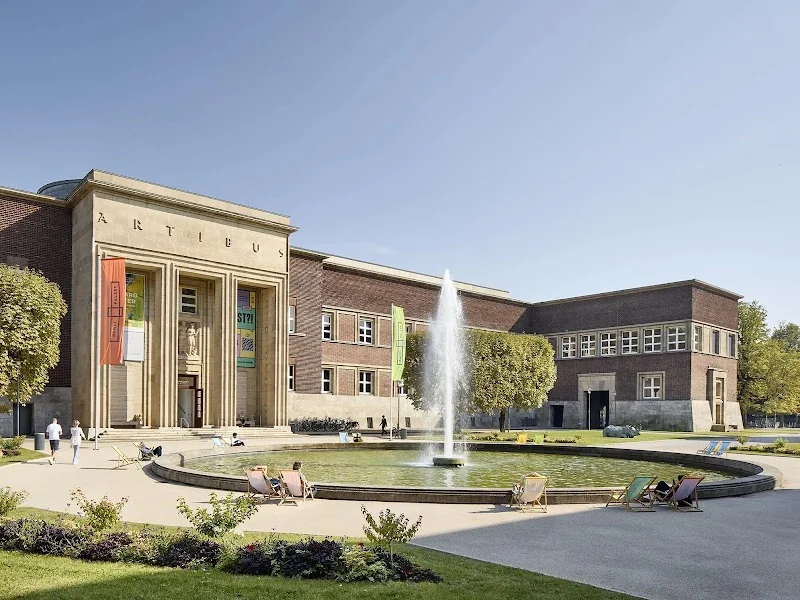
The Kunstpalast at Ehrenhof in Düsseldorf is more than a classic museum: it is an exhibition venue, a cultural address, a meeting point for families, art enthusiasts, and event visitors, as well as a house with an extraordinarily long history. Its roots go back over 300 years, but the current institution took shape in the 20th century when a significant museum emerged from civic engagement, art historical aspirations, and urban self-awareness. Today, after the comprehensive reorganization of the collection since November 2023, the Kunstpalast presents a curated journey through 11 centuries of art history and around 130,000 objects, from paintings and graphics to photography, glass, and applied arts, across approximately 5,000 square meters. In 2026, the house will again be particularly visible in search fields, as it impresses with major special exhibitions, free offerings for children, and a clearly structured visitor service. Therefore, anyone looking for opening hours, tickets, parking, directions, or current exhibitions will find a location here that combines classic museum quality with very practical visitor orientation. ([kunstpalast.de](https://www.kunstpalast.de/de/kunstpalast/))
Current Exhibitions 2026 and the Program of the Kunstpalast
One of the main attractions of 2026 is Monet – Cézanne – Matisse. The Scharf Collection, which will be on view at the Kunstpalast from March 12 to August 9, 2026. The exhibition brings the most significant German private collection of French Impressionists and Post-Impressionists to the public for the first time in this breadth and showcases around 180 works, according to the Kunstpalast. This gathers names that are directly associated with modern painting for many visitors: Monet, Cézanne, Renoir, Bonnard, Toulouse-Lautrec, and Matisse represent a dense, art historically strong selection that makes the Kunstpalast relevant beyond Düsseldorf. From an SEO perspective, this is a key theme, as search queries around Monet and current exhibitions clearly refer to this major show. ([kunstpalast.de](https://www.kunstpalast.de/de/event/scharfcollection/?utm_source=openai))
In parallel, Community. Photography and Community runs from February 11 to May 25, 2026. This exhibition focuses on the relationship between photography and community in the past and present, connecting applied and artistic positions that make social groups, shared identity, and togetherness visible. Not only is the curatorial theme striking, but also the involvement of the audience: the Kunstpalast explicitly invites local groups and associations to participate, so the exhibition is not only viewed but experienced as an open process. For visitors looking for a current exhibition in Düsseldorf, this is a good example of how the Kunstpalast combines classic art themes with social issues. ([kunstpalast.de](https://www.kunstpalast.de/en/event/community-photography-and-community/))
Another strong keyword theme is DIE KLEINE 2026. The art competition for elementary schools runs from April 30 to June 7, 2026, under the motto "Kunstpalast Kunterbunt!" The exhibition showcases works by Düsseldorf elementary school children from grades 1 to 4 and highlights how open and experimental children are with images, collages, sculptures, installations, and videos. According to the Kunstpalast, 58 collaborative works are on display, created in over 60 classes with around 1,600 participating students. This theme fits perfectly with search queries like Kunstpalast exhibitions 2026 or Kunstpalast die kleine, as it is a free, family-friendly, and locally rooted offering. ([kunstpalast.de](https://www.kunstpalast.de/de/event/die-kleine-2026/))
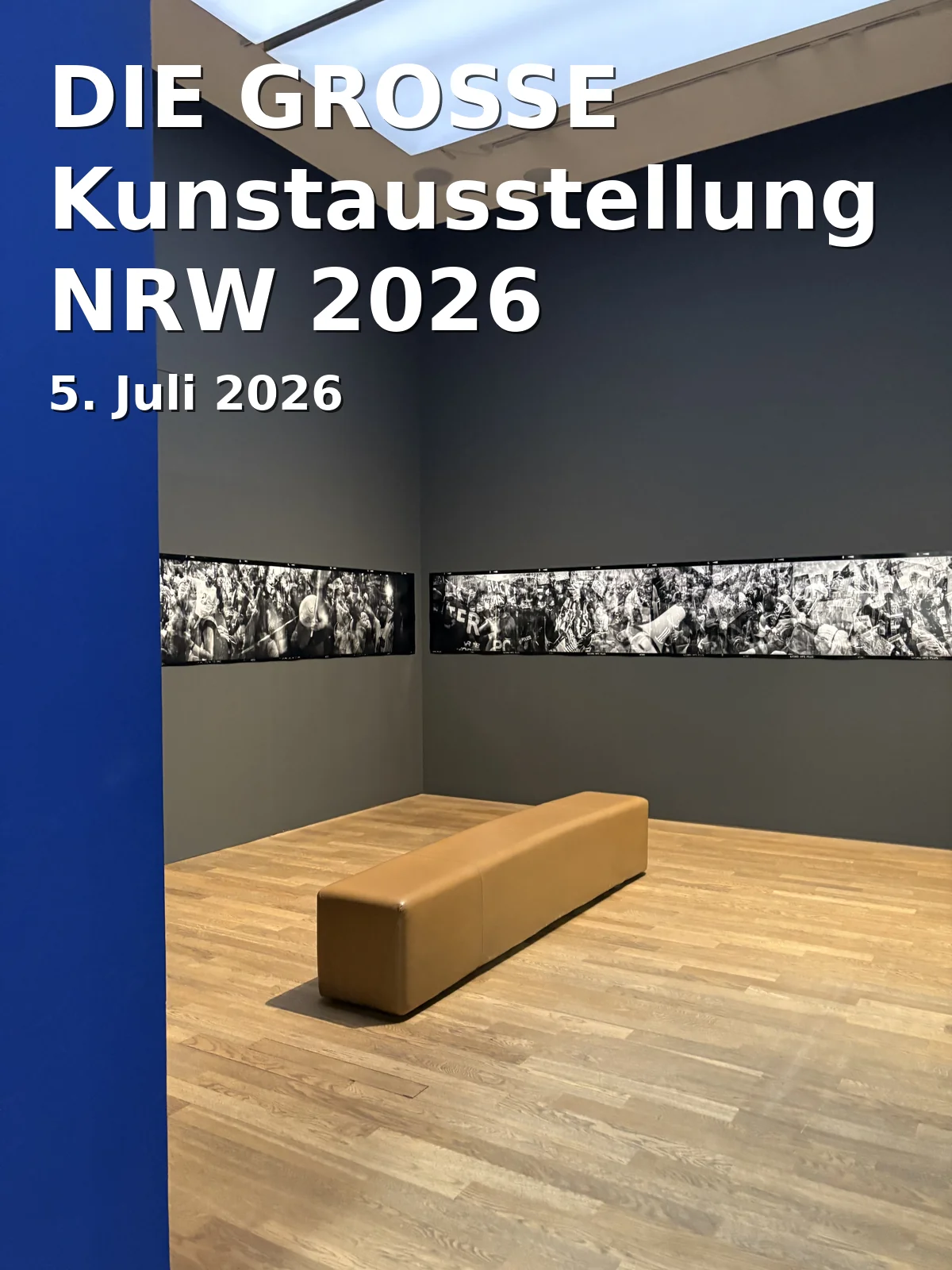
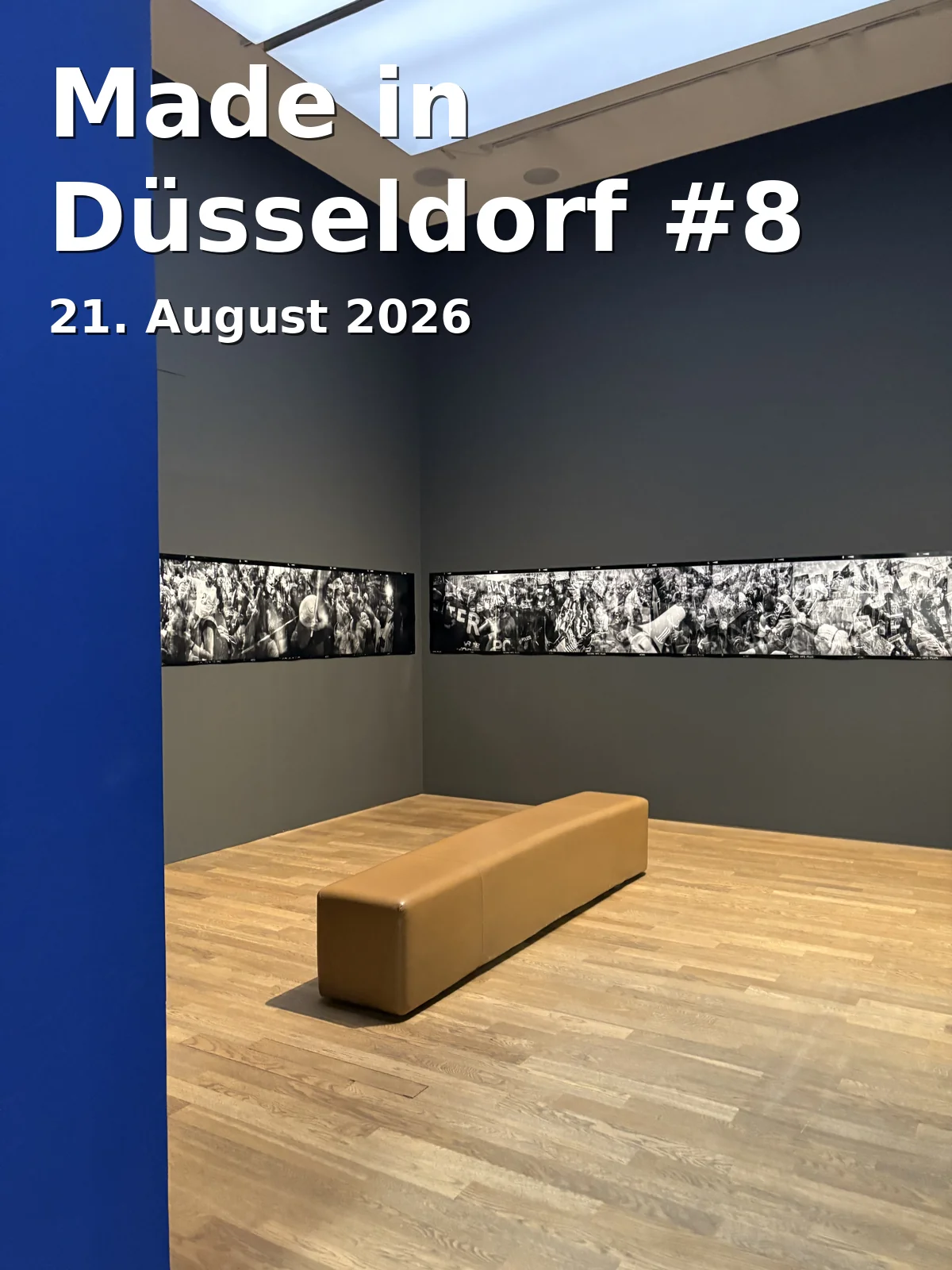
The preview also shows that the Kunstpalast will operate in a continuous exhibition rhythm in 2026. Further stations have already been announced on the exhibition page, including Spot on: 100 Years GeSoLei starting May 8, 2026, DIE GROSSE in summer, Made in Düsseldorf #8. In Scene, and Niki de Saint Phalle. Dream Machine starting September 2026. For planning a visit, this is important because the Kunstpalast offers not just a single major exhibition, but a whole annual program with changing focuses that makes the visit continually attractive. This dynamism is a strong signal for all those searching for current Kunstpalast Düsseldorf exhibitions 2026. ([kunstpalast.de](https://www.kunstpalast.de/de/programm/ausstellungen/))
Opening Hours, Tickets & Admission Prices
The opening hours of the Kunstpalast are clearly and visitor-friendly structured. The museum section is closed on Mondays, open from Tuesday to Sunday from 11 AM to 6 PM, and accessible until 9 PM on Thursdays. Additionally, the Kunstpalast specifies special opening hours on holidays; for May 1, 2026, for example, an opening time of 11 AM to 6 PM is indicated. It is also practical to note that visitors should leave the exhibition rooms ten minutes before closing. For the search intent of opening hours, this is ideal, as the Kunstpalast not only offers a standard rhythm but also communicates transparent special times. ([kunstpalast.de](https://www.kunstpalast.de/de/besuch/))
Regarding admission prices, the Kunstpalast relies on a clear pricing structure. The regular admission is 16 euros, reduced 12 euros. Children and teenagers under 18 years have free admission, as do members of the friends' circle. Additionally, there are several offer windows that make the visit particularly attractive: On Wednesdays from 2 PM to 6 PM, the collection and exhibition cost only 8 euros, and on the first Thursday of the month from 6 PM to 9 PM, admission to the collection is free; for exhibitions, the prices are then 13 euros or 10 euros reduced. Those coming from the NRW-Forum pay the reduced price, and holders of an EC or credit card from the Stadtsparkasse Düsseldorf can book a second ticket for free on Saturdays. ([kunstpalast.de](https://www.kunstpalast.de/de/besuch/))
The ticket logic for large special exhibitions is also clearly described. In the Scharf program, the Kunstpalast points out that tickets may still be available at the box office even if the online allocation is sold out. This is particularly important for visitors who plan their trip to Düsseldorf long-term, as it allows a visit to be realized even when online time slots become scarce. Therefore, anyone wanting to visit the museum specifically for Monet, Community, or other current focuses should check the ticket shop in advance and also remember the special conditions. This increases planning security and is exactly the practical added value that seekers expect regarding admission prices, tickets, and exhibitions. ([kunstpalast.de](https://www.kunstpalast.de/de/event/scharfcollection/?utm_source=openai))
Directions, Parking, and Accessible Visits
The Kunstpalast is very centrally located in Düsseldorf, directly on the Rhine and about five minutes from Königsallee. This location is a decisive advantage for many visitors, as it makes the house attractive both for a targeted museum visit and as part of a city center and Rhine walk. The Kunstpalast itself emphasizes the good connection to public transport as well as sufficient parking options. For search queries like Kunstpalast directions or Kunstpalast Düsseldorf parking, this is particularly relevant, as the location at Ehrenhof is central but still well-planned. ([kunstpalast.de](https://www.kunstpalast.de/en/visit/?utm_source=openai))
For those arriving by car, the Kunstpalast mentions the Unteres Werft parking lot at the riverside, the Scheibenstraße parking garage, and the Campus parking garage at the Kunstpalast. For events, the Campus underground garage at the Kunstpalast also plays a role, and for certain paths, the Kunstpalast refers to the direct access through the courtyard. However, it is important to note that there is no barrier-free access to the house from the Campus parking garage, according to the Kunstpalast. Such details make a difference when understanding parking in Düsseldorf not just as an ad-hoc question but as part of a clean visit planning. ([kunstpalast.de](https://www.kunstpalast.de/de/besuch/))
The public transport directions are also described very precisely. From the main train station, lines U70, U74, U75, U76, and U77 go to the Kulturzentrum Ehrenhof/Tonhalle stop; from there it is about a five-minute walk. Alternatively, the stops Sternstraße with lines 701, 706, and 705 or ERGO-Platz/Klever Str. with U78 and U79 are sensible options. For many visitors, this is convenient because the Kunstpalast can be reached without complicated transfers, and the paths from public transport remain short. Those integrating public transport into their planning also save themselves the parking search in the city center. ([kunstpalast.de](https://www.kunstpalast.de/de/besuch/))
Regarding accessibility, the Kunstpalast provides very detailed visitor information. The house is accessible for people with limited mobility, there is an elevator next to the main entrance, wheelchair-accessible parking spaces in the courtyard, and the possibility to borrow wheelchairs for free. Additionally, folding stools are available. For visually impaired and blind people, the Kunstpalast points out good accessibility, and guide dogs for the blind are also allowed. The barrier-free approach is not just an addition but part of the visit concept, making it an important argument for families, seniors, and anyone who prefers a comfortable museum visit. ([kunstpalast.de](https://www.kunstpalast.de/en/accessibility-information/?utm_source=openai))
History, Collection, and Architecture of the Kunstpalast
The history of the Kunstpalast is closely linked to the art and urban history of Düsseldorf. As the city's art museum, the Kunstpalast looks back on a tradition of over 300 years; as early as the mid-19th century, the association for the establishment of a painting gallery was founded in Düsseldorf. In 1902, the first Kunstpalast was opened at Ehrenhof, in 1926 the building complex was redesigned as part of GeSoLei, and in 1928 the art museum moved in with the collection of the dissolved Düsseldorf Museum of Applied Arts. After a fundamental renovation, the house was reopened in 2001; since November 2023, visitors have also experienced a comprehensive new presentation of the collection. These historical dates show how strongly the Kunstpalast mediates between museum, urban development, and architecture. ([kunstpalast.de](https://www.kunstpalast.de/de/kunstpalast/))
In terms of content, the collection is exceptionally broad. The Kunstpalast unites nearly all artistic genres under one roof and divides its holdings into image gallery, graphics, sculpture, applied arts, glass, modern art, photography, and time-based media. Around 130,000 objects form the basis; about 800 works are displayed in the collection tour over more than 5,000 square meters. It is particularly noteworthy that the image gallery presents European painting from the 15th to the early 20th century, with a focus on the Düsseldorf School of Painting. Thus, the Kunstpalast is not only a place for major special exhibitions but also a deep, permanent art archive that is well connected in Düsseldorf and beyond. ([kunstpalast.de](https://www.kunstpalast.de/en/event/collection/))
Also exciting are the additional contemporary accents in the house. The collection includes the legendary Creamcheese Room, which recalls the Düsseldorf music and art scene of the late 1960s and 1970s and was added to the collection in 1978. Additionally, the Spot-On Room is reconfigured twice a year, providing a stage for changing themes and artists from the collection. The Kunstpalast has also participated as one of the first museums in the Google Arts & Culture project and has digitally cataloged its collection. Therefore, those looking not only for exhibitions but also for history, collection, and special features will find a house that visibly connects tradition and present. ([kunstpalast.de](https://www.kunstpalast.de/en/programme/collection/))
Robert Schumann Hall, Foyers, and Event Spaces
For event and location seekers, the Kunstpalast is also interesting because of the Robert Schumann Hall. According to its own description, the rooms of the house offer an unmistakable flair, characterized by the architecture of the internationally renowned Prof. O. M. Ungers. The hall is directly linked to the museum and its exhibition program and is suitable for cultural events, corporate events, receptions, gala evenings, lectures, and exhibitions. Thus, the Kunstpalast is not only a museum to look at but also a true event location with a museum character and high-quality infrastructure. ([kunstpalast.de](https://www.kunstpalast.de/de/unsere-raeumlichkeiten/))
The Robert Schumann Hall itself, with its multifunctional equipment, is a strong space for various formats. According to the Kunstpalast, the total area of the hall is about 600 square meters, the adjacent foyer about 234 square meters. The capacities are clearly indicated: 796 seats in row seating, 240 seats in banquet seating, and 320 seats in parliamentary seating. Additionally, there is a stage area of about 97 square meters, expandable to about 145 square meters, four individual dressing rooms, and two collective dressing rooms. The direct access to an adjacent garden area makes the space additionally attractive, especially for evening events with a reception character. ([kunstpalast.de](https://www.kunstpalast.de/de/unsere-raeumlichkeiten/))
The other foyers are also well documented for event planning. The foyer of the Robert Schumann Hall offers 250 square meters and space for 250 people. The ERGO foyer provides 250 square meters and 200 seats, the gallery 200 square meters and 150 seats, the Peter-Michael Engel foyer 100 square meters and 100 seats, and the TEEKANNE-Belvedere 220 square meters with a capacity for 199 people. For events, it is also important that the entrance to the Robert Schumann Hall is now located in the courtyard and can be accessed via a barrier-free passage and, if necessary, directly from the Campus parking garage at the Kunstpalast. This shows: The Kunstpalast is not just an exhibition house but a finely graded location with several bookable scenarios. ([kunstpalast.de](https://www.kunstpalast.de/de/unsere-raeumlichkeiten/))
Practical Tips for Families, Tours, and Visits
The Kunstpalast is strongly oriented towards different target groups. In addition to the collection and special exhibitions, the house offers a wide program with tours, workshops, online talks, and events. On the homepage and in the visit planning, it becomes clear that the Kunstpalast understands the visit not as a static observation but as an active experience. Families and school classes additionally benefit from the fact that children and teenagers under 18 years have free admission and that there are formats like DIE KLEINE 2026 that make art by elementary school children visible. For all those searching for Kunstpalast exhibition, family offerings, or program 2026, this is a clear plus. ([kunstpalast.de](https://www.kunstpalast.de/de/?utm_source=openai))
It is also practical that the Kunstpalast provides specific tips for a relaxed museum visit. At the current Scharf exhibition, only bags up to A4 size may be taken into the exhibition; larger bags, backpacks, and jackets belong in the cloakroom. If you need a break in between, there are seating areas in the collection and exhibitions, and in summer, there are also deck chairs by the fountain and benches in the shade in the courtyard. Additionally, there is the Anna Maria Café and restaurant with coffee, cake, snacks, and lunch as well as the museum shop. Such details make the Kunstpalast a location that not only performs well in search engines but also functions pleasantly on-site. ([kunstpalast.de](https://www.kunstpalast.de/de/event/scharfcollection/?utm_source=openai))
Ultimately, the Kunstpalast is a house for several types of visitors at once: for art fans interested in Monet, Cézanne, Matisse, and the Düsseldorf collection; for families with free admissions and child-friendly formats; for visitors looking for a well-accessible address by the Rhine; and for organizers needing a representative hall with a strong cultural environment. Those who want to plan their visit sensibly should remember opening hours, ticket models, and directions in advance and then ideally plan a whole day, as the combination of collection, special exhibitions, architecture, and quality of stay offers much more than just a quick museum stop. ([kunstpalast.de](https://www.kunstpalast.de/de/kunstpalast/))
Sources:
Show moreShow less
Kunstpalast | Opening Hours & Exhibitions 2026
The Kunstpalast at Ehrenhof in Düsseldorf is more than a classic museum: it is an exhibition venue, a cultural address, a meeting point for families, art enthusiasts, and event visitors, as well as a house with an extraordinarily long history. Its roots go back over 300 years, but the current institution took shape in the 20th century when a significant museum emerged from civic engagement, art historical aspirations, and urban self-awareness. Today, after the comprehensive reorganization of the collection since November 2023, the Kunstpalast presents a curated journey through 11 centuries of art history and around 130,000 objects, from paintings and graphics to photography, glass, and applied arts, across approximately 5,000 square meters. In 2026, the house will again be particularly visible in search fields, as it impresses with major special exhibitions, free offerings for children, and a clearly structured visitor service. Therefore, anyone looking for opening hours, tickets, parking, directions, or current exhibitions will find a location here that combines classic museum quality with very practical visitor orientation. ([kunstpalast.de](https://www.kunstpalast.de/de/kunstpalast/))
Current Exhibitions 2026 and the Program of the Kunstpalast
One of the main attractions of 2026 is Monet – Cézanne – Matisse. The Scharf Collection, which will be on view at the Kunstpalast from March 12 to August 9, 2026. The exhibition brings the most significant German private collection of French Impressionists and Post-Impressionists to the public for the first time in this breadth and showcases around 180 works, according to the Kunstpalast. This gathers names that are directly associated with modern painting for many visitors: Monet, Cézanne, Renoir, Bonnard, Toulouse-Lautrec, and Matisse represent a dense, art historically strong selection that makes the Kunstpalast relevant beyond Düsseldorf. From an SEO perspective, this is a key theme, as search queries around Monet and current exhibitions clearly refer to this major show. ([kunstpalast.de](https://www.kunstpalast.de/de/event/scharfcollection/?utm_source=openai))
In parallel, Community. Photography and Community runs from February 11 to May 25, 2026. This exhibition focuses on the relationship between photography and community in the past and present, connecting applied and artistic positions that make social groups, shared identity, and togetherness visible. Not only is the curatorial theme striking, but also the involvement of the audience: the Kunstpalast explicitly invites local groups and associations to participate, so the exhibition is not only viewed but experienced as an open process. For visitors looking for a current exhibition in Düsseldorf, this is a good example of how the Kunstpalast combines classic art themes with social issues. ([kunstpalast.de](https://www.kunstpalast.de/en/event/community-photography-and-community/))
Another strong keyword theme is DIE KLEINE 2026. The art competition for elementary schools runs from April 30 to June 7, 2026, under the motto "Kunstpalast Kunterbunt!" The exhibition showcases works by Düsseldorf elementary school children from grades 1 to 4 and highlights how open and experimental children are with images, collages, sculptures, installations, and videos. According to the Kunstpalast, 58 collaborative works are on display, created in over 60 classes with around 1,600 participating students. This theme fits perfectly with search queries like Kunstpalast exhibitions 2026 or Kunstpalast die kleine, as it is a free, family-friendly, and locally rooted offering. ([kunstpalast.de](https://www.kunstpalast.de/de/event/die-kleine-2026/))
The preview also shows that the Kunstpalast will operate in a continuous exhibition rhythm in 2026. Further stations have already been announced on the exhibition page, including Spot on: 100 Years GeSoLei starting May 8, 2026, DIE GROSSE in summer, Made in Düsseldorf #8. In Scene, and Niki de Saint Phalle. Dream Machine starting September 2026. For planning a visit, this is important because the Kunstpalast offers not just a single major exhibition, but a whole annual program with changing focuses that makes the visit continually attractive. This dynamism is a strong signal for all those searching for current Kunstpalast Düsseldorf exhibitions 2026. ([kunstpalast.de](https://www.kunstpalast.de/de/programm/ausstellungen/))
Opening Hours, Tickets & Admission Prices
The opening hours of the Kunstpalast are clearly and visitor-friendly structured. The museum section is closed on Mondays, open from Tuesday to Sunday from 11 AM to 6 PM, and accessible until 9 PM on Thursdays. Additionally, the Kunstpalast specifies special opening hours on holidays; for May 1, 2026, for example, an opening time of 11 AM to 6 PM is indicated. It is also practical to note that visitors should leave the exhibition rooms ten minutes before closing. For the search intent of opening hours, this is ideal, as the Kunstpalast not only offers a standard rhythm but also communicates transparent special times. ([kunstpalast.de](https://www.kunstpalast.de/de/besuch/))
Regarding admission prices, the Kunstpalast relies on a clear pricing structure. The regular admission is 16 euros, reduced 12 euros. Children and teenagers under 18 years have free admission, as do members of the friends' circle. Additionally, there are several offer windows that make the visit particularly attractive: On Wednesdays from 2 PM to 6 PM, the collection and exhibition cost only 8 euros, and on the first Thursday of the month from 6 PM to 9 PM, admission to the collection is free; for exhibitions, the prices are then 13 euros or 10 euros reduced. Those coming from the NRW-Forum pay the reduced price, and holders of an EC or credit card from the Stadtsparkasse Düsseldorf can book a second ticket for free on Saturdays. ([kunstpalast.de](https://www.kunstpalast.de/de/besuch/))
The ticket logic for large special exhibitions is also clearly described. In the Scharf program, the Kunstpalast points out that tickets may still be available at the box office even if the online allocation is sold out. This is particularly important for visitors who plan their trip to Düsseldorf long-term, as it allows a visit to be realized even when online time slots become scarce. Therefore, anyone wanting to visit the museum specifically for Monet, Community, or other current focuses should check the ticket shop in advance and also remember the special conditions. This increases planning security and is exactly the practical added value that seekers expect regarding admission prices, tickets, and exhibitions. ([kunstpalast.de](https://www.kunstpalast.de/de/event/scharfcollection/?utm_source=openai))
Directions, Parking, and Accessible Visits
The Kunstpalast is very centrally located in Düsseldorf, directly on the Rhine and about five minutes from Königsallee. This location is a decisive advantage for many visitors, as it makes the house attractive both for a targeted museum visit and as part of a city center and Rhine walk. The Kunstpalast itself emphasizes the good connection to public transport as well as sufficient parking options. For search queries like Kunstpalast directions or Kunstpalast Düsseldorf parking, this is particularly relevant, as the location at Ehrenhof is central but still well-planned. ([kunstpalast.de](https://www.kunstpalast.de/en/visit/?utm_source=openai))
For those arriving by car, the Kunstpalast mentions the Unteres Werft parking lot at the riverside, the Scheibenstraße parking garage, and the Campus parking garage at the Kunstpalast. For events, the Campus underground garage at the Kunstpalast also plays a role, and for certain paths, the Kunstpalast refers to the direct access through the courtyard. However, it is important to note that there is no barrier-free access to the house from the Campus parking garage, according to the Kunstpalast. Such details make a difference when understanding parking in Düsseldorf not just as an ad-hoc question but as part of a clean visit planning. ([kunstpalast.de](https://www.kunstpalast.de/de/besuch/))
The public transport directions are also described very precisely. From the main train station, lines U70, U74, U75, U76, and U77 go to the Kulturzentrum Ehrenhof/Tonhalle stop; from there it is about a five-minute walk. Alternatively, the stops Sternstraße with lines 701, 706, and 705 or ERGO-Platz/Klever Str. with U78 and U79 are sensible options. For many visitors, this is convenient because the Kunstpalast can be reached without complicated transfers, and the paths from public transport remain short. Those integrating public transport into their planning also save themselves the parking search in the city center. ([kunstpalast.de](https://www.kunstpalast.de/de/besuch/))
Regarding accessibility, the Kunstpalast provides very detailed visitor information. The house is accessible for people with limited mobility, there is an elevator next to the main entrance, wheelchair-accessible parking spaces in the courtyard, and the possibility to borrow wheelchairs for free. Additionally, folding stools are available. For visually impaired and blind people, the Kunstpalast points out good accessibility, and guide dogs for the blind are also allowed. The barrier-free approach is not just an addition but part of the visit concept, making it an important argument for families, seniors, and anyone who prefers a comfortable museum visit. ([kunstpalast.de](https://www.kunstpalast.de/en/accessibility-information/?utm_source=openai))
History, Collection, and Architecture of the Kunstpalast
The history of the Kunstpalast is closely linked to the art and urban history of Düsseldorf. As the city's art museum, the Kunstpalast looks back on a tradition of over 300 years; as early as the mid-19th century, the association for the establishment of a painting gallery was founded in Düsseldorf. In 1902, the first Kunstpalast was opened at Ehrenhof, in 1926 the building complex was redesigned as part of GeSoLei, and in 1928 the art museum moved in with the collection of the dissolved Düsseldorf Museum of Applied Arts. After a fundamental renovation, the house was reopened in 2001; since November 2023, visitors have also experienced a comprehensive new presentation of the collection. These historical dates show how strongly the Kunstpalast mediates between museum, urban development, and architecture. ([kunstpalast.de](https://www.kunstpalast.de/de/kunstpalast/))
In terms of content, the collection is exceptionally broad. The Kunstpalast unites nearly all artistic genres under one roof and divides its holdings into image gallery, graphics, sculpture, applied arts, glass, modern art, photography, and time-based media. Around 130,000 objects form the basis; about 800 works are displayed in the collection tour over more than 5,000 square meters. It is particularly noteworthy that the image gallery presents European painting from the 15th to the early 20th century, with a focus on the Düsseldorf School of Painting. Thus, the Kunstpalast is not only a place for major special exhibitions but also a deep, permanent art archive that is well connected in Düsseldorf and beyond. ([kunstpalast.de](https://www.kunstpalast.de/en/event/collection/))
Also exciting are the additional contemporary accents in the house. The collection includes the legendary Creamcheese Room, which recalls the Düsseldorf music and art scene of the late 1960s and 1970s and was added to the collection in 1978. Additionally, the Spot-On Room is reconfigured twice a year, providing a stage for changing themes and artists from the collection. The Kunstpalast has also participated as one of the first museums in the Google Arts & Culture project and has digitally cataloged its collection. Therefore, those looking not only for exhibitions but also for history, collection, and special features will find a house that visibly connects tradition and present. ([kunstpalast.de](https://www.kunstpalast.de/en/programme/collection/))
Robert Schumann Hall, Foyers, and Event Spaces
For event and location seekers, the Kunstpalast is also interesting because of the Robert Schumann Hall. According to its own description, the rooms of the house offer an unmistakable flair, characterized by the architecture of the internationally renowned Prof. O. M. Ungers. The hall is directly linked to the museum and its exhibition program and is suitable for cultural events, corporate events, receptions, gala evenings, lectures, and exhibitions. Thus, the Kunstpalast is not only a museum to look at but also a true event location with a museum character and high-quality infrastructure. ([kunstpalast.de](https://www.kunstpalast.de/de/unsere-raeumlichkeiten/))
The Robert Schumann Hall itself, with its multifunctional equipment, is a strong space for various formats. According to the Kunstpalast, the total area of the hall is about 600 square meters, the adjacent foyer about 234 square meters. The capacities are clearly indicated: 796 seats in row seating, 240 seats in banquet seating, and 320 seats in parliamentary seating. Additionally, there is a stage area of about 97 square meters, expandable to about 145 square meters, four individual dressing rooms, and two collective dressing rooms. The direct access to an adjacent garden area makes the space additionally attractive, especially for evening events with a reception character. ([kunstpalast.de](https://www.kunstpalast.de/de/unsere-raeumlichkeiten/))
The other foyers are also well documented for event planning. The foyer of the Robert Schumann Hall offers 250 square meters and space for 250 people. The ERGO foyer provides 250 square meters and 200 seats, the gallery 200 square meters and 150 seats, the Peter-Michael Engel foyer 100 square meters and 100 seats, and the TEEKANNE-Belvedere 220 square meters with a capacity for 199 people. For events, it is also important that the entrance to the Robert Schumann Hall is now located in the courtyard and can be accessed via a barrier-free passage and, if necessary, directly from the Campus parking garage at the Kunstpalast. This shows: The Kunstpalast is not just an exhibition house but a finely graded location with several bookable scenarios. ([kunstpalast.de](https://www.kunstpalast.de/de/unsere-raeumlichkeiten/))
Practical Tips for Families, Tours, and Visits
The Kunstpalast is strongly oriented towards different target groups. In addition to the collection and special exhibitions, the house offers a wide program with tours, workshops, online talks, and events. On the homepage and in the visit planning, it becomes clear that the Kunstpalast understands the visit not as a static observation but as an active experience. Families and school classes additionally benefit from the fact that children and teenagers under 18 years have free admission and that there are formats like DIE KLEINE 2026 that make art by elementary school children visible. For all those searching for Kunstpalast exhibition, family offerings, or program 2026, this is a clear plus. ([kunstpalast.de](https://www.kunstpalast.de/de/?utm_source=openai))
It is also practical that the Kunstpalast provides specific tips for a relaxed museum visit. At the current Scharf exhibition, only bags up to A4 size may be taken into the exhibition; larger bags, backpacks, and jackets belong in the cloakroom. If you need a break in between, there are seating areas in the collection and exhibitions, and in summer, there are also deck chairs by the fountain and benches in the shade in the courtyard. Additionally, there is the Anna Maria Café and restaurant with coffee, cake, snacks, and lunch as well as the museum shop. Such details make the Kunstpalast a location that not only performs well in search engines but also functions pleasantly on-site. ([kunstpalast.de](https://www.kunstpalast.de/de/event/scharfcollection/?utm_source=openai))
Ultimately, the Kunstpalast is a house for several types of visitors at once: for art fans interested in Monet, Cézanne, Matisse, and the Düsseldorf collection; for families with free admissions and child-friendly formats; for visitors looking for a well-accessible address by the Rhine; and for organizers needing a representative hall with a strong cultural environment. Those who want to plan their visit sensibly should remember opening hours, ticket models, and directions in advance and then ideally plan a whole day, as the combination of collection, special exhibitions, architecture, and quality of stay offers much more than just a quick museum stop. ([kunstpalast.de](https://www.kunstpalast.de/de/kunstpalast/))
Sources:
Kunstpalast | Opening Hours & Exhibitions 2026
The Kunstpalast at Ehrenhof in Düsseldorf is more than a classic museum: it is an exhibition venue, a cultural address, a meeting point for families, art enthusiasts, and event visitors, as well as a house with an extraordinarily long history. Its roots go back over 300 years, but the current institution took shape in the 20th century when a significant museum emerged from civic engagement, art historical aspirations, and urban self-awareness. Today, after the comprehensive reorganization of the collection since November 2023, the Kunstpalast presents a curated journey through 11 centuries of art history and around 130,000 objects, from paintings and graphics to photography, glass, and applied arts, across approximately 5,000 square meters. In 2026, the house will again be particularly visible in search fields, as it impresses with major special exhibitions, free offerings for children, and a clearly structured visitor service. Therefore, anyone looking for opening hours, tickets, parking, directions, or current exhibitions will find a location here that combines classic museum quality with very practical visitor orientation. ([kunstpalast.de](https://www.kunstpalast.de/de/kunstpalast/))
Current Exhibitions 2026 and the Program of the Kunstpalast
One of the main attractions of 2026 is Monet – Cézanne – Matisse. The Scharf Collection, which will be on view at the Kunstpalast from March 12 to August 9, 2026. The exhibition brings the most significant German private collection of French Impressionists and Post-Impressionists to the public for the first time in this breadth and showcases around 180 works, according to the Kunstpalast. This gathers names that are directly associated with modern painting for many visitors: Monet, Cézanne, Renoir, Bonnard, Toulouse-Lautrec, and Matisse represent a dense, art historically strong selection that makes the Kunstpalast relevant beyond Düsseldorf. From an SEO perspective, this is a key theme, as search queries around Monet and current exhibitions clearly refer to this major show. ([kunstpalast.de](https://www.kunstpalast.de/de/event/scharfcollection/?utm_source=openai))
In parallel, Community. Photography and Community runs from February 11 to May 25, 2026. This exhibition focuses on the relationship between photography and community in the past and present, connecting applied and artistic positions that make social groups, shared identity, and togetherness visible. Not only is the curatorial theme striking, but also the involvement of the audience: the Kunstpalast explicitly invites local groups and associations to participate, so the exhibition is not only viewed but experienced as an open process. For visitors looking for a current exhibition in Düsseldorf, this is a good example of how the Kunstpalast combines classic art themes with social issues. ([kunstpalast.de](https://www.kunstpalast.de/en/event/community-photography-and-community/))
Another strong keyword theme is DIE KLEINE 2026. The art competition for elementary schools runs from April 30 to June 7, 2026, under the motto "Kunstpalast Kunterbunt!" The exhibition showcases works by Düsseldorf elementary school children from grades 1 to 4 and highlights how open and experimental children are with images, collages, sculptures, installations, and videos. According to the Kunstpalast, 58 collaborative works are on display, created in over 60 classes with around 1,600 participating students. This theme fits perfectly with search queries like Kunstpalast exhibitions 2026 or Kunstpalast die kleine, as it is a free, family-friendly, and locally rooted offering. ([kunstpalast.de](https://www.kunstpalast.de/de/event/die-kleine-2026/))
The preview also shows that the Kunstpalast will operate in a continuous exhibition rhythm in 2026. Further stations have already been announced on the exhibition page, including Spot on: 100 Years GeSoLei starting May 8, 2026, DIE GROSSE in summer, Made in Düsseldorf #8. In Scene, and Niki de Saint Phalle. Dream Machine starting September 2026. For planning a visit, this is important because the Kunstpalast offers not just a single major exhibition, but a whole annual program with changing focuses that makes the visit continually attractive. This dynamism is a strong signal for all those searching for current Kunstpalast Düsseldorf exhibitions 2026. ([kunstpalast.de](https://www.kunstpalast.de/de/programm/ausstellungen/))
Opening Hours, Tickets & Admission Prices
The opening hours of the Kunstpalast are clearly and visitor-friendly structured. The museum section is closed on Mondays, open from Tuesday to Sunday from 11 AM to 6 PM, and accessible until 9 PM on Thursdays. Additionally, the Kunstpalast specifies special opening hours on holidays; for May 1, 2026, for example, an opening time of 11 AM to 6 PM is indicated. It is also practical to note that visitors should leave the exhibition rooms ten minutes before closing. For the search intent of opening hours, this is ideal, as the Kunstpalast not only offers a standard rhythm but also communicates transparent special times. ([kunstpalast.de](https://www.kunstpalast.de/de/besuch/))
Regarding admission prices, the Kunstpalast relies on a clear pricing structure. The regular admission is 16 euros, reduced 12 euros. Children and teenagers under 18 years have free admission, as do members of the friends' circle. Additionally, there are several offer windows that make the visit particularly attractive: On Wednesdays from 2 PM to 6 PM, the collection and exhibition cost only 8 euros, and on the first Thursday of the month from 6 PM to 9 PM, admission to the collection is free; for exhibitions, the prices are then 13 euros or 10 euros reduced. Those coming from the NRW-Forum pay the reduced price, and holders of an EC or credit card from the Stadtsparkasse Düsseldorf can book a second ticket for free on Saturdays. ([kunstpalast.de](https://www.kunstpalast.de/de/besuch/))
The ticket logic for large special exhibitions is also clearly described. In the Scharf program, the Kunstpalast points out that tickets may still be available at the box office even if the online allocation is sold out. This is particularly important for visitors who plan their trip to Düsseldorf long-term, as it allows a visit to be realized even when online time slots become scarce. Therefore, anyone wanting to visit the museum specifically for Monet, Community, or other current focuses should check the ticket shop in advance and also remember the special conditions. This increases planning security and is exactly the practical added value that seekers expect regarding admission prices, tickets, and exhibitions. ([kunstpalast.de](https://www.kunstpalast.de/de/event/scharfcollection/?utm_source=openai))
Directions, Parking, and Accessible Visits
The Kunstpalast is very centrally located in Düsseldorf, directly on the Rhine and about five minutes from Königsallee. This location is a decisive advantage for many visitors, as it makes the house attractive both for a targeted museum visit and as part of a city center and Rhine walk. The Kunstpalast itself emphasizes the good connection to public transport as well as sufficient parking options. For search queries like Kunstpalast directions or Kunstpalast Düsseldorf parking, this is particularly relevant, as the location at Ehrenhof is central but still well-planned. ([kunstpalast.de](https://www.kunstpalast.de/en/visit/?utm_source=openai))
For those arriving by car, the Kunstpalast mentions the Unteres Werft parking lot at the riverside, the Scheibenstraße parking garage, and the Campus parking garage at the Kunstpalast. For events, the Campus underground garage at the Kunstpalast also plays a role, and for certain paths, the Kunstpalast refers to the direct access through the courtyard. However, it is important to note that there is no barrier-free access to the house from the Campus parking garage, according to the Kunstpalast. Such details make a difference when understanding parking in Düsseldorf not just as an ad-hoc question but as part of a clean visit planning. ([kunstpalast.de](https://www.kunstpalast.de/de/besuch/))
The public transport directions are also described very precisely. From the main train station, lines U70, U74, U75, U76, and U77 go to the Kulturzentrum Ehrenhof/Tonhalle stop; from there it is about a five-minute walk. Alternatively, the stops Sternstraße with lines 701, 706, and 705 or ERGO-Platz/Klever Str. with U78 and U79 are sensible options. For many visitors, this is convenient because the Kunstpalast can be reached without complicated transfers, and the paths from public transport remain short. Those integrating public transport into their planning also save themselves the parking search in the city center. ([kunstpalast.de](https://www.kunstpalast.de/de/besuch/))
Regarding accessibility, the Kunstpalast provides very detailed visitor information. The house is accessible for people with limited mobility, there is an elevator next to the main entrance, wheelchair-accessible parking spaces in the courtyard, and the possibility to borrow wheelchairs for free. Additionally, folding stools are available. For visually impaired and blind people, the Kunstpalast points out good accessibility, and guide dogs for the blind are also allowed. The barrier-free approach is not just an addition but part of the visit concept, making it an important argument for families, seniors, and anyone who prefers a comfortable museum visit. ([kunstpalast.de](https://www.kunstpalast.de/en/accessibility-information/?utm_source=openai))
History, Collection, and Architecture of the Kunstpalast
The history of the Kunstpalast is closely linked to the art and urban history of Düsseldorf. As the city's art museum, the Kunstpalast looks back on a tradition of over 300 years; as early as the mid-19th century, the association for the establishment of a painting gallery was founded in Düsseldorf. In 1902, the first Kunstpalast was opened at Ehrenhof, in 1926 the building complex was redesigned as part of GeSoLei, and in 1928 the art museum moved in with the collection of the dissolved Düsseldorf Museum of Applied Arts. After a fundamental renovation, the house was reopened in 2001; since November 2023, visitors have also experienced a comprehensive new presentation of the collection. These historical dates show how strongly the Kunstpalast mediates between museum, urban development, and architecture. ([kunstpalast.de](https://www.kunstpalast.de/de/kunstpalast/))
In terms of content, the collection is exceptionally broad. The Kunstpalast unites nearly all artistic genres under one roof and divides its holdings into image gallery, graphics, sculpture, applied arts, glass, modern art, photography, and time-based media. Around 130,000 objects form the basis; about 800 works are displayed in the collection tour over more than 5,000 square meters. It is particularly noteworthy that the image gallery presents European painting from the 15th to the early 20th century, with a focus on the Düsseldorf School of Painting. Thus, the Kunstpalast is not only a place for major special exhibitions but also a deep, permanent art archive that is well connected in Düsseldorf and beyond. ([kunstpalast.de](https://www.kunstpalast.de/en/event/collection/))
Also exciting are the additional contemporary accents in the house. The collection includes the legendary Creamcheese Room, which recalls the Düsseldorf music and art scene of the late 1960s and 1970s and was added to the collection in 1978. Additionally, the Spot-On Room is reconfigured twice a year, providing a stage for changing themes and artists from the collection. The Kunstpalast has also participated as one of the first museums in the Google Arts & Culture project and has digitally cataloged its collection. Therefore, those looking not only for exhibitions but also for history, collection, and special features will find a house that visibly connects tradition and present. ([kunstpalast.de](https://www.kunstpalast.de/en/programme/collection/))
Robert Schumann Hall, Foyers, and Event Spaces
For event and location seekers, the Kunstpalast is also interesting because of the Robert Schumann Hall. According to its own description, the rooms of the house offer an unmistakable flair, characterized by the architecture of the internationally renowned Prof. O. M. Ungers. The hall is directly linked to the museum and its exhibition program and is suitable for cultural events, corporate events, receptions, gala evenings, lectures, and exhibitions. Thus, the Kunstpalast is not only a museum to look at but also a true event location with a museum character and high-quality infrastructure. ([kunstpalast.de](https://www.kunstpalast.de/de/unsere-raeumlichkeiten/))
The Robert Schumann Hall itself, with its multifunctional equipment, is a strong space for various formats. According to the Kunstpalast, the total area of the hall is about 600 square meters, the adjacent foyer about 234 square meters. The capacities are clearly indicated: 796 seats in row seating, 240 seats in banquet seating, and 320 seats in parliamentary seating. Additionally, there is a stage area of about 97 square meters, expandable to about 145 square meters, four individual dressing rooms, and two collective dressing rooms. The direct access to an adjacent garden area makes the space additionally attractive, especially for evening events with a reception character. ([kunstpalast.de](https://www.kunstpalast.de/de/unsere-raeumlichkeiten/))
The other foyers are also well documented for event planning. The foyer of the Robert Schumann Hall offers 250 square meters and space for 250 people. The ERGO foyer provides 250 square meters and 200 seats, the gallery 200 square meters and 150 seats, the Peter-Michael Engel foyer 100 square meters and 100 seats, and the TEEKANNE-Belvedere 220 square meters with a capacity for 199 people. For events, it is also important that the entrance to the Robert Schumann Hall is now located in the courtyard and can be accessed via a barrier-free passage and, if necessary, directly from the Campus parking garage at the Kunstpalast. This shows: The Kunstpalast is not just an exhibition house but a finely graded location with several bookable scenarios. ([kunstpalast.de](https://www.kunstpalast.de/de/unsere-raeumlichkeiten/))
Practical Tips for Families, Tours, and Visits
The Kunstpalast is strongly oriented towards different target groups. In addition to the collection and special exhibitions, the house offers a wide program with tours, workshops, online talks, and events. On the homepage and in the visit planning, it becomes clear that the Kunstpalast understands the visit not as a static observation but as an active experience. Families and school classes additionally benefit from the fact that children and teenagers under 18 years have free admission and that there are formats like DIE KLEINE 2026 that make art by elementary school children visible. For all those searching for Kunstpalast exhibition, family offerings, or program 2026, this is a clear plus. ([kunstpalast.de](https://www.kunstpalast.de/de/?utm_source=openai))
It is also practical that the Kunstpalast provides specific tips for a relaxed museum visit. At the current Scharf exhibition, only bags up to A4 size may be taken into the exhibition; larger bags, backpacks, and jackets belong in the cloakroom. If you need a break in between, there are seating areas in the collection and exhibitions, and in summer, there are also deck chairs by the fountain and benches in the shade in the courtyard. Additionally, there is the Anna Maria Café and restaurant with coffee, cake, snacks, and lunch as well as the museum shop. Such details make the Kunstpalast a location that not only performs well in search engines but also functions pleasantly on-site. ([kunstpalast.de](https://www.kunstpalast.de/de/event/scharfcollection/?utm_source=openai))
Ultimately, the Kunstpalast is a house for several types of visitors at once: for art fans interested in Monet, Cézanne, Matisse, and the Düsseldorf collection; for families with free admissions and child-friendly formats; for visitors looking for a well-accessible address by the Rhine; and for organizers needing a representative hall with a strong cultural environment. Those who want to plan their visit sensibly should remember opening hours, ticket models, and directions in advance and then ideally plan a whole day, as the combination of collection, special exhibitions, architecture, and quality of stay offers much more than just a quick museum stop. ([kunstpalast.de](https://www.kunstpalast.de/de/kunstpalast/))
Sources:
Upcoming Events
Frequently Asked Questions
Reviews
Elle H
19. December 2025
A truly stunning place! The Kunstpalast in Düsseldorf is a beautiful building with a grand atmosphere, perfect for a cultural escape. I enjoyed exploring the diverse range of interesting temporary exhibitions. A highlight was the "Smell Art" exhibit—a uniquely fun and entertaining sensory experience. Highly recommended for a creative visit!
Yumi is happy!
5. December 2025
This was my final museum stop on my trip to Düsseldorf — and what a grand finale it turned out to be! I only started exploring the world of modern art during this business trip, and although I may not fully understand every piece, the way the museums here play with light, color, and space consistently exceeds my expectations. At Museum Kunstpalast, the experience became even more memorable thanks to the interactive elements throughout the exhibits. Each room featured a unique scent that complemented the artwork, making the visit unexpectedly fun and wonderfully immersive. If you ever find yourself in Düsseldorf, this museum is an absolute must-visit. It’s truly one of the city’s highlights.
Anyanee V
10. November 2025
A huge museum with many fascinating artworks. Everything was great, though I felt a bit sorry for the cloakroom staff — there was only one person working during the museum’s special evening event, and the line was so long. He really deserves a raise!
Юлія Горєлова
9. November 2025
I love this place because it’s full of surprises – meeting for creative people and gallery shows with brilliant works from creative people! Want to visit it next year 🎉
harriet miller
27. July 2025
Just walking up to this museum is something to see the beautiful fountain with all the families around it enjoy the beautiful day. It was. The museum itself is quite interesting. Three levels. They had a special exhibit called mama, which I must say was very unique and interesting. Some of the other artwork were very unique that I hadn’t seen before. Oh, it’s a way to spend a nice Sunday afternoon. They have a coffee shop and a gift shop.