Düsseldorf
Konrad-Adenauer-Platz 1, 40210 Düsseldorf, Deutschland
KAP1 | Events & Parking
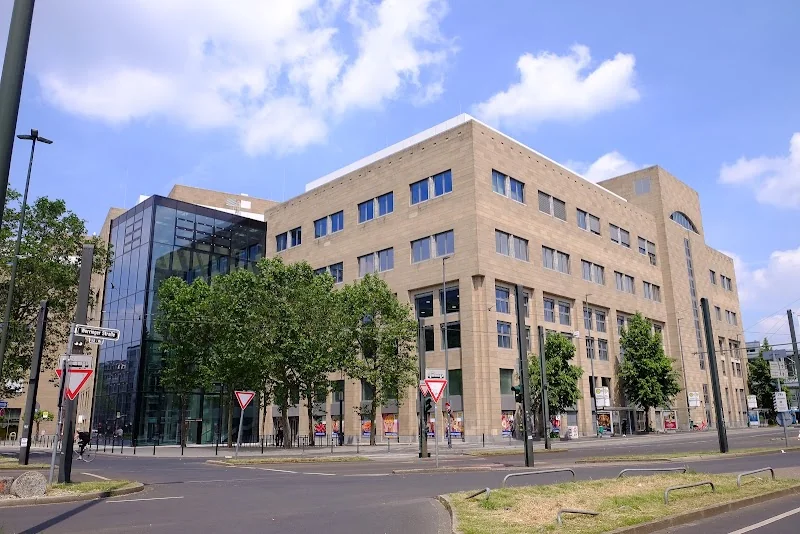
KAP1 is much more than just an address at Konrad-Adenauer-Platz 1. The building in front of Düsseldorf's main train station has developed into one of the most visible cultural venues in the city since its opening on November 6, 2021. Under one roof, the central library, event spaces of FFT, and an open house for learning, reading, and staying come together. Those searching for kap1 düsseldorf, kap1 events, or kap1 parking will therefore find a place that combines library, café, workspace, and cultural center in one. The city of Düsseldorf describes KAP1 as a new cultural hotspot that focuses not only on media but especially on people. The location was created based on a former logistics building of the post office and was converted into a house that connects urban public space, digital offerings, and cultural use. This very mix makes KAP1 so relevant today for visitors looking for a lively, easily accessible, and versatile place in the middle of the city. ([duesseldorf.de](https://www.duesseldorf.de/fileadmin/Amt13/ob/reden/211106_Eroeffnung_Zentralbibliothek_KAP1_bf.pdf))
Events and Exhibitions at KAP1
The search for events around KAP1 is no coincidence, as the central library explicitly sees itself as a cultural institution. The event page lists workshops, discussions, lectures, readings, information events, and cooperation formats. Particularly important for the user intention behind kap1 events is that many offerings are freely accessible and the spaces of the central library are intentionally designed to be low-threshold. Cooperation partners from the cultural sector include Herzkammer, Stadtfenster, Lernbox 1, and the learning studio. Stadtfenster is located directly at the café and can even be booked as a wedding room for civil ceremonies. The Herzkammer hall accommodates 180 spectators and is designed for cultural live experiences. Freiraum serves as a flexible action space and exhibition area, while the forum functions as a meeting point for groups and as an event area. This creates an event profile at KAP1 that cannot be reduced to a single format but brings together readings, discussions, exhibitions, family offerings, and urban encounters. ([duesseldorf.de](https://www.duesseldorf.de/stadtbuechereien/standorte/zentralbibliothek))
This diversity is also very evident in the current program. The event calendar of the central library regularly lists formats from various fields, including digital workshops, music studio introductions, 3D printing offerings, exhibitions, and literary events. For this reason, KAP1 is not only a place for the classic borrowing of media but also for the spontaneous discovery of new topics. Those searching for kap1 events, kap1 exhibitions, or kap1 tours will find here a house that regularly sets changing impulses. Additionally, the strong reference to current social and cultural issues is emphasized by the city libraries themselves. KAP1 is thus a place where one not only informs oneself but also participates: as a visitor, as a group, or as a cooperation partner. This openness is a central reason why the event spaces of the house are in such high demand and the cultural profile of the location goes far beyond a normal library. ([duesseldorf.de](https://www.duesseldorf.de/stadtbuechereien/standorte/zentralbibliothek))
Directions and Parking at Konrad-Adenauer-Platz 1
For those searching for kap1 directions or kap1 düsseldorf parking, the location at the main train station is the most significant advantage. KAP1 is situated between the Worringer Platz stop and Düsseldorf's main train station. The location is accessible via almost all Düsseldorf U-Bahn and S-Bahn lines as well as many regional trains from all over North Rhine-Westphalia. From the train travel perspective, access is particularly easy: At the main train station, one takes the exit towards Konrad-Adenauer-Platz, crosses the tracks, and follows the path towards KAP1. In front of the building, there are also plenty of bike racks, and around the main train station, one can also rent a nextbike. For many visitors, this is the most practical solution, as the house is thus directly accessible from the urban mobility network. This central location also explains why KAP1 is so frequently searched in connection with events, libraries, and city visits. ([fft-duesseldorf.de](https://www.fft-duesseldorf.de/kontakt/))
Those arriving by car should read the parking instructions carefully, as the entrance to the parking garage is not at the front of the building but at the back of KAP1. The FFT indicates the address Karlstraße 127-135 for this. From there, one does not go directly into the event area but first exits the parking garage, takes the elevator to the ground floor, and then follows the path through the glass entrance hall. This is particularly important for visitors specifically searching for kap1 parking: The location is indeed central, but the pathways in the building are deliberately structured and not comparable to a classic parking garage entrance. Therefore, anyone attending an event at FFT or heading to the central library should plan some time for orientation. In return, one receives an excellent downtown location with direct access to trains, buses, bikes, and walkable urban spaces. ([fft-duesseldorf.de](https://www.fft-duesseldorf.de/kontakt/))
Opening Hours, Sunday Opening, and Xafé
The opening hours are among the most sought-after information regarding kap1 opening hours, and they are particularly attractive for everyday life at the location. The central library in KAP1 is open Monday to Friday from 9 AM to 9 PM, Saturday from 9 AM to 6 PM, and Sunday from 11 AM to 6 PM. On weekdays, the library team is present during core hours, while the house remains open on Sundays even if the team is not regularly present. Additionally, there is an external return option that can be used around the clock. This makes KAP1 not only a cultural venue but also a very practical place for people who want to learn, read, research, or simply spend time in peace. This Sunday opening distinguishes the house from many classic municipal libraries and makes it a popular destination for city dwellers, commuters, and families. ([duesseldorf.de](https://www.duesseldorf.de/stadtbuechereien/adressen-und-oeffnungszeiten))
Staying at KAP1 also naturally includes the Xafé. The central library refers to the library café as the heart of the house, and eating and drinking are explicitly welcome there. The Xafé is accessible during the opening hours of the library and offers a variety of dishes, including vegan options. The dishes are inspired by Arabic, Turkish, and Mediterranean cuisine and are almost entirely prepared in-house. The menu includes bagels, muesli, porridge, salads, bowls, and cakes for coffee time. Behind the café are Xenia Bienefeld-Asabar and Karim Asabar, who bring experience from other gastronomy businesses. For search queries like kap1 cafe and xafé in kap1, this is an important detail as it shows that the café is not just an addition but an integral part of the stay concept. Those visiting on Sundays can browse, read, use digital offerings, and enjoy a piece of cake at the Xafé. This is how the library becomes a place to linger. ([duesseldorf.de](https://www.duesseldorf.de/stadtbuechereien/standorte/zentralbibliothek))
Children's Library, Youth Library, and LibraryLab
A strong search theme behind kap1 children's library is the family-friendly orientation of the house. The children's library of the central library in KAP1 is designed according to the city to cover 800 square meters and follows the motto Düsseldorf and Nature. It is divided into different areas, from the reading garden for the very young to knowledge and learning for school children. This makes it clear that the children's library not only provides a space for books but also a thematically designed learning and experience environment. The city emphasizes that reading, playing, and creative work come together here. This offering is complemented by the youth library, described as a meeting point for chilling, surfing, and hanging out with style. This formulation shows how consciously KAP1 is tailored to different age groups. Children, teenagers, and families each have their own spaces and independent qualities for staying in the house. ([duesseldorf.de](https://www.duesseldorf.de/stadtbuechereien/standorte/zentralbibliothek/kinderbibliothek))
For the digital focus, KAP1 features the LibraryLab. The city describes it as an open experimentation platform for digital offerings, which has existed since 2017 and is being continued in an expanded form in the new central library. In the current KAP1 concept, the digital environment includes 3D printing, virtual reality, introductions to digital offerings, eBook lending, social networks, and a meeting point for the digital community. Additional components include the LibraryLab Studio with video, audio, and image editing programs, music studio, learning studio, and parent-child studios. The library of things is also part of this sustainable approach: Here, items can be borrowed that one does not need to own constantly, such as a laminator or a slide scanner. For search queries like kap1 librarylab or kap1 youth library, this is particularly relevant as it clearly shows that the house goes beyond classic media lending and links digital competence, sustainability, and everyday use. ([www2.duesseldorf.de](https://www2.duesseldorf.de/stadtbuechereien/standorte/zentralbibliothek/librarylab))
Rooms, Media, and Workspaces in KAP1
The numbers behind the location explain why KAP1 is perceived as a modern large location. The central library has about 8,000 square meters of public space available on two levels, with a total of 12,900 square meters planned for the library in the building. The library has over 300,000 media, 600 workspaces, of which 60 have PCs and free internet access, as well as free Wi-Fi throughout the house. In addition, there are three info points, mobile staff, 13 group workrooms, and 15 event zones. For visitors, this means: KAP1 is not a cramped reading room but a spacious working and staying place with many different usage scenarios. Whether one wants to research, learn, discover media, collaborate with others, or participate in an event, the building offers the appropriate structure for that. Especially in combination with the opening hours and Sunday opening, this creates a very user-friendly overall picture. ([duesseldorf.de](https://www.duesseldorf.de/stadtbuechereien/standorte/zentralbibliothek/kap1))
The internal logic of the house is as important as the pure numbers. The city describes level 1 as the heart of the central library: Here you will find fiction, films, audiobooks, newspapers, magazines, comics, mangas, games, as well as children's and youth media. This area also includes the Xafé, Stadtfenster, the Herzkammer hall, Freiraum, Forum, LibraryLab, the children's library, the youth library, and the library of things. Level 2 is described as the brain of the central library: There you will find non-fiction and specialist literature, scores and music CDs, as well as a rooftop garden, reading windows, learning boxes, LibraryLab Studio, parent-child studios, music studio, learning studio, and the sun terrace as a meeting point. This clear thematic separation makes KAP1 intuitively usable and supports the search intention behind terms like kap1 seating plan, kap1 events, or central library kap1. Upon entering the building, one finds not only bookshelves but a well-thought-out spatial dramaturgy that connects tranquility, exchange, learning, and encounters. ([duesseldorf.de](https://www.duesseldorf.de/stadtbuechereien/standorte/zentralbibliothek/kap1))
History and Special Features of the Cultural Hotspot KAP1
The history of KAP1 is closely linked to the history of the Düsseldorf city libraries. Its roots go back to 1885 when the establishment of a public library was decided in Düsseldorf. In 1886, the people's library opened with 862 volumes, and later more branches were added. In the post-war decades, the system evolved, and in 1985/86, the central library moved with 300,000 media into the adult education center behind the train station. The new solution at Konrad-Adenauer-Platz 1 thus marks not a break but the next developmental step in a very long urban library journey. The opening speech also emphasized that the building was still known to many people as the main post office and once represented the largest post building in West Germany. This repurposing makes the location architecturally and historically significant. From a former logistics and post building, it became a cultural place with a public function. ([duesseldorf.de](https://www.duesseldorf.de/stadtbuechereien/standorte/zentralbibliothek/kap1))
Particularly noteworthy is also the change in self-understanding. The central library in KAP1 today sees itself as a forum for all citizens, a meeting point for communication, cultural and digital education, knowledge exchange, and a literary center. This adapts the house to today's urban society and significantly expands the concept of the library. The new central library is no longer just a place for borrowing but a space to stay with a café, workshops, readings, digital experiments, children's and youth areas, event zones, and opportunities for encounters. The open character of the house is also striking: Tours are offered, exhibitions are an important part, and the building remains accessible to visitors on Sundays. So, those searching for kap1 reviews, kap1 events, or kap1 düsseldorf are often looking for this mix of size, accessibility, and urban liveliness. KAP1 is therefore not just a library in a central location but an urban symbol of an open, modern, and versatile Düsseldorf. ([duesseldorf.de](https://www.duesseldorf.de/stadtbuechereien/standorte/zentralbibliothek))
Sources:
Show moreShow less
KAP1 | Events & Parking
KAP1 is much more than just an address at Konrad-Adenauer-Platz 1. The building in front of Düsseldorf's main train station has developed into one of the most visible cultural venues in the city since its opening on November 6, 2021. Under one roof, the central library, event spaces of FFT, and an open house for learning, reading, and staying come together. Those searching for kap1 düsseldorf, kap1 events, or kap1 parking will therefore find a place that combines library, café, workspace, and cultural center in one. The city of Düsseldorf describes KAP1 as a new cultural hotspot that focuses not only on media but especially on people. The location was created based on a former logistics building of the post office and was converted into a house that connects urban public space, digital offerings, and cultural use. This very mix makes KAP1 so relevant today for visitors looking for a lively, easily accessible, and versatile place in the middle of the city. ([duesseldorf.de](https://www.duesseldorf.de/fileadmin/Amt13/ob/reden/211106_Eroeffnung_Zentralbibliothek_KAP1_bf.pdf))
Events and Exhibitions at KAP1
The search for events around KAP1 is no coincidence, as the central library explicitly sees itself as a cultural institution. The event page lists workshops, discussions, lectures, readings, information events, and cooperation formats. Particularly important for the user intention behind kap1 events is that many offerings are freely accessible and the spaces of the central library are intentionally designed to be low-threshold. Cooperation partners from the cultural sector include Herzkammer, Stadtfenster, Lernbox 1, and the learning studio. Stadtfenster is located directly at the café and can even be booked as a wedding room for civil ceremonies. The Herzkammer hall accommodates 180 spectators and is designed for cultural live experiences. Freiraum serves as a flexible action space and exhibition area, while the forum functions as a meeting point for groups and as an event area. This creates an event profile at KAP1 that cannot be reduced to a single format but brings together readings, discussions, exhibitions, family offerings, and urban encounters. ([duesseldorf.de](https://www.duesseldorf.de/stadtbuechereien/standorte/zentralbibliothek))
This diversity is also very evident in the current program. The event calendar of the central library regularly lists formats from various fields, including digital workshops, music studio introductions, 3D printing offerings, exhibitions, and literary events. For this reason, KAP1 is not only a place for the classic borrowing of media but also for the spontaneous discovery of new topics. Those searching for kap1 events, kap1 exhibitions, or kap1 tours will find here a house that regularly sets changing impulses. Additionally, the strong reference to current social and cultural issues is emphasized by the city libraries themselves. KAP1 is thus a place where one not only informs oneself but also participates: as a visitor, as a group, or as a cooperation partner. This openness is a central reason why the event spaces of the house are in such high demand and the cultural profile of the location goes far beyond a normal library. ([duesseldorf.de](https://www.duesseldorf.de/stadtbuechereien/standorte/zentralbibliothek))
Directions and Parking at Konrad-Adenauer-Platz 1
For those searching for kap1 directions or kap1 düsseldorf parking, the location at the main train station is the most significant advantage. KAP1 is situated between the Worringer Platz stop and Düsseldorf's main train station. The location is accessible via almost all Düsseldorf U-Bahn and S-Bahn lines as well as many regional trains from all over North Rhine-Westphalia. From the train travel perspective, access is particularly easy: At the main train station, one takes the exit towards Konrad-Adenauer-Platz, crosses the tracks, and follows the path towards KAP1. In front of the building, there are also plenty of bike racks, and around the main train station, one can also rent a nextbike. For many visitors, this is the most practical solution, as the house is thus directly accessible from the urban mobility network. This central location also explains why KAP1 is so frequently searched in connection with events, libraries, and city visits. ([fft-duesseldorf.de](https://www.fft-duesseldorf.de/kontakt/))
Those arriving by car should read the parking instructions carefully, as the entrance to the parking garage is not at the front of the building but at the back of KAP1. The FFT indicates the address Karlstraße 127-135 for this. From there, one does not go directly into the event area but first exits the parking garage, takes the elevator to the ground floor, and then follows the path through the glass entrance hall. This is particularly important for visitors specifically searching for kap1 parking: The location is indeed central, but the pathways in the building are deliberately structured and not comparable to a classic parking garage entrance. Therefore, anyone attending an event at FFT or heading to the central library should plan some time for orientation. In return, one receives an excellent downtown location with direct access to trains, buses, bikes, and walkable urban spaces. ([fft-duesseldorf.de](https://www.fft-duesseldorf.de/kontakt/))
Opening Hours, Sunday Opening, and Xafé
The opening hours are among the most sought-after information regarding kap1 opening hours, and they are particularly attractive for everyday life at the location. The central library in KAP1 is open Monday to Friday from 9 AM to 9 PM, Saturday from 9 AM to 6 PM, and Sunday from 11 AM to 6 PM. On weekdays, the library team is present during core hours, while the house remains open on Sundays even if the team is not regularly present. Additionally, there is an external return option that can be used around the clock. This makes KAP1 not only a cultural venue but also a very practical place for people who want to learn, read, research, or simply spend time in peace. This Sunday opening distinguishes the house from many classic municipal libraries and makes it a popular destination for city dwellers, commuters, and families. ([duesseldorf.de](https://www.duesseldorf.de/stadtbuechereien/adressen-und-oeffnungszeiten))
Staying at KAP1 also naturally includes the Xafé. The central library refers to the library café as the heart of the house, and eating and drinking are explicitly welcome there. The Xafé is accessible during the opening hours of the library and offers a variety of dishes, including vegan options. The dishes are inspired by Arabic, Turkish, and Mediterranean cuisine and are almost entirely prepared in-house. The menu includes bagels, muesli, porridge, salads, bowls, and cakes for coffee time. Behind the café are Xenia Bienefeld-Asabar and Karim Asabar, who bring experience from other gastronomy businesses. For search queries like kap1 cafe and xafé in kap1, this is an important detail as it shows that the café is not just an addition but an integral part of the stay concept. Those visiting on Sundays can browse, read, use digital offerings, and enjoy a piece of cake at the Xafé. This is how the library becomes a place to linger. ([duesseldorf.de](https://www.duesseldorf.de/stadtbuechereien/standorte/zentralbibliothek))
Children's Library, Youth Library, and LibraryLab
A strong search theme behind kap1 children's library is the family-friendly orientation of the house. The children's library of the central library in KAP1 is designed according to the city to cover 800 square meters and follows the motto Düsseldorf and Nature. It is divided into different areas, from the reading garden for the very young to knowledge and learning for school children. This makes it clear that the children's library not only provides a space for books but also a thematically designed learning and experience environment. The city emphasizes that reading, playing, and creative work come together here. This offering is complemented by the youth library, described as a meeting point for chilling, surfing, and hanging out with style. This formulation shows how consciously KAP1 is tailored to different age groups. Children, teenagers, and families each have their own spaces and independent qualities for staying in the house. ([duesseldorf.de](https://www.duesseldorf.de/stadtbuechereien/standorte/zentralbibliothek/kinderbibliothek))
For the digital focus, KAP1 features the LibraryLab. The city describes it as an open experimentation platform for digital offerings, which has existed since 2017 and is being continued in an expanded form in the new central library. In the current KAP1 concept, the digital environment includes 3D printing, virtual reality, introductions to digital offerings, eBook lending, social networks, and a meeting point for the digital community. Additional components include the LibraryLab Studio with video, audio, and image editing programs, music studio, learning studio, and parent-child studios. The library of things is also part of this sustainable approach: Here, items can be borrowed that one does not need to own constantly, such as a laminator or a slide scanner. For search queries like kap1 librarylab or kap1 youth library, this is particularly relevant as it clearly shows that the house goes beyond classic media lending and links digital competence, sustainability, and everyday use. ([www2.duesseldorf.de](https://www2.duesseldorf.de/stadtbuechereien/standorte/zentralbibliothek/librarylab))
Rooms, Media, and Workspaces in KAP1
The numbers behind the location explain why KAP1 is perceived as a modern large location. The central library has about 8,000 square meters of public space available on two levels, with a total of 12,900 square meters planned for the library in the building. The library has over 300,000 media, 600 workspaces, of which 60 have PCs and free internet access, as well as free Wi-Fi throughout the house. In addition, there are three info points, mobile staff, 13 group workrooms, and 15 event zones. For visitors, this means: KAP1 is not a cramped reading room but a spacious working and staying place with many different usage scenarios. Whether one wants to research, learn, discover media, collaborate with others, or participate in an event, the building offers the appropriate structure for that. Especially in combination with the opening hours and Sunday opening, this creates a very user-friendly overall picture. ([duesseldorf.de](https://www.duesseldorf.de/stadtbuechereien/standorte/zentralbibliothek/kap1))
The internal logic of the house is as important as the pure numbers. The city describes level 1 as the heart of the central library: Here you will find fiction, films, audiobooks, newspapers, magazines, comics, mangas, games, as well as children's and youth media. This area also includes the Xafé, Stadtfenster, the Herzkammer hall, Freiraum, Forum, LibraryLab, the children's library, the youth library, and the library of things. Level 2 is described as the brain of the central library: There you will find non-fiction and specialist literature, scores and music CDs, as well as a rooftop garden, reading windows, learning boxes, LibraryLab Studio, parent-child studios, music studio, learning studio, and the sun terrace as a meeting point. This clear thematic separation makes KAP1 intuitively usable and supports the search intention behind terms like kap1 seating plan, kap1 events, or central library kap1. Upon entering the building, one finds not only bookshelves but a well-thought-out spatial dramaturgy that connects tranquility, exchange, learning, and encounters. ([duesseldorf.de](https://www.duesseldorf.de/stadtbuechereien/standorte/zentralbibliothek/kap1))
History and Special Features of the Cultural Hotspot KAP1
The history of KAP1 is closely linked to the history of the Düsseldorf city libraries. Its roots go back to 1885 when the establishment of a public library was decided in Düsseldorf. In 1886, the people's library opened with 862 volumes, and later more branches were added. In the post-war decades, the system evolved, and in 1985/86, the central library moved with 300,000 media into the adult education center behind the train station. The new solution at Konrad-Adenauer-Platz 1 thus marks not a break but the next developmental step in a very long urban library journey. The opening speech also emphasized that the building was still known to many people as the main post office and once represented the largest post building in West Germany. This repurposing makes the location architecturally and historically significant. From a former logistics and post building, it became a cultural place with a public function. ([duesseldorf.de](https://www.duesseldorf.de/stadtbuechereien/standorte/zentralbibliothek/kap1))
Particularly noteworthy is also the change in self-understanding. The central library in KAP1 today sees itself as a forum for all citizens, a meeting point for communication, cultural and digital education, knowledge exchange, and a literary center. This adapts the house to today's urban society and significantly expands the concept of the library. The new central library is no longer just a place for borrowing but a space to stay with a café, workshops, readings, digital experiments, children's and youth areas, event zones, and opportunities for encounters. The open character of the house is also striking: Tours are offered, exhibitions are an important part, and the building remains accessible to visitors on Sundays. So, those searching for kap1 reviews, kap1 events, or kap1 düsseldorf are often looking for this mix of size, accessibility, and urban liveliness. KAP1 is therefore not just a library in a central location but an urban symbol of an open, modern, and versatile Düsseldorf. ([duesseldorf.de](https://www.duesseldorf.de/stadtbuechereien/standorte/zentralbibliothek))
Sources:
KAP1 | Events & Parking
KAP1 is much more than just an address at Konrad-Adenauer-Platz 1. The building in front of Düsseldorf's main train station has developed into one of the most visible cultural venues in the city since its opening on November 6, 2021. Under one roof, the central library, event spaces of FFT, and an open house for learning, reading, and staying come together. Those searching for kap1 düsseldorf, kap1 events, or kap1 parking will therefore find a place that combines library, café, workspace, and cultural center in one. The city of Düsseldorf describes KAP1 as a new cultural hotspot that focuses not only on media but especially on people. The location was created based on a former logistics building of the post office and was converted into a house that connects urban public space, digital offerings, and cultural use. This very mix makes KAP1 so relevant today for visitors looking for a lively, easily accessible, and versatile place in the middle of the city. ([duesseldorf.de](https://www.duesseldorf.de/fileadmin/Amt13/ob/reden/211106_Eroeffnung_Zentralbibliothek_KAP1_bf.pdf))
Events and Exhibitions at KAP1
The search for events around KAP1 is no coincidence, as the central library explicitly sees itself as a cultural institution. The event page lists workshops, discussions, lectures, readings, information events, and cooperation formats. Particularly important for the user intention behind kap1 events is that many offerings are freely accessible and the spaces of the central library are intentionally designed to be low-threshold. Cooperation partners from the cultural sector include Herzkammer, Stadtfenster, Lernbox 1, and the learning studio. Stadtfenster is located directly at the café and can even be booked as a wedding room for civil ceremonies. The Herzkammer hall accommodates 180 spectators and is designed for cultural live experiences. Freiraum serves as a flexible action space and exhibition area, while the forum functions as a meeting point for groups and as an event area. This creates an event profile at KAP1 that cannot be reduced to a single format but brings together readings, discussions, exhibitions, family offerings, and urban encounters. ([duesseldorf.de](https://www.duesseldorf.de/stadtbuechereien/standorte/zentralbibliothek))
This diversity is also very evident in the current program. The event calendar of the central library regularly lists formats from various fields, including digital workshops, music studio introductions, 3D printing offerings, exhibitions, and literary events. For this reason, KAP1 is not only a place for the classic borrowing of media but also for the spontaneous discovery of new topics. Those searching for kap1 events, kap1 exhibitions, or kap1 tours will find here a house that regularly sets changing impulses. Additionally, the strong reference to current social and cultural issues is emphasized by the city libraries themselves. KAP1 is thus a place where one not only informs oneself but also participates: as a visitor, as a group, or as a cooperation partner. This openness is a central reason why the event spaces of the house are in such high demand and the cultural profile of the location goes far beyond a normal library. ([duesseldorf.de](https://www.duesseldorf.de/stadtbuechereien/standorte/zentralbibliothek))
Directions and Parking at Konrad-Adenauer-Platz 1
For those searching for kap1 directions or kap1 düsseldorf parking, the location at the main train station is the most significant advantage. KAP1 is situated between the Worringer Platz stop and Düsseldorf's main train station. The location is accessible via almost all Düsseldorf U-Bahn and S-Bahn lines as well as many regional trains from all over North Rhine-Westphalia. From the train travel perspective, access is particularly easy: At the main train station, one takes the exit towards Konrad-Adenauer-Platz, crosses the tracks, and follows the path towards KAP1. In front of the building, there are also plenty of bike racks, and around the main train station, one can also rent a nextbike. For many visitors, this is the most practical solution, as the house is thus directly accessible from the urban mobility network. This central location also explains why KAP1 is so frequently searched in connection with events, libraries, and city visits. ([fft-duesseldorf.de](https://www.fft-duesseldorf.de/kontakt/))
Those arriving by car should read the parking instructions carefully, as the entrance to the parking garage is not at the front of the building but at the back of KAP1. The FFT indicates the address Karlstraße 127-135 for this. From there, one does not go directly into the event area but first exits the parking garage, takes the elevator to the ground floor, and then follows the path through the glass entrance hall. This is particularly important for visitors specifically searching for kap1 parking: The location is indeed central, but the pathways in the building are deliberately structured and not comparable to a classic parking garage entrance. Therefore, anyone attending an event at FFT or heading to the central library should plan some time for orientation. In return, one receives an excellent downtown location with direct access to trains, buses, bikes, and walkable urban spaces. ([fft-duesseldorf.de](https://www.fft-duesseldorf.de/kontakt/))
Opening Hours, Sunday Opening, and Xafé
The opening hours are among the most sought-after information regarding kap1 opening hours, and they are particularly attractive for everyday life at the location. The central library in KAP1 is open Monday to Friday from 9 AM to 9 PM, Saturday from 9 AM to 6 PM, and Sunday from 11 AM to 6 PM. On weekdays, the library team is present during core hours, while the house remains open on Sundays even if the team is not regularly present. Additionally, there is an external return option that can be used around the clock. This makes KAP1 not only a cultural venue but also a very practical place for people who want to learn, read, research, or simply spend time in peace. This Sunday opening distinguishes the house from many classic municipal libraries and makes it a popular destination for city dwellers, commuters, and families. ([duesseldorf.de](https://www.duesseldorf.de/stadtbuechereien/adressen-und-oeffnungszeiten))
Staying at KAP1 also naturally includes the Xafé. The central library refers to the library café as the heart of the house, and eating and drinking are explicitly welcome there. The Xafé is accessible during the opening hours of the library and offers a variety of dishes, including vegan options. The dishes are inspired by Arabic, Turkish, and Mediterranean cuisine and are almost entirely prepared in-house. The menu includes bagels, muesli, porridge, salads, bowls, and cakes for coffee time. Behind the café are Xenia Bienefeld-Asabar and Karim Asabar, who bring experience from other gastronomy businesses. For search queries like kap1 cafe and xafé in kap1, this is an important detail as it shows that the café is not just an addition but an integral part of the stay concept. Those visiting on Sundays can browse, read, use digital offerings, and enjoy a piece of cake at the Xafé. This is how the library becomes a place to linger. ([duesseldorf.de](https://www.duesseldorf.de/stadtbuechereien/standorte/zentralbibliothek))
Children's Library, Youth Library, and LibraryLab
A strong search theme behind kap1 children's library is the family-friendly orientation of the house. The children's library of the central library in KAP1 is designed according to the city to cover 800 square meters and follows the motto Düsseldorf and Nature. It is divided into different areas, from the reading garden for the very young to knowledge and learning for school children. This makes it clear that the children's library not only provides a space for books but also a thematically designed learning and experience environment. The city emphasizes that reading, playing, and creative work come together here. This offering is complemented by the youth library, described as a meeting point for chilling, surfing, and hanging out with style. This formulation shows how consciously KAP1 is tailored to different age groups. Children, teenagers, and families each have their own spaces and independent qualities for staying in the house. ([duesseldorf.de](https://www.duesseldorf.de/stadtbuechereien/standorte/zentralbibliothek/kinderbibliothek))
For the digital focus, KAP1 features the LibraryLab. The city describes it as an open experimentation platform for digital offerings, which has existed since 2017 and is being continued in an expanded form in the new central library. In the current KAP1 concept, the digital environment includes 3D printing, virtual reality, introductions to digital offerings, eBook lending, social networks, and a meeting point for the digital community. Additional components include the LibraryLab Studio with video, audio, and image editing programs, music studio, learning studio, and parent-child studios. The library of things is also part of this sustainable approach: Here, items can be borrowed that one does not need to own constantly, such as a laminator or a slide scanner. For search queries like kap1 librarylab or kap1 youth library, this is particularly relevant as it clearly shows that the house goes beyond classic media lending and links digital competence, sustainability, and everyday use. ([www2.duesseldorf.de](https://www2.duesseldorf.de/stadtbuechereien/standorte/zentralbibliothek/librarylab))
Rooms, Media, and Workspaces in KAP1
The numbers behind the location explain why KAP1 is perceived as a modern large location. The central library has about 8,000 square meters of public space available on two levels, with a total of 12,900 square meters planned for the library in the building. The library has over 300,000 media, 600 workspaces, of which 60 have PCs and free internet access, as well as free Wi-Fi throughout the house. In addition, there are three info points, mobile staff, 13 group workrooms, and 15 event zones. For visitors, this means: KAP1 is not a cramped reading room but a spacious working and staying place with many different usage scenarios. Whether one wants to research, learn, discover media, collaborate with others, or participate in an event, the building offers the appropriate structure for that. Especially in combination with the opening hours and Sunday opening, this creates a very user-friendly overall picture. ([duesseldorf.de](https://www.duesseldorf.de/stadtbuechereien/standorte/zentralbibliothek/kap1))
The internal logic of the house is as important as the pure numbers. The city describes level 1 as the heart of the central library: Here you will find fiction, films, audiobooks, newspapers, magazines, comics, mangas, games, as well as children's and youth media. This area also includes the Xafé, Stadtfenster, the Herzkammer hall, Freiraum, Forum, LibraryLab, the children's library, the youth library, and the library of things. Level 2 is described as the brain of the central library: There you will find non-fiction and specialist literature, scores and music CDs, as well as a rooftop garden, reading windows, learning boxes, LibraryLab Studio, parent-child studios, music studio, learning studio, and the sun terrace as a meeting point. This clear thematic separation makes KAP1 intuitively usable and supports the search intention behind terms like kap1 seating plan, kap1 events, or central library kap1. Upon entering the building, one finds not only bookshelves but a well-thought-out spatial dramaturgy that connects tranquility, exchange, learning, and encounters. ([duesseldorf.de](https://www.duesseldorf.de/stadtbuechereien/standorte/zentralbibliothek/kap1))
History and Special Features of the Cultural Hotspot KAP1
The history of KAP1 is closely linked to the history of the Düsseldorf city libraries. Its roots go back to 1885 when the establishment of a public library was decided in Düsseldorf. In 1886, the people's library opened with 862 volumes, and later more branches were added. In the post-war decades, the system evolved, and in 1985/86, the central library moved with 300,000 media into the adult education center behind the train station. The new solution at Konrad-Adenauer-Platz 1 thus marks not a break but the next developmental step in a very long urban library journey. The opening speech also emphasized that the building was still known to many people as the main post office and once represented the largest post building in West Germany. This repurposing makes the location architecturally and historically significant. From a former logistics and post building, it became a cultural place with a public function. ([duesseldorf.de](https://www.duesseldorf.de/stadtbuechereien/standorte/zentralbibliothek/kap1))
Particularly noteworthy is also the change in self-understanding. The central library in KAP1 today sees itself as a forum for all citizens, a meeting point for communication, cultural and digital education, knowledge exchange, and a literary center. This adapts the house to today's urban society and significantly expands the concept of the library. The new central library is no longer just a place for borrowing but a space to stay with a café, workshops, readings, digital experiments, children's and youth areas, event zones, and opportunities for encounters. The open character of the house is also striking: Tours are offered, exhibitions are an important part, and the building remains accessible to visitors on Sundays. So, those searching for kap1 reviews, kap1 events, or kap1 düsseldorf are often looking for this mix of size, accessibility, and urban liveliness. KAP1 is therefore not just a library in a central location but an urban symbol of an open, modern, and versatile Düsseldorf. ([duesseldorf.de](https://www.duesseldorf.de/stadtbuechereien/standorte/zentralbibliothek))
Sources:
Upcoming Events
No events found
Frequently Asked Questions
Reviews
Mike JB007
2. April 2026
Good place if you exclude the outside people.
Patrick
11. February 2026
Very nice library with great opportunities to prepare for exams! The café in the library completes the whole experience. Still only 3 stars because the toilets are often used as a shower room by junkies.. also, someone once spread out in the stairwell and distributed their drugs.. the security service at the lower entrance seems powerless.
NadineV
24. January 2025
Very modern yet cozy. There’s a space for everyone. Great selection and very friendly staff. Incredible number of offers. Young people seem to really embrace the library, so there are hardly any seats available early on. The café has good prices and delicious food, but the staff could work a bit faster.
Nicole K
7. January 2025
Modern and large library with many great offers. However, there are far too few workspaces here. The chairs and couches are nice to look at, but there aren't enough places to be productive. By early afternoon, everything is already taken. Then you walk both floors and feel really cheated because in some corners, instead of efficient rows of tables, there are weird circles of chairs without power outlets. Why not use the empty space and provide a few more tables? Why not design the benches by the windows more efficiently with more small tables to pull up? For a central city library, this is really disappointing.
S T
26. October 2024
Wonderful, well-organized, large and modern library, with many workspaces, bookable rooms, and good opening hours. Various media can be borrowed, and there are exciting activities, lectures, and groups for all age groups taking place here. A successful implementation of a library for the present.