Düsseldorf
Grabbepl. 5, 40213 Düsseldorf-Stadtbezirk 1, Deutschland
K20, Kunstsammlung Nordrhein-Westfalen | Opening Hours & Parking
The K20 at Grabbeplatz 5 is one of the most renowned art addresses in Düsseldorf and is the home of the Kunstsammlung Nordrhein-Westfalen for classical modernism, post-war modernism, and significant positions in contemporary art. Those searching for K20, K21, current exhibitions, opening hours, parking, or address will find themselves at a museum that attracts attention far beyond the city with its clear architecture, central location, and strong collection profile. The house is not only an exhibition space but a precisely curated place where historical works and current positions meet. This mix makes the visit interesting for first-time visitors as well as for art connoisseurs who are specifically looking for masterpieces, special collection rooms, or a well-planned museum route in Düsseldorf. ([kunstsammlung.de](https://www.kunstsammlung.de/en/visit/collection/K20))
Current Exhibitions, Opening Hours, and Tickets
For those who want to plan their museum tour neatly, it is best to start with the current exhibitions and fixed opening hours. On the official K20 page, current exhibitions include “Playground” from April 25, 2026, to May 9, 2027, “Anne Truitt” from March 28 to August 2, 2026, as well as the collection presentation “Masterpieces from Etel Adnan to Andy Warhol.” This is important because the search term current exhibition refers not only to a single show but to the question of what can actually be seen in the house in the summer of 2026. The regular opening hours are from Tuesday to Sunday and on public holidays between 11 AM and 6 PM; on the first Wednesday of the month, the house extends to 10 PM, and entry is free from 6 PM. It is closed on Mondays, as well as on December 24, 25, and 31, and on the Carnival days of Women’s Carnival and Rose Monday. However, on public holidays that fall on a Monday, the museum opens, except for Rose Monday. For families, groups, and planning visitors, it is also important that school and daycare offers are possible from 10 AM by prior arrangement. ([kunstsammlung.de](https://www.kunstsammlung.de/en/visit/collection/K20))
Regarding tickets, K20 works with a clear, easily understandable model. Admission is free for children and teenagers up to and including 17 years, and tickets can often be used digitally or printed. The combination ticket for K20 and K21 costs 20 euros, is valid for one year from the date of purchase, and entitles one-time entry to all exhibitions and collections of both houses, even on different days. For K20 itself, the Kunstsammlung NRW states a single ticket for collection and exhibition at 16 euros, reduced 14 euros, for the collection alone 9 euros, reduced 7 euros, and for the combination of collection and Playground 10 euros. Time slot tickets are required for visiting Playground; however, for the collection in K20 and K21 and most special exhibitions, such time slots are not necessary. This is a real advantage, especially for highly demanded dates, as it allows for flexibility while still planning early. Also important: Even with an online ticket, there may be waiting times depending on visitor traffic. Therefore, those who want to arrive as relaxed as possible should pay attention not only to the ticket but also to the time of day. ([kunstsammlung.de](https://www.kunstsammlung.de/en/visit/collection/K20))
Directions, Parking, and the Best Route to Grabbeplatz
The address of K20 is Grabbeplatz 5, 40213 Düsseldorf, right in the center and close to the Old Town, Heinrich-Heine-Allee, and the most important inner-city routes. For public transport, the Kunstsammlung NRW recommends the subway lines U70, U71, U72, U73, U74, U75, U76, U77, U78, U79, and U83 to Heinrich-Heine-Allee. This makes the house easily accessible for visitors from the city, day visitors from the surrounding area, and tourists arriving via the main train station. Those arriving by car should head towards the city center or Old Town; parking options include the underground garage K20/Grabbeplatz and the parking garage Ratinger Tor. This is particularly relevant for inquiries about parking at K20, as the parking solution is located directly at the house and does not require a long search. Additionally, there is a pick-up and drop-off point for travel groups in close proximity to the museum; bus parking is available at Tonhallenufer. For many visitors, it is also interesting that the museum itself is generally barrier-free and that there are additional solutions for limited mobility in the house or garage. ([kunstsammlung.de](https://www.kunstsammlung.de/de/visit/collection/K20))
The connection between K20 and K21 is also practically solved if one wants to connect both locations in one day. The Kunstsammlung NRW mentions the subway connection between Heinrich-Heine-Allee and Graf-Adolf-Platz with lines U71, U72, U73, and U83; the travel time is about 2 to 3 minutes, and the walking distance is approximately 15 to 20 minutes. This short connection makes the combination ticket so attractive because one can flexibly combine art at Grabbeplatz and contemporary art at K21 without having a complicated logistics problem. Therefore, those searching for K20 Kunstsammlung Nordrhein-Westfalen Düsseldorf, address, directions, or Grabbeplatz Düsseldorf district 1 will find a very central location with clear traffic routes. Additionally, the Kunstsammlung points out that disabled parking spaces are located in the underground garage Grabbeplatz under K20 and can be accessed via Mutter-Ey-Platz. For visitors with a lot of luggage or in a wheelchair, this is an important practical advantage. Overall, the journey is not spectacularly complicated but rather typically urban: central, dense, well-connected, and with several options, depending on whether one arrives by train, car, or group. ([kunstsammlung.de](https://www.kunstsammlung.de/de/visit/collection/K20))
Collection, Architecture, and Key Works
Content-wise, K20 is particularly strong because it does not only showcase individual big names but makes the development of modern art visible as a coherent narrative. The new collection tour includes 25 rooms and displays more than 200 works created between 1904 and 2023. This temporal range explains why the house is exciting for both art-historically interested visitors and for people seeking current references: in the tour, historical works and contemporary pieces are juxtaposed, allowing tradition and present to enter into direct dialogue. Key focuses in K20 include the works of Paul Klee, German Expressionism, Cubism, and Surrealism. For the period after World War II, Abstract Expressionism, Pop Art, and Minimalism are important. Additionally, significant collections from Joseph Beuys and Gerhard Richter, as well as key works from Imi Knoebel, Blinky Palermo, and Isa Genzken are included. The spectrum is complemented by selected works from female artists such as Maria Helena Vieira da Silva and Carmen Herrera. For the search terms related to K20 collection, modern art, and exhibition profile, this combination of canonical positions and contemporary perspectives is crucial. ([kunstsammlung.de](https://www.kunstsammlung.de/de/museum/K20/))
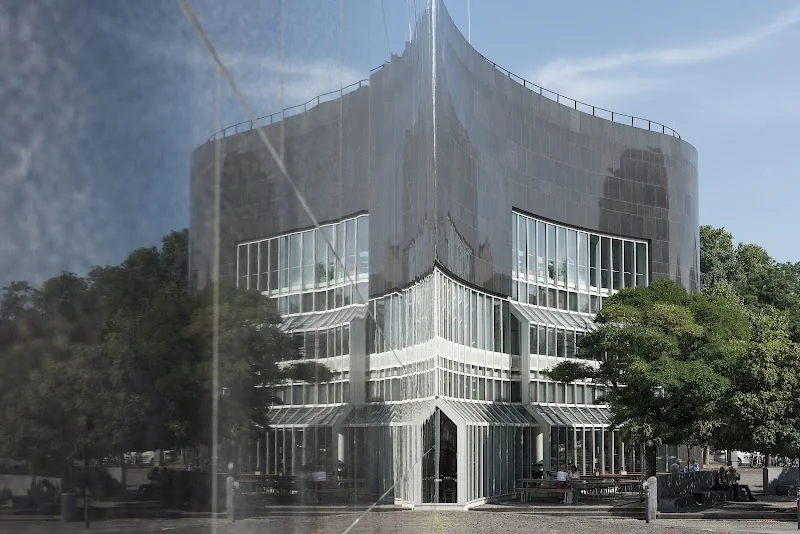
Architecturally, K20 is also a strong statement. The building at Grabbeplatz was opened in 1986 and is immediately recognizable by its characteristic black granite facade. It was realized by the Copenhagen architectural firm Dissing + Weitling in a design language that is oriented towards the restraint and elegance of Arne Jacobsen, consciously giving precedence to the art. In 2008, the foundation stone for the extension was laid; the addition seamlessly integrated architecturally with the old building and brought an additional 2,000 square meters in two column-free exhibition halls. This increased the total exhibition area to more than 5,000 square meters, which is a very comfortable size for a museum of this kind. For visitors, this means: spacious rooms, clear pathways, plenty of space between the positions, and the possibility to perceive large-format works and installations without feeling cramped. The house is therefore interesting not only because of the art but also because of its spatial quality. When searching for photos of K20, the architecture itself is already a central motif: the dark facade, the calm exterior, and the concentrated presentation inside together tell a very precise museum aesthetic. ([kunstsammlung.de](https://www.kunstsammlung.de/de/museum/K20/))
Photos, Accessibility, and the Visitor Experience in the House
In everyday visits, K20 impresses with many practical details that make a difference overall. Photography is allowed in the collection rooms for private purposes, which is relevant for anyone looking for K20 photos or motifs for private memories. At the same time, the museum sets clear boundaries: in special exhibitions or in front of individual works, restrictions may apply, and prior written agreement is required for commercial photo or film recordings. It is also required that coats, larger bags, bulky or wet items be left at the cloakroom or stored in lockers; the cloakroom and lockers are available free of charge. Additionally, phone calls are not welcome in the museum, and eating, drinking, and smoking are not permitted in the exhibition rooms. Those who enjoy sketching may bring a sketchbook up to a maximum size of DIN A3 and pencils. Such rules may seem strict at first glance, but they serve to maintain tranquility in the house and protect the works. At the same time, there are free folding chairs available at the cloakroom, making longer visits significantly more pleasant. This is important for the overall feeling, as K20 functions not as a hectic throughput space but as a concentrated cultural venue. ([kunstsammlung.de](https://www.kunstsammlung.de/de/visit/collection/K20))
Additionally, there is a solid infrastructure that makes the stay practically pleasant. In the public areas of K20, there is free internet access; the Wi-Fi hotspots are located in the foyer, in the Trinkaus Auditorium, in the library, and in Salon20. The house is generally barrier-free, and in case of queues, holders of an official disability ID receive priority entry. Wheelchairs can be borrowed free of charge at the cloakroom, guide dogs for the blind and disabled are allowed with appropriate documentation, and the accompanying person of blind or visually impaired visitors pays no admission fee. For guests with limited mobility, the mention of disabled parking spaces in the underground garage under K20 is also relevant. When all this is put together, it results in a museum that not only impresses architecturally and curatorially but is also well thought out in everyday life. The interplay of private photography permission, spacious rooms, calm guidance, and good accessibility results in a visitor experience that works very well for both spontaneous guests and those planning specifically. ([kunstsammlung.de](https://www.kunstsammlung.de/de/visit/collection/K20))
Planning K20 and K21 Together: Combination Ticket, Tours, and Events
Those searching for K20 k21 Kunstsammlung Nordrhein-Westfalen usually do not mean just a single museum visit but an entire cultural block in Düsseldorf. The Kunstsammlung NRW is well positioned for this. The combination ticket for K20 and K21 is valid for one year, allows one-time entry to all exhibitions and collections of both houses, and can be used on different days. For visitors who want to see as much as possible in a short time, this is the most convenient solution. Additionally, the house offers guided tours in German for up to 20 participants per group, optionally lasting 60, 90, or 120 minutes. Tours in foreign languages are also possible, including in English, French, Ukrainian, and Russian. For groups with a practical work component, there are workshops for adults as well as for children and teenagers; different maximum group sizes and durations apply. This is interesting for school classes, clubs, companies, or art groups that want to use a visit not just as a pure tour but as a joint format. The Kunstsammlung also offers discounted conditions for groups of ten paying persons and for various eligible groups. ([kunstsammlung.de](https://www.kunstsammlung.de/de/visit/collection/K20))
Particularly relevant for event and business contexts is that K20 can also be used as an event location. According to the rental page, the house realized by the Copenhagen architectural firm Dissing + Weitling, with the Trinkaus Auditorium as well as the upper and lower foyer, provides the suitable framework for conferences, receptions, panel discussions, and film screenings. For companies, institutions, or private groups, this means: the museum is not only an exhibition space but also a high-quality address for events with a cultural environment. Additionally, there is the possibility of special tours outside opening hours, where guests can experience the current exhibition or the collection in a private atmosphere. For many plans, the library in K20 is also interesting, as it is located in the house and is a scientific special library on 20th and 21st-century art. The offer is complemented by a museum shop and gastronomy, so a visit is not limited to the pure exhibition space. Therefore, anyone organizing a day in Düsseldorf can very well plan K20 as a fixed point: morning or noon collection, possibly K21 in the afternoon, parking or subway in between, and if needed, a shop, library, or event appointment at the end. This versatility makes K20 one of the most important art addresses in the city. ([kunstsammlung.de](https://www.kunstsammlung.de/de/museum/renting/K20))
Sources:
Mehr anzeigenWeniger anzeigen
K20, Kunstsammlung Nordrhein-Westfalen | Opening Hours & Parking
The K20 at Grabbeplatz 5 is one of the most renowned art addresses in Düsseldorf and is the home of the Kunstsammlung Nordrhein-Westfalen for classical modernism, post-war modernism, and significant positions in contemporary art. Those searching for K20, K21, current exhibitions, opening hours, parking, or address will find themselves at a museum that attracts attention far beyond the city with its clear architecture, central location, and strong collection profile. The house is not only an exhibition space but a precisely curated place where historical works and current positions meet. This mix makes the visit interesting for first-time visitors as well as for art connoisseurs who are specifically looking for masterpieces, special collection rooms, or a well-planned museum route in Düsseldorf. ([kunstsammlung.de](https://www.kunstsammlung.de/en/visit/collection/K20))
Current Exhibitions, Opening Hours, and Tickets
For those who want to plan their museum tour neatly, it is best to start with the current exhibitions and fixed opening hours. On the official K20 page, current exhibitions include “Playground” from April 25, 2026, to May 9, 2027, “Anne Truitt” from March 28 to August 2, 2026, as well as the collection presentation “Masterpieces from Etel Adnan to Andy Warhol.” This is important because the search term current exhibition refers not only to a single show but to the question of what can actually be seen in the house in the summer of 2026. The regular opening hours are from Tuesday to Sunday and on public holidays between 11 AM and 6 PM; on the first Wednesday of the month, the house extends to 10 PM, and entry is free from 6 PM. It is closed on Mondays, as well as on December 24, 25, and 31, and on the Carnival days of Women’s Carnival and Rose Monday. However, on public holidays that fall on a Monday, the museum opens, except for Rose Monday. For families, groups, and planning visitors, it is also important that school and daycare offers are possible from 10 AM by prior arrangement. ([kunstsammlung.de](https://www.kunstsammlung.de/en/visit/collection/K20))
Regarding tickets, K20 works with a clear, easily understandable model. Admission is free for children and teenagers up to and including 17 years, and tickets can often be used digitally or printed. The combination ticket for K20 and K21 costs 20 euros, is valid for one year from the date of purchase, and entitles one-time entry to all exhibitions and collections of both houses, even on different days. For K20 itself, the Kunstsammlung NRW states a single ticket for collection and exhibition at 16 euros, reduced 14 euros, for the collection alone 9 euros, reduced 7 euros, and for the combination of collection and Playground 10 euros. Time slot tickets are required for visiting Playground; however, for the collection in K20 and K21 and most special exhibitions, such time slots are not necessary. This is a real advantage, especially for highly demanded dates, as it allows for flexibility while still planning early. Also important: Even with an online ticket, there may be waiting times depending on visitor traffic. Therefore, those who want to arrive as relaxed as possible should pay attention not only to the ticket but also to the time of day. ([kunstsammlung.de](https://www.kunstsammlung.de/en/visit/collection/K20))
Directions, Parking, and the Best Route to Grabbeplatz
The address of K20 is Grabbeplatz 5, 40213 Düsseldorf, right in the center and close to the Old Town, Heinrich-Heine-Allee, and the most important inner-city routes. For public transport, the Kunstsammlung NRW recommends the subway lines U70, U71, U72, U73, U74, U75, U76, U77, U78, U79, and U83 to Heinrich-Heine-Allee. This makes the house easily accessible for visitors from the city, day visitors from the surrounding area, and tourists arriving via the main train station. Those arriving by car should head towards the city center or Old Town; parking options include the underground garage K20/Grabbeplatz and the parking garage Ratinger Tor. This is particularly relevant for inquiries about parking at K20, as the parking solution is located directly at the house and does not require a long search. Additionally, there is a pick-up and drop-off point for travel groups in close proximity to the museum; bus parking is available at Tonhallenufer. For many visitors, it is also interesting that the museum itself is generally barrier-free and that there are additional solutions for limited mobility in the house or garage. ([kunstsammlung.de](https://www.kunstsammlung.de/de/visit/collection/K20))
The connection between K20 and K21 is also practically solved if one wants to connect both locations in one day. The Kunstsammlung NRW mentions the subway connection between Heinrich-Heine-Allee and Graf-Adolf-Platz with lines U71, U72, U73, and U83; the travel time is about 2 to 3 minutes, and the walking distance is approximately 15 to 20 minutes. This short connection makes the combination ticket so attractive because one can flexibly combine art at Grabbeplatz and contemporary art at K21 without having a complicated logistics problem. Therefore, those searching for K20 Kunstsammlung Nordrhein-Westfalen Düsseldorf, address, directions, or Grabbeplatz Düsseldorf district 1 will find a very central location with clear traffic routes. Additionally, the Kunstsammlung points out that disabled parking spaces are located in the underground garage Grabbeplatz under K20 and can be accessed via Mutter-Ey-Platz. For visitors with a lot of luggage or in a wheelchair, this is an important practical advantage. Overall, the journey is not spectacularly complicated but rather typically urban: central, dense, well-connected, and with several options, depending on whether one arrives by train, car, or group. ([kunstsammlung.de](https://www.kunstsammlung.de/de/visit/collection/K20))
Collection, Architecture, and Key Works
Content-wise, K20 is particularly strong because it does not only showcase individual big names but makes the development of modern art visible as a coherent narrative. The new collection tour includes 25 rooms and displays more than 200 works created between 1904 and 2023. This temporal range explains why the house is exciting for both art-historically interested visitors and for people seeking current references: in the tour, historical works and contemporary pieces are juxtaposed, allowing tradition and present to enter into direct dialogue. Key focuses in K20 include the works of Paul Klee, German Expressionism, Cubism, and Surrealism. For the period after World War II, Abstract Expressionism, Pop Art, and Minimalism are important. Additionally, significant collections from Joseph Beuys and Gerhard Richter, as well as key works from Imi Knoebel, Blinky Palermo, and Isa Genzken are included. The spectrum is complemented by selected works from female artists such as Maria Helena Vieira da Silva and Carmen Herrera. For the search terms related to K20 collection, modern art, and exhibition profile, this combination of canonical positions and contemporary perspectives is crucial. ([kunstsammlung.de](https://www.kunstsammlung.de/de/museum/K20/))
Architecturally, K20 is also a strong statement. The building at Grabbeplatz was opened in 1986 and is immediately recognizable by its characteristic black granite facade. It was realized by the Copenhagen architectural firm Dissing + Weitling in a design language that is oriented towards the restraint and elegance of Arne Jacobsen, consciously giving precedence to the art. In 2008, the foundation stone for the extension was laid; the addition seamlessly integrated architecturally with the old building and brought an additional 2,000 square meters in two column-free exhibition halls. This increased the total exhibition area to more than 5,000 square meters, which is a very comfortable size for a museum of this kind. For visitors, this means: spacious rooms, clear pathways, plenty of space between the positions, and the possibility to perceive large-format works and installations without feeling cramped. The house is therefore interesting not only because of the art but also because of its spatial quality. When searching for photos of K20, the architecture itself is already a central motif: the dark facade, the calm exterior, and the concentrated presentation inside together tell a very precise museum aesthetic. ([kunstsammlung.de](https://www.kunstsammlung.de/de/museum/K20/))
Photos, Accessibility, and the Visitor Experience in the House
In everyday visits, K20 impresses with many practical details that make a difference overall. Photography is allowed in the collection rooms for private purposes, which is relevant for anyone looking for K20 photos or motifs for private memories. At the same time, the museum sets clear boundaries: in special exhibitions or in front of individual works, restrictions may apply, and prior written agreement is required for commercial photo or film recordings. It is also required that coats, larger bags, bulky or wet items be left at the cloakroom or stored in lockers; the cloakroom and lockers are available free of charge. Additionally, phone calls are not welcome in the museum, and eating, drinking, and smoking are not permitted in the exhibition rooms. Those who enjoy sketching may bring a sketchbook up to a maximum size of DIN A3 and pencils. Such rules may seem strict at first glance, but they serve to maintain tranquility in the house and protect the works. At the same time, there are free folding chairs available at the cloakroom, making longer visits significantly more pleasant. This is important for the overall feeling, as K20 functions not as a hectic throughput space but as a concentrated cultural venue. ([kunstsammlung.de](https://www.kunstsammlung.de/de/visit/collection/K20))
Additionally, there is a solid infrastructure that makes the stay practically pleasant. In the public areas of K20, there is free internet access; the Wi-Fi hotspots are located in the foyer, in the Trinkaus Auditorium, in the library, and in Salon20. The house is generally barrier-free, and in case of queues, holders of an official disability ID receive priority entry. Wheelchairs can be borrowed free of charge at the cloakroom, guide dogs for the blind and disabled are allowed with appropriate documentation, and the accompanying person of blind or visually impaired visitors pays no admission fee. For guests with limited mobility, the mention of disabled parking spaces in the underground garage under K20 is also relevant. When all this is put together, it results in a museum that not only impresses architecturally and curatorially but is also well thought out in everyday life. The interplay of private photography permission, spacious rooms, calm guidance, and good accessibility results in a visitor experience that works very well for both spontaneous guests and those planning specifically. ([kunstsammlung.de](https://www.kunstsammlung.de/de/visit/collection/K20))
Planning K20 and K21 Together: Combination Ticket, Tours, and Events
Those searching for K20 k21 Kunstsammlung Nordrhein-Westfalen usually do not mean just a single museum visit but an entire cultural block in Düsseldorf. The Kunstsammlung NRW is well positioned for this. The combination ticket for K20 and K21 is valid for one year, allows one-time entry to all exhibitions and collections of both houses, and can be used on different days. For visitors who want to see as much as possible in a short time, this is the most convenient solution. Additionally, the house offers guided tours in German for up to 20 participants per group, optionally lasting 60, 90, or 120 minutes. Tours in foreign languages are also possible, including in English, French, Ukrainian, and Russian. For groups with a practical work component, there are workshops for adults as well as for children and teenagers; different maximum group sizes and durations apply. This is interesting for school classes, clubs, companies, or art groups that want to use a visit not just as a pure tour but as a joint format. The Kunstsammlung also offers discounted conditions for groups of ten paying persons and for various eligible groups. ([kunstsammlung.de](https://www.kunstsammlung.de/de/visit/collection/K20))
Particularly relevant for event and business contexts is that K20 can also be used as an event location. According to the rental page, the house realized by the Copenhagen architectural firm Dissing + Weitling, with the Trinkaus Auditorium as well as the upper and lower foyer, provides the suitable framework for conferences, receptions, panel discussions, and film screenings. For companies, institutions, or private groups, this means: the museum is not only an exhibition space but also a high-quality address for events with a cultural environment. Additionally, there is the possibility of special tours outside opening hours, where guests can experience the current exhibition or the collection in a private atmosphere. For many plans, the library in K20 is also interesting, as it is located in the house and is a scientific special library on 20th and 21st-century art. The offer is complemented by a museum shop and gastronomy, so a visit is not limited to the pure exhibition space. Therefore, anyone organizing a day in Düsseldorf can very well plan K20 as a fixed point: morning or noon collection, possibly K21 in the afternoon, parking or subway in between, and if needed, a shop, library, or event appointment at the end. This versatility makes K20 one of the most important art addresses in the city. ([kunstsammlung.de](https://www.kunstsammlung.de/de/museum/renting/K20))
Sources:
K20, Kunstsammlung Nordrhein-Westfalen | Opening Hours & Parking
The K20 at Grabbeplatz 5 is one of the most renowned art addresses in Düsseldorf and is the home of the Kunstsammlung Nordrhein-Westfalen for classical modernism, post-war modernism, and significant positions in contemporary art. Those searching for K20, K21, current exhibitions, opening hours, parking, or address will find themselves at a museum that attracts attention far beyond the city with its clear architecture, central location, and strong collection profile. The house is not only an exhibition space but a precisely curated place where historical works and current positions meet. This mix makes the visit interesting for first-time visitors as well as for art connoisseurs who are specifically looking for masterpieces, special collection rooms, or a well-planned museum route in Düsseldorf. ([kunstsammlung.de](https://www.kunstsammlung.de/en/visit/collection/K20))
Current Exhibitions, Opening Hours, and Tickets
For those who want to plan their museum tour neatly, it is best to start with the current exhibitions and fixed opening hours. On the official K20 page, current exhibitions include “Playground” from April 25, 2026, to May 9, 2027, “Anne Truitt” from March 28 to August 2, 2026, as well as the collection presentation “Masterpieces from Etel Adnan to Andy Warhol.” This is important because the search term current exhibition refers not only to a single show but to the question of what can actually be seen in the house in the summer of 2026. The regular opening hours are from Tuesday to Sunday and on public holidays between 11 AM and 6 PM; on the first Wednesday of the month, the house extends to 10 PM, and entry is free from 6 PM. It is closed on Mondays, as well as on December 24, 25, and 31, and on the Carnival days of Women’s Carnival and Rose Monday. However, on public holidays that fall on a Monday, the museum opens, except for Rose Monday. For families, groups, and planning visitors, it is also important that school and daycare offers are possible from 10 AM by prior arrangement. ([kunstsammlung.de](https://www.kunstsammlung.de/en/visit/collection/K20))
Regarding tickets, K20 works with a clear, easily understandable model. Admission is free for children and teenagers up to and including 17 years, and tickets can often be used digitally or printed. The combination ticket for K20 and K21 costs 20 euros, is valid for one year from the date of purchase, and entitles one-time entry to all exhibitions and collections of both houses, even on different days. For K20 itself, the Kunstsammlung NRW states a single ticket for collection and exhibition at 16 euros, reduced 14 euros, for the collection alone 9 euros, reduced 7 euros, and for the combination of collection and Playground 10 euros. Time slot tickets are required for visiting Playground; however, for the collection in K20 and K21 and most special exhibitions, such time slots are not necessary. This is a real advantage, especially for highly demanded dates, as it allows for flexibility while still planning early. Also important: Even with an online ticket, there may be waiting times depending on visitor traffic. Therefore, those who want to arrive as relaxed as possible should pay attention not only to the ticket but also to the time of day. ([kunstsammlung.de](https://www.kunstsammlung.de/en/visit/collection/K20))
Directions, Parking, and the Best Route to Grabbeplatz
The address of K20 is Grabbeplatz 5, 40213 Düsseldorf, right in the center and close to the Old Town, Heinrich-Heine-Allee, and the most important inner-city routes. For public transport, the Kunstsammlung NRW recommends the subway lines U70, U71, U72, U73, U74, U75, U76, U77, U78, U79, and U83 to Heinrich-Heine-Allee. This makes the house easily accessible for visitors from the city, day visitors from the surrounding area, and tourists arriving via the main train station. Those arriving by car should head towards the city center or Old Town; parking options include the underground garage K20/Grabbeplatz and the parking garage Ratinger Tor. This is particularly relevant for inquiries about parking at K20, as the parking solution is located directly at the house and does not require a long search. Additionally, there is a pick-up and drop-off point for travel groups in close proximity to the museum; bus parking is available at Tonhallenufer. For many visitors, it is also interesting that the museum itself is generally barrier-free and that there are additional solutions for limited mobility in the house or garage. ([kunstsammlung.de](https://www.kunstsammlung.de/de/visit/collection/K20))
The connection between K20 and K21 is also practically solved if one wants to connect both locations in one day. The Kunstsammlung NRW mentions the subway connection between Heinrich-Heine-Allee and Graf-Adolf-Platz with lines U71, U72, U73, and U83; the travel time is about 2 to 3 minutes, and the walking distance is approximately 15 to 20 minutes. This short connection makes the combination ticket so attractive because one can flexibly combine art at Grabbeplatz and contemporary art at K21 without having a complicated logistics problem. Therefore, those searching for K20 Kunstsammlung Nordrhein-Westfalen Düsseldorf, address, directions, or Grabbeplatz Düsseldorf district 1 will find a very central location with clear traffic routes. Additionally, the Kunstsammlung points out that disabled parking spaces are located in the underground garage Grabbeplatz under K20 and can be accessed via Mutter-Ey-Platz. For visitors with a lot of luggage or in a wheelchair, this is an important practical advantage. Overall, the journey is not spectacularly complicated but rather typically urban: central, dense, well-connected, and with several options, depending on whether one arrives by train, car, or group. ([kunstsammlung.de](https://www.kunstsammlung.de/de/visit/collection/K20))
Collection, Architecture, and Key Works
Content-wise, K20 is particularly strong because it does not only showcase individual big names but makes the development of modern art visible as a coherent narrative. The new collection tour includes 25 rooms and displays more than 200 works created between 1904 and 2023. This temporal range explains why the house is exciting for both art-historically interested visitors and for people seeking current references: in the tour, historical works and contemporary pieces are juxtaposed, allowing tradition and present to enter into direct dialogue. Key focuses in K20 include the works of Paul Klee, German Expressionism, Cubism, and Surrealism. For the period after World War II, Abstract Expressionism, Pop Art, and Minimalism are important. Additionally, significant collections from Joseph Beuys and Gerhard Richter, as well as key works from Imi Knoebel, Blinky Palermo, and Isa Genzken are included. The spectrum is complemented by selected works from female artists such as Maria Helena Vieira da Silva and Carmen Herrera. For the search terms related to K20 collection, modern art, and exhibition profile, this combination of canonical positions and contemporary perspectives is crucial. ([kunstsammlung.de](https://www.kunstsammlung.de/de/museum/K20/))
Architecturally, K20 is also a strong statement. The building at Grabbeplatz was opened in 1986 and is immediately recognizable by its characteristic black granite facade. It was realized by the Copenhagen architectural firm Dissing + Weitling in a design language that is oriented towards the restraint and elegance of Arne Jacobsen, consciously giving precedence to the art. In 2008, the foundation stone for the extension was laid; the addition seamlessly integrated architecturally with the old building and brought an additional 2,000 square meters in two column-free exhibition halls. This increased the total exhibition area to more than 5,000 square meters, which is a very comfortable size for a museum of this kind. For visitors, this means: spacious rooms, clear pathways, plenty of space between the positions, and the possibility to perceive large-format works and installations without feeling cramped. The house is therefore interesting not only because of the art but also because of its spatial quality. When searching for photos of K20, the architecture itself is already a central motif: the dark facade, the calm exterior, and the concentrated presentation inside together tell a very precise museum aesthetic. ([kunstsammlung.de](https://www.kunstsammlung.de/de/museum/K20/))
Photos, Accessibility, and the Visitor Experience in the House
In everyday visits, K20 impresses with many practical details that make a difference overall. Photography is allowed in the collection rooms for private purposes, which is relevant for anyone looking for K20 photos or motifs for private memories. At the same time, the museum sets clear boundaries: in special exhibitions or in front of individual works, restrictions may apply, and prior written agreement is required for commercial photo or film recordings. It is also required that coats, larger bags, bulky or wet items be left at the cloakroom or stored in lockers; the cloakroom and lockers are available free of charge. Additionally, phone calls are not welcome in the museum, and eating, drinking, and smoking are not permitted in the exhibition rooms. Those who enjoy sketching may bring a sketchbook up to a maximum size of DIN A3 and pencils. Such rules may seem strict at first glance, but they serve to maintain tranquility in the house and protect the works. At the same time, there are free folding chairs available at the cloakroom, making longer visits significantly more pleasant. This is important for the overall feeling, as K20 functions not as a hectic throughput space but as a concentrated cultural venue. ([kunstsammlung.de](https://www.kunstsammlung.de/de/visit/collection/K20))
Additionally, there is a solid infrastructure that makes the stay practically pleasant. In the public areas of K20, there is free internet access; the Wi-Fi hotspots are located in the foyer, in the Trinkaus Auditorium, in the library, and in Salon20. The house is generally barrier-free, and in case of queues, holders of an official disability ID receive priority entry. Wheelchairs can be borrowed free of charge at the cloakroom, guide dogs for the blind and disabled are allowed with appropriate documentation, and the accompanying person of blind or visually impaired visitors pays no admission fee. For guests with limited mobility, the mention of disabled parking spaces in the underground garage under K20 is also relevant. When all this is put together, it results in a museum that not only impresses architecturally and curatorially but is also well thought out in everyday life. The interplay of private photography permission, spacious rooms, calm guidance, and good accessibility results in a visitor experience that works very well for both spontaneous guests and those planning specifically. ([kunstsammlung.de](https://www.kunstsammlung.de/de/visit/collection/K20))
Planning K20 and K21 Together: Combination Ticket, Tours, and Events
Those searching for K20 k21 Kunstsammlung Nordrhein-Westfalen usually do not mean just a single museum visit but an entire cultural block in Düsseldorf. The Kunstsammlung NRW is well positioned for this. The combination ticket for K20 and K21 is valid for one year, allows one-time entry to all exhibitions and collections of both houses, and can be used on different days. For visitors who want to see as much as possible in a short time, this is the most convenient solution. Additionally, the house offers guided tours in German for up to 20 participants per group, optionally lasting 60, 90, or 120 minutes. Tours in foreign languages are also possible, including in English, French, Ukrainian, and Russian. For groups with a practical work component, there are workshops for adults as well as for children and teenagers; different maximum group sizes and durations apply. This is interesting for school classes, clubs, companies, or art groups that want to use a visit not just as a pure tour but as a joint format. The Kunstsammlung also offers discounted conditions for groups of ten paying persons and for various eligible groups. ([kunstsammlung.de](https://www.kunstsammlung.de/de/visit/collection/K20))
Particularly relevant for event and business contexts is that K20 can also be used as an event location. According to the rental page, the house realized by the Copenhagen architectural firm Dissing + Weitling, with the Trinkaus Auditorium as well as the upper and lower foyer, provides the suitable framework for conferences, receptions, panel discussions, and film screenings. For companies, institutions, or private groups, this means: the museum is not only an exhibition space but also a high-quality address for events with a cultural environment. Additionally, there is the possibility of special tours outside opening hours, where guests can experience the current exhibition or the collection in a private atmosphere. For many plans, the library in K20 is also interesting, as it is located in the house and is a scientific special library on 20th and 21st-century art. The offer is complemented by a museum shop and gastronomy, so a visit is not limited to the pure exhibition space. Therefore, anyone organizing a day in Düsseldorf can very well plan K20 as a fixed point: morning or noon collection, possibly K21 in the afternoon, parking or subway in between, and if needed, a shop, library, or event appointment at the end. This versatility makes K20 one of the most important art addresses in the city. ([kunstsammlung.de](https://www.kunstsammlung.de/de/museum/renting/K20))
Sources:
Upcoming Events
No events found
Frequently Asked Questions
Reviews
Elle H
26. May 2026
solid classic modernism, but less inspiring than its counterpart The Kunstsammlung's flagship museum on Grabbeplatz has a very different vibe from K21. Where K21's former parliament building offers soaring ceilings and that ethereal glass dome bathing everything in natural light, K20 feels intentionally restrained—its black granite façade is sleek but somewhat severe, and the interior is functional rather than spectacular. It's architecture that deliberately steps back to let the art speak. And the art is undeniably world-class. K20 houses the core of the collection, covering classical modernism through post-war movements—Klee, Picasso, Matisse, Pollock, Beuys, Richter, Warhol. This is the museum's heavyweight lineup, and you can feel the curatorial ambition. So why did I leave feeling a little underwhelmed? Perhaps because I visited K21 the same week, and K20's presentation—impressive as it is—felt more like walking through a textbook of modern art than having a genuine encounter. The collection is monumental, but the experience was somewhat distant. That said, if you're looking to trace the canonical history of 20th-century art, K20 delivers with unmatched depth. Just don't expect the architectural magic or conceptual edge of its younger counterpart.
Rina
24. January 2026
A well-curated contemporary art museum that leaves a very positive impression. The space is thoughtfully designed — compact enough to feel accessible, yet open and spacious, allowing the artworks to breathe and the visitor to move comfortably through the exhibitions. The staff deserve special mention: polite, welcoming, and professional, contributing to a calm and pleasant museum experience. The overall atmosphere feels well-managed and visitor-oriented, without being overwhelming or overly formal. A strong cultural destination in Düsseldorf that successfully balances scale, space, and contemporary artistic expression.
Gama In Europe
14. March 2026
K20 Kunstsammlung Nordrhein‑Westfalen is, in my opinion, one of the richest museums in Western Europe if you want to understand the development of art in the 20th century. The museum offers an impressive overview of major artistic movements from that period. Visitors can see works by famous artists such as Andy Warhol, Vincent van Gogh, and Piet Mondrian. Having the opportunity to encounter works from these iconic figures in one place makes the museum particularly special. Although the building itself is not extremely large, the museum manages to present a very broad and meaningful overview of 20th-century art. The exhibitions are carefully curated so that visitors can understand the evolution of artistic movements without feeling overwhelmed. When I visited at the beginning of last year, around the New Year period, I was lucky because the museum was open during the holidays. During my visit there was also a temporary exhibition by Yoko Ono. It was fascinating to discover another side of her work and to realize how innovative and influential her contemporary artistic projects are. One thing that impressed me is how the museums in Düsseldorf combine strong permanent collections with temporary exhibitions from international artists. This strategy keeps the museum dynamic and gives visitors new reasons to return regularly. For a city of Düsseldorf’s size, having such a strong museum collection is truly remarkable. It feels like an important cultural investment and an artistic highlight for the city. One small point of improvement could be the library area. The museum has a library space with a nice view, but it felt somewhat empty and underused when I visited. Perhaps making the space more welcoming — with more books, comfortable seating, and clearer access for visitors — could encourage people to spend more time there. Overall, K20 is a wonderful museum that provides a clear and inspiring journey through 20th-century art, and it is definitely worth visiting for anyone interested in modern art.
Mark Kao
26. February 2026
My favorite pieces. It’s feb end workday afternoon. A few of young people drafting. Very good timing without high volume of visitors.
Yumi is happy!
6. December 2025
A quick little adventure to Kunstsammlung Nordrhein-Westfalen. The art was amazing and the installations were fascinating — but the security guards were so serious that I almost wondered if I’d done something wrong just by walking in. A tiny smile from them would’ve brightened the whole museum vibe. 😊