
Düsseldorf
Konrad-Adenauer-Platz 1, 40210 Düsseldorf, Deutschland
FFT Düsseldorf | Schedule & Tickets
The FFT Düsseldorf, officially Forum Freies Theater e.V., is one of the most prominent venues for free performing arts in the state capital. Those looking for the schedule, tickets, directions, parking, or photos will find here a place that not only presents theater but understands it as an open space for thought and encounter. Since 1999, the FFT has shaped the Düsseldorf scene, and since 2004 under the artistic direction of Kathrin Tiedemann. With the move to KAP1 at the main train station, the venue has arrived in an environment that combines visibility, accessibility, and urban presence. The result is a production house with clear visitor information, flexible stages, barrier-free access, and a program aimed at different age groups, interests, and experiences. ([fft-duesseldorf.de](https://www.fft-duesseldorf.de/impressum/))
Schedule and Program at FFT Düsseldorf
The schedule is the heart of the FFT and clearly shows how broad the venue is. On the official program page, you will find not only classic theater evenings but also performances, discussions, workshops, lecture performances, rave formats, youth clubs, and participatory offerings. This mix makes the FFT a place where free art is not reduced to a single genre. In spring 2026, the range in the schedule will include artistic lectures, workshops, discussion formats, stage productions, and offerings in the foyer. The house does not curate a narrow repertoire but an open field of artistic research, social issues, and direct encounters with the audience and scene. Therefore, those searching for the term schedule FFT Düsseldorf are often actually looking for an overview of a very multifaceted cultural offering. ([fft-duesseldorf.de](https://www.fft-duesseldorf.de/spielplan/))
Particularly interesting are the formats that shape the FFT beyond the classic performance. The cultural breakfast, for example, shows how the house understands its foyer as a social space: Once a month, an audience meets there who wants to look behind the scenes of free theater, engages in conversation with artists over coffee and pastries, and simultaneously gains insights into new pieces. Additionally, there are series like Young FFT, participatory offerings, discussions, and thematic focuses that repeatedly connect with current social questions. The schedule is thus not just a calendar but a programmatic statement: FFT Düsseldorf focuses on exchange, artistic openness, and the idea that theater can be a place for debate, research, and shared experiences. For those searching for program, program 2026, or current events, this polyphony is the real added value. ([fft-duesseldorf.de](https://www.fft-duesseldorf.de/spielplan/kultur-fruehstueck))
Photos, Foyer, and Architecture in KAP1
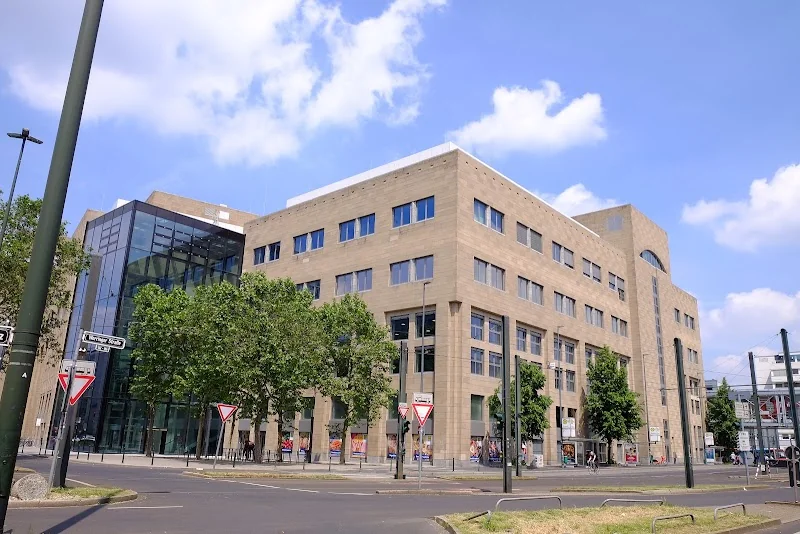
Those searching for FFT Düsseldorf photos often mean more than just a single image: They are looking for the first impression of the house, the atmosphere of the foyer, the impact of the stages, and the special architecture in KAP1. The FFT is located in a former post office building directly at the main train station, which has been converted into a cultural center. The new location offers a bright, city-facing foyer with impressive room height and clear, modern visitor pathways. These qualities make the house visually memorable. Photos of the FFT often show not only a stage but also a place where the audience, bar, meeting areas, and sightlines to the city overlap. The foyer is designed as a lounge and bar area and shapes the character of the house at least as strongly as the stages themselves. ([fft-duesseldorf.de](https://www.fft-duesseldorf.de/about-us/))
Architecturally, the FFT is also interesting because it does not function like a closed theater box but like an open house in urban space. Access through the glass entrance hall, the location in KAP1, and the direct proximity to the central library and the train station create a very urban theater experience. This fits the profile of the house, which is used not only for evening performances but also for meetings, mediation, workshops, and open formats. Therefore, those searching for photos of FFT Düsseldorf usually want to see how the free theater integrates into a modern, heavily frequented urban setting. The answer is a place that consciously uses light, transparency, and public space, signaling from the reception area that art is not shielded but made accessible. ([fft-duesseldorf.de](https://www.fft-duesseldorf.de/spielplan/kultur-fruehstueck))
Directions, Public Transport, and Parking at FFT Düsseldorf
The directions to FFT Düsseldorf are very clearly organized because the house is located directly at the main train station. Those arriving by train get off at Düsseldorf main station and head towards Konrad-Adenauer-Platz or KAP1. According to the house, the building is situated between the Worringer Platz stop and the main station; almost all Düsseldorf U-Bahn and S-Bahn lines as well as many regional trains from North Rhine-Westphalia lead there. This makes the FFT particularly attractive for visitors who want to arrive without a car. In front of KAP1, there are also sufficient bike racks, and additionally, bicycles can be parked under cover at the entrance to the parking garage. For urban everyday life, this is a very practical advantage, as the location remains easily accessible by public transport, bike, and on foot. ([fft-duesseldorf.de](https://www.fft-duesseldorf.de/kontakt/))
When it comes to parking, it is important to know the specifics of the building: The parking deck is located directly at KAP1, but not at the address of the FFT itself. The entrance is located at the back on Karlstraße 127-135. Those parking there do not reach the theater directly but must first leave the parking deck, use the elevator, and then switch through the glass entrance hall to the correct part of the building. This may sound complicated at first glance, but it is organized on-site with the described pathways and elevators. The FFT also points out that there are no own parking spaces and that parking options in the vicinity are subject to fees. For visitors with clear travel plans, arriving by train or S-Bahn is usually the most convenient solution. Those who do come by car should read the route to the parking garage in advance and allow some extra time so that the theater visit can start relaxed. ([fft-duesseldorf.de](https://www.fft-duesseldorf.de/kontakt/))
Stage I, Stage II, and Foyer: Room Plan and Capacity
The technical and spatial structure of FFT Düsseldorf is one of its strongest arguments. According to technical specifications, Stage I is the largest performance space in the house. It offers a maximum of 167 seats plus 2 wheelchair spaces, as well as 65 seats in the balcony or up to 380 standing places when the audience tribune is retracted. Stage II is significantly more intimate but also versatile: It has 58 seats plus 2 wheelchair spaces or up to 158 standing places. The foyer is not just a waiting area but an additional space with 142 seats plus 4 wheelchair spaces or up to 320 standing places. These numbers show that the FFT is not just a theater with one stage but a flexible production house with several usable room types. ([fft-duesseldorf.de](https://www.fft-duesseldorf.de/files/Feste_Ausstattung_FFT.pdf))
This flexibility is complemented by the overall logic of the house: On around 1,800 square meters, KAP1 has created a common space where performance areas, foyer, rehearsal room, and seminar area come together under one roof for the first time. This was an important step at the opening in 2021 because the FFT thus gained significantly more internal possibilities than it had at its previous location. For event visitors, this means above all varied spatial effects: Sometimes you sit close to a compact stage action, sometimes you experience a larger, more instrumented production, and sometimes the action shifts into the foyer, making the audience part of the situation. Additionally, there is a modern technical infrastructure with digitally networked audio, lighting, and video technology that supports both classic stage evenings as well as hybrid or experimental formats. Therefore, those searching for room plans, seating plans, or capacity will find here not only numbers but an architecture that is consistently designed for changeability. ([fft-duesseldorf.de](https://www.fft-duesseldorf.de/journal/fft-neu-im-kap1?utm_source=openai))
Tickets, Box Office, and Discounts
The ticket question is consciously organized at FFT Düsseldorf to be low-threshold. Tickets are available in the online ticket shop and at the box office in the house. This is helpful for spontaneous theater visits as well as for planned evening appointments. Particularly important: Reserved tickets are only held at the box office until 30 minutes before the performance begins; if they are not picked up by then, they go back on sale. Different rules apply for concerts, as these cannot be reserved according to the house and must be purchased in advance. Therefore, those specifically searching for FFT Düsseldorf tickets should distinguish between the different types of events, as the house does not treat every form of appointment the same. ([fft-duesseldorf.de](https://www.fft-duesseldorf.de/tickets/?lang=en))
Additionally, there are discounts that the house offers for students, trainees, social assistance recipients, retirees, and people with disabilities. Groups, families, and holders of the Düssel-Pass and Artcard-Plus can also receive additional discounts upon request. This fits well with the profile of a free theater that aims to appeal to as broad an audience as possible. Also practical for the visit is the bar at the FFT: It opens an hour before the performance begins and remains open after the performance. This creates a buffer before and after the actual program, where one can arrive, stay, or engage in conversation. Especially during free theater evenings, which often aim to generate not only entertainment but also exchange, discussion, or afterthought, this is an important part of the overall experience. For planning, this means: Those who think about tickets, box office, discounts, and bar together plan their visit to the FFT much more relaxed. ([fft-duesseldorf.de](https://www.fft-duesseldorf.de/tickets/?lang=en))
History, Profile, and Artistic Ambition
FFT Düsseldorf has a long development behind it, closely linked to the free scene of the city. According to the official representation, the house has existed since 1999; since 2004, it has been under the artistic direction of Kathrin Tiedemann. It sees itself as an international production house for free performing arts and collaborates in networks with production sites, theaters, universities, schools, and other partners both regionally and internationally. This network idea continues to shape the profile of the FFT today: not just to show, but to produce, develop, mediate, and connect with other actors. Working with young people and an advanced program for young audiences has also been part of the house's self-understanding from the beginning. In 2015, the FFT was awarded the Federal Theater Prize for this, underscoring the supra-regional significance of the house. ([fft-duesseldorf.de](https://www.fft-duesseldorf.de/ueber-uns/?utm_source=openai))
The move to KAP1 did not mark a break but a development. In summer 2021, the FFT moved into the former main post location at Düsseldorf main station; on the new premises, stages, foyer, and other rooms are united under one roof for the first time. The opening in KAP1 not only stood for new architecture but also for a thematic opening: The house used the change to readdress questions about the future of theater in a globalized and digitized urban society. Additionally, it is integrated into the alliance of international production houses and is closely supported by the city of Düsseldorf and the state of North Rhine-Westphalia. Therefore, those who view the FFT only as a performance venue are missing the point. It is also a production site, a space for discourse, a testing ground, and a place of cultural public life, positioned in Düsseldorf not on the periphery but right in the midst of urban everyday life. ([fft-duesseldorf.de](https://www.fft-duesseldorf.de/about-us/))
Accessibility, Visitor Service, and Practical Comfort
FFT Düsseldorf visibly values barrier-free access. The official Accessibility page describes the foyer, the two stages, and the restrooms as barrier-free; there is also a wheelchair-accessible restroom. Access is via the elevators in KAP1, and the floors are marked with Braille and tactile writing. This makes the pathway clear and understandable for people with mobility impairments. Wheelchair spaces can be reserved in advance through the ticket service, and assistance dogs are welcome with prior registration. The house also recommends directly addressing the staff on-site for questions or needs. This combination of architectural accessibility and personal support is particularly valuable for event venues because it not only meets formal requirements but also considers real visitor situations. ([fft-duesseldorf.de](https://www.fft-duesseldorf.de/accessibility/))
Practical orientation also includes comfort around the visit. The address is clearly communicated, the journey by train is easy, and the building is easily identifiable due to its proximity to the main train station. Those coming from there follow the pathway towards Konrad-Adenauer-Platz, cross the tracks, and reach the entrance of KAP1. Inside the house, an orientation system guides visitors to the elevators and the theater area. For many guests, this mix of good accessibility, clear house logic, and open reception is crucial to whether a venue is perceived as pleasant. The FFT meets many practical requirements at once: central location, barrier-free pathways, understandable signage, flexible support, and a foyer that is not just a transition but a place to stay. This makes the visit not only organizationally easier but also content-wise more open and relaxed. ([fft-duesseldorf.de](https://www.fft-duesseldorf.de/kontakt/))
Sources:
- FFT Düsseldorf - About Us ([fft-duesseldorf.de](https://www.fft-duesseldorf.de/ueber-uns/?utm_source=openai))
- FFT Düsseldorf - Contact + Directions ([fft-duesseldorf.de](https://www.fft-duesseldorf.de/kontakt/))
- FFT Düsseldorf - Tickets ([fft-duesseldorf.de](https://www.fft-duesseldorf.de/tickets/?lang=en))
- FFT Düsseldorf - Technical Data ([fft-duesseldorf.de](https://www.fft-duesseldorf.de/technical-data/))
- FFT Düsseldorf - Accessibility ([fft-duesseldorf.de](https://www.fft-duesseldorf.de/accessibility/))
- FFT Düsseldorf - Schedule ([fft-duesseldorf.de](https://www.fft-duesseldorf.de/spielplan/))
Show moreShow less
FFT Düsseldorf | Schedule & Tickets
The FFT Düsseldorf, officially Forum Freies Theater e.V., is one of the most prominent venues for free performing arts in the state capital. Those looking for the schedule, tickets, directions, parking, or photos will find here a place that not only presents theater but understands it as an open space for thought and encounter. Since 1999, the FFT has shaped the Düsseldorf scene, and since 2004 under the artistic direction of Kathrin Tiedemann. With the move to KAP1 at the main train station, the venue has arrived in an environment that combines visibility, accessibility, and urban presence. The result is a production house with clear visitor information, flexible stages, barrier-free access, and a program aimed at different age groups, interests, and experiences. ([fft-duesseldorf.de](https://www.fft-duesseldorf.de/impressum/))
Schedule and Program at FFT Düsseldorf
The schedule is the heart of the FFT and clearly shows how broad the venue is. On the official program page, you will find not only classic theater evenings but also performances, discussions, workshops, lecture performances, rave formats, youth clubs, and participatory offerings. This mix makes the FFT a place where free art is not reduced to a single genre. In spring 2026, the range in the schedule will include artistic lectures, workshops, discussion formats, stage productions, and offerings in the foyer. The house does not curate a narrow repertoire but an open field of artistic research, social issues, and direct encounters with the audience and scene. Therefore, those searching for the term schedule FFT Düsseldorf are often actually looking for an overview of a very multifaceted cultural offering. ([fft-duesseldorf.de](https://www.fft-duesseldorf.de/spielplan/))
Particularly interesting are the formats that shape the FFT beyond the classic performance. The cultural breakfast, for example, shows how the house understands its foyer as a social space: Once a month, an audience meets there who wants to look behind the scenes of free theater, engages in conversation with artists over coffee and pastries, and simultaneously gains insights into new pieces. Additionally, there are series like Young FFT, participatory offerings, discussions, and thematic focuses that repeatedly connect with current social questions. The schedule is thus not just a calendar but a programmatic statement: FFT Düsseldorf focuses on exchange, artistic openness, and the idea that theater can be a place for debate, research, and shared experiences. For those searching for program, program 2026, or current events, this polyphony is the real added value. ([fft-duesseldorf.de](https://www.fft-duesseldorf.de/spielplan/kultur-fruehstueck))
Photos, Foyer, and Architecture in KAP1
Those searching for FFT Düsseldorf photos often mean more than just a single image: They are looking for the first impression of the house, the atmosphere of the foyer, the impact of the stages, and the special architecture in KAP1. The FFT is located in a former post office building directly at the main train station, which has been converted into a cultural center. The new location offers a bright, city-facing foyer with impressive room height and clear, modern visitor pathways. These qualities make the house visually memorable. Photos of the FFT often show not only a stage but also a place where the audience, bar, meeting areas, and sightlines to the city overlap. The foyer is designed as a lounge and bar area and shapes the character of the house at least as strongly as the stages themselves. ([fft-duesseldorf.de](https://www.fft-duesseldorf.de/about-us/))
Architecturally, the FFT is also interesting because it does not function like a closed theater box but like an open house in urban space. Access through the glass entrance hall, the location in KAP1, and the direct proximity to the central library and the train station create a very urban theater experience. This fits the profile of the house, which is used not only for evening performances but also for meetings, mediation, workshops, and open formats. Therefore, those searching for photos of FFT Düsseldorf usually want to see how the free theater integrates into a modern, heavily frequented urban setting. The answer is a place that consciously uses light, transparency, and public space, signaling from the reception area that art is not shielded but made accessible. ([fft-duesseldorf.de](https://www.fft-duesseldorf.de/spielplan/kultur-fruehstueck))
Directions, Public Transport, and Parking at FFT Düsseldorf
The directions to FFT Düsseldorf are very clearly organized because the house is located directly at the main train station. Those arriving by train get off at Düsseldorf main station and head towards Konrad-Adenauer-Platz or KAP1. According to the house, the building is situated between the Worringer Platz stop and the main station; almost all Düsseldorf U-Bahn and S-Bahn lines as well as many regional trains from North Rhine-Westphalia lead there. This makes the FFT particularly attractive for visitors who want to arrive without a car. In front of KAP1, there are also sufficient bike racks, and additionally, bicycles can be parked under cover at the entrance to the parking garage. For urban everyday life, this is a very practical advantage, as the location remains easily accessible by public transport, bike, and on foot. ([fft-duesseldorf.de](https://www.fft-duesseldorf.de/kontakt/))
When it comes to parking, it is important to know the specifics of the building: The parking deck is located directly at KAP1, but not at the address of the FFT itself. The entrance is located at the back on Karlstraße 127-135. Those parking there do not reach the theater directly but must first leave the parking deck, use the elevator, and then switch through the glass entrance hall to the correct part of the building. This may sound complicated at first glance, but it is organized on-site with the described pathways and elevators. The FFT also points out that there are no own parking spaces and that parking options in the vicinity are subject to fees. For visitors with clear travel plans, arriving by train or S-Bahn is usually the most convenient solution. Those who do come by car should read the route to the parking garage in advance and allow some extra time so that the theater visit can start relaxed. ([fft-duesseldorf.de](https://www.fft-duesseldorf.de/kontakt/))
Stage I, Stage II, and Foyer: Room Plan and Capacity
The technical and spatial structure of FFT Düsseldorf is one of its strongest arguments. According to technical specifications, Stage I is the largest performance space in the house. It offers a maximum of 167 seats plus 2 wheelchair spaces, as well as 65 seats in the balcony or up to 380 standing places when the audience tribune is retracted. Stage II is significantly more intimate but also versatile: It has 58 seats plus 2 wheelchair spaces or up to 158 standing places. The foyer is not just a waiting area but an additional space with 142 seats plus 4 wheelchair spaces or up to 320 standing places. These numbers show that the FFT is not just a theater with one stage but a flexible production house with several usable room types. ([fft-duesseldorf.de](https://www.fft-duesseldorf.de/files/Feste_Ausstattung_FFT.pdf))
This flexibility is complemented by the overall logic of the house: On around 1,800 square meters, KAP1 has created a common space where performance areas, foyer, rehearsal room, and seminar area come together under one roof for the first time. This was an important step at the opening in 2021 because the FFT thus gained significantly more internal possibilities than it had at its previous location. For event visitors, this means above all varied spatial effects: Sometimes you sit close to a compact stage action, sometimes you experience a larger, more instrumented production, and sometimes the action shifts into the foyer, making the audience part of the situation. Additionally, there is a modern technical infrastructure with digitally networked audio, lighting, and video technology that supports both classic stage evenings as well as hybrid or experimental formats. Therefore, those searching for room plans, seating plans, or capacity will find here not only numbers but an architecture that is consistently designed for changeability. ([fft-duesseldorf.de](https://www.fft-duesseldorf.de/journal/fft-neu-im-kap1?utm_source=openai))
Tickets, Box Office, and Discounts
The ticket question is consciously organized at FFT Düsseldorf to be low-threshold. Tickets are available in the online ticket shop and at the box office in the house. This is helpful for spontaneous theater visits as well as for planned evening appointments. Particularly important: Reserved tickets are only held at the box office until 30 minutes before the performance begins; if they are not picked up by then, they go back on sale. Different rules apply for concerts, as these cannot be reserved according to the house and must be purchased in advance. Therefore, those specifically searching for FFT Düsseldorf tickets should distinguish between the different types of events, as the house does not treat every form of appointment the same. ([fft-duesseldorf.de](https://www.fft-duesseldorf.de/tickets/?lang=en))
Additionally, there are discounts that the house offers for students, trainees, social assistance recipients, retirees, and people with disabilities. Groups, families, and holders of the Düssel-Pass and Artcard-Plus can also receive additional discounts upon request. This fits well with the profile of a free theater that aims to appeal to as broad an audience as possible. Also practical for the visit is the bar at the FFT: It opens an hour before the performance begins and remains open after the performance. This creates a buffer before and after the actual program, where one can arrive, stay, or engage in conversation. Especially during free theater evenings, which often aim to generate not only entertainment but also exchange, discussion, or afterthought, this is an important part of the overall experience. For planning, this means: Those who think about tickets, box office, discounts, and bar together plan their visit to the FFT much more relaxed. ([fft-duesseldorf.de](https://www.fft-duesseldorf.de/tickets/?lang=en))
History, Profile, and Artistic Ambition
FFT Düsseldorf has a long development behind it, closely linked to the free scene of the city. According to the official representation, the house has existed since 1999; since 2004, it has been under the artistic direction of Kathrin Tiedemann. It sees itself as an international production house for free performing arts and collaborates in networks with production sites, theaters, universities, schools, and other partners both regionally and internationally. This network idea continues to shape the profile of the FFT today: not just to show, but to produce, develop, mediate, and connect with other actors. Working with young people and an advanced program for young audiences has also been part of the house's self-understanding from the beginning. In 2015, the FFT was awarded the Federal Theater Prize for this, underscoring the supra-regional significance of the house. ([fft-duesseldorf.de](https://www.fft-duesseldorf.de/ueber-uns/?utm_source=openai))
The move to KAP1 did not mark a break but a development. In summer 2021, the FFT moved into the former main post location at Düsseldorf main station; on the new premises, stages, foyer, and other rooms are united under one roof for the first time. The opening in KAP1 not only stood for new architecture but also for a thematic opening: The house used the change to readdress questions about the future of theater in a globalized and digitized urban society. Additionally, it is integrated into the alliance of international production houses and is closely supported by the city of Düsseldorf and the state of North Rhine-Westphalia. Therefore, those who view the FFT only as a performance venue are missing the point. It is also a production site, a space for discourse, a testing ground, and a place of cultural public life, positioned in Düsseldorf not on the periphery but right in the midst of urban everyday life. ([fft-duesseldorf.de](https://www.fft-duesseldorf.de/about-us/))
Accessibility, Visitor Service, and Practical Comfort
FFT Düsseldorf visibly values barrier-free access. The official Accessibility page describes the foyer, the two stages, and the restrooms as barrier-free; there is also a wheelchair-accessible restroom. Access is via the elevators in KAP1, and the floors are marked with Braille and tactile writing. This makes the pathway clear and understandable for people with mobility impairments. Wheelchair spaces can be reserved in advance through the ticket service, and assistance dogs are welcome with prior registration. The house also recommends directly addressing the staff on-site for questions or needs. This combination of architectural accessibility and personal support is particularly valuable for event venues because it not only meets formal requirements but also considers real visitor situations. ([fft-duesseldorf.de](https://www.fft-duesseldorf.de/accessibility/))
Practical orientation also includes comfort around the visit. The address is clearly communicated, the journey by train is easy, and the building is easily identifiable due to its proximity to the main train station. Those coming from there follow the pathway towards Konrad-Adenauer-Platz, cross the tracks, and reach the entrance of KAP1. Inside the house, an orientation system guides visitors to the elevators and the theater area. For many guests, this mix of good accessibility, clear house logic, and open reception is crucial to whether a venue is perceived as pleasant. The FFT meets many practical requirements at once: central location, barrier-free pathways, understandable signage, flexible support, and a foyer that is not just a transition but a place to stay. This makes the visit not only organizationally easier but also content-wise more open and relaxed. ([fft-duesseldorf.de](https://www.fft-duesseldorf.de/kontakt/))
Sources:
- FFT Düsseldorf - About Us ([fft-duesseldorf.de](https://www.fft-duesseldorf.de/ueber-uns/?utm_source=openai))
- FFT Düsseldorf - Contact + Directions ([fft-duesseldorf.de](https://www.fft-duesseldorf.de/kontakt/))
- FFT Düsseldorf - Tickets ([fft-duesseldorf.de](https://www.fft-duesseldorf.de/tickets/?lang=en))
- FFT Düsseldorf - Technical Data ([fft-duesseldorf.de](https://www.fft-duesseldorf.de/technical-data/))
- FFT Düsseldorf - Accessibility ([fft-duesseldorf.de](https://www.fft-duesseldorf.de/accessibility/))
- FFT Düsseldorf - Schedule ([fft-duesseldorf.de](https://www.fft-duesseldorf.de/spielplan/))
FFT Düsseldorf | Schedule & Tickets
The FFT Düsseldorf, officially Forum Freies Theater e.V., is one of the most prominent venues for free performing arts in the state capital. Those looking for the schedule, tickets, directions, parking, or photos will find here a place that not only presents theater but understands it as an open space for thought and encounter. Since 1999, the FFT has shaped the Düsseldorf scene, and since 2004 under the artistic direction of Kathrin Tiedemann. With the move to KAP1 at the main train station, the venue has arrived in an environment that combines visibility, accessibility, and urban presence. The result is a production house with clear visitor information, flexible stages, barrier-free access, and a program aimed at different age groups, interests, and experiences. ([fft-duesseldorf.de](https://www.fft-duesseldorf.de/impressum/))
Schedule and Program at FFT Düsseldorf
The schedule is the heart of the FFT and clearly shows how broad the venue is. On the official program page, you will find not only classic theater evenings but also performances, discussions, workshops, lecture performances, rave formats, youth clubs, and participatory offerings. This mix makes the FFT a place where free art is not reduced to a single genre. In spring 2026, the range in the schedule will include artistic lectures, workshops, discussion formats, stage productions, and offerings in the foyer. The house does not curate a narrow repertoire but an open field of artistic research, social issues, and direct encounters with the audience and scene. Therefore, those searching for the term schedule FFT Düsseldorf are often actually looking for an overview of a very multifaceted cultural offering. ([fft-duesseldorf.de](https://www.fft-duesseldorf.de/spielplan/))
Particularly interesting are the formats that shape the FFT beyond the classic performance. The cultural breakfast, for example, shows how the house understands its foyer as a social space: Once a month, an audience meets there who wants to look behind the scenes of free theater, engages in conversation with artists over coffee and pastries, and simultaneously gains insights into new pieces. Additionally, there are series like Young FFT, participatory offerings, discussions, and thematic focuses that repeatedly connect with current social questions. The schedule is thus not just a calendar but a programmatic statement: FFT Düsseldorf focuses on exchange, artistic openness, and the idea that theater can be a place for debate, research, and shared experiences. For those searching for program, program 2026, or current events, this polyphony is the real added value. ([fft-duesseldorf.de](https://www.fft-duesseldorf.de/spielplan/kultur-fruehstueck))
Photos, Foyer, and Architecture in KAP1
Those searching for FFT Düsseldorf photos often mean more than just a single image: They are looking for the first impression of the house, the atmosphere of the foyer, the impact of the stages, and the special architecture in KAP1. The FFT is located in a former post office building directly at the main train station, which has been converted into a cultural center. The new location offers a bright, city-facing foyer with impressive room height and clear, modern visitor pathways. These qualities make the house visually memorable. Photos of the FFT often show not only a stage but also a place where the audience, bar, meeting areas, and sightlines to the city overlap. The foyer is designed as a lounge and bar area and shapes the character of the house at least as strongly as the stages themselves. ([fft-duesseldorf.de](https://www.fft-duesseldorf.de/about-us/))
Architecturally, the FFT is also interesting because it does not function like a closed theater box but like an open house in urban space. Access through the glass entrance hall, the location in KAP1, and the direct proximity to the central library and the train station create a very urban theater experience. This fits the profile of the house, which is used not only for evening performances but also for meetings, mediation, workshops, and open formats. Therefore, those searching for photos of FFT Düsseldorf usually want to see how the free theater integrates into a modern, heavily frequented urban setting. The answer is a place that consciously uses light, transparency, and public space, signaling from the reception area that art is not shielded but made accessible. ([fft-duesseldorf.de](https://www.fft-duesseldorf.de/spielplan/kultur-fruehstueck))
Directions, Public Transport, and Parking at FFT Düsseldorf
The directions to FFT Düsseldorf are very clearly organized because the house is located directly at the main train station. Those arriving by train get off at Düsseldorf main station and head towards Konrad-Adenauer-Platz or KAP1. According to the house, the building is situated between the Worringer Platz stop and the main station; almost all Düsseldorf U-Bahn and S-Bahn lines as well as many regional trains from North Rhine-Westphalia lead there. This makes the FFT particularly attractive for visitors who want to arrive without a car. In front of KAP1, there are also sufficient bike racks, and additionally, bicycles can be parked under cover at the entrance to the parking garage. For urban everyday life, this is a very practical advantage, as the location remains easily accessible by public transport, bike, and on foot. ([fft-duesseldorf.de](https://www.fft-duesseldorf.de/kontakt/))
When it comes to parking, it is important to know the specifics of the building: The parking deck is located directly at KAP1, but not at the address of the FFT itself. The entrance is located at the back on Karlstraße 127-135. Those parking there do not reach the theater directly but must first leave the parking deck, use the elevator, and then switch through the glass entrance hall to the correct part of the building. This may sound complicated at first glance, but it is organized on-site with the described pathways and elevators. The FFT also points out that there are no own parking spaces and that parking options in the vicinity are subject to fees. For visitors with clear travel plans, arriving by train or S-Bahn is usually the most convenient solution. Those who do come by car should read the route to the parking garage in advance and allow some extra time so that the theater visit can start relaxed. ([fft-duesseldorf.de](https://www.fft-duesseldorf.de/kontakt/))
Stage I, Stage II, and Foyer: Room Plan and Capacity
The technical and spatial structure of FFT Düsseldorf is one of its strongest arguments. According to technical specifications, Stage I is the largest performance space in the house. It offers a maximum of 167 seats plus 2 wheelchair spaces, as well as 65 seats in the balcony or up to 380 standing places when the audience tribune is retracted. Stage II is significantly more intimate but also versatile: It has 58 seats plus 2 wheelchair spaces or up to 158 standing places. The foyer is not just a waiting area but an additional space with 142 seats plus 4 wheelchair spaces or up to 320 standing places. These numbers show that the FFT is not just a theater with one stage but a flexible production house with several usable room types. ([fft-duesseldorf.de](https://www.fft-duesseldorf.de/files/Feste_Ausstattung_FFT.pdf))
This flexibility is complemented by the overall logic of the house: On around 1,800 square meters, KAP1 has created a common space where performance areas, foyer, rehearsal room, and seminar area come together under one roof for the first time. This was an important step at the opening in 2021 because the FFT thus gained significantly more internal possibilities than it had at its previous location. For event visitors, this means above all varied spatial effects: Sometimes you sit close to a compact stage action, sometimes you experience a larger, more instrumented production, and sometimes the action shifts into the foyer, making the audience part of the situation. Additionally, there is a modern technical infrastructure with digitally networked audio, lighting, and video technology that supports both classic stage evenings as well as hybrid or experimental formats. Therefore, those searching for room plans, seating plans, or capacity will find here not only numbers but an architecture that is consistently designed for changeability. ([fft-duesseldorf.de](https://www.fft-duesseldorf.de/journal/fft-neu-im-kap1?utm_source=openai))
Tickets, Box Office, and Discounts
The ticket question is consciously organized at FFT Düsseldorf to be low-threshold. Tickets are available in the online ticket shop and at the box office in the house. This is helpful for spontaneous theater visits as well as for planned evening appointments. Particularly important: Reserved tickets are only held at the box office until 30 minutes before the performance begins; if they are not picked up by then, they go back on sale. Different rules apply for concerts, as these cannot be reserved according to the house and must be purchased in advance. Therefore, those specifically searching for FFT Düsseldorf tickets should distinguish between the different types of events, as the house does not treat every form of appointment the same. ([fft-duesseldorf.de](https://www.fft-duesseldorf.de/tickets/?lang=en))
Additionally, there are discounts that the house offers for students, trainees, social assistance recipients, retirees, and people with disabilities. Groups, families, and holders of the Düssel-Pass and Artcard-Plus can also receive additional discounts upon request. This fits well with the profile of a free theater that aims to appeal to as broad an audience as possible. Also practical for the visit is the bar at the FFT: It opens an hour before the performance begins and remains open after the performance. This creates a buffer before and after the actual program, where one can arrive, stay, or engage in conversation. Especially during free theater evenings, which often aim to generate not only entertainment but also exchange, discussion, or afterthought, this is an important part of the overall experience. For planning, this means: Those who think about tickets, box office, discounts, and bar together plan their visit to the FFT much more relaxed. ([fft-duesseldorf.de](https://www.fft-duesseldorf.de/tickets/?lang=en))
History, Profile, and Artistic Ambition
FFT Düsseldorf has a long development behind it, closely linked to the free scene of the city. According to the official representation, the house has existed since 1999; since 2004, it has been under the artistic direction of Kathrin Tiedemann. It sees itself as an international production house for free performing arts and collaborates in networks with production sites, theaters, universities, schools, and other partners both regionally and internationally. This network idea continues to shape the profile of the FFT today: not just to show, but to produce, develop, mediate, and connect with other actors. Working with young people and an advanced program for young audiences has also been part of the house's self-understanding from the beginning. In 2015, the FFT was awarded the Federal Theater Prize for this, underscoring the supra-regional significance of the house. ([fft-duesseldorf.de](https://www.fft-duesseldorf.de/ueber-uns/?utm_source=openai))
The move to KAP1 did not mark a break but a development. In summer 2021, the FFT moved into the former main post location at Düsseldorf main station; on the new premises, stages, foyer, and other rooms are united under one roof for the first time. The opening in KAP1 not only stood for new architecture but also for a thematic opening: The house used the change to readdress questions about the future of theater in a globalized and digitized urban society. Additionally, it is integrated into the alliance of international production houses and is closely supported by the city of Düsseldorf and the state of North Rhine-Westphalia. Therefore, those who view the FFT only as a performance venue are missing the point. It is also a production site, a space for discourse, a testing ground, and a place of cultural public life, positioned in Düsseldorf not on the periphery but right in the midst of urban everyday life. ([fft-duesseldorf.de](https://www.fft-duesseldorf.de/about-us/))
Accessibility, Visitor Service, and Practical Comfort
FFT Düsseldorf visibly values barrier-free access. The official Accessibility page describes the foyer, the two stages, and the restrooms as barrier-free; there is also a wheelchair-accessible restroom. Access is via the elevators in KAP1, and the floors are marked with Braille and tactile writing. This makes the pathway clear and understandable for people with mobility impairments. Wheelchair spaces can be reserved in advance through the ticket service, and assistance dogs are welcome with prior registration. The house also recommends directly addressing the staff on-site for questions or needs. This combination of architectural accessibility and personal support is particularly valuable for event venues because it not only meets formal requirements but also considers real visitor situations. ([fft-duesseldorf.de](https://www.fft-duesseldorf.de/accessibility/))
Practical orientation also includes comfort around the visit. The address is clearly communicated, the journey by train is easy, and the building is easily identifiable due to its proximity to the main train station. Those coming from there follow the pathway towards Konrad-Adenauer-Platz, cross the tracks, and reach the entrance of KAP1. Inside the house, an orientation system guides visitors to the elevators and the theater area. For many guests, this mix of good accessibility, clear house logic, and open reception is crucial to whether a venue is perceived as pleasant. The FFT meets many practical requirements at once: central location, barrier-free pathways, understandable signage, flexible support, and a foyer that is not just a transition but a place to stay. This makes the visit not only organizationally easier but also content-wise more open and relaxed. ([fft-duesseldorf.de](https://www.fft-duesseldorf.de/kontakt/))
Sources:
- FFT Düsseldorf - About Us ([fft-duesseldorf.de](https://www.fft-duesseldorf.de/ueber-uns/?utm_source=openai))
- FFT Düsseldorf - Contact + Directions ([fft-duesseldorf.de](https://www.fft-duesseldorf.de/kontakt/))
- FFT Düsseldorf - Tickets ([fft-duesseldorf.de](https://www.fft-duesseldorf.de/tickets/?lang=en))
- FFT Düsseldorf - Technical Data ([fft-duesseldorf.de](https://www.fft-duesseldorf.de/technical-data/))
- FFT Düsseldorf - Accessibility ([fft-duesseldorf.de](https://www.fft-duesseldorf.de/accessibility/))
- FFT Düsseldorf - Schedule ([fft-duesseldorf.de](https://www.fft-duesseldorf.de/spielplan/))
Upcoming Events
No events found
Frequently Asked Questions
Reviews
Mandana BG
10. February 2019
Nice venue for not so big performances. Very central.
Sander Loonen
6. September 2018
Small performing arts auditorium with great dedicated crew.
nabil said
1. February 2019
Staff are super unfriendly.
Lutz Peller
18. March 2023
Super Location.
Gabriella John
18. February 2026
Very community-oriented, suitable for all age groups, diverse program. Super nice staff, great performers. Excellent bar with delicious drinks at affordable prices. Very friendly and helpful. I also think it's great that there are lockers at the cloakroom in case of emergencies. I don't need it, but there are also concerned people. Looking forward to the next visit at the theater breakfast with the actors!