
Bilker Straße 7 im Palais Wittgenstein, Düsseldorf
Bilker Straße 7 im Palais Wittgenstein, 40213 Düsseldorf, Germany
Düsseldorf Puppet Theater | Schedule & Tickets
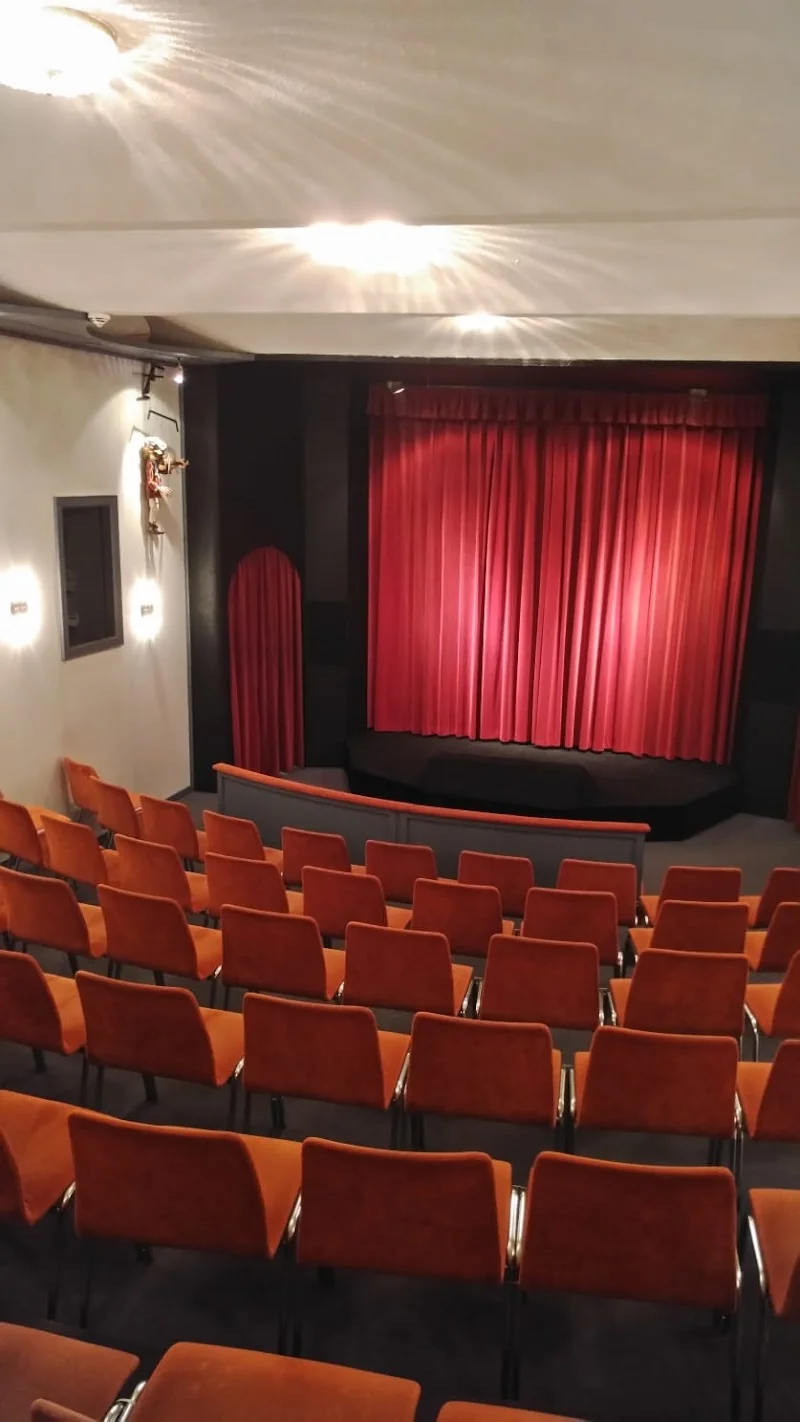
The Düsseldorf Puppet Theater is one of the special cultural addresses in the city, as it is not just a small theater, but a firmly established house with its own signature, its own workshop tradition, and a very clear artistic profile. It is located in the Palais Wittgenstein at Bilker Straße 7 in Carlstadt, right at the southern edge of Düsseldorf's old town and in close proximity to Carlsplatz. The hall accommodates nearly 100 people, giving each performance a very personal, almost intimate atmosphere. The program is primarily aimed at adults and older children and includes fables, fairy tales, dramas, as well as classical and modern music theater. Thus, the house is not just a children's theater, but a stage for demanding, imaginative, and often surprisingly multifaceted productions. This mix of fine craftsmanship, emotional closeness, and cultural tradition makes the theater a place that one does not just visit, but experiences. ([visitduesseldorf.de](https://www.visitduesseldorf.de/en/art-culture/opera-tonhalle-theatre-and-more/duesseldorfer-marionetten-theater/?utm_source=openai))
Schedule, Tickets, and Reservations
Those looking for the current schedule of the Düsseldorf Puppet Theater will find the most important dates and productions clearly bundled on the official site. For the season from March 2026 to July 2026, titles such as Jim Button and Luke the Engine Driver, Night of the Arts at the Puppet Theater, The Abduction from the Seraglio, and Jim Button and the Wild 13 are announced. This clearly shows how strongly the house relies on literary material, music theater, and family-friendly narrative worlds. Especially for visitors who specifically search for the term schedule, this mix of fixed repertoire pieces and special dates is important. The theater publishes its performances in clear blocks and supplements them with current information, making a visit easy to plan. The performance times themselves are also relevant for the search intent: According to official information, regular performances take place on Saturdays at 3:00 PM and Wednesdays to Saturdays at 8:00 PM. Anyone with a specific performance wish should not wait until the last minute, as the theater recommends reservations, especially for weekend dates and groups. ([marionettentheater-duesseldorf.de](https://www.marionettentheater-duesseldorf.de/webseite/spielplan.php?utm_source=openai))
The ticket question is also clearly regulated: Admission tickets can be purchased directly at the theater office at Bilker Straße 7; reservations are also possible by phone or through the ticket form. The box office and advance sales are open from Tuesday to Saturday between 1:00 PM and 6:00 PM, plus one hour before the performance begins. The price structure is transparent and distinguishes between categories A, B, and C, as well as between adults, reduced tickets, and children. For adults, prices currently range from 21 to 32 euros depending on the day of the week and category, reduced tickets range from 20 to 27 euros, and children up to the age of 16 pay 13 euros. On Wednesdays and Thursdays, the student day applies, where reduced admission tickets are available at children's prices. This information is particularly useful for anyone looking for tickets to the Düsseldorf Puppet Theater and needing a quick price overview. So, whether coming with family, friends, or as a culture fan, one can plan the visit very specifically and should reserve early for popular dates. ([marionettentheater-duesseldorf.de](https://www.marionettentheater-duesseldorf.de/webseite/kontakt.php?utm_source=openai))
Directions and Parking on Bilker Straße
When approaching the Düsseldorf Puppet Theater, the location is one of the great advantages of the house. It is located in the Palais Wittgenstein at Bilker Straße 7 at the southern edge of the old town, just a few steps from Carlsplatz. This is convenient for guests who want to combine their theater visit with a stroll through Carlstadt or the old town. For drivers, it is especially important that the nearest parking garage is located at Carlsplatz on Benrather Straße. Thus, the theater is not only central but also well integrated into the existing traffic and parking system for a city center visit. Especially with a location that has only about 100 seats, the surroundings are almost as relevant as the hall itself, as the paths from the parking garage or from the stop are short and easy to follow. Therefore, those looking for directions and parking will not find a complicated peripheral location here, but a very well-described city center address with clear orientation points. The proximity to the weekly market and the old town also ensures that the visit begins with urban flair even before the performance starts. ([marionettentheater-duesseldorf.de](https://www.marionettentheater-duesseldorf.de/webseite/anfahrt.php?utm_source=openai))
The theater is also easily accessible by public transport. The official directions mention the subway station Benrather Straße as the nearest access point. From the main train station, one can also reach the stations Königsallee/Steinstraße or Heinrich-Heine-Allee by subway; additionally, the tram stops Graf-Adolf-Platz, Poststraße, and Königsallee/Steinstraße are nearby. This is particularly convenient for visitors from Düsseldorf, from the region, and for guests without a car. Those planning to walk from the city center benefit from the compact location in Carlstadt and the short distances between the train stop, parking garage, and theater foyer. For SEO searches regarding directions, parking, or public transport connections, this clear combination is crucial: central location, named stops, and a specific parking garage in the immediate vicinity. This makes the visit well-preparable and accessible, even though it is an artistic and tradition-rich stage. ([marionettentheater-duesseldorf.de](https://www.marionettentheater-duesseldorf.de/webseite/anfahrt.php?utm_source=openai))
Seating Plan, Seats, and Visitor Experience
The seating plan at the Düsseldorf Puppet Theater is not only an organizational tool but part of the visitor experience. The official ticket page refers to a seating plan as a PDF for printing, which shows that the choice of seats is consciously supported. Since the hall offers nearly 100 seats, the spatial effect is very concentrated. One does not sit in an anonymous large space, but in a manageable auditorium where the figures can be experienced up close. This proximity is one of the reasons why many visitors describe the small setting as so pleasant. The audience sees the puppets not just as a distant stage event, but as finely crafted figures whose movements, gestures, and materials can be perceived in detail. For SEO topics such as seating plan, best seats, and overall seating, it is important: Those who want the clearest view should reserve early and check the seating plan in advance. The theater itself recommends early reservations for weekend performances and group visits, which is particularly sensible given the limited number of seats. ([marionettentheater-duesseldorf.de](https://www.marionettentheater-duesseldorf.de/webseite/tickets.php?utm_source=openai))
The price and seating structure also helps with planning. Categories A, B, and C provide a simple orientation for different seating areas and price points. This makes it easier to select a suitable seat according to budget and desired proximity to the stage. For visitors looking for the best seat or a good sightline, this division is helpful because the hall is small and the distance to the stage is generally low. The theater also recommends early reservations, especially for weekend performances, group visits, and popular productions. This is logical for a house with so few seats: The more intimate the hall, the more important the seat choice. At the same time, this size is what makes it appealing, as the performance remains focused, detailed, and personal. Therefore, anyone planning a visit should not see the seating plan as a minor detail, but as part of the preparation for a very immediate theater experience. The compact architecture not only supports the view of the stage but also the special tension that arises between performers, figures, and the audience. ([marionettentheater-duesseldorf.de](https://www.marionettentheater-duesseldorf.de/webseite/tickets.php?utm_source=openai))
Repertoire, Target Audience, and Special Productions
The repertoire of the Düsseldorf Puppet Theater is one of its strongest SEO and cultural features. It is officially described as diverse and aims to appeal primarily to adults and, depending on the production, older children from about 8 years old with fables, fairy tales, dramas, as well as classical and modern music theater. This is important because many people initially think of puppet theater as purely a children's offering. However, this is different in Düsseldorf: The house sees itself as a demanding stage with literary references and musical depth. This is why there are works that go far beyond a simple family program. Michael Ende's works traditionally play an important role, and the current season shows this particularly clearly. The schedule includes titles such as Jim Button and Luke the Engine Driver, a classic that works as an adventure and friendship story for the stage, as well as Jim Button and the Wild 13. Additionally, there are other titles that showcase the range of the house, such as The Abduction from the Seraglio as a bridge to music theater. For all those searching for programs, Michael Ende, or The Magic Flute, it becomes clear: The theater serves not just one term, but an entire repertoire field between literature, opera material, and poetic fantasy. ([marionettentheater-duesseldorf.de](https://www.marionettentheater-duesseldorf.de/webseite/haus.php?utm_source=openai))
Particularly exciting is the connection between classical material choice and the house's own implementation. The Düsseldorf Puppet Theater works with very carefully crafted figures, elaborate stage designs, and music that is often recorded specifically for the production. This creates an aesthetic impression that clearly differs from conventional spoken theater or children's stages. The official description emphasizes that the figures, props, and backdrops are made by the performing ensemble according to designs by theater director Anton Bachleitner and that the sound comes from a recording, often featuring well-known actors and renowned musicians. For the audience, this means a strong connection of craftsmanship, sound, and image. The performances are thus not just theater but almost small total works of art. Those searching for photos or impressions will therefore primarily find images of a very detailed stage world where technique and poetry intertwine. The current selection of the schedule with Michael Ende's works and music theater shows how consistently the house relies on fairy-tale narrative power, cultural recognizability, and high craftsmanship quality. ([marionettentheater-duesseldorf.de](https://www.marionettentheater-duesseldorf.de/webseite/kulissen.php?utm_source=openai))
History, House, and Workshops
The history of the Düsseldorf Puppet Theater goes back a long way and is central to inquiries about backgrounds, history, and special features. According to the official history page, the Puppet Theater was founded by Emanuel and Franz Zangerle and was based in Düsseldorf in 1956. In 1966, the Rhineland Puppet Theater moved into the premises in Palais Wittgenstein on Bilker Straße. After several family and artistic transitions, Anton Bachleitner took over the artistic direction in 1981 and the management in 1985; in the same year, the theater was renamed Düsseldorf Puppet Theater. This development is important because it explains why the house is so closely associated with a specific artistic profile today. It is not just any venue, but a theater that has grown over decades with a clear identity. Additionally, there is special support from the state capital Düsseldorf and the state of North Rhine-Westphalia, as well as membership in international and national professional associations. Thus, the stage stands not only for local tradition but also for professional recognition in the field of puppet and figure theater. ([marionettentheater-duesseldorf.de](https://www.marionettentheater-duesseldorf.de/webseite/geschichte.php?utm_source=openai))
Equally remarkable is the craftsmanship aspect of the house. The official description of the scenery work shows that the five-member performing ensemble works from three leading bridges in most productions and moves the puppets on strings up to two meters long. Figures, props, and backdrops are made according to designs by Anton Bachleitner, who also performs sculptural work himself. The sound comes from a recording and is often specifically recorded for the theater's requirements with actors and musicians. Additionally, there are guest performances that have already taken the house to many German and European cities as well as to Canada, Japan, Russia, and Indonesia. The technical modernization of recent years is also part of the history: After the Corona lockdown in March 2020, performances were initially suspended, followed by a performance ban due to a lack of ventilation system; in 2021, with donations and support from the city of Düsseldorf, the installation of a new ventilation and air conditioning system and a comprehensive modernization began. All of this shows that the Düsseldorf Puppet Theater is not a nostalgic museum, but a lively stage that connects tradition, tour suitability, craftsmanship, and current infrastructure. Therefore, those searching for reviews, images, or the special atmosphere will find here a house that gains its magic from precision, patience, and artistic continuity. ([marionettentheater-duesseldorf.de](https://www.marionettentheater-duesseldorf.de/webseite/kulissen.php?utm_source=openai))
Sources:
- Düsseldorf Puppet Theater – official homepage and current schedule. ([marionettentheater-duesseldorf.de](https://www.marionettentheater-duesseldorf.de/webseite/spielplan.php?utm_source=openai))
- Düsseldorf Puppet Theater – House, Management, and History. ([marionettentheater-duesseldorf.de](https://www.marionettentheater-duesseldorf.de/webseite/haus.php?utm_source=openai))
- Düsseldorf Puppet Theater – Tickets, Prices, and Seating Plan. ([marionettentheater-duesseldorf.de](https://www.marionettentheater-duesseldorf.de/webseite/tickets.php?utm_source=openai))
- Düsseldorf Puppet Theater – Directions and Parking. ([marionettentheater-duesseldorf.de](https://www.marionettentheater-duesseldorf.de/webseite/anfahrt.php?utm_source=openai))
- Düsseldorf Tourism – Visitor information for the Puppet Theater. ([visitduesseldorf.de](https://www.visitduesseldorf.de/en/art-culture/opera-tonhalle-theatre-and-more/duesseldorfer-marionetten-theater/?utm_source=openai))
- Düsseldorf Puppet Theater – Scenery, Performance Technique, and Guest Performances. ([marionettentheater-duesseldorf.de](https://www.marionettentheater-duesseldorf.de/webseite/kulissen.php?utm_source=openai))
Show moreShow less
Düsseldorf Puppet Theater | Schedule & Tickets
The Düsseldorf Puppet Theater is one of the special cultural addresses in the city, as it is not just a small theater, but a firmly established house with its own signature, its own workshop tradition, and a very clear artistic profile. It is located in the Palais Wittgenstein at Bilker Straße 7 in Carlstadt, right at the southern edge of Düsseldorf's old town and in close proximity to Carlsplatz. The hall accommodates nearly 100 people, giving each performance a very personal, almost intimate atmosphere. The program is primarily aimed at adults and older children and includes fables, fairy tales, dramas, as well as classical and modern music theater. Thus, the house is not just a children's theater, but a stage for demanding, imaginative, and often surprisingly multifaceted productions. This mix of fine craftsmanship, emotional closeness, and cultural tradition makes the theater a place that one does not just visit, but experiences. ([visitduesseldorf.de](https://www.visitduesseldorf.de/en/art-culture/opera-tonhalle-theatre-and-more/duesseldorfer-marionetten-theater/?utm_source=openai))
Schedule, Tickets, and Reservations
Those looking for the current schedule of the Düsseldorf Puppet Theater will find the most important dates and productions clearly bundled on the official site. For the season from March 2026 to July 2026, titles such as Jim Button and Luke the Engine Driver, Night of the Arts at the Puppet Theater, The Abduction from the Seraglio, and Jim Button and the Wild 13 are announced. This clearly shows how strongly the house relies on literary material, music theater, and family-friendly narrative worlds. Especially for visitors who specifically search for the term schedule, this mix of fixed repertoire pieces and special dates is important. The theater publishes its performances in clear blocks and supplements them with current information, making a visit easy to plan. The performance times themselves are also relevant for the search intent: According to official information, regular performances take place on Saturdays at 3:00 PM and Wednesdays to Saturdays at 8:00 PM. Anyone with a specific performance wish should not wait until the last minute, as the theater recommends reservations, especially for weekend dates and groups. ([marionettentheater-duesseldorf.de](https://www.marionettentheater-duesseldorf.de/webseite/spielplan.php?utm_source=openai))
The ticket question is also clearly regulated: Admission tickets can be purchased directly at the theater office at Bilker Straße 7; reservations are also possible by phone or through the ticket form. The box office and advance sales are open from Tuesday to Saturday between 1:00 PM and 6:00 PM, plus one hour before the performance begins. The price structure is transparent and distinguishes between categories A, B, and C, as well as between adults, reduced tickets, and children. For adults, prices currently range from 21 to 32 euros depending on the day of the week and category, reduced tickets range from 20 to 27 euros, and children up to the age of 16 pay 13 euros. On Wednesdays and Thursdays, the student day applies, where reduced admission tickets are available at children's prices. This information is particularly useful for anyone looking for tickets to the Düsseldorf Puppet Theater and needing a quick price overview. So, whether coming with family, friends, or as a culture fan, one can plan the visit very specifically and should reserve early for popular dates. ([marionettentheater-duesseldorf.de](https://www.marionettentheater-duesseldorf.de/webseite/kontakt.php?utm_source=openai))
Directions and Parking on Bilker Straße
When approaching the Düsseldorf Puppet Theater, the location is one of the great advantages of the house. It is located in the Palais Wittgenstein at Bilker Straße 7 at the southern edge of the old town, just a few steps from Carlsplatz. This is convenient for guests who want to combine their theater visit with a stroll through Carlstadt or the old town. For drivers, it is especially important that the nearest parking garage is located at Carlsplatz on Benrather Straße. Thus, the theater is not only central but also well integrated into the existing traffic and parking system for a city center visit. Especially with a location that has only about 100 seats, the surroundings are almost as relevant as the hall itself, as the paths from the parking garage or from the stop are short and easy to follow. Therefore, those looking for directions and parking will not find a complicated peripheral location here, but a very well-described city center address with clear orientation points. The proximity to the weekly market and the old town also ensures that the visit begins with urban flair even before the performance starts. ([marionettentheater-duesseldorf.de](https://www.marionettentheater-duesseldorf.de/webseite/anfahrt.php?utm_source=openai))
The theater is also easily accessible by public transport. The official directions mention the subway station Benrather Straße as the nearest access point. From the main train station, one can also reach the stations Königsallee/Steinstraße or Heinrich-Heine-Allee by subway; additionally, the tram stops Graf-Adolf-Platz, Poststraße, and Königsallee/Steinstraße are nearby. This is particularly convenient for visitors from Düsseldorf, from the region, and for guests without a car. Those planning to walk from the city center benefit from the compact location in Carlstadt and the short distances between the train stop, parking garage, and theater foyer. For SEO searches regarding directions, parking, or public transport connections, this clear combination is crucial: central location, named stops, and a specific parking garage in the immediate vicinity. This makes the visit well-preparable and accessible, even though it is an artistic and tradition-rich stage. ([marionettentheater-duesseldorf.de](https://www.marionettentheater-duesseldorf.de/webseite/anfahrt.php?utm_source=openai))
Seating Plan, Seats, and Visitor Experience
The seating plan at the Düsseldorf Puppet Theater is not only an organizational tool but part of the visitor experience. The official ticket page refers to a seating plan as a PDF for printing, which shows that the choice of seats is consciously supported. Since the hall offers nearly 100 seats, the spatial effect is very concentrated. One does not sit in an anonymous large space, but in a manageable auditorium where the figures can be experienced up close. This proximity is one of the reasons why many visitors describe the small setting as so pleasant. The audience sees the puppets not just as a distant stage event, but as finely crafted figures whose movements, gestures, and materials can be perceived in detail. For SEO topics such as seating plan, best seats, and overall seating, it is important: Those who want the clearest view should reserve early and check the seating plan in advance. The theater itself recommends early reservations for weekend performances and group visits, which is particularly sensible given the limited number of seats. ([marionettentheater-duesseldorf.de](https://www.marionettentheater-duesseldorf.de/webseite/tickets.php?utm_source=openai))
The price and seating structure also helps with planning. Categories A, B, and C provide a simple orientation for different seating areas and price points. This makes it easier to select a suitable seat according to budget and desired proximity to the stage. For visitors looking for the best seat or a good sightline, this division is helpful because the hall is small and the distance to the stage is generally low. The theater also recommends early reservations, especially for weekend performances, group visits, and popular productions. This is logical for a house with so few seats: The more intimate the hall, the more important the seat choice. At the same time, this size is what makes it appealing, as the performance remains focused, detailed, and personal. Therefore, anyone planning a visit should not see the seating plan as a minor detail, but as part of the preparation for a very immediate theater experience. The compact architecture not only supports the view of the stage but also the special tension that arises between performers, figures, and the audience. ([marionettentheater-duesseldorf.de](https://www.marionettentheater-duesseldorf.de/webseite/tickets.php?utm_source=openai))
Repertoire, Target Audience, and Special Productions
The repertoire of the Düsseldorf Puppet Theater is one of its strongest SEO and cultural features. It is officially described as diverse and aims to appeal primarily to adults and, depending on the production, older children from about 8 years old with fables, fairy tales, dramas, as well as classical and modern music theater. This is important because many people initially think of puppet theater as purely a children's offering. However, this is different in Düsseldorf: The house sees itself as a demanding stage with literary references and musical depth. This is why there are works that go far beyond a simple family program. Michael Ende's works traditionally play an important role, and the current season shows this particularly clearly. The schedule includes titles such as Jim Button and Luke the Engine Driver, a classic that works as an adventure and friendship story for the stage, as well as Jim Button and the Wild 13. Additionally, there are other titles that showcase the range of the house, such as The Abduction from the Seraglio as a bridge to music theater. For all those searching for programs, Michael Ende, or The Magic Flute, it becomes clear: The theater serves not just one term, but an entire repertoire field between literature, opera material, and poetic fantasy. ([marionettentheater-duesseldorf.de](https://www.marionettentheater-duesseldorf.de/webseite/haus.php?utm_source=openai))
Particularly exciting is the connection between classical material choice and the house's own implementation. The Düsseldorf Puppet Theater works with very carefully crafted figures, elaborate stage designs, and music that is often recorded specifically for the production. This creates an aesthetic impression that clearly differs from conventional spoken theater or children's stages. The official description emphasizes that the figures, props, and backdrops are made by the performing ensemble according to designs by theater director Anton Bachleitner and that the sound comes from a recording, often featuring well-known actors and renowned musicians. For the audience, this means a strong connection of craftsmanship, sound, and image. The performances are thus not just theater but almost small total works of art. Those searching for photos or impressions will therefore primarily find images of a very detailed stage world where technique and poetry intertwine. The current selection of the schedule with Michael Ende's works and music theater shows how consistently the house relies on fairy-tale narrative power, cultural recognizability, and high craftsmanship quality. ([marionettentheater-duesseldorf.de](https://www.marionettentheater-duesseldorf.de/webseite/kulissen.php?utm_source=openai))
History, House, and Workshops
The history of the Düsseldorf Puppet Theater goes back a long way and is central to inquiries about backgrounds, history, and special features. According to the official history page, the Puppet Theater was founded by Emanuel and Franz Zangerle and was based in Düsseldorf in 1956. In 1966, the Rhineland Puppet Theater moved into the premises in Palais Wittgenstein on Bilker Straße. After several family and artistic transitions, Anton Bachleitner took over the artistic direction in 1981 and the management in 1985; in the same year, the theater was renamed Düsseldorf Puppet Theater. This development is important because it explains why the house is so closely associated with a specific artistic profile today. It is not just any venue, but a theater that has grown over decades with a clear identity. Additionally, there is special support from the state capital Düsseldorf and the state of North Rhine-Westphalia, as well as membership in international and national professional associations. Thus, the stage stands not only for local tradition but also for professional recognition in the field of puppet and figure theater. ([marionettentheater-duesseldorf.de](https://www.marionettentheater-duesseldorf.de/webseite/geschichte.php?utm_source=openai))
Equally remarkable is the craftsmanship aspect of the house. The official description of the scenery work shows that the five-member performing ensemble works from three leading bridges in most productions and moves the puppets on strings up to two meters long. Figures, props, and backdrops are made according to designs by Anton Bachleitner, who also performs sculptural work himself. The sound comes from a recording and is often specifically recorded for the theater's requirements with actors and musicians. Additionally, there are guest performances that have already taken the house to many German and European cities as well as to Canada, Japan, Russia, and Indonesia. The technical modernization of recent years is also part of the history: After the Corona lockdown in March 2020, performances were initially suspended, followed by a performance ban due to a lack of ventilation system; in 2021, with donations and support from the city of Düsseldorf, the installation of a new ventilation and air conditioning system and a comprehensive modernization began. All of this shows that the Düsseldorf Puppet Theater is not a nostalgic museum, but a lively stage that connects tradition, tour suitability, craftsmanship, and current infrastructure. Therefore, those searching for reviews, images, or the special atmosphere will find here a house that gains its magic from precision, patience, and artistic continuity. ([marionettentheater-duesseldorf.de](https://www.marionettentheater-duesseldorf.de/webseite/kulissen.php?utm_source=openai))
Sources:
- Düsseldorf Puppet Theater – official homepage and current schedule. ([marionettentheater-duesseldorf.de](https://www.marionettentheater-duesseldorf.de/webseite/spielplan.php?utm_source=openai))
- Düsseldorf Puppet Theater – House, Management, and History. ([marionettentheater-duesseldorf.de](https://www.marionettentheater-duesseldorf.de/webseite/haus.php?utm_source=openai))
- Düsseldorf Puppet Theater – Tickets, Prices, and Seating Plan. ([marionettentheater-duesseldorf.de](https://www.marionettentheater-duesseldorf.de/webseite/tickets.php?utm_source=openai))
- Düsseldorf Puppet Theater – Directions and Parking. ([marionettentheater-duesseldorf.de](https://www.marionettentheater-duesseldorf.de/webseite/anfahrt.php?utm_source=openai))
- Düsseldorf Tourism – Visitor information for the Puppet Theater. ([visitduesseldorf.de](https://www.visitduesseldorf.de/en/art-culture/opera-tonhalle-theatre-and-more/duesseldorfer-marionetten-theater/?utm_source=openai))
- Düsseldorf Puppet Theater – Scenery, Performance Technique, and Guest Performances. ([marionettentheater-duesseldorf.de](https://www.marionettentheater-duesseldorf.de/webseite/kulissen.php?utm_source=openai))
Düsseldorf Puppet Theater | Schedule & Tickets
The Düsseldorf Puppet Theater is one of the special cultural addresses in the city, as it is not just a small theater, but a firmly established house with its own signature, its own workshop tradition, and a very clear artistic profile. It is located in the Palais Wittgenstein at Bilker Straße 7 in Carlstadt, right at the southern edge of Düsseldorf's old town and in close proximity to Carlsplatz. The hall accommodates nearly 100 people, giving each performance a very personal, almost intimate atmosphere. The program is primarily aimed at adults and older children and includes fables, fairy tales, dramas, as well as classical and modern music theater. Thus, the house is not just a children's theater, but a stage for demanding, imaginative, and often surprisingly multifaceted productions. This mix of fine craftsmanship, emotional closeness, and cultural tradition makes the theater a place that one does not just visit, but experiences. ([visitduesseldorf.de](https://www.visitduesseldorf.de/en/art-culture/opera-tonhalle-theatre-and-more/duesseldorfer-marionetten-theater/?utm_source=openai))
Schedule, Tickets, and Reservations
Those looking for the current schedule of the Düsseldorf Puppet Theater will find the most important dates and productions clearly bundled on the official site. For the season from March 2026 to July 2026, titles such as Jim Button and Luke the Engine Driver, Night of the Arts at the Puppet Theater, The Abduction from the Seraglio, and Jim Button and the Wild 13 are announced. This clearly shows how strongly the house relies on literary material, music theater, and family-friendly narrative worlds. Especially for visitors who specifically search for the term schedule, this mix of fixed repertoire pieces and special dates is important. The theater publishes its performances in clear blocks and supplements them with current information, making a visit easy to plan. The performance times themselves are also relevant for the search intent: According to official information, regular performances take place on Saturdays at 3:00 PM and Wednesdays to Saturdays at 8:00 PM. Anyone with a specific performance wish should not wait until the last minute, as the theater recommends reservations, especially for weekend dates and groups. ([marionettentheater-duesseldorf.de](https://www.marionettentheater-duesseldorf.de/webseite/spielplan.php?utm_source=openai))
The ticket question is also clearly regulated: Admission tickets can be purchased directly at the theater office at Bilker Straße 7; reservations are also possible by phone or through the ticket form. The box office and advance sales are open from Tuesday to Saturday between 1:00 PM and 6:00 PM, plus one hour before the performance begins. The price structure is transparent and distinguishes between categories A, B, and C, as well as between adults, reduced tickets, and children. For adults, prices currently range from 21 to 32 euros depending on the day of the week and category, reduced tickets range from 20 to 27 euros, and children up to the age of 16 pay 13 euros. On Wednesdays and Thursdays, the student day applies, where reduced admission tickets are available at children's prices. This information is particularly useful for anyone looking for tickets to the Düsseldorf Puppet Theater and needing a quick price overview. So, whether coming with family, friends, or as a culture fan, one can plan the visit very specifically and should reserve early for popular dates. ([marionettentheater-duesseldorf.de](https://www.marionettentheater-duesseldorf.de/webseite/kontakt.php?utm_source=openai))
Directions and Parking on Bilker Straße
When approaching the Düsseldorf Puppet Theater, the location is one of the great advantages of the house. It is located in the Palais Wittgenstein at Bilker Straße 7 at the southern edge of the old town, just a few steps from Carlsplatz. This is convenient for guests who want to combine their theater visit with a stroll through Carlstadt or the old town. For drivers, it is especially important that the nearest parking garage is located at Carlsplatz on Benrather Straße. Thus, the theater is not only central but also well integrated into the existing traffic and parking system for a city center visit. Especially with a location that has only about 100 seats, the surroundings are almost as relevant as the hall itself, as the paths from the parking garage or from the stop are short and easy to follow. Therefore, those looking for directions and parking will not find a complicated peripheral location here, but a very well-described city center address with clear orientation points. The proximity to the weekly market and the old town also ensures that the visit begins with urban flair even before the performance starts. ([marionettentheater-duesseldorf.de](https://www.marionettentheater-duesseldorf.de/webseite/anfahrt.php?utm_source=openai))
The theater is also easily accessible by public transport. The official directions mention the subway station Benrather Straße as the nearest access point. From the main train station, one can also reach the stations Königsallee/Steinstraße or Heinrich-Heine-Allee by subway; additionally, the tram stops Graf-Adolf-Platz, Poststraße, and Königsallee/Steinstraße are nearby. This is particularly convenient for visitors from Düsseldorf, from the region, and for guests without a car. Those planning to walk from the city center benefit from the compact location in Carlstadt and the short distances between the train stop, parking garage, and theater foyer. For SEO searches regarding directions, parking, or public transport connections, this clear combination is crucial: central location, named stops, and a specific parking garage in the immediate vicinity. This makes the visit well-preparable and accessible, even though it is an artistic and tradition-rich stage. ([marionettentheater-duesseldorf.de](https://www.marionettentheater-duesseldorf.de/webseite/anfahrt.php?utm_source=openai))
Seating Plan, Seats, and Visitor Experience
The seating plan at the Düsseldorf Puppet Theater is not only an organizational tool but part of the visitor experience. The official ticket page refers to a seating plan as a PDF for printing, which shows that the choice of seats is consciously supported. Since the hall offers nearly 100 seats, the spatial effect is very concentrated. One does not sit in an anonymous large space, but in a manageable auditorium where the figures can be experienced up close. This proximity is one of the reasons why many visitors describe the small setting as so pleasant. The audience sees the puppets not just as a distant stage event, but as finely crafted figures whose movements, gestures, and materials can be perceived in detail. For SEO topics such as seating plan, best seats, and overall seating, it is important: Those who want the clearest view should reserve early and check the seating plan in advance. The theater itself recommends early reservations for weekend performances and group visits, which is particularly sensible given the limited number of seats. ([marionettentheater-duesseldorf.de](https://www.marionettentheater-duesseldorf.de/webseite/tickets.php?utm_source=openai))
The price and seating structure also helps with planning. Categories A, B, and C provide a simple orientation for different seating areas and price points. This makes it easier to select a suitable seat according to budget and desired proximity to the stage. For visitors looking for the best seat or a good sightline, this division is helpful because the hall is small and the distance to the stage is generally low. The theater also recommends early reservations, especially for weekend performances, group visits, and popular productions. This is logical for a house with so few seats: The more intimate the hall, the more important the seat choice. At the same time, this size is what makes it appealing, as the performance remains focused, detailed, and personal. Therefore, anyone planning a visit should not see the seating plan as a minor detail, but as part of the preparation for a very immediate theater experience. The compact architecture not only supports the view of the stage but also the special tension that arises between performers, figures, and the audience. ([marionettentheater-duesseldorf.de](https://www.marionettentheater-duesseldorf.de/webseite/tickets.php?utm_source=openai))
Repertoire, Target Audience, and Special Productions
The repertoire of the Düsseldorf Puppet Theater is one of its strongest SEO and cultural features. It is officially described as diverse and aims to appeal primarily to adults and, depending on the production, older children from about 8 years old with fables, fairy tales, dramas, as well as classical and modern music theater. This is important because many people initially think of puppet theater as purely a children's offering. However, this is different in Düsseldorf: The house sees itself as a demanding stage with literary references and musical depth. This is why there are works that go far beyond a simple family program. Michael Ende's works traditionally play an important role, and the current season shows this particularly clearly. The schedule includes titles such as Jim Button and Luke the Engine Driver, a classic that works as an adventure and friendship story for the stage, as well as Jim Button and the Wild 13. Additionally, there are other titles that showcase the range of the house, such as The Abduction from the Seraglio as a bridge to music theater. For all those searching for programs, Michael Ende, or The Magic Flute, it becomes clear: The theater serves not just one term, but an entire repertoire field between literature, opera material, and poetic fantasy. ([marionettentheater-duesseldorf.de](https://www.marionettentheater-duesseldorf.de/webseite/haus.php?utm_source=openai))
Particularly exciting is the connection between classical material choice and the house's own implementation. The Düsseldorf Puppet Theater works with very carefully crafted figures, elaborate stage designs, and music that is often recorded specifically for the production. This creates an aesthetic impression that clearly differs from conventional spoken theater or children's stages. The official description emphasizes that the figures, props, and backdrops are made by the performing ensemble according to designs by theater director Anton Bachleitner and that the sound comes from a recording, often featuring well-known actors and renowned musicians. For the audience, this means a strong connection of craftsmanship, sound, and image. The performances are thus not just theater but almost small total works of art. Those searching for photos or impressions will therefore primarily find images of a very detailed stage world where technique and poetry intertwine. The current selection of the schedule with Michael Ende's works and music theater shows how consistently the house relies on fairy-tale narrative power, cultural recognizability, and high craftsmanship quality. ([marionettentheater-duesseldorf.de](https://www.marionettentheater-duesseldorf.de/webseite/kulissen.php?utm_source=openai))
History, House, and Workshops
The history of the Düsseldorf Puppet Theater goes back a long way and is central to inquiries about backgrounds, history, and special features. According to the official history page, the Puppet Theater was founded by Emanuel and Franz Zangerle and was based in Düsseldorf in 1956. In 1966, the Rhineland Puppet Theater moved into the premises in Palais Wittgenstein on Bilker Straße. After several family and artistic transitions, Anton Bachleitner took over the artistic direction in 1981 and the management in 1985; in the same year, the theater was renamed Düsseldorf Puppet Theater. This development is important because it explains why the house is so closely associated with a specific artistic profile today. It is not just any venue, but a theater that has grown over decades with a clear identity. Additionally, there is special support from the state capital Düsseldorf and the state of North Rhine-Westphalia, as well as membership in international and national professional associations. Thus, the stage stands not only for local tradition but also for professional recognition in the field of puppet and figure theater. ([marionettentheater-duesseldorf.de](https://www.marionettentheater-duesseldorf.de/webseite/geschichte.php?utm_source=openai))
Equally remarkable is the craftsmanship aspect of the house. The official description of the scenery work shows that the five-member performing ensemble works from three leading bridges in most productions and moves the puppets on strings up to two meters long. Figures, props, and backdrops are made according to designs by Anton Bachleitner, who also performs sculptural work himself. The sound comes from a recording and is often specifically recorded for the theater's requirements with actors and musicians. Additionally, there are guest performances that have already taken the house to many German and European cities as well as to Canada, Japan, Russia, and Indonesia. The technical modernization of recent years is also part of the history: After the Corona lockdown in March 2020, performances were initially suspended, followed by a performance ban due to a lack of ventilation system; in 2021, with donations and support from the city of Düsseldorf, the installation of a new ventilation and air conditioning system and a comprehensive modernization began. All of this shows that the Düsseldorf Puppet Theater is not a nostalgic museum, but a lively stage that connects tradition, tour suitability, craftsmanship, and current infrastructure. Therefore, those searching for reviews, images, or the special atmosphere will find here a house that gains its magic from precision, patience, and artistic continuity. ([marionettentheater-duesseldorf.de](https://www.marionettentheater-duesseldorf.de/webseite/kulissen.php?utm_source=openai))
Sources:
- Düsseldorf Puppet Theater – official homepage and current schedule. ([marionettentheater-duesseldorf.de](https://www.marionettentheater-duesseldorf.de/webseite/spielplan.php?utm_source=openai))
- Düsseldorf Puppet Theater – House, Management, and History. ([marionettentheater-duesseldorf.de](https://www.marionettentheater-duesseldorf.de/webseite/haus.php?utm_source=openai))
- Düsseldorf Puppet Theater – Tickets, Prices, and Seating Plan. ([marionettentheater-duesseldorf.de](https://www.marionettentheater-duesseldorf.de/webseite/tickets.php?utm_source=openai))
- Düsseldorf Puppet Theater – Directions and Parking. ([marionettentheater-duesseldorf.de](https://www.marionettentheater-duesseldorf.de/webseite/anfahrt.php?utm_source=openai))
- Düsseldorf Tourism – Visitor information for the Puppet Theater. ([visitduesseldorf.de](https://www.visitduesseldorf.de/en/art-culture/opera-tonhalle-theatre-and-more/duesseldorfer-marionetten-theater/?utm_source=openai))
- Düsseldorf Puppet Theater – Scenery, Performance Technique, and Guest Performances. ([marionettentheater-duesseldorf.de](https://www.marionettentheater-duesseldorf.de/webseite/kulissen.php?utm_source=openai))
Upcoming Events
No events found
Frequently Asked Questions
Reviews
Dalrymple MacAlpin
12. November 2024
One of the greatest puppet theaters I have ever been to. As a puppeteer myself, I was utterly bespelled. These are true masters of their craft. Expect to be transported to another realm completely. Surrender yourself to the magic of these puppets and the stories they tell, you will be richer for it.
S Kwon
10. December 2017
A cozy little venue for everyone. There were actually more grown-ups than children. The show was excellent - lots of hearty laughs. Would definitely return for the other Michael Ende stories. It can be quite crowded and shorter persons like me should sit in the first four rows to get a decent view. There are also student discounts on Wednesday and Thursday evenings.
Valentina Oliver
24. February 2024
Wonderful marionettes and repertoire! Miss it 34 years.
Jeff Kruger
3. November 2025
I recently saw "Momo" here with friends and was completely blown away: the play, the performance, the abstraction, the immersion...the attention to detail...my inner child was smiling the whole time. After the show, we had some questions and, in a brief exchange with Ms. Zamolska and Mr. Bachleitner, learned more about the background of the production and the puppetry itself. Their joy in performing, their passion for their craft, was simply infectious. Thank you both for taking a moment for us. We went home feeling incredibly inspired.
Peter Van Renterghem
15. October 2023
It is a jewel in the Düsseldorf theatre landscape, hidden in the backyard of Wittgenstein Palace. Although the Düsseldorf Marionette Theatre features puppets exclusively, its program isn't just aimed at young visitors. "The Satanarchaeolyingalkohellish Wish Punch," by Michael Ende, for example, has been performed here over 1,000 times and is a cult favorite among both eight- and 88-year-olds. The theatre hall seats almost 100 people. It has been deliberately kept small. This ensures that every visitor can admire the puppets up close, which have been crafted with the utmost attention to detail. Everything seen on stage is based on the designs of founder and artistic director Anton Bachleitner. Bilker Straße 7