
Düsseldorf
Altstadt, 40213 Düsseldorf-Stadtbezirk 1, Deutschland
Old Town Düsseldorf | Attractions & Access
The Old Town Düsseldorf is much more than a place for the evening. It is the historical core of the city, a dense and surprisingly multifaceted neighborhood between the Rhine and Heinrich-Heine-Allee, where history, gastronomy, culture, and urban life come together in a small space. Those who arrive here do not move through a single district with a clear function, but through an urban space that is simultaneously a residential area, a nightlife district, a cultural address, and a historical memory space. This very mix makes the Old Town so attractive for visitors: One can stroll through squares and alleys in the morning, take a break at the Rhine promenade at noon, visit museums or churches in the afternoon, and choose between breweries, bars, and restaurants in the evening. Official pages describe the Old Town as the heart of Düsseldorf, covering an area of about half a square kilometer, where around 260 hospitality businesses are crowded together. At the same time, it is the place where the city makes its origins, its beer culture, and its typical narratives particularly visible. For inquiries about Old Town Düsseldorf, attractions, access, parking, Altbier, and tours, it is therefore a classic destination with a very clear local identity. ([duesseldorf.de](https://www.duesseldorf.de/int/tourism/discover/old-town))
Historical Core with St. Lambertus, Castle Tower, and Town Hall
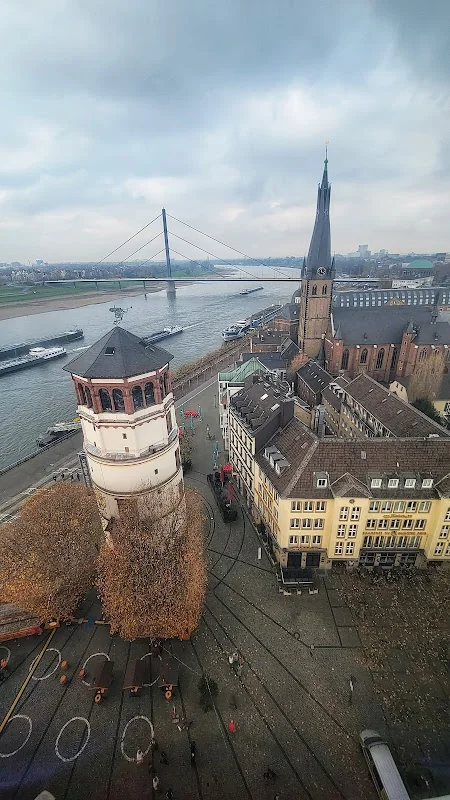
The Old Town is the place where Düsseldorf most clearly shows its history. Among the most important landmarks are the Gothic basilica of St. Lambertus with its crooked tower, the Castle Tower, and the old Town Hall from 1573 with the Baroque equestrian statue of Jan Wellem. These buildings are not separate attractions but part of a historical structure that can be experienced over a short distance. Between Liefergasse and Burgplatz, one can even see the Düssel, the small river arm that gave the city its name. It is precisely here that the origins of Düsseldorf become particularly vivid: The city name, the river location, and the development of the historical core intertwine to create a very compact urban image that can be understood without long walks. Those who walk through the Old Town encounter not only individual monuments but a whole city history in condensed form. ([duesseldorf.de](https://www.duesseldorf.de/int/tourism/discover/old-town))
It is also remarkable how strongly the Old Town is associated with cultural names. Heinrich Heine was born on Bolkerstraße, directly opposite stands the Neander Church, and not far away are the Kom(m)ödchen, the NRW Art Collection, and other significant places. In this way, the Old Town connects sacred architecture, literature, theater, and art in a very small space. This is crucial for the character of the district: Here, there is not just a single museum or a single church, but a whole network of reference points that together create a vibrant historical image. The district page also points out that the Old Town is perceived by many as a historical core, while at the same time remaining an urban city district with commerce, leisure, gastronomy, culture, and housing. This inhabited, everyday framework prevents the Old Town from becoming a mere backdrop. It is a district with people, routines, and uses, not just an open-air museum. ([duesseldorf.de](https://www.duesseldorf.de/bv/01/))
Anyone building a destination page for Old Town Düsseldorf should clearly highlight this historical core, as it forms the most important search intent for the location. The Old Town is the place where the emergence of Düsseldorf, its religious and political history, as well as the cultural development of the city condense at a few points. The official tourism description also emphasizes that one can discover historical traces while walking through the narrow streets between the Rhine and Heinrich-Heine-Allee. This includes not only the well-known landmarks but also smaller details like alleys, square edges, facades, and the special transition between open river space and dense city center. For visitors, this creates an urban experience that is suitable for both a short stay and a longer stroll. This is precisely why the Old Town works so well as a search term: It stands for history but always also for immediate experiences in today's urban everyday life. ([duesseldorf.de](https://www.duesseldorf.de/int/tourism/discover/old-town))
Altbier, Breweries, and the Longest Bar in the World
The Old Town Düsseldorf is known throughout Germany for its gastronomy culture. Official descriptions speak of the longest bar in the world, and this formula is more than just a local nickname: In a small space, there are over 260 bars, pubs, restaurants, and breweries. The density is extraordinary, but equally important is the mix. In the alleys, traditional breweries, student hangouts, international venues, music clubs, cafes, snack bars, and restaurants are closely situated next to each other. This creates an atmosphere where very different target groups can meet. Those who are more interested in culture or city history during the day experience a vibrant nightlife culture in the evening, ranging from fast food to traditional home cooking. This very range makes the Old Town particularly relevant for search queries like Old Town Düsseldorf Bars or Old Town Düsseldorf Restaurants. ([visitduesseldorf.de](https://www.visitduesseldorf.de/en/experience/sights/altstadt-old-town))
The Old Town experience primarily includes Altbier and the brewery culture. The tourism site explains that Alt refers to the top-fermented brewing method, and that Düsseldorf breweries keep the tradition alive. Typical elements such as long wooden tables, large portions, direct communication, and the Köbes as a service figure are just as much a part of it as the popular ritual that the freshly tapped jug continues until the beer coaster covers the top of the glass. This may sound rough to guests at first, but it is an expression of a very own, Rhineland sociability. This is precisely where the charm of the Old Town lies: It is not just any nightlife district, but a social space with clear rituals, a strong local beer tradition, and a cuisine that ranges from snacks to classic brewery dishes. International offerings are also naturally present, ensuring that the district remains culturally open and culinarily diverse. ([visitduesseldorf.de](https://www.visitduesseldorf.de/en/experience/sights/altstadt-old-town))
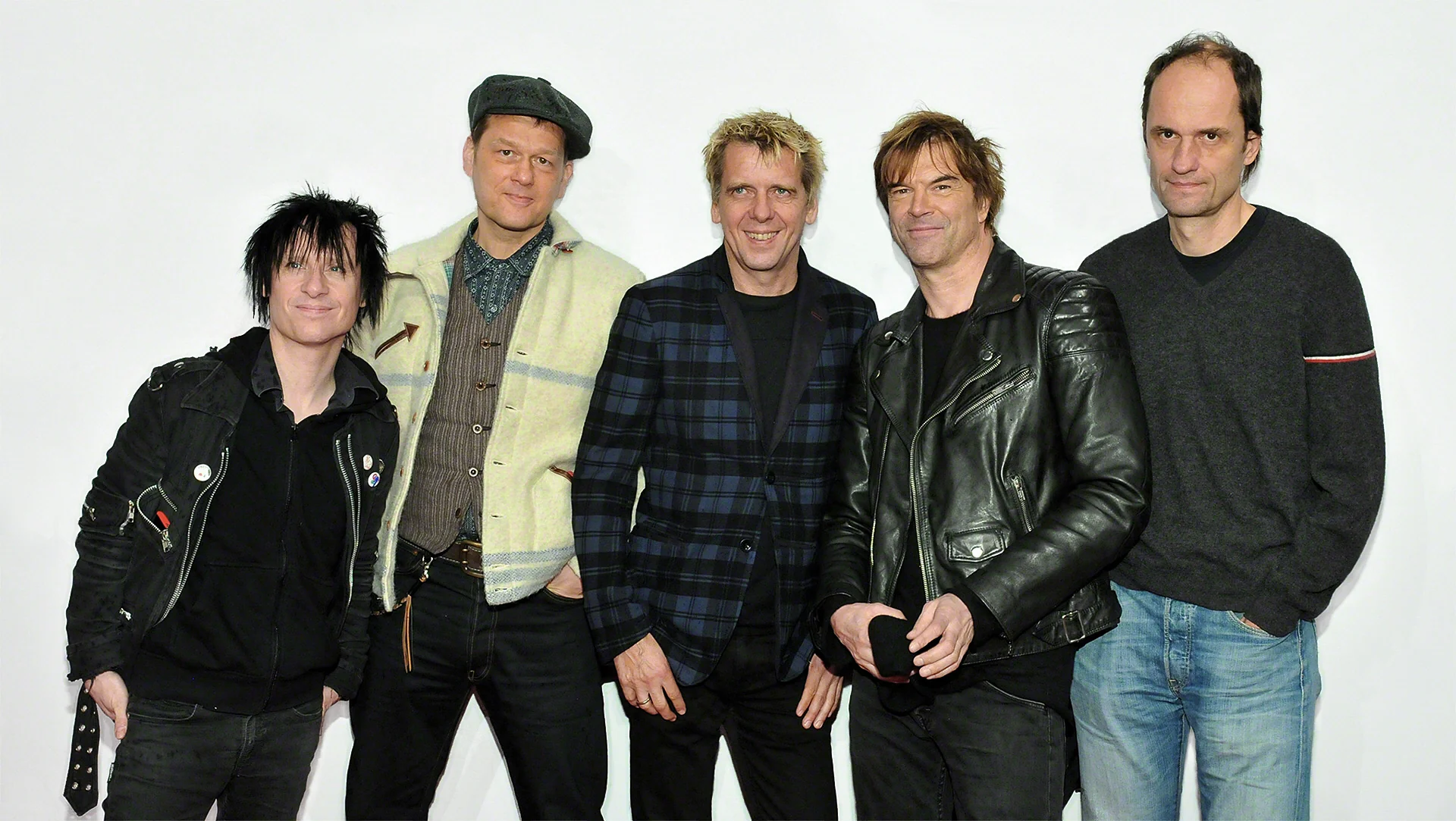
For the content depth of a location page, it is also important that the Old Town does not only function as a party location but as a place with narrative gastronomy. Visit Düsseldorf refers to student pubs, artist venues, music clubs, and the connection between the Old Town and pop history. Bands like Kraftwerk or Die Toten Hosen are located in this context, and this makes the Old Town relevant for search queries related to programs, scenes, and experiences. Therefore, those who book a city tour not only receive tavern knowledge but also access to local cultural history. The Old Town is thus a district that expresses its identity not only through buildings but also through taste, sound, routines, and social encounters. For visitors, this is a clear added value, as they can experience Düsseldorf here not abstractly but immediately and in many facets. ([visitduesseldorf.de](https://www.visitduesseldorf.de/en/experience/sights/altstadt-old-town))
Access, Heinrich-Heine-Allee, and Parking in the Old Town
Access to the Old Town is easily possible thanks to its central location, but should be planned carefully. The city of Düsseldorf operates a parking guidance system, in which the city center is divided into districts such as Old Town, Schadowstraße, Kö, Friedrichstadt, Nordstraße, and main train station. About 11,000 parking spaces are connected to the central computer, and dynamic signs show the current capacities. This is particularly helpful because the Old Town, with its narrow streets and high visitor volume, is not a district where one should spontaneously look for parking. Those arriving by car benefit significantly from paying attention to the parking guidance system in advance and choosing a parking garage or underground parking nearby. For SEO logic, this is a central topic, as parking and access are among the strongest usage intents for an inner-city location. ([duesseldorf.de](https://www.duesseldorf.de/parken))
Additionally, there are resident parking areas in the Old Town. The city explicitly states that resident parking areas have been established in several districts, including the Old Town, to facilitate parking for residents. For guests, this means: Parking is possible, but usually only in managed areas, parking garages, or with a parking ticket. Therefore, the combination of car and public transport or a complete switch to the train is particularly comfortable. The Heinrich-Heine-Allee subway station is described by the city as a central hub of the Düsseldorf light rail and is mentioned by the tourism site as an important starting and return point for visiting the Old Town. Those who want to travel stress-free can also use the city's park-and-ride offers and then take the train or bus into the city. For the Old Town, this accessibility is a great advantage, as it works well for both short visits and longer city stays. ([duesseldorf.de](https://www.duesseldorf.de/verkehrsmanagement/mobil-in-duesseldorf/mit-dem-auto/bewohnerparken))
Carlsplatz, Rhine Promenade, and Paths for Day Strolls
The Old Town includes not only nightlife but also a strong daytime rhythm. A particularly important place for this is Carlsplatz, south of the Old Town. Visit Düsseldorf describes it as a central marketplace where not only fruits, vegetables, fish, meat, bread, and cheese are offered, but also delicacies, spices, tea, herbs, spirits, and mustard. In addition, there are various food offerings ranging from classic home cooking to international cuisine. The market is open from Monday to Saturday, making it an ideal counterpoint to the evening nightlife culture. For visitors, this is an important note: Those who want to experience the Old Town during the day get a pleasure-oriented, very urban entry with market flair, shopping opportunities, and small breaks between the stalls. ([visitduesseldorf.de](https://www.visitduesseldorf.de/erleben/essen-und-ausgehen/carlsplatz))
Equally important is the location at the Rhine promenade. The official tourism site emphasizes that from there one can look out over the Rhine, the opposite side with Oberkassel, and the expanse of the river space. The promenade is an ideal place to walk, linger, and breathe, especially when the alleys of the Old Town are fuller. Many guests experience the most beautiful contrast of the district here: just a few steps after the hustle and bustle of the breweries open up water, expanse, and light. This connection between market, promenade, and historical core is central for search queries related to Old Town Düsseldorf attractions, as it shows that the Old Town stands not only for nights but also for relaxed daytime moments. Those planning a visit can very well combine the market, Old Town, Rhine, and city center. This creates a compact but very rich urban stroll that optimally utilizes the location of the Old Town. ([duesseldorf.de](https://www.duesseldorf.de/int/tourism/discover/old-town))
Guided Tours, Culture, and Special Experiences in the Old Town
The Old Town Düsseldorf is also an excellent place for guided tours and staged city experiences. Visit Düsseldorf offers, among other things, the Old Town tour, the Altbeer safari, the Sound of Düsseldorf, and night watchman tours. These formats are interesting because they open up different perspectives on the same district: once about beer culture and breweries, once about music history and pop culture, and once about historical alleys in the evening light. Those who experience the Old Town with a guided tour not only receive facts but also stories about Hoppeditz, Jan Wellem, and the Radschläger as landmarks. This makes the district tangible for guests and strengthens the emotional connection to the place. For an SEO page, this is particularly relevant, as it naturally captures search queries related to programs, tours, and experiences. ([visitduesseldorf.de](https://www.visitduesseldorf.de/event/altstadt-fuehrung-b68115ec30))
Additionally, there is cultural seasonality. The Old Town is regularly used for urban events, and an important seasonal attraction is the Christmas market around the marketplace in the historic center. At the same time, several cultural venues, including the Castle Tower, the City Museum, the Heinrich-Heine Institute, the NRW Art Collection, and other houses, are located in direct proximity. This means that the Old Town is not limited to a single event but remains interesting throughout the year: as a nightlife district, as a historical walking area, as a market environment, as a tour route, and as a festive place during the Advent season. This very complexity should be visible in a location description, as it answers the most important user questions and realistically depicts the character of the district. Those searching for Old Town Düsseldorf are usually looking for not just a name but a compact, vibrant urban experience. And this place offers that in particularly dense form. ([duesseldorf.de](https://www.duesseldorf.de/aktuelles/news/detailansicht/newsdetail/der-weihnachtsmarkt-ist-eroeffnet?utm_source=openai))
Sources:
Show moreShow less
Old Town Düsseldorf | Attractions & Access
The Old Town Düsseldorf is much more than a place for the evening. It is the historical core of the city, a dense and surprisingly multifaceted neighborhood between the Rhine and Heinrich-Heine-Allee, where history, gastronomy, culture, and urban life come together in a small space. Those who arrive here do not move through a single district with a clear function, but through an urban space that is simultaneously a residential area, a nightlife district, a cultural address, and a historical memory space. This very mix makes the Old Town so attractive for visitors: One can stroll through squares and alleys in the morning, take a break at the Rhine promenade at noon, visit museums or churches in the afternoon, and choose between breweries, bars, and restaurants in the evening. Official pages describe the Old Town as the heart of Düsseldorf, covering an area of about half a square kilometer, where around 260 hospitality businesses are crowded together. At the same time, it is the place where the city makes its origins, its beer culture, and its typical narratives particularly visible. For inquiries about Old Town Düsseldorf, attractions, access, parking, Altbier, and tours, it is therefore a classic destination with a very clear local identity. ([duesseldorf.de](https://www.duesseldorf.de/int/tourism/discover/old-town))
Historical Core with St. Lambertus, Castle Tower, and Town Hall
The Old Town is the place where Düsseldorf most clearly shows its history. Among the most important landmarks are the Gothic basilica of St. Lambertus with its crooked tower, the Castle Tower, and the old Town Hall from 1573 with the Baroque equestrian statue of Jan Wellem. These buildings are not separate attractions but part of a historical structure that can be experienced over a short distance. Between Liefergasse and Burgplatz, one can even see the Düssel, the small river arm that gave the city its name. It is precisely here that the origins of Düsseldorf become particularly vivid: The city name, the river location, and the development of the historical core intertwine to create a very compact urban image that can be understood without long walks. Those who walk through the Old Town encounter not only individual monuments but a whole city history in condensed form. ([duesseldorf.de](https://www.duesseldorf.de/int/tourism/discover/old-town))
It is also remarkable how strongly the Old Town is associated with cultural names. Heinrich Heine was born on Bolkerstraße, directly opposite stands the Neander Church, and not far away are the Kom(m)ödchen, the NRW Art Collection, and other significant places. In this way, the Old Town connects sacred architecture, literature, theater, and art in a very small space. This is crucial for the character of the district: Here, there is not just a single museum or a single church, but a whole network of reference points that together create a vibrant historical image. The district page also points out that the Old Town is perceived by many as a historical core, while at the same time remaining an urban city district with commerce, leisure, gastronomy, culture, and housing. This inhabited, everyday framework prevents the Old Town from becoming a mere backdrop. It is a district with people, routines, and uses, not just an open-air museum. ([duesseldorf.de](https://www.duesseldorf.de/bv/01/))
Anyone building a destination page for Old Town Düsseldorf should clearly highlight this historical core, as it forms the most important search intent for the location. The Old Town is the place where the emergence of Düsseldorf, its religious and political history, as well as the cultural development of the city condense at a few points. The official tourism description also emphasizes that one can discover historical traces while walking through the narrow streets between the Rhine and Heinrich-Heine-Allee. This includes not only the well-known landmarks but also smaller details like alleys, square edges, facades, and the special transition between open river space and dense city center. For visitors, this creates an urban experience that is suitable for both a short stay and a longer stroll. This is precisely why the Old Town works so well as a search term: It stands for history but always also for immediate experiences in today's urban everyday life. ([duesseldorf.de](https://www.duesseldorf.de/int/tourism/discover/old-town))
Altbier, Breweries, and the Longest Bar in the World
The Old Town Düsseldorf is known throughout Germany for its gastronomy culture. Official descriptions speak of the longest bar in the world, and this formula is more than just a local nickname: In a small space, there are over 260 bars, pubs, restaurants, and breweries. The density is extraordinary, but equally important is the mix. In the alleys, traditional breweries, student hangouts, international venues, music clubs, cafes, snack bars, and restaurants are closely situated next to each other. This creates an atmosphere where very different target groups can meet. Those who are more interested in culture or city history during the day experience a vibrant nightlife culture in the evening, ranging from fast food to traditional home cooking. This very range makes the Old Town particularly relevant for search queries like Old Town Düsseldorf Bars or Old Town Düsseldorf Restaurants. ([visitduesseldorf.de](https://www.visitduesseldorf.de/en/experience/sights/altstadt-old-town))
The Old Town experience primarily includes Altbier and the brewery culture. The tourism site explains that Alt refers to the top-fermented brewing method, and that Düsseldorf breweries keep the tradition alive. Typical elements such as long wooden tables, large portions, direct communication, and the Köbes as a service figure are just as much a part of it as the popular ritual that the freshly tapped jug continues until the beer coaster covers the top of the glass. This may sound rough to guests at first, but it is an expression of a very own, Rhineland sociability. This is precisely where the charm of the Old Town lies: It is not just any nightlife district, but a social space with clear rituals, a strong local beer tradition, and a cuisine that ranges from snacks to classic brewery dishes. International offerings are also naturally present, ensuring that the district remains culturally open and culinarily diverse. ([visitduesseldorf.de](https://www.visitduesseldorf.de/en/experience/sights/altstadt-old-town))
For the content depth of a location page, it is also important that the Old Town does not only function as a party location but as a place with narrative gastronomy. Visit Düsseldorf refers to student pubs, artist venues, music clubs, and the connection between the Old Town and pop history. Bands like Kraftwerk or Die Toten Hosen are located in this context, and this makes the Old Town relevant for search queries related to programs, scenes, and experiences. Therefore, those who book a city tour not only receive tavern knowledge but also access to local cultural history. The Old Town is thus a district that expresses its identity not only through buildings but also through taste, sound, routines, and social encounters. For visitors, this is a clear added value, as they can experience Düsseldorf here not abstractly but immediately and in many facets. ([visitduesseldorf.de](https://www.visitduesseldorf.de/en/experience/sights/altstadt-old-town))
Access, Heinrich-Heine-Allee, and Parking in the Old Town
Access to the Old Town is easily possible thanks to its central location, but should be planned carefully. The city of Düsseldorf operates a parking guidance system, in which the city center is divided into districts such as Old Town, Schadowstraße, Kö, Friedrichstadt, Nordstraße, and main train station. About 11,000 parking spaces are connected to the central computer, and dynamic signs show the current capacities. This is particularly helpful because the Old Town, with its narrow streets and high visitor volume, is not a district where one should spontaneously look for parking. Those arriving by car benefit significantly from paying attention to the parking guidance system in advance and choosing a parking garage or underground parking nearby. For SEO logic, this is a central topic, as parking and access are among the strongest usage intents for an inner-city location. ([duesseldorf.de](https://www.duesseldorf.de/parken))
Additionally, there are resident parking areas in the Old Town. The city explicitly states that resident parking areas have been established in several districts, including the Old Town, to facilitate parking for residents. For guests, this means: Parking is possible, but usually only in managed areas, parking garages, or with a parking ticket. Therefore, the combination of car and public transport or a complete switch to the train is particularly comfortable. The Heinrich-Heine-Allee subway station is described by the city as a central hub of the Düsseldorf light rail and is mentioned by the tourism site as an important starting and return point for visiting the Old Town. Those who want to travel stress-free can also use the city's park-and-ride offers and then take the train or bus into the city. For the Old Town, this accessibility is a great advantage, as it works well for both short visits and longer city stays. ([duesseldorf.de](https://www.duesseldorf.de/verkehrsmanagement/mobil-in-duesseldorf/mit-dem-auto/bewohnerparken))
Carlsplatz, Rhine Promenade, and Paths for Day Strolls
The Old Town includes not only nightlife but also a strong daytime rhythm. A particularly important place for this is Carlsplatz, south of the Old Town. Visit Düsseldorf describes it as a central marketplace where not only fruits, vegetables, fish, meat, bread, and cheese are offered, but also delicacies, spices, tea, herbs, spirits, and mustard. In addition, there are various food offerings ranging from classic home cooking to international cuisine. The market is open from Monday to Saturday, making it an ideal counterpoint to the evening nightlife culture. For visitors, this is an important note: Those who want to experience the Old Town during the day get a pleasure-oriented, very urban entry with market flair, shopping opportunities, and small breaks between the stalls. ([visitduesseldorf.de](https://www.visitduesseldorf.de/erleben/essen-und-ausgehen/carlsplatz))
Equally important is the location at the Rhine promenade. The official tourism site emphasizes that from there one can look out over the Rhine, the opposite side with Oberkassel, and the expanse of the river space. The promenade is an ideal place to walk, linger, and breathe, especially when the alleys of the Old Town are fuller. Many guests experience the most beautiful contrast of the district here: just a few steps after the hustle and bustle of the breweries open up water, expanse, and light. This connection between market, promenade, and historical core is central for search queries related to Old Town Düsseldorf attractions, as it shows that the Old Town stands not only for nights but also for relaxed daytime moments. Those planning a visit can very well combine the market, Old Town, Rhine, and city center. This creates a compact but very rich urban stroll that optimally utilizes the location of the Old Town. ([duesseldorf.de](https://www.duesseldorf.de/int/tourism/discover/old-town))
Guided Tours, Culture, and Special Experiences in the Old Town
The Old Town Düsseldorf is also an excellent place for guided tours and staged city experiences. Visit Düsseldorf offers, among other things, the Old Town tour, the Altbeer safari, the Sound of Düsseldorf, and night watchman tours. These formats are interesting because they open up different perspectives on the same district: once about beer culture and breweries, once about music history and pop culture, and once about historical alleys in the evening light. Those who experience the Old Town with a guided tour not only receive facts but also stories about Hoppeditz, Jan Wellem, and the Radschläger as landmarks. This makes the district tangible for guests and strengthens the emotional connection to the place. For an SEO page, this is particularly relevant, as it naturally captures search queries related to programs, tours, and experiences. ([visitduesseldorf.de](https://www.visitduesseldorf.de/event/altstadt-fuehrung-b68115ec30))
Additionally, there is cultural seasonality. The Old Town is regularly used for urban events, and an important seasonal attraction is the Christmas market around the marketplace in the historic center. At the same time, several cultural venues, including the Castle Tower, the City Museum, the Heinrich-Heine Institute, the NRW Art Collection, and other houses, are located in direct proximity. This means that the Old Town is not limited to a single event but remains interesting throughout the year: as a nightlife district, as a historical walking area, as a market environment, as a tour route, and as a festive place during the Advent season. This very complexity should be visible in a location description, as it answers the most important user questions and realistically depicts the character of the district. Those searching for Old Town Düsseldorf are usually looking for not just a name but a compact, vibrant urban experience. And this place offers that in particularly dense form. ([duesseldorf.de](https://www.duesseldorf.de/aktuelles/news/detailansicht/newsdetail/der-weihnachtsmarkt-ist-eroeffnet?utm_source=openai))
Sources:
Old Town Düsseldorf | Attractions & Access
The Old Town Düsseldorf is much more than a place for the evening. It is the historical core of the city, a dense and surprisingly multifaceted neighborhood between the Rhine and Heinrich-Heine-Allee, where history, gastronomy, culture, and urban life come together in a small space. Those who arrive here do not move through a single district with a clear function, but through an urban space that is simultaneously a residential area, a nightlife district, a cultural address, and a historical memory space. This very mix makes the Old Town so attractive for visitors: One can stroll through squares and alleys in the morning, take a break at the Rhine promenade at noon, visit museums or churches in the afternoon, and choose between breweries, bars, and restaurants in the evening. Official pages describe the Old Town as the heart of Düsseldorf, covering an area of about half a square kilometer, where around 260 hospitality businesses are crowded together. At the same time, it is the place where the city makes its origins, its beer culture, and its typical narratives particularly visible. For inquiries about Old Town Düsseldorf, attractions, access, parking, Altbier, and tours, it is therefore a classic destination with a very clear local identity. ([duesseldorf.de](https://www.duesseldorf.de/int/tourism/discover/old-town))
Historical Core with St. Lambertus, Castle Tower, and Town Hall
The Old Town is the place where Düsseldorf most clearly shows its history. Among the most important landmarks are the Gothic basilica of St. Lambertus with its crooked tower, the Castle Tower, and the old Town Hall from 1573 with the Baroque equestrian statue of Jan Wellem. These buildings are not separate attractions but part of a historical structure that can be experienced over a short distance. Between Liefergasse and Burgplatz, one can even see the Düssel, the small river arm that gave the city its name. It is precisely here that the origins of Düsseldorf become particularly vivid: The city name, the river location, and the development of the historical core intertwine to create a very compact urban image that can be understood without long walks. Those who walk through the Old Town encounter not only individual monuments but a whole city history in condensed form. ([duesseldorf.de](https://www.duesseldorf.de/int/tourism/discover/old-town))
It is also remarkable how strongly the Old Town is associated with cultural names. Heinrich Heine was born on Bolkerstraße, directly opposite stands the Neander Church, and not far away are the Kom(m)ödchen, the NRW Art Collection, and other significant places. In this way, the Old Town connects sacred architecture, literature, theater, and art in a very small space. This is crucial for the character of the district: Here, there is not just a single museum or a single church, but a whole network of reference points that together create a vibrant historical image. The district page also points out that the Old Town is perceived by many as a historical core, while at the same time remaining an urban city district with commerce, leisure, gastronomy, culture, and housing. This inhabited, everyday framework prevents the Old Town from becoming a mere backdrop. It is a district with people, routines, and uses, not just an open-air museum. ([duesseldorf.de](https://www.duesseldorf.de/bv/01/))
Anyone building a destination page for Old Town Düsseldorf should clearly highlight this historical core, as it forms the most important search intent for the location. The Old Town is the place where the emergence of Düsseldorf, its religious and political history, as well as the cultural development of the city condense at a few points. The official tourism description also emphasizes that one can discover historical traces while walking through the narrow streets between the Rhine and Heinrich-Heine-Allee. This includes not only the well-known landmarks but also smaller details like alleys, square edges, facades, and the special transition between open river space and dense city center. For visitors, this creates an urban experience that is suitable for both a short stay and a longer stroll. This is precisely why the Old Town works so well as a search term: It stands for history but always also for immediate experiences in today's urban everyday life. ([duesseldorf.de](https://www.duesseldorf.de/int/tourism/discover/old-town))
Altbier, Breweries, and the Longest Bar in the World
The Old Town Düsseldorf is known throughout Germany for its gastronomy culture. Official descriptions speak of the longest bar in the world, and this formula is more than just a local nickname: In a small space, there are over 260 bars, pubs, restaurants, and breweries. The density is extraordinary, but equally important is the mix. In the alleys, traditional breweries, student hangouts, international venues, music clubs, cafes, snack bars, and restaurants are closely situated next to each other. This creates an atmosphere where very different target groups can meet. Those who are more interested in culture or city history during the day experience a vibrant nightlife culture in the evening, ranging from fast food to traditional home cooking. This very range makes the Old Town particularly relevant for search queries like Old Town Düsseldorf Bars or Old Town Düsseldorf Restaurants. ([visitduesseldorf.de](https://www.visitduesseldorf.de/en/experience/sights/altstadt-old-town))
The Old Town experience primarily includes Altbier and the brewery culture. The tourism site explains that Alt refers to the top-fermented brewing method, and that Düsseldorf breweries keep the tradition alive. Typical elements such as long wooden tables, large portions, direct communication, and the Köbes as a service figure are just as much a part of it as the popular ritual that the freshly tapped jug continues until the beer coaster covers the top of the glass. This may sound rough to guests at first, but it is an expression of a very own, Rhineland sociability. This is precisely where the charm of the Old Town lies: It is not just any nightlife district, but a social space with clear rituals, a strong local beer tradition, and a cuisine that ranges from snacks to classic brewery dishes. International offerings are also naturally present, ensuring that the district remains culturally open and culinarily diverse. ([visitduesseldorf.de](https://www.visitduesseldorf.de/en/experience/sights/altstadt-old-town))
For the content depth of a location page, it is also important that the Old Town does not only function as a party location but as a place with narrative gastronomy. Visit Düsseldorf refers to student pubs, artist venues, music clubs, and the connection between the Old Town and pop history. Bands like Kraftwerk or Die Toten Hosen are located in this context, and this makes the Old Town relevant for search queries related to programs, scenes, and experiences. Therefore, those who book a city tour not only receive tavern knowledge but also access to local cultural history. The Old Town is thus a district that expresses its identity not only through buildings but also through taste, sound, routines, and social encounters. For visitors, this is a clear added value, as they can experience Düsseldorf here not abstractly but immediately and in many facets. ([visitduesseldorf.de](https://www.visitduesseldorf.de/en/experience/sights/altstadt-old-town))
Access, Heinrich-Heine-Allee, and Parking in the Old Town
Access to the Old Town is easily possible thanks to its central location, but should be planned carefully. The city of Düsseldorf operates a parking guidance system, in which the city center is divided into districts such as Old Town, Schadowstraße, Kö, Friedrichstadt, Nordstraße, and main train station. About 11,000 parking spaces are connected to the central computer, and dynamic signs show the current capacities. This is particularly helpful because the Old Town, with its narrow streets and high visitor volume, is not a district where one should spontaneously look for parking. Those arriving by car benefit significantly from paying attention to the parking guidance system in advance and choosing a parking garage or underground parking nearby. For SEO logic, this is a central topic, as parking and access are among the strongest usage intents for an inner-city location. ([duesseldorf.de](https://www.duesseldorf.de/parken))
Additionally, there are resident parking areas in the Old Town. The city explicitly states that resident parking areas have been established in several districts, including the Old Town, to facilitate parking for residents. For guests, this means: Parking is possible, but usually only in managed areas, parking garages, or with a parking ticket. Therefore, the combination of car and public transport or a complete switch to the train is particularly comfortable. The Heinrich-Heine-Allee subway station is described by the city as a central hub of the Düsseldorf light rail and is mentioned by the tourism site as an important starting and return point for visiting the Old Town. Those who want to travel stress-free can also use the city's park-and-ride offers and then take the train or bus into the city. For the Old Town, this accessibility is a great advantage, as it works well for both short visits and longer city stays. ([duesseldorf.de](https://www.duesseldorf.de/verkehrsmanagement/mobil-in-duesseldorf/mit-dem-auto/bewohnerparken))
Carlsplatz, Rhine Promenade, and Paths for Day Strolls
The Old Town includes not only nightlife but also a strong daytime rhythm. A particularly important place for this is Carlsplatz, south of the Old Town. Visit Düsseldorf describes it as a central marketplace where not only fruits, vegetables, fish, meat, bread, and cheese are offered, but also delicacies, spices, tea, herbs, spirits, and mustard. In addition, there are various food offerings ranging from classic home cooking to international cuisine. The market is open from Monday to Saturday, making it an ideal counterpoint to the evening nightlife culture. For visitors, this is an important note: Those who want to experience the Old Town during the day get a pleasure-oriented, very urban entry with market flair, shopping opportunities, and small breaks between the stalls. ([visitduesseldorf.de](https://www.visitduesseldorf.de/erleben/essen-und-ausgehen/carlsplatz))
Equally important is the location at the Rhine promenade. The official tourism site emphasizes that from there one can look out over the Rhine, the opposite side with Oberkassel, and the expanse of the river space. The promenade is an ideal place to walk, linger, and breathe, especially when the alleys of the Old Town are fuller. Many guests experience the most beautiful contrast of the district here: just a few steps after the hustle and bustle of the breweries open up water, expanse, and light. This connection between market, promenade, and historical core is central for search queries related to Old Town Düsseldorf attractions, as it shows that the Old Town stands not only for nights but also for relaxed daytime moments. Those planning a visit can very well combine the market, Old Town, Rhine, and city center. This creates a compact but very rich urban stroll that optimally utilizes the location of the Old Town. ([duesseldorf.de](https://www.duesseldorf.de/int/tourism/discover/old-town))
Guided Tours, Culture, and Special Experiences in the Old Town
The Old Town Düsseldorf is also an excellent place for guided tours and staged city experiences. Visit Düsseldorf offers, among other things, the Old Town tour, the Altbeer safari, the Sound of Düsseldorf, and night watchman tours. These formats are interesting because they open up different perspectives on the same district: once about beer culture and breweries, once about music history and pop culture, and once about historical alleys in the evening light. Those who experience the Old Town with a guided tour not only receive facts but also stories about Hoppeditz, Jan Wellem, and the Radschläger as landmarks. This makes the district tangible for guests and strengthens the emotional connection to the place. For an SEO page, this is particularly relevant, as it naturally captures search queries related to programs, tours, and experiences. ([visitduesseldorf.de](https://www.visitduesseldorf.de/event/altstadt-fuehrung-b68115ec30))
Additionally, there is cultural seasonality. The Old Town is regularly used for urban events, and an important seasonal attraction is the Christmas market around the marketplace in the historic center. At the same time, several cultural venues, including the Castle Tower, the City Museum, the Heinrich-Heine Institute, the NRW Art Collection, and other houses, are located in direct proximity. This means that the Old Town is not limited to a single event but remains interesting throughout the year: as a nightlife district, as a historical walking area, as a market environment, as a tour route, and as a festive place during the Advent season. This very complexity should be visible in a location description, as it answers the most important user questions and realistically depicts the character of the district. Those searching for Old Town Düsseldorf are usually looking for not just a name but a compact, vibrant urban experience. And this place offers that in particularly dense form. ([duesseldorf.de](https://www.duesseldorf.de/aktuelles/news/detailansicht/newsdetail/der-weihnachtsmarkt-ist-eroeffnet?utm_source=openai))
Sources:
Frequently Asked Questions
Reviews
No reviews found