
Hugo Harrer
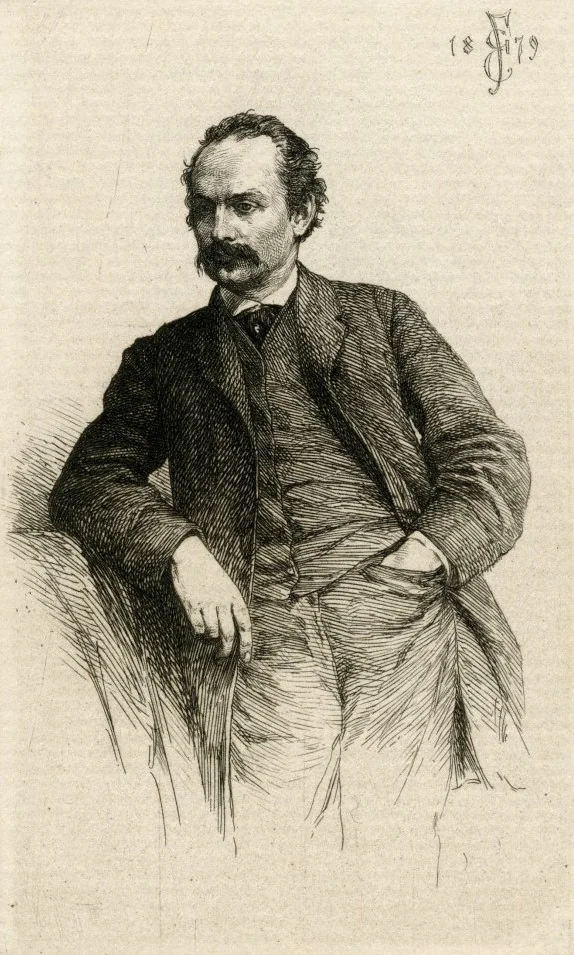
Image from Wikipedia
Image from Wikipedia
Hugo Harrer: The Quiet Realist of the Düsseldorf School
An Artist between Architecture, Nature Observation, and Italian Light
Hugo Paul Harrer was a German landscape and architectural painter whose life and work unfolded between Eberswalde, Nuremberg, Munich, Düsseldorf, and Rome. Born on February 6, 1836, and died on December 10, 1876, in Rome, he belongs to the Düsseldorf School and represents a painting style that combines careful observation, compositional clarity, and a strong sense of atmosphere. Biographical sources paint the picture of an artist who forged his path not through the academy, but through self-study, studio visits, and consistent practice. ([de.wikipedia.org](https://de.wikipedia.org/wiki/Hugo_Harrer))
Biography: From Aspiring Architect to Painter with a Unique Perspective
Harrer began an architectural education but quickly turned to painting and continued to develop as a self-taught artist. His first works were created in Nuremberg, where the picturesque architecture of the city inspired him to engage in architectural painting. He then moved to Munich to be inspired by the realistic painting style of Carl Theodor von Piloty, which shaped his development. These stages illustrate an artist who thought not from a textbook but from the urban landscape, from façades, perspectives, and atmospheric spaces. ([de.wikipedia.org](https://de.wikipedia.org/wiki/Hugo_Harrer))
Due to a chest ailment, Harrer moved to Rome in 1861 or October 1862, where he joined Ludwig Passini and created studies from nature. Rome became a crucial resonant space for his artistic development: here, observation, light effects, and architectural motives condensed into a distinctive visual language. Between 1867 and 1868, he stayed in Düsseldorf and studied at the local art academy in the landscape painting class of Oswald Achenbach. From 1868 to 1872, he was a member of the Düsseldorf Artists' Association Malkasten before returning to Rome. ([de.wikipedia.org](https://de.wikipedia.org/wiki/Hugo_Harrer))
Career: Studies, City Views, and the Quest for Authenticity
Harrer's career developed not along the classical route of a long-term master class, but through intensive nature studies and exchanges with fellow artists. Rudolf Bergau describes him in the Allgemeine Deutsche Biographie as a painter distinguished by his self-study and meticulous observation of nature. His early studies of Rome attracted attention for their great truthfulness and fidelity. This combination of technical precision and realistic attitude made him interesting to his contemporaries. ([deutsche-biographie.de](https://www.deutsche-biographie.de/sfz26126.html?language=de))
After his return to Rome, Harrer amassed a significant collection of studies and sketches, which served as templates for oil paintings. With these works, he participated in German art exhibitions and primarily created painterly representations of street scenes, ruins, and Italian coastal landscapes. His paintings revolve around spaces with history: crumbling architecture, narrow alleys, coastal horizons, and urban life in transition between past and present. This endows his work with a quiet dramaturgy that resonates to this day. ([de.wikipedia.org](https://de.wikipedia.org/wiki/Hugo_Harrer))
Works and Art Historical Perspective: Harrer's Artistic Production Examined
Harrer does not possess a musical discography; instead, his artistic output consists of a group of paintings and studies. Among the preserved works are Old Hanse from 1868, View of the Amalfi Coast at Sunset from 1871, as well as At the Marcellus Theater in Rome and The Theater of Marcellus in Rome from 1876. These motifs reveal his preference for historical architecture, Mediterranean lighting conditions, and pictorial spaces where architecture and atmosphere form a unity. ([de.wikipedia.org](https://de.wikipedia.org/wiki/Hugo_Harrer))
His choice of themes is particularly striking: Harrer preferred painterly angles in crumbling ruins and worked with a realistic approach that prioritized accurate representation. The Deutsche Biographie emphasizes that he aimed to portray objects exactly as he saw them, placing great importance on the manner of pictorial representation. Thus, he positions himself within a realism that does not appear cold, but rather generates tension through sensitive light handling and architectural depth. ([deutsche-biographie.de](https://www.deutsche-biographie.de/sfz26126.html?language=de))
Style: Düsseldorf School, Realism, and Architectural Atmosphere
Harrer's style is closely linked to the Düsseldorf School; however, his handwriting remains individual. The influence of Piloty and Achenbach is evident in his compositional discipline and interest in atmospheric landscapes, while he simultaneously maintains a quiet objectivity. As a modern realist, he did not seek to idealize but to make visible what lay before him: masonry, street spaces, coastlines, ruins, and all the traces of time that consolidate a motif. ([deutsche-biographie.de](https://www.deutsche-biographie.de/sfz26126.html?language=de))
For Harrer, architectural painting was more than mere reproduction of buildings. It became a vehicle for atmosphere, perspective, and historical awareness. His paintings of Rome combine urban reality with a sense of transience, while the Italian coastal landscapes emphasize openness and light. This tension between intimacy and expansiveness, structure and atmosphere, defines his artistic appeal. ([de.wikipedia.org](https://de.wikipedia.org/wiki/Hugo_Harrer))
Cultural Influence: An Underappreciated Name with Museum Presence
Today, Hugo Harrer is not among the most prominent names of the 19th century, yet his work has remained present in art historical contexts. The preservation in the Deutsche Biographie, in museum and collection holdings, as well as in international art portals, shows that his paintings continue to receive attention. The fact that works like At the Marcellus Theater in Rome are part of the art collection in Gera and associated with the National Gallery in Berlin underscores the lasting museum relevance of his painting. ([de.wikipedia.org](https://de.wikipedia.org/wiki/Hugo_Harrer))
His cultural value also lies in the precision of his gaze. Harrer did not simply document places; he shaped them into images with historical depth and poetic tranquility. In an art landscape that often favors the big names, he stands for those careful, observant painters who contributed to building the visual memory of the 19th century. This is where his special authority lies: not in pathos, but in the reliability of seeing. ([deutsche-biographie.de](https://www.deutsche-biographie.de/sfz26126.html?language=de))
Current Projects and Publications
As Hugo Harrer is a historical artist from the 19th century, there are no current albums, singles, tours, or new projects in the modern sense. More recent web hits refer to museum educational and exhibition-related formats, not to ongoing artistic production. Therefore, exhibitions, collection acknowledgments, and art historical classifications are particularly relevant for contemporary reception. ([niederlausitz-aktuell.de](https://www.niederlausitz-aktuell.de/niederlausitz-aktuell/orte/cottbus/317951/cottbus-feiert-carl-blechen-in-branitz-mit-neuem-gemaelde.html?utm_source=openai))
Conclusion: Why Hugo Harrer Remains Fascinating
Hugo Harrer captivates through the combination of realistic accuracy, architectural sensibility, and Mediterranean atmosphere. He was not an academically conformist salon painter but a meticulous observer who developed a quiet, concentrated visual language from cities, ruins, and coastal landscapes. Anyone interested in the Düsseldorf school of painting, realism, and 19th-century art will discover in Harrer an artist with a unique profile and lasting impact. A museum visit or engagement with his preserved works is worthwhile, as it presents historical visual culture with great clarity and dignity. ([deutsche-biographie.de](https://www.deutsche-biographie.de/sfz26126.html?language=de))
Official Channels of Hugo Harrer:
- Instagram: No official profile found
- Facebook: No official profile found
- YouTube: No official profile found
- Spotify: No official profile found
- TikTok: No official profile found