Franz Marc
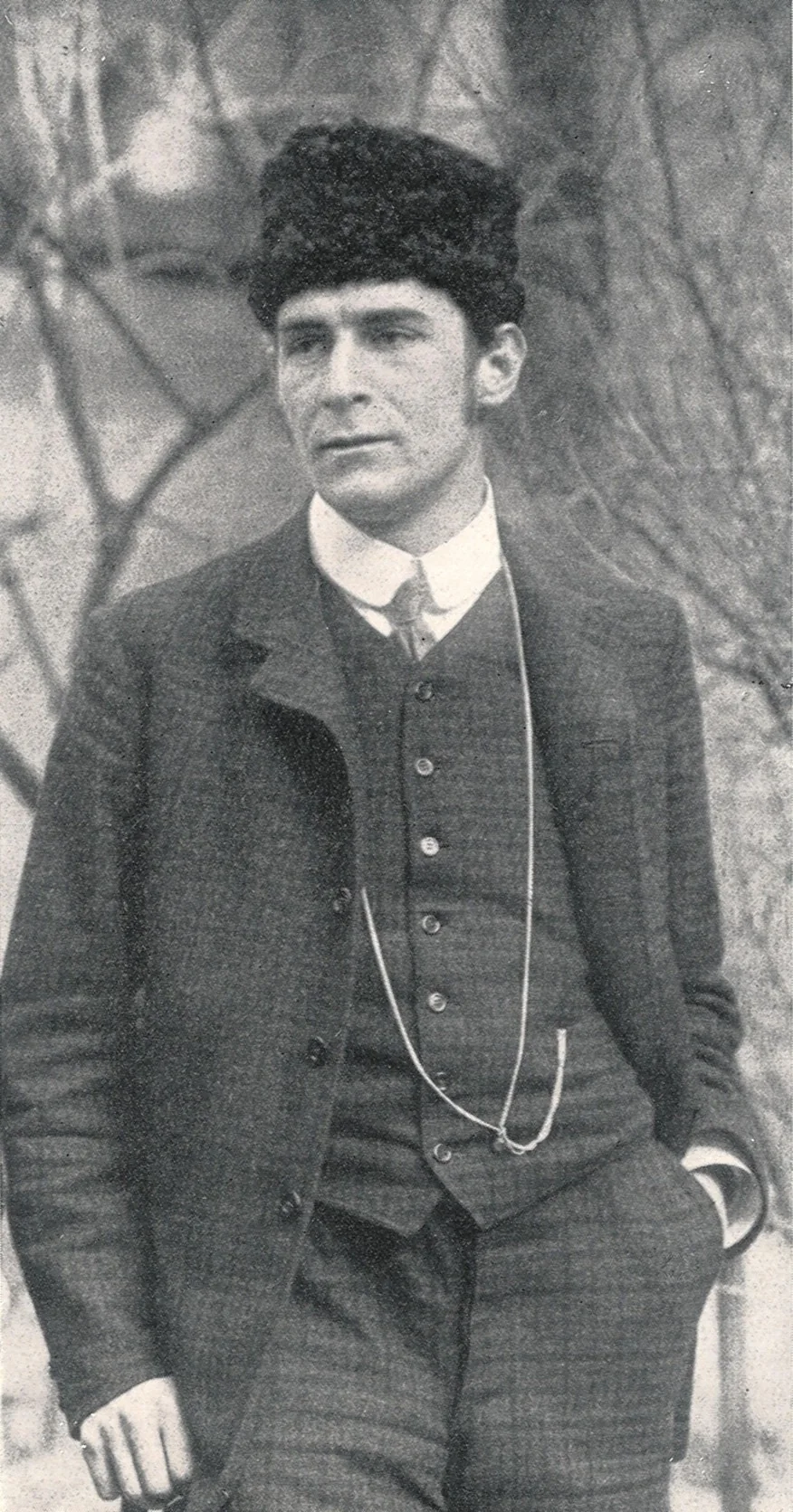
Image from Wikipedia
Image from Wikipedia
Franz Marc – The Visionary Color Thinker of German Expressionism
An artist who combined animals, color, and spirit into a new visual language
Franz Marc is one of the most influential figures of German Expressionism. With his radiant animal paintings, his symbolic understanding of color, and his role in the circle of the Blue Rider, he created art that did not merely depict nature but spiritually charged it. His work emerged during an extremely brief yet extraordinarily intense creative phase, which is still regarded today as a central contribution to European modernism. ([dhm.de](https://www.dhm.de/lemo/biografie/franz-marc?utm_source=openai))
Biography: From the Munich Environment to Radical Modernism
Franz Marc was born on February 8, 1880, in Munich and grew up in an artistically influenced environment. After early studies and initial works in an academic style, his perspective gradually shifted away from naturalism. A visit to Paris in 1907 became a turning point: Marc engaged intensely with Post-Impressionism and absorbed impulses from Paul Gauguin and Vincent van Gogh. ([dhm.de](https://www.dhm.de/lemo/biografie/franz-marc?utm_source=openai))
This artistic openness led him into a visual world where color did not only describe but also conveyed meaning. Marc developed an increasingly personal symbolic language in which blue, yellow, and red took on spiritual, emotional, and structural functions. His development exemplifies how an academically trained painter transformed into an expressionist visionary. ([sammlung.staedelmuseum.de](https://sammlung.staedelmuseum.de/de/person/marc-franz?utm_source=openai))
The Blue Rider: Departure, Collaboration, and Theoretical Sharpness
In 1911, after a brief membership in the New Artists' Association of Munich, Marc joined forces with Wassily Kandinsky to create the editorial community of The Blue Rider. The group's first exhibition opened on December 18, 1911, in Munich and marked a decisive moment for the avant-garde in Germany. The Blue Rider became a focal point for modern painting, new perspectives on spirituality, and intercultural openness. ([britishmuseum.org](https://www.britishmuseum.org/collection/term/BIOG37146?utm_source=openai))
Marc was not only a painter but also an author of art theoretical writings. For the Almanac of The Blue Rider and other publications, he articulated beliefs that intellectually expanded his paintings. This connection between practice and theory makes him an authority in modern art: his images are not merely expressions but also analytically founded positions within the discourse of the time. ([de.wikipedia.org](https://de.wikipedia.org/wiki/Der_Blaue_Reiter?utm_source=openai))
The Visual Language: Animals as Bearers of Harmony, Tension, and World Feelings
Marc's most famous works revolve around animals, especially horses, cows, tigers, and foxes. In paintings such as Blue Horse I, The Yellow Cow, The Tiger, and Animal Destinies, he condenses nature into a symbolic order. The animal motifs appear not as picturesque embellishments but as embodiments of a pure, untainted existence. ([de.wikipedia.org](https://de.wikipedia.org/wiki/Franz_Marc?utm_source=openai))
His color compositions follow a clear internal logic. Marc used color tones symbolically to express characteristics and the harmonious integration of the animals into their environment. This is where the strength of his painting lies: form, color, and content interweave to create a visual tension that is at once poetic and intellectual. ([sammlung.staedelmuseum.de](https://sammlung.staedelmuseum.de/de/person/marc-franz?utm_source=openai))
Style Development: From Post-Impressionism to Cubist and Futurist Impulses
Between 1910 and 1914, Marc expanded his language with influences from Fauvism, Cubism, Futurism, and Orphism. He never completely detached from the subject, yet he increasingly deconstructed it into rhythmic surfaces, dynamic lines, and vibrant color zones. As a result, images emerged that oscillated between figuration and abstraction, revealing their allure precisely in this tension. ([de.wikipedia.org](https://de.wikipedia.org/wiki/Franz_Marc?utm_source=openai))
This phase also produced his first more abstract works, including Small Composition I, Struggling Forms, and Foxes from the years 1913 and 1914. They demonstrate an artistic development that transcends the purely figurative nature of Expressionism. Here, Marc works with condensation, dynamism, and formal logic, as if he were translating nature not merely into images but into an internal structure. ([de.wikipedia.org](https://de.wikipedia.org/wiki/Franz_Marc?utm_source=openai))
Critical Reception and Art Historical Significance
Franz Marc is considered one of the most significant figures of Expressionism in Germany. His importance is evident not only in the museum presence of his works but also in the art historical classification as a principal representative of the movement that radically opened the way to artistic modernity. His works were later displayed at the documenta exhibitions in Kassel, thus permanently securing their place in the canon of modernity. ([de.wikipedia.org](https://de.wikipedia.org/wiki/Franz_Marc?utm_source=openai))
The reception of Marc is closely linked to the Blue Rider, whose impact is retrospectively described as the pinnacle of German Expressionism. Museum collections, catalogues raisonnés, and academic publications continue to document the density and quality of his oeuvre today. The Franz Marc Museum explicitly sees itself as a place where Marc's art can be experienced in the context of modernity and its contemporary issues. ([moma.org](https://www.moma.org/s/ge/collection_ge/artist/artist_id-3748.html?utm_source=openai))
Cultural Influence: From Avant-Garde Painter to a Symbol of Spiritual Modernity
Marc's work influenced far beyond his early death. His understanding of color, his animal allegories, and his vision of a spiritually renewed art profoundly shaped the perception of Expressionism. The combination of nature observation, symbolism, and formal radicalization made him a reference point for later generations seeking not just style but also attitude within modernity. ([de.wikipedia.org](https://de.wikipedia.org/wiki/Franz_Marc?utm_source=openai))
The institutional care of his legacy is also noteworthy. The Franz Marc Museum in Kochel carries his artistic presence not as a mere memory, but as a living reference point for exhibitions on modernism. Current museum programs demonstrate that Marc's name continues to inspire art historical debates, even when they concern exhibitions related to his environment and the consequences of modernity. ([franz-marc-museum.de](https://franz-marc-museum.de/rueckblick/?utm_source=openai))
Conclusion: Why Franz Marc Remains Fascinating Today
Franz Marc remains intriguing because his work encapsulates beauty and rupture, harmony and dissolution, nature and spirit in a distinctive visual language. He elevated animal painting to a modern, symbolic art form and expanded Expressionism with a deep spiritual dimension. Those who view his paintings experience not only art history but also an intense encounter with color as an expression of inner truth. ([sammlung.staedelmuseum.de](https://sammlung.staedelmuseum.de/de/person/marc-franz?utm_source=openai))
For this reason, engaging with Franz Marc is always worthwhile. His works challenge the viewer's gaze, open spaces for interpretation, and demonstrate how powerful an artistic vision can be when it consistently opposes conventions. A visit to an exhibition featuring his works is not merely a trip to a museum but an encounter with one of the brightest minds of European modernity. ([franz-marc-museum.de](https://franz-marc-museum.de/franz-marc-museum/franz-marc-museum/?utm_source=openai))
Official Channels of Franz Marc:
- Instagram: No official profile found
- Facebook: No official profile found
- YouTube: No official profile found
- Spotify: No official profile found
- TikTok: No official profile found
Sources:
- German Historical Museum – LeMO: Biography of Franz Marc
- British Museum – Franz Marc Biography
- Museum of Modern Art – Franz Marc
- Städel Museum – Franz Marc, Digital Collection
- FranzMarc.org – Biography
- Franz Marc Museum – Museum and Self-Understanding
- Franz Marc Museum – Current Exhibitions
- Wikipedia – Franz Marc
Upcoming Events
Franz Marc Exhibition at the Kunstsammlung NRW
Art Breakfast: Franz Marc