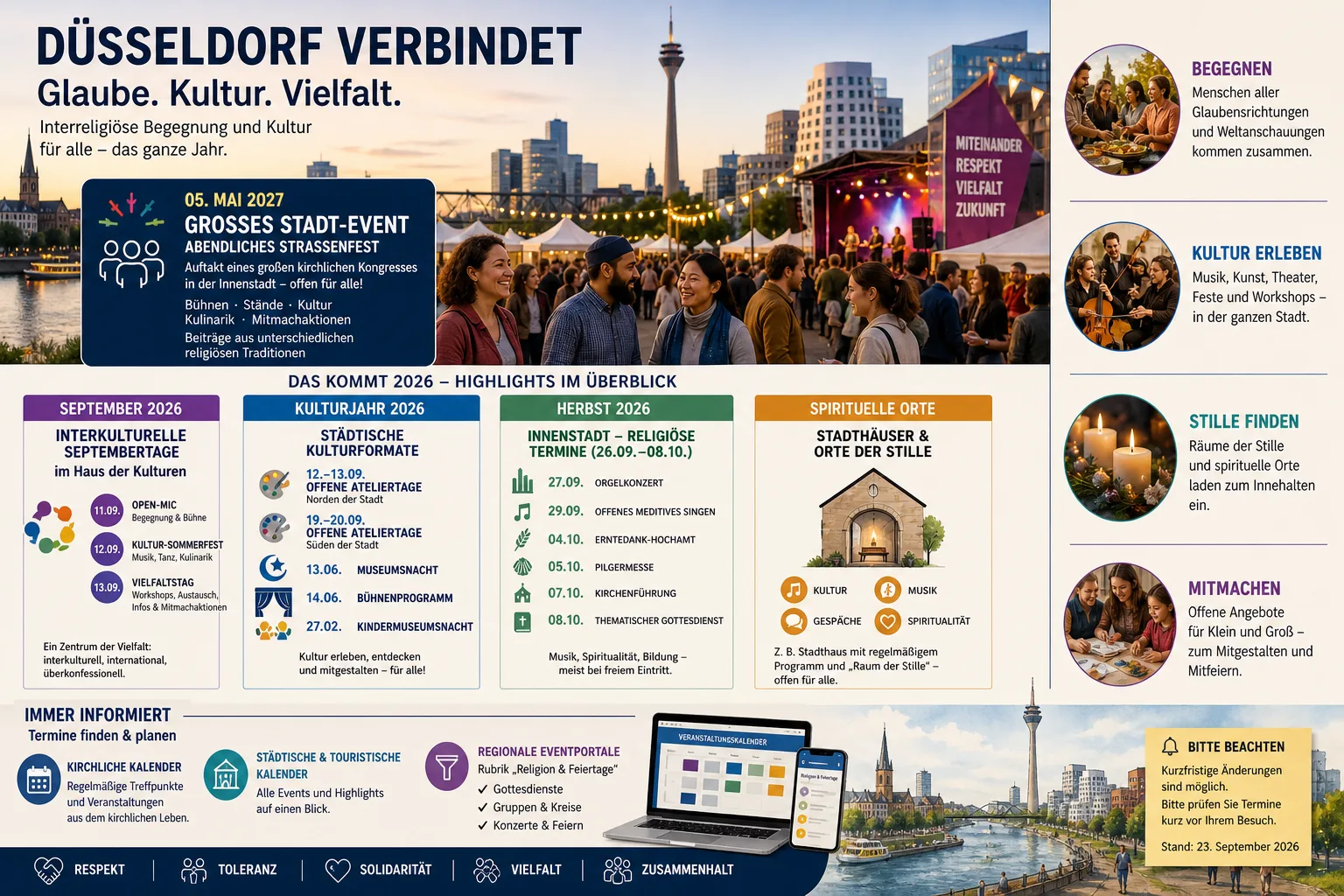
Interreligious Events in Düsseldorf: Culture & Dialogue
Interreligious Events & Cultural Festivals in Düsseldorf (Outlook 2026/2027)
What does it feel like when a city center becomes an open stage for faith, culture, and community for an evening – and no one at the door is asked what they believe in? In Düsseldorf, this can be experienced especially well where cultural formats, city festivals, and spiritual places consciously focus on encounters: in city center spaces, museums, city houses, and on open stages.
This overview shows which future interreligious events and cultural festivals in Düsseldorf typically attract attention, how you can reliably find them in the event calendar – and what you should pay attention to when planning and participating.
Intercultural Days & Open Stages: Diversity in the Program
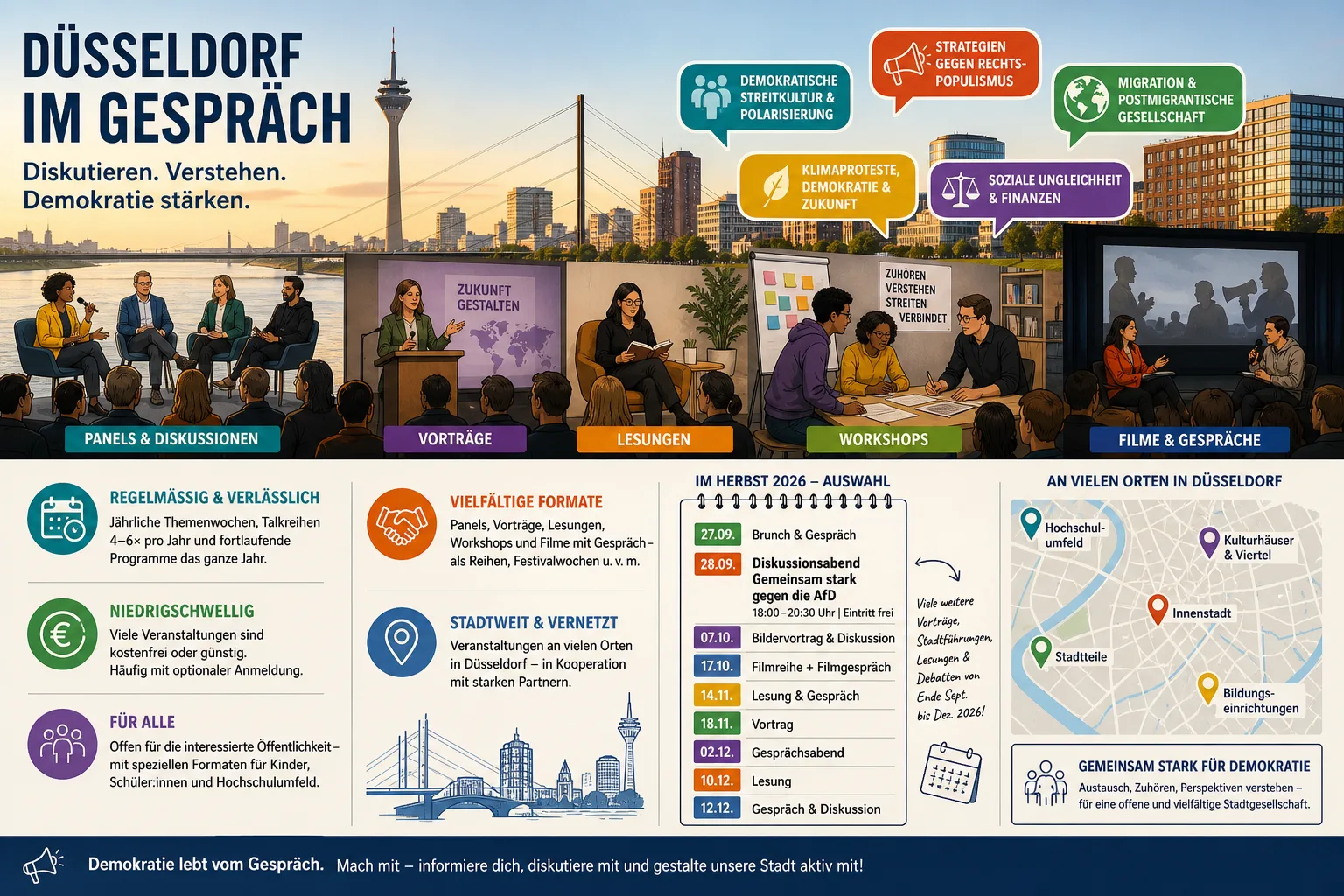
In addition to major events, intercultural program weeks and "open" formats (e.g., open mic, theme days, community festivals) shape the calendar of many Düsseldorf venues and initiatives. A typical triad consists of stage (art & stories), festival (food, music, exchange), and workshop (learning, discussion, participation).
How to Recognize a Truly Inclusive Format
- Clear invitation to all – regardless of religion, origin, or worldview.
- Transparent program information (duration, language(s), costs, registration).
- Cooperation between culture, education, and, if applicable, religious communities, without missionary or pressure situations.
- Information on accessibility (e.g., wheelchair-accessible entrance, induction loop, simple language).
If you are specifically looking for interreligious encounters, formats with moderated discussion rounds, themed tours, or "meet & talk" time slots are often more fruitful than pure stage programs. Those who prefer to observe will often find the most relaxed entry in concerts, readings, and exhibitions.
Cultural Year & Museum Nights: Points of Contact with Religion and City History
Düsseldorf's cultural formats (including museum evenings, special openings, studio days, or district programs) are for many people the easiest way to get to know topics such as religion, migration, identity, or ritual culture – without it having to be a "religious event" in the narrow sense.
Which Formats May Be Particularly Worthwhile in 2027
- Family and children's formats (Winter/Spring 2027): Often with creative approaches to symbols, festival culture, and city history.
- Long cultural and museum evenings (Early Summer 2027): Often with music, short tours, and interdisciplinary programs that also touch on spiritual motifs in art and architecture.
- Open studio days (Late Summer/Autumn 2027): Especially exciting when artists incorporate their biographical or cultural backgrounds into artist talks.
Important: The specific dates and participating venues are usually only officially announced in the months beforehand. Therefore, plan with "program windows" (e.g., "June 2027") and confirm details in the official calendar.
Church Series & Spiritual City Houses: Spaces of Calm
In addition to festivals and cultural series, Düsseldorf has a dense landscape of smaller, regular offerings: concerts, discussion evenings, meditative formats, open church tours, or social initiatives. Especially in city center spaces, this creates a "second program" beyond the big stages – often free of charge or for a donation.
Typical Program Lines (Ongoing 2026/2027)
- Music & Space: Organ concerts, choir evenings, sound meditations.
- Education & Discussion: Short impulses on ethics, urban society, philosophy, or theology – often with Q&A.
- Silence & Pause: Open times in "rooms of silence" or comparable retreats.
- Tours: Architecture or art tours that make religion tangible as part of city history.
If you are new to Düsseldorf or coming alone: Look for formats that are explicitly marked as "open" and communicate a clear schedule (start time, duration, language, contact person). This lowers the threshold and increases the chance of real encounters.
Calendar & Meetups: How to Keep Track
Because programs can change (weather, safety concepts, venue changes, cancellations), a reliable source of information is crucial. In Düsseldorf, a combination has proven effective: official city calendar plus the pages of the respective organizers.
The Three Most Important Calendar Strategies
- City and tourist event calendars: Good for large cultural formats, city festivals, program highlights, and short-term updates.
- Calendars of individual venues/initiatives: Best for open mics, theme days, discussion series, and community meetups.
- Religious calendars & community pages: Especially helpful for regular meetups (choir, discussion, open church, educational evenings) – often with direct contact options.
Check information again 24–72 hours before the event: times, location, ticket/registration, safety rules, accessibility, and information on photo/audio recordings. This way you avoid disappointment and can plan your visit in a relaxed way.
Practical Planning: Arrival, Accessibility, Rules of Respect
Arrival & Timing
For city center formats, it is recommended to arrive by public transport, as parking can be scarce at major events. Allow for buffers for detours and entry situations. Those who prefer it quieter often come at the beginning or use off-peak times of the programs.
Accessibility
Accessibility varies greatly depending on the venue. Look for information on wheelchair-accessible entrances, accessible toilets, seating, quiet zones, and offers for people with hearing or visual impairments. If this information is missing, a quick inquiry with the organizer is worthwhile.
Rules of Respect at Interreligious Encounters
- Photography: Especially in spiritual contexts, ask beforehand; children only with consent.
- Clothing: When visiting sacred spaces, pay attention to notices if necessary (e.g., cover shoulders, head covering depending on tradition).
- Conversation culture: Ask questions instead of judging; use "I" statements instead of generalizations.